
 Latest Review





They say good things come to those who wait. It’s almost a decade since Isotope launched their Rider Jumping Hour, and has introduced a variety of GMTs, dive watches, chronographs and dress watches since then, without revisiting one of my favorite complications. It feels like a couple of years ago that Isotope founder José Miranda began to tease the long awaited follow up to watch enthusiasts at events across the globe. Last August the OVNI Jumping Hour Founders Edition was finally unveiled to the world. The 150 Founders Edition watches sold out during the pre-order period, and now a production piece has landed on my desk. Since its inception, the OVNI has promised to be an other-worldly timepiece, from its name right through to its flying saucer form, and at first glance it hasn’t shied away from that aspiration. So, how easy is it to live with a UFO on your wrist?
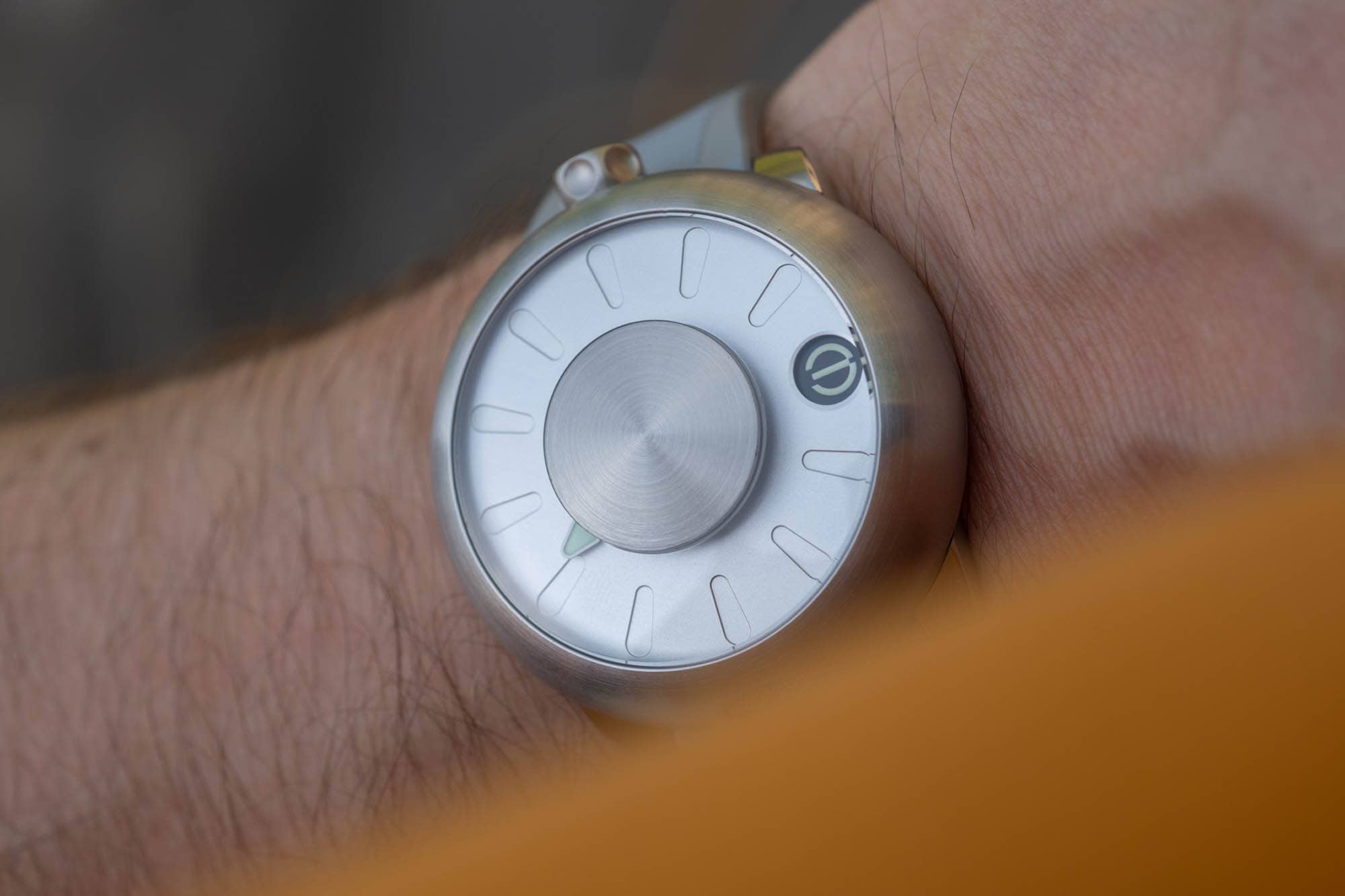
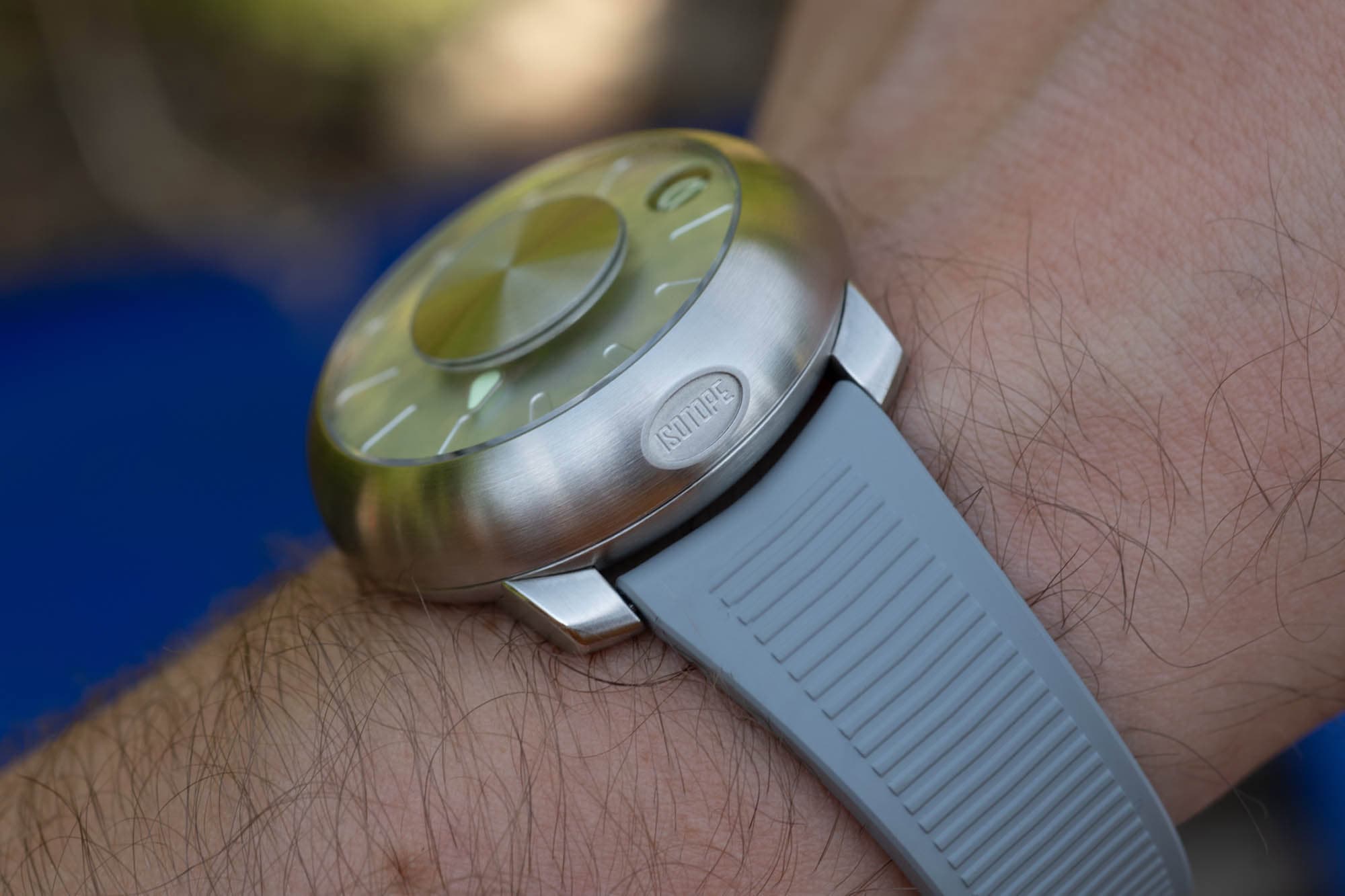
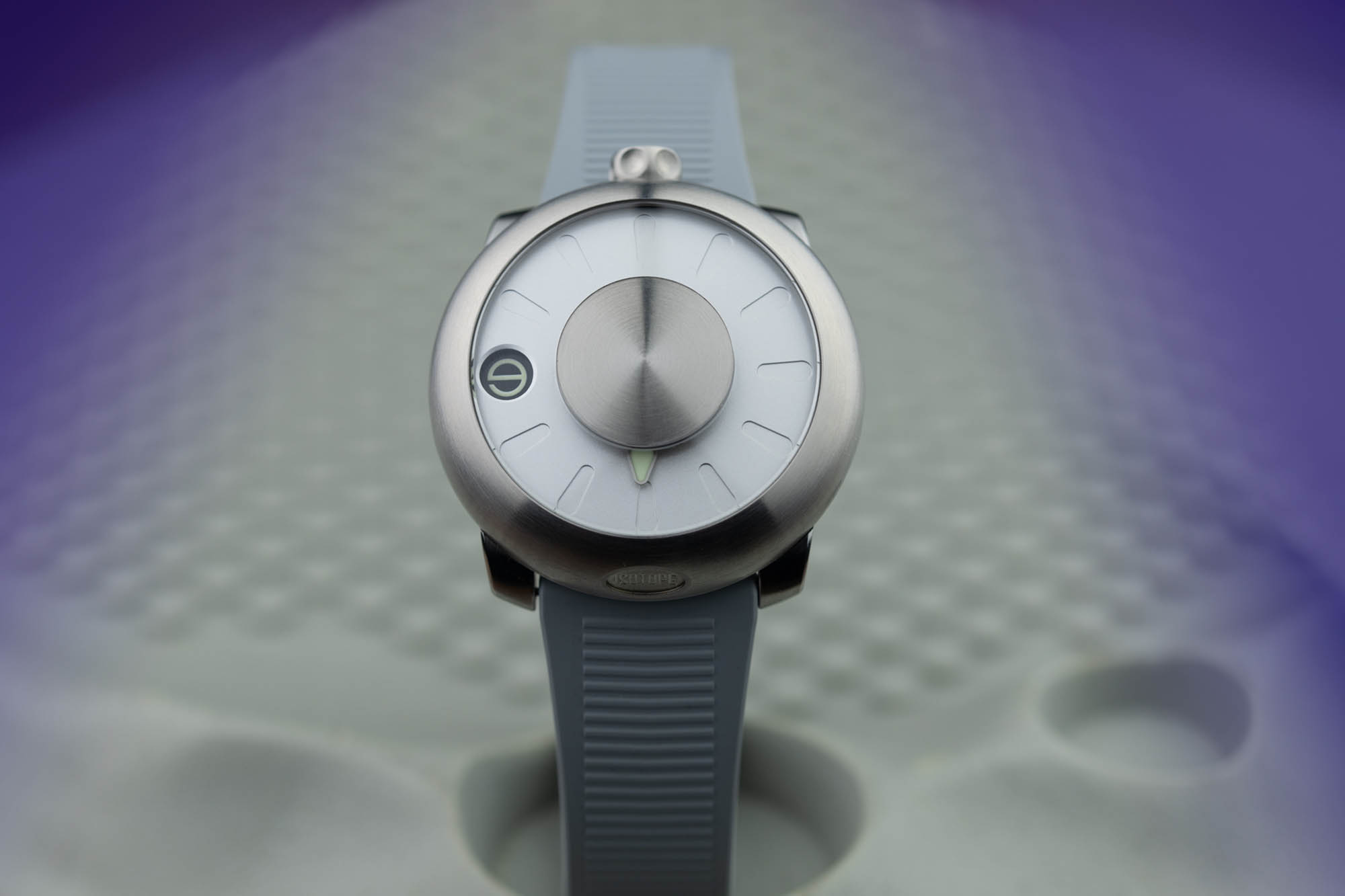
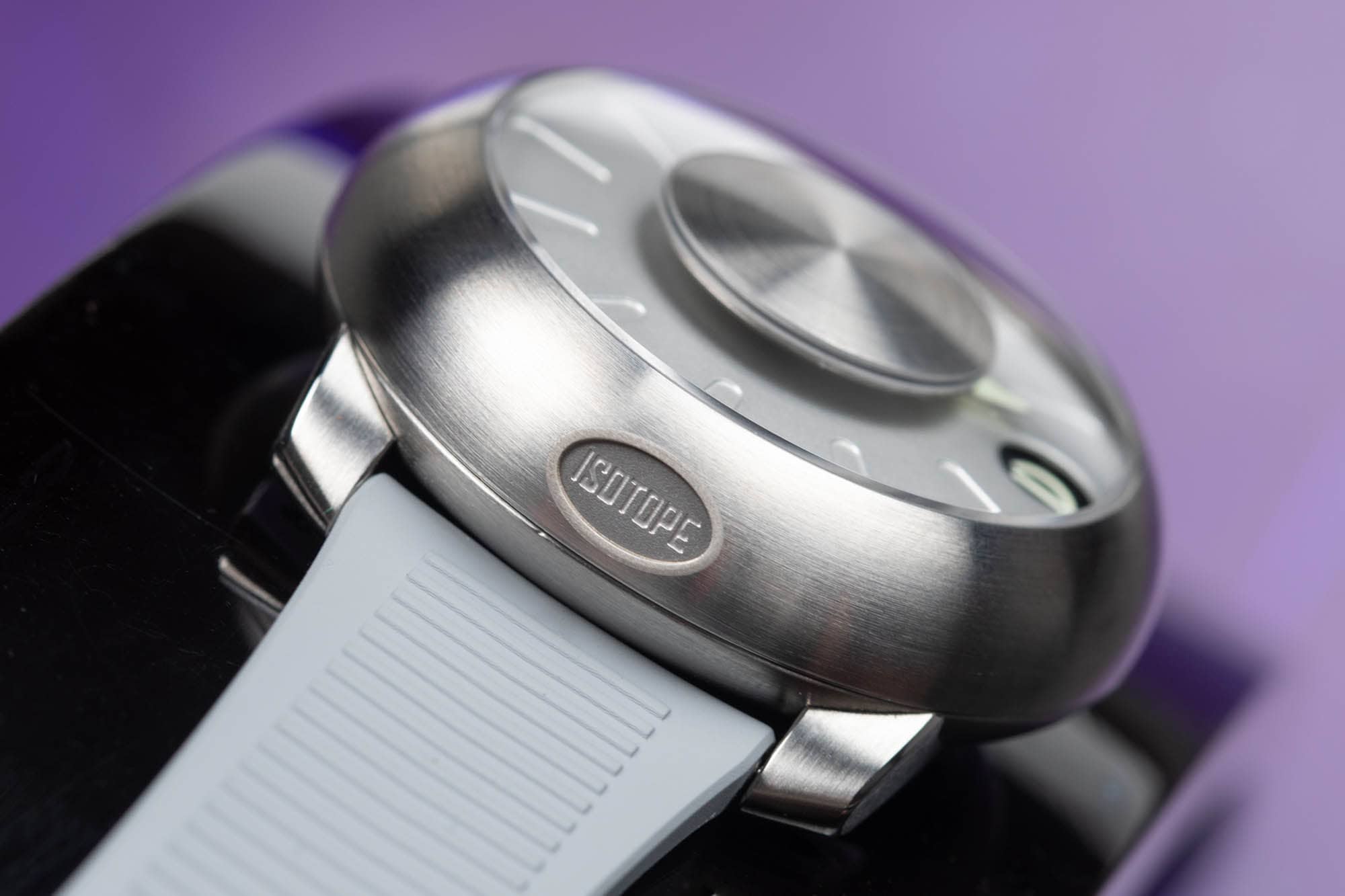
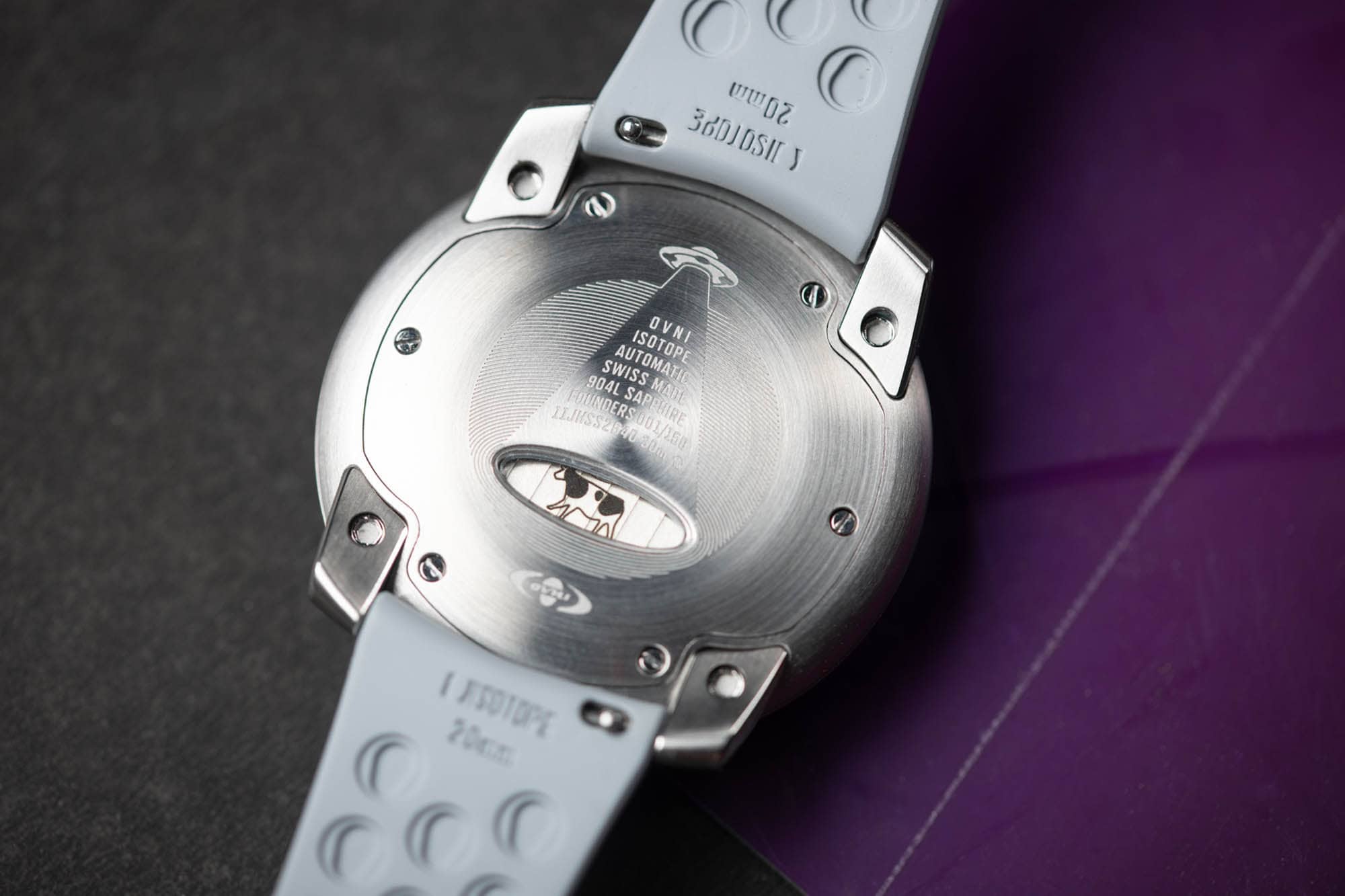
When talking about the OVNI, it makes sense to start with the case. Named OVNI (the Portuguese equivalent of Unidentified Flying Object is Objeto Voador Nãu Identificado), the body of the watch is designed to mimic the traditional flying saucer shape associated with UFOs throughout the years. Crafted from 904L stainless steel and given a brushed finish, the case is an oblate spheroid, slightly flatter on the back than the front. It resembles a perfect ball of steel that has been left out in the hot, hot sun. Smooth and organic, yet dense and alien. The lugs and crown are attached to the case rather than feeling like they belong to it. Viewed in profile, it’s noticeable just how little of the watch case sits in line with the lugs, and how much bulges in front. Flip the watch over, and you’ll see how the sharply downturned lugs are indeed bolted onto the case rather than being formed from the same piece of steel. The case back is screwed down too, and features an engraving of a UFO with a beam of light stretching beneath. Although the exhibition window is very small, if you position the rotor just right you’ll be treated to the sight of a cow being beamed up. Look even closer, and part of the piebald pattern is the Isotope ‘Lacrima’ shape.
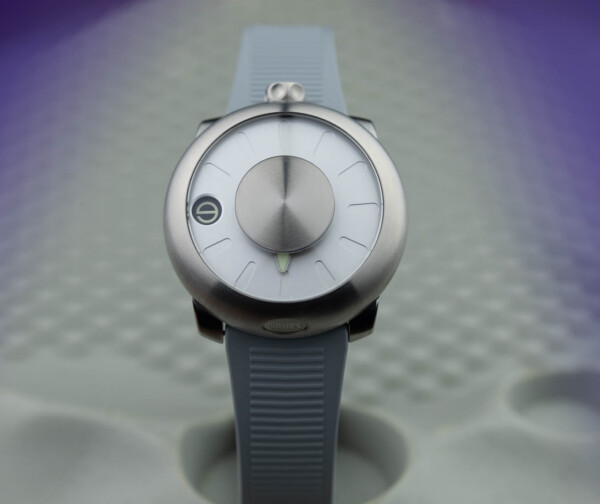
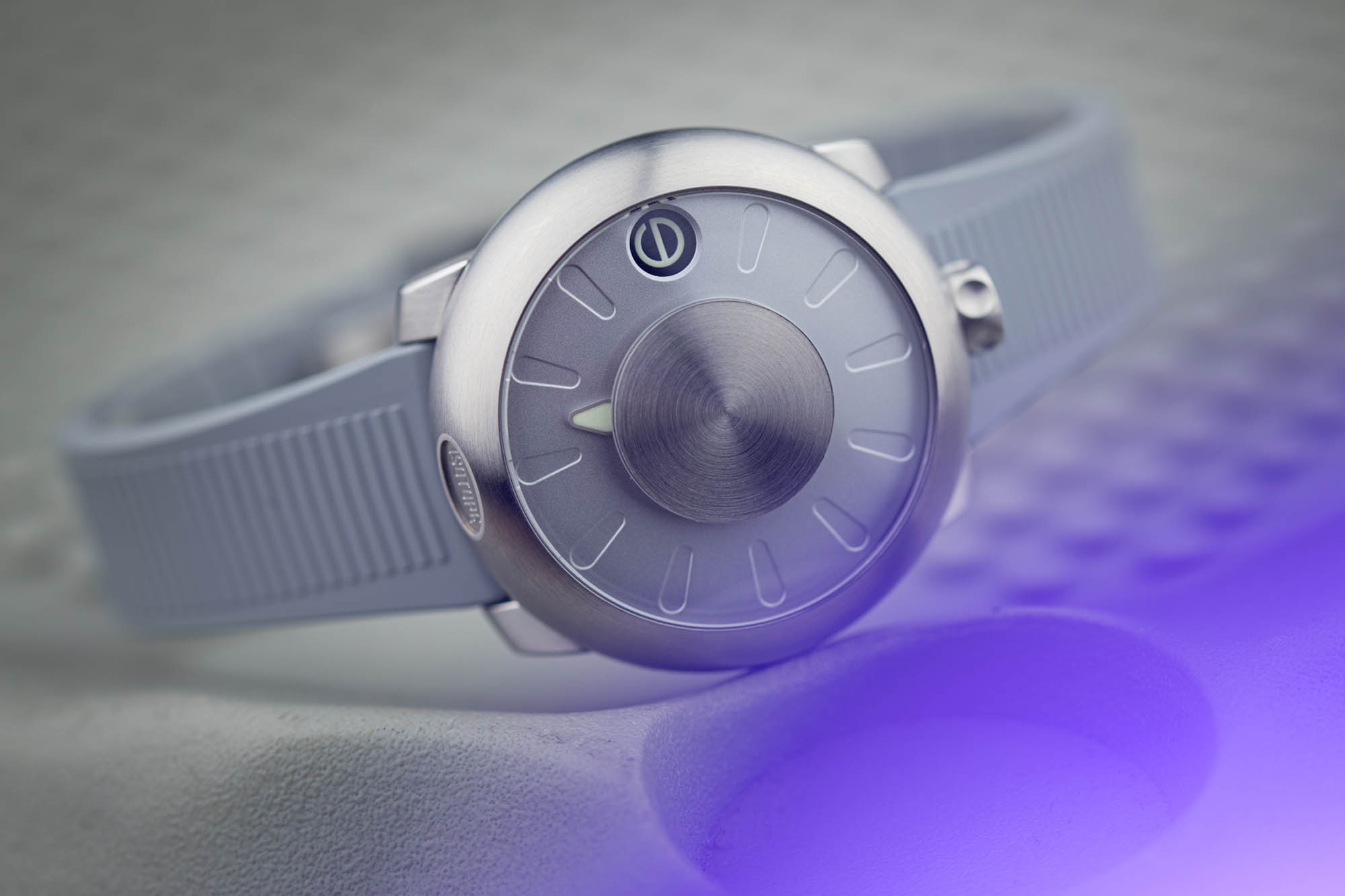
On the front of the watch, the crystal continues the curvature from the case, and concludes with another brushed stainless steel surface at the center of what you’d normally refer to as the dial. The large central ‘cap’ hovers over the dial casting shadows beneath. Isotope leans heavily into the UFO theme as the sapphire crystal, arcing between the two steel surfaces, becomes a ‘window’ into the watch rather than a simple transparent protective surface over the dial. The dial and hand are three distinct parts but act as one. Minutes are read in a fairly conventional way by way of a short, but lumed, minute hand protruding from beneath the central stainless steel disc. The hour (or 5-minute) dial markers are sculpted within the aluminum disc, which itself sits above the dial on which the hour numerals are printed.
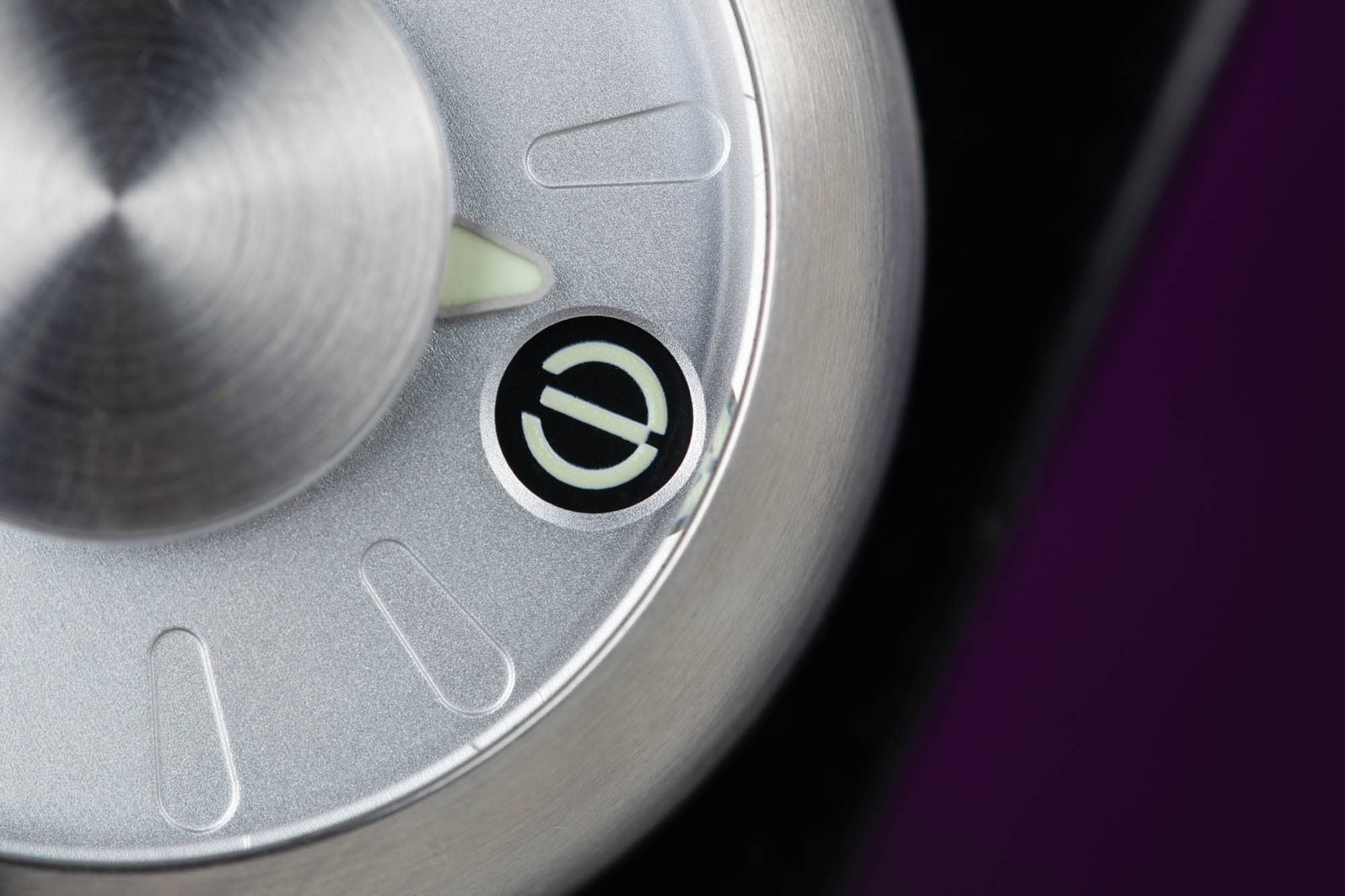
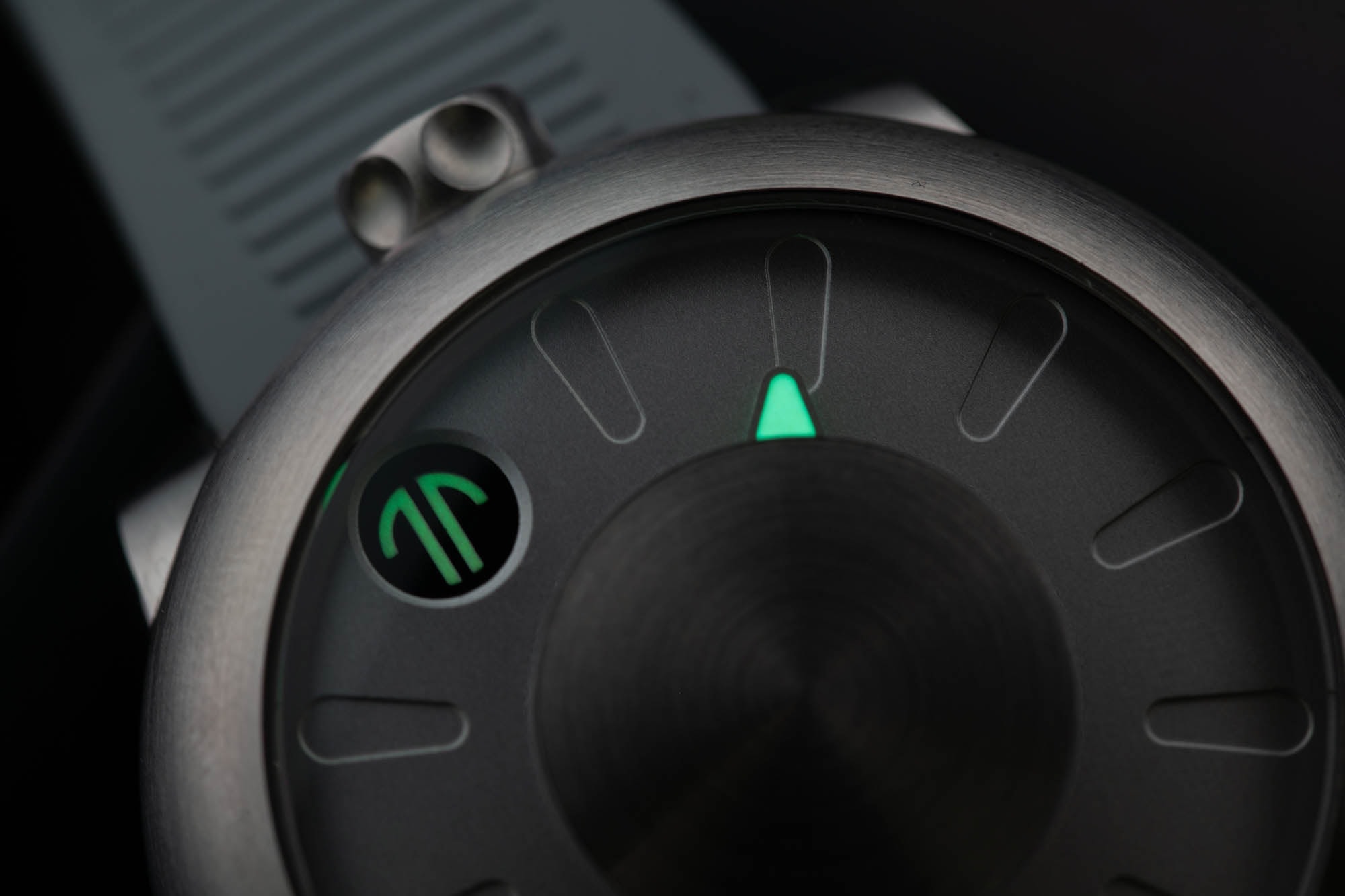
Unlike most jumping hour watches where a disc containing all 12 hour numerals ‘jumps’ 30 degrees to reveal the next one through an opening on the dial, in the case of the OVNI those two surfaces are switched. As the minute hand reaches 60 minutes the aluminum disc jumps, moving the opening itself around the dial to reveal the next number. The typeface created for the hour numerals is purposefully alien. With all 12 showing side by side, I suspect it would be hard to distinguish between some of them. Three, eight and nine, for example, appear to be very closely formed, as do four and seven. Part of the appeal of a typical jumping hour watch is the removal of extraneous information when reading the time. After all, why do I need to see 11 other numerals when I only care about the hour hand’s proximity to one of them? Due to the indistinctness of the numerals, they need to be read in conjunction with their position on the dial to make sense. As with the minute hand, the numerals feature green-glowing Super-LumiNova. This looks cool, but comes with the problem that 11 of the numerals are hidden beneath the aluminum disc at any one time and so are not being ‘charged’ by sunlight (or artificial light). Therefore, once the hour clicks over, the new numeral won’t be lumed.
To achieve the jumping dial opening, Isotope is using a proprietary module on top of the La Joux-Perret caliber G101. In its base form (the LJP-G100), this is a Swiss made three-hand automatic movement, with hand-winding and hacking, offering a respectable 68 hours of power reserve once fully wound. The G101 removes the date functionality from beneath the dial and through the crown. Isotope have removed the seconds hand, and the jumping hour module replaces a constantly moving hour hand with the snapping aluminum disc. Isotope has opted to use the Soignée (top) grade, which is adjusted in four positions and features Côtes de Genève, mostly hidden from view.
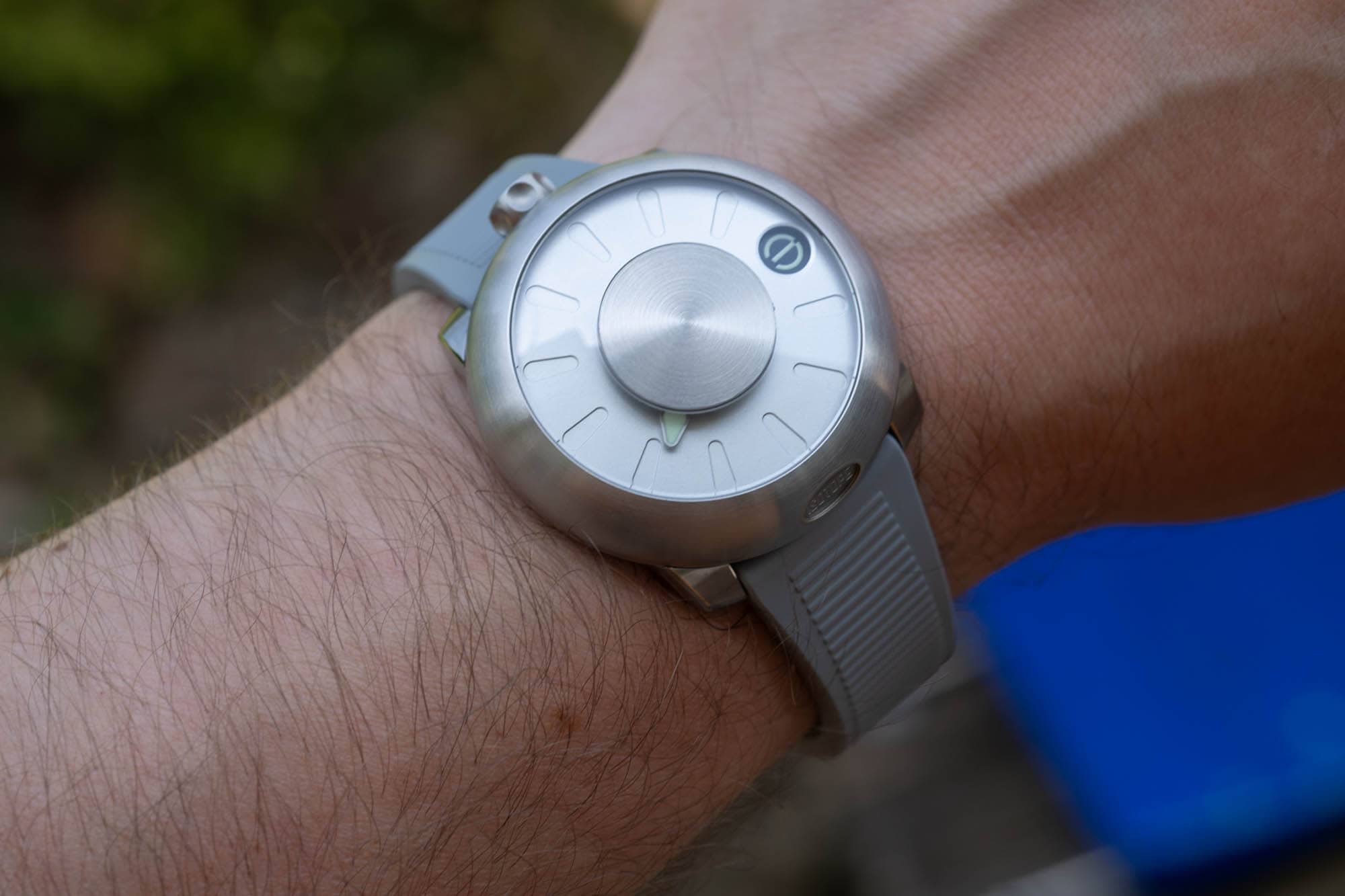
The Isotope OVNI is a heavy watch, and along with the overall shape, that helps it to feel other-worldly. On the wrist, it has much more presence than you might expect from a 40mm diameter watch. That 40mm is the measurement both from left to right as well as from lug tip to lug tip; the stubby lugs sit low on the case such that the strap rests beneath the widest part.
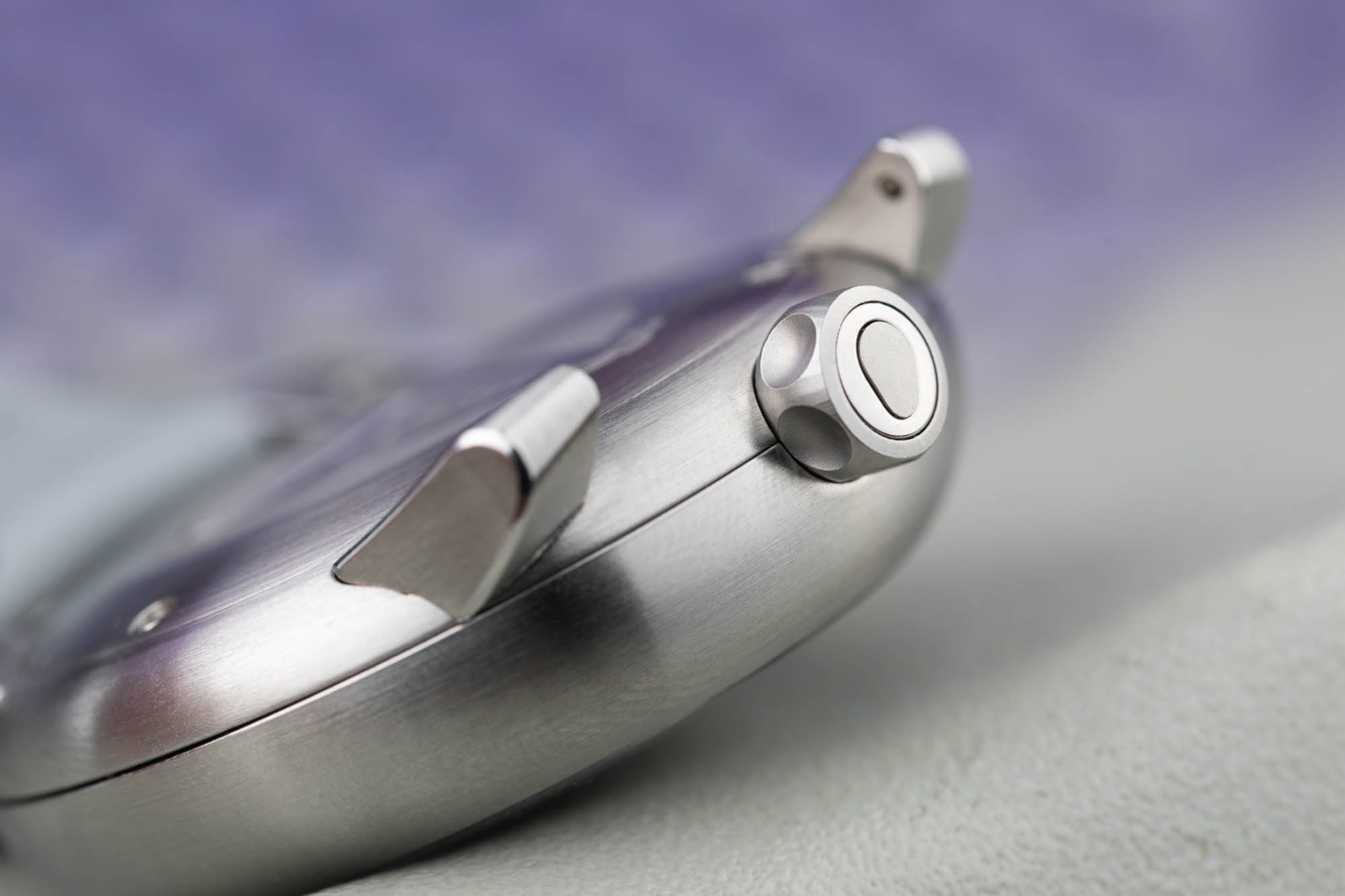
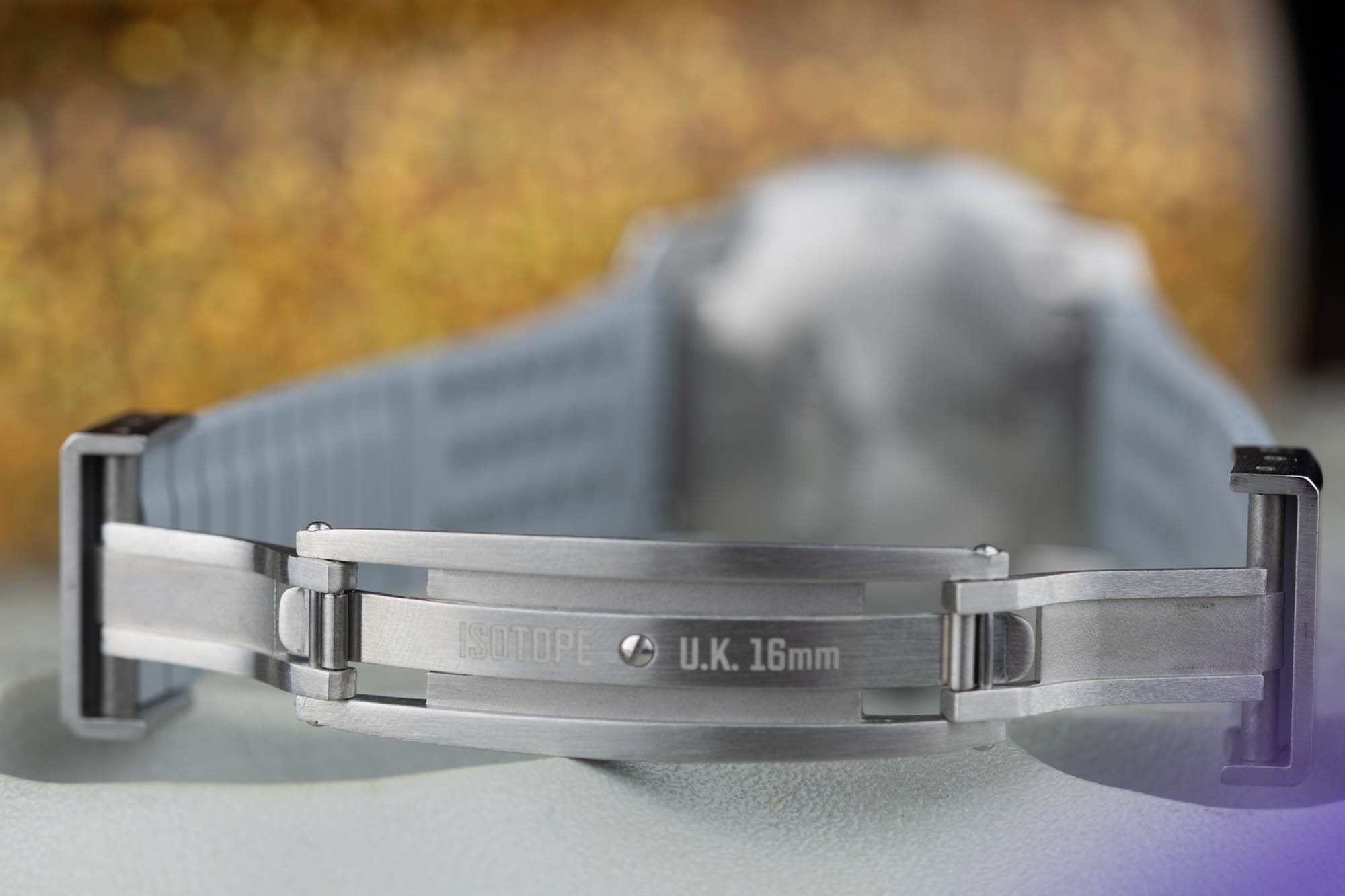
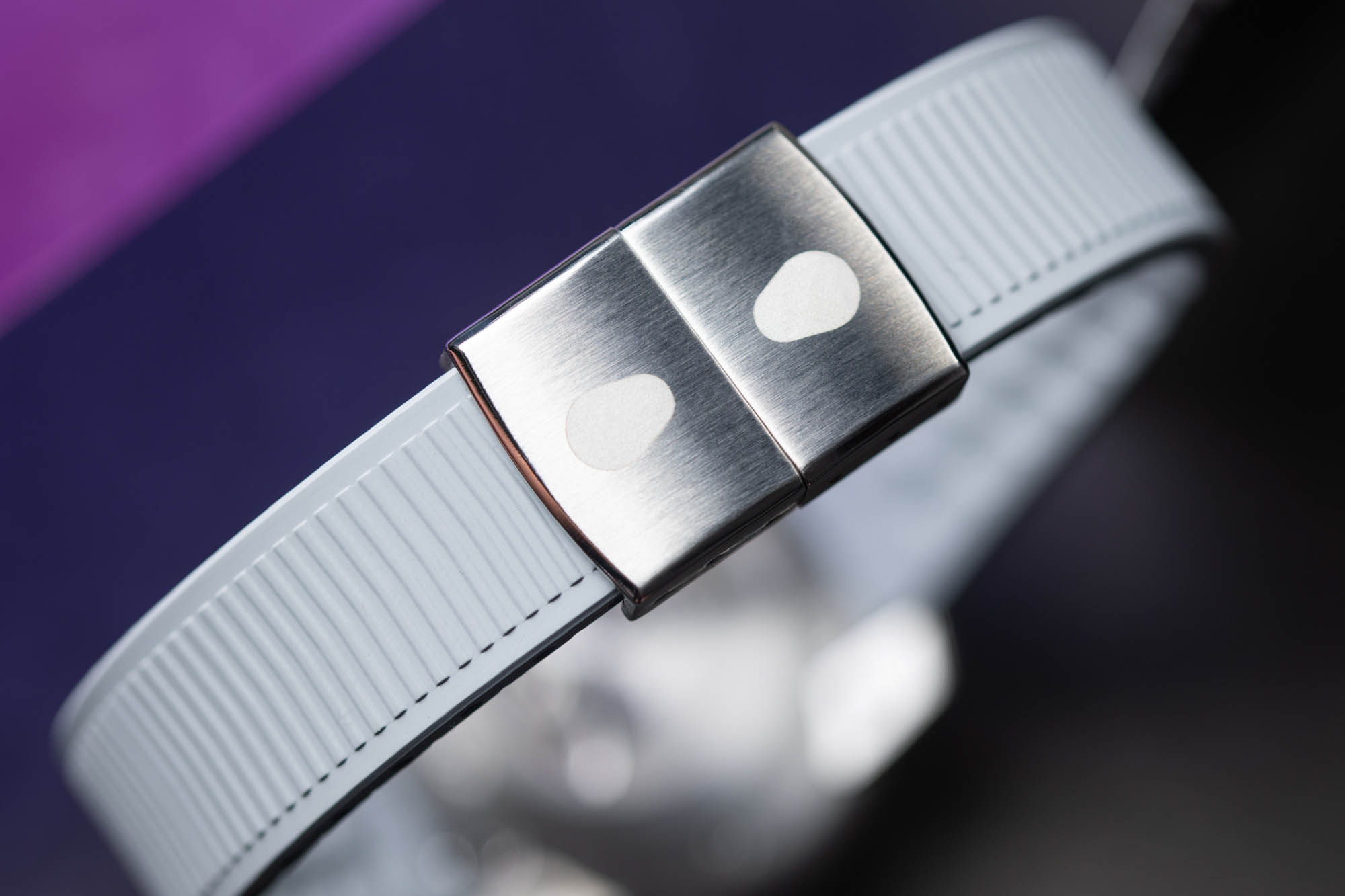
Fitted to the OVNI is a FKM rubber strap, with curved quick-release spring bars at one end, and is cut-to-size where it meets the spring loaded clasp at the other. The curved end is important here: although I was able to fit a different 20mm straight-end strap, it was a snug fit and didn’t allow the strap the same range of motion though the lug fastening. Another unconventional choice was to position the crown at the 12 o’clock position. Adjusting the time is best done with the watch taken off the wrist, and with the strap angled out of the way.
Once a good fit is achieved through careful sizing of the strap and the choice between the two pin holes in each clasp fastening, the OVNI feels at home. Weighty and impactful, yet not overbearing. Getting a good fit is important though. At almost 14mm high, and a little top heavy, I imagine it would move around the wrist a lot if worn slightly loosely. Some watches will try to hide their height, but the OVNI showcases it. Indeed, much of what makes the OVNI stand apart are those unconventional choices. From the shapes through to the time-telling, many parts of the Isotope OVNI feel deliberately discordant with my expectations of what a watch should be. I don’t quite know if that’s the acceptable trade-off that comes from leaning heavily into the UFO theme, or whether it’s more of a disruptive statement about how we should view time and our desire to measure it.
Regardless, the jumping hour was the topic of one of my earliest Worn & Wound articles, and remains one of my favorite complications. Being slightly jarring feels entirely appropriate for a jumping hour watch, so I’d say the Isotope OVNI succeeds there. The 150-piece pre-order run of this Founders Edition sold out last year, and priced at £1,500 (excluding VAT) that’s not surprising. There are likely to be further iterations of this watch moving forward, so I intend to keep my eyes to the skies to see where it goes next. Isotope