
 Latest Review







There’s genuine horological history in the home of Beaucroft Watches, the independent brand founded in 2020 in Cambridge. England was once the heart of the world’s finest watchmaking, a legacy that dated back to the 16th century. Some of the most important innovations originated in these early epochs, up until Switzerland took the mantle in the mid-1800s: complex clocks meant for royalty, and instruments for gauging the stars and the sea alike. Thomas Tompion, the “Father of English Clockmaking,” pioneered the hairspring as a viable means of regulating time, clockmaker Thomas Mudge invented the lever escapement in 1755, and John Harrison’s marine chronometer solved the problem of determining longitude once and for all.
Zoom forward about five centuries. Some of the most exciting, historically-minded efforts in independent watches are emerging from British watchmakers, many of whom are attempting to evoke this proud tradition. For Beaucroft, whose latest watch is the Arc, there’s no lack of influence to draw from among Cambridge’s stone archways, pointed Gothic windows, and the ancient towers that loom over King’s and Trinity Colleges.
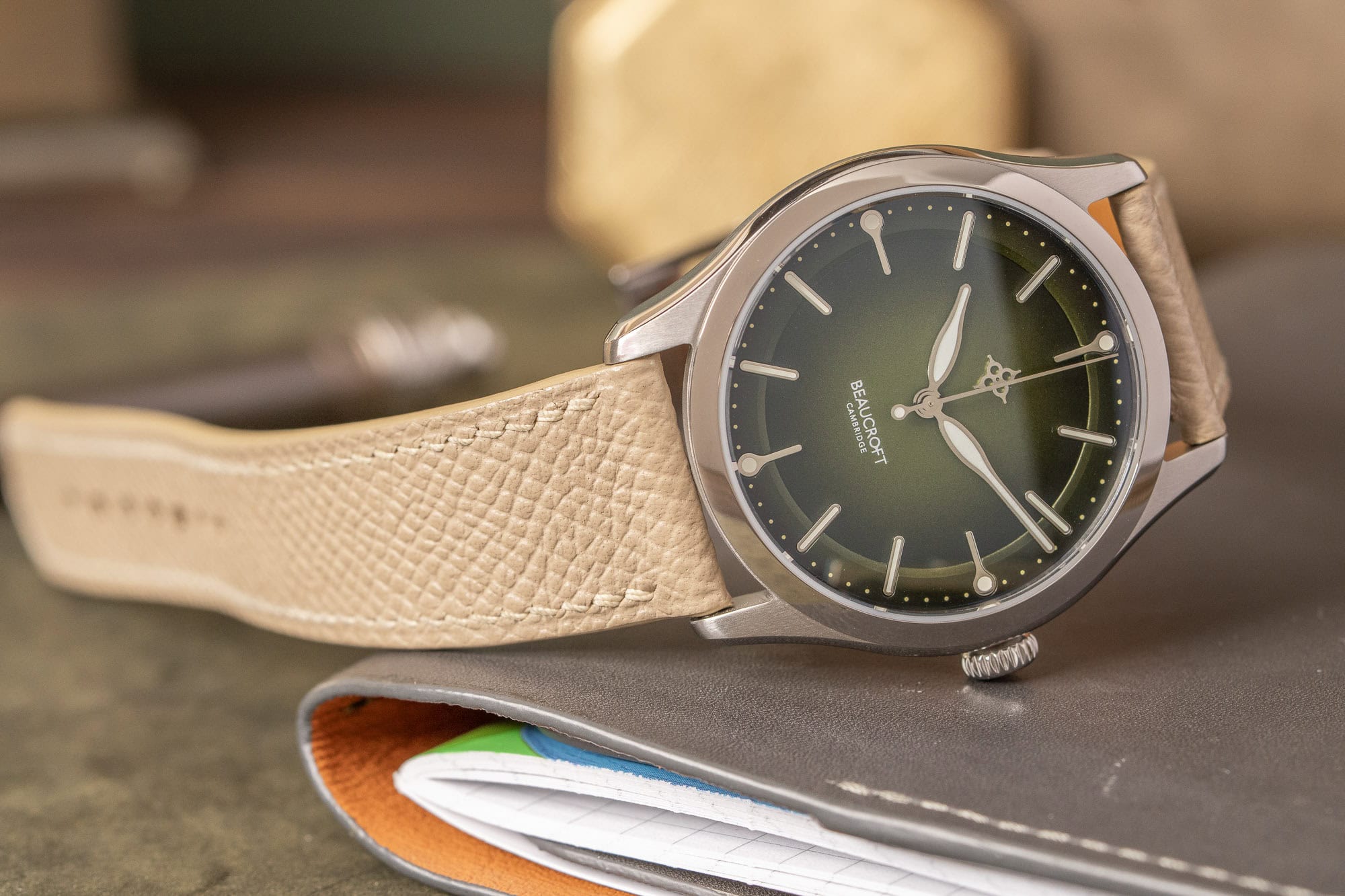
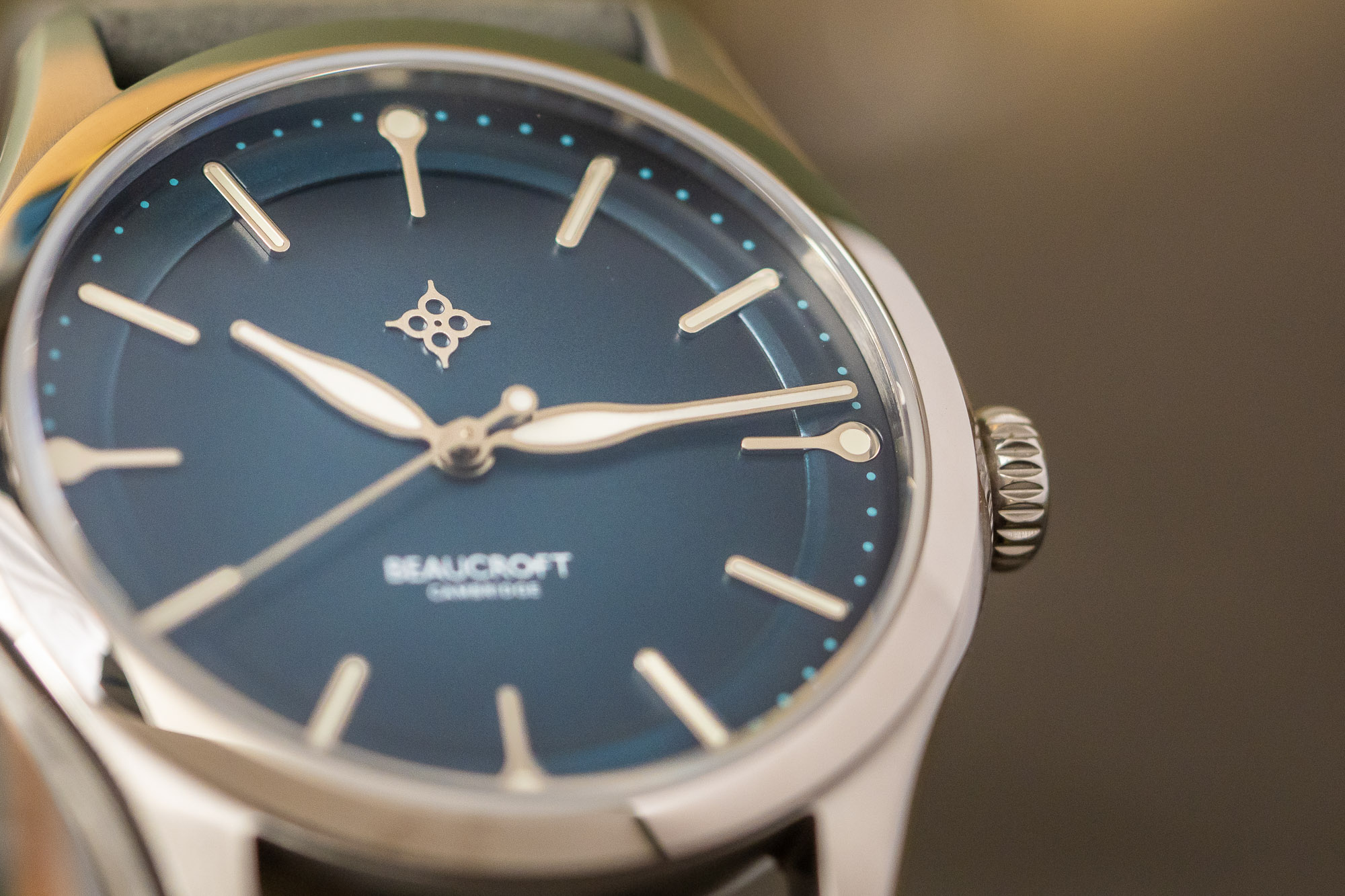
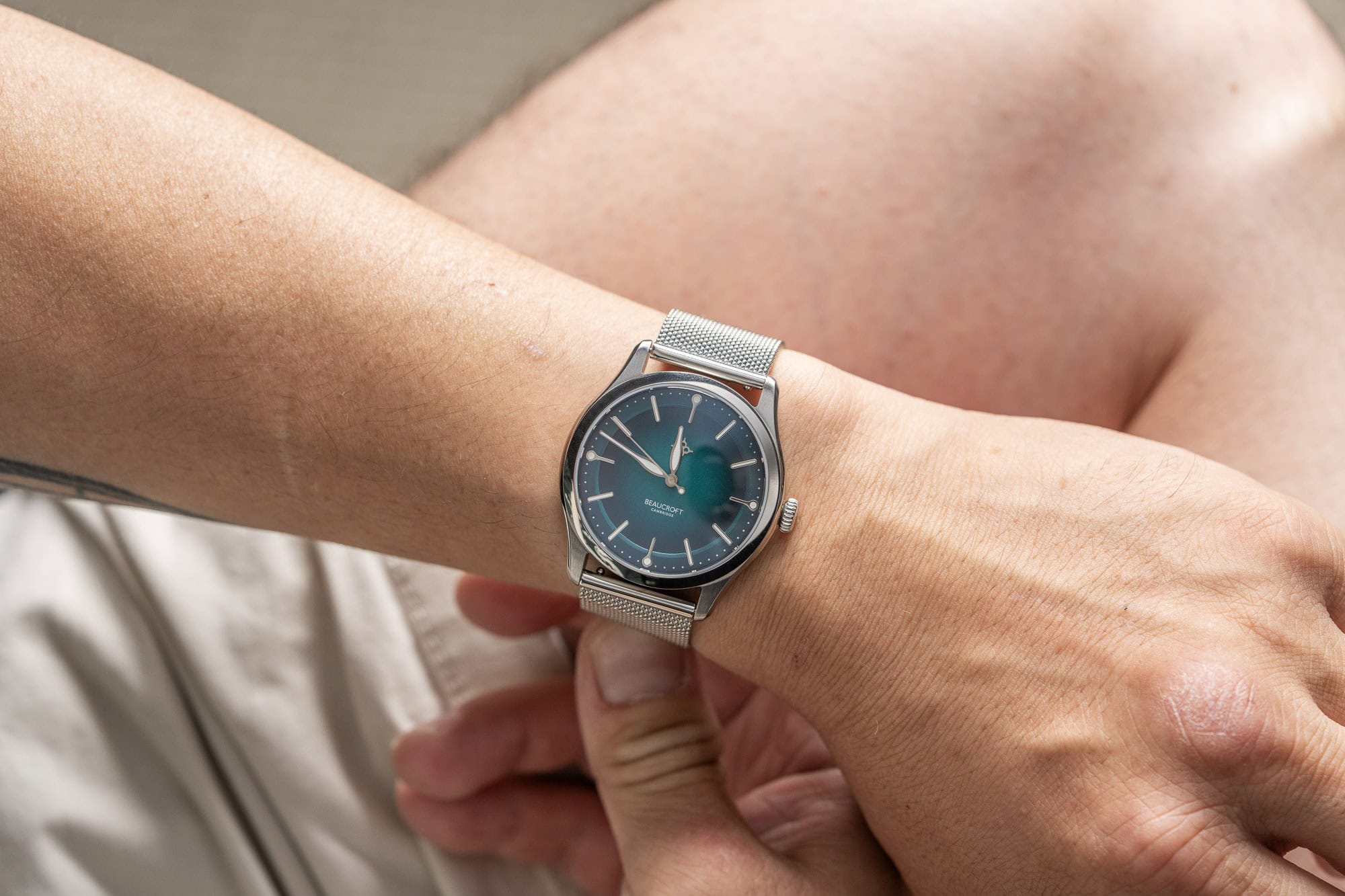
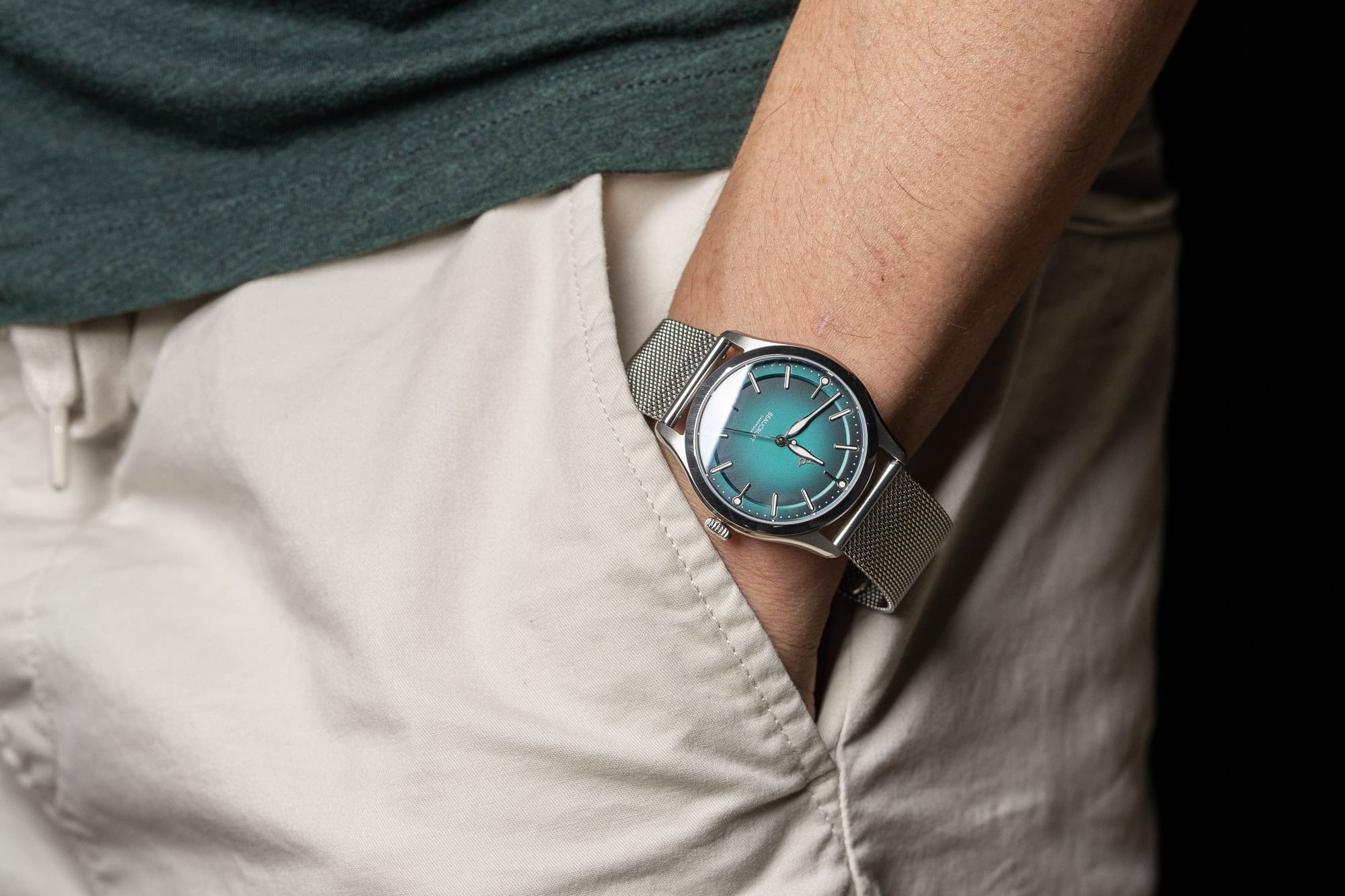
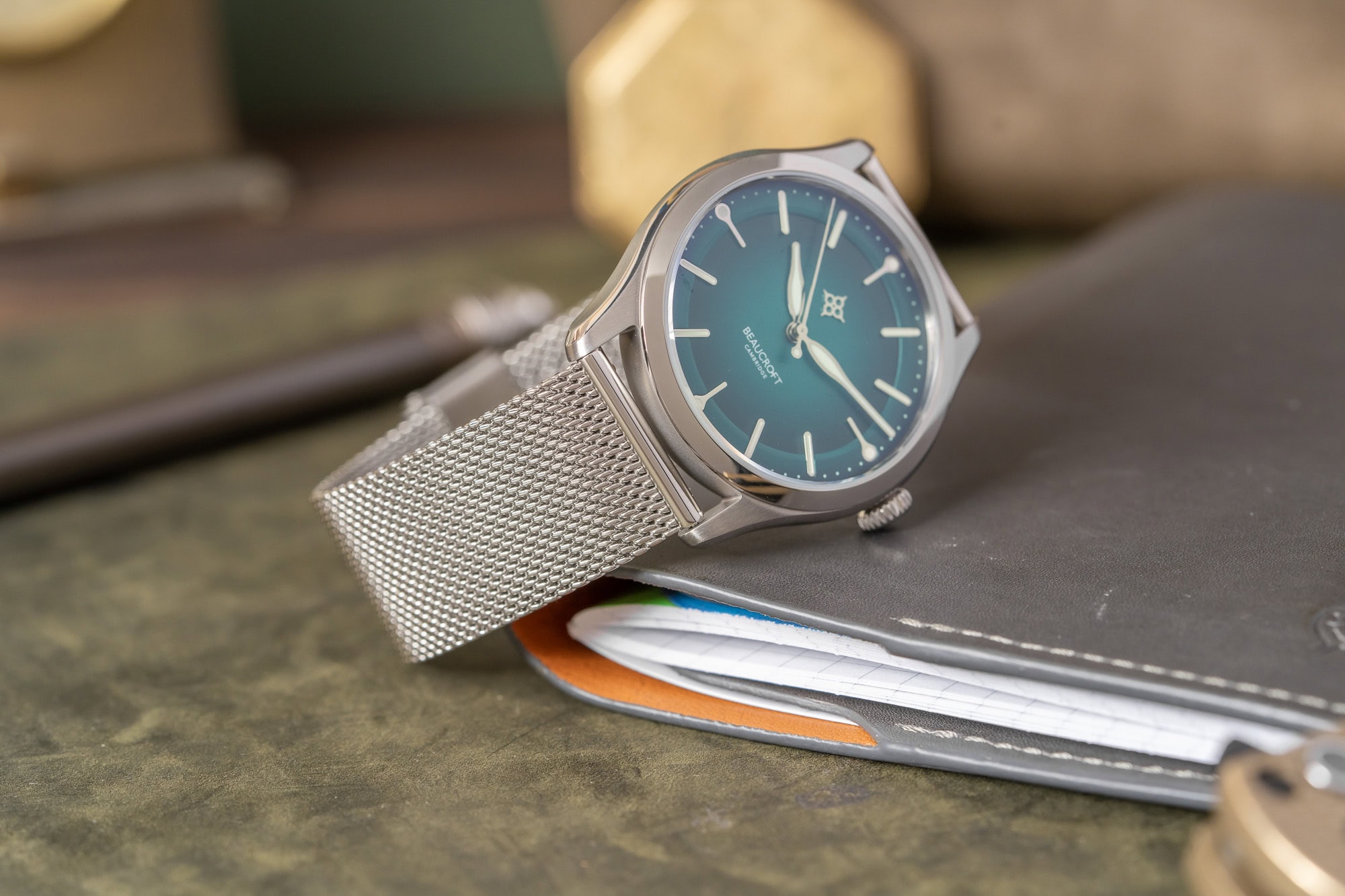
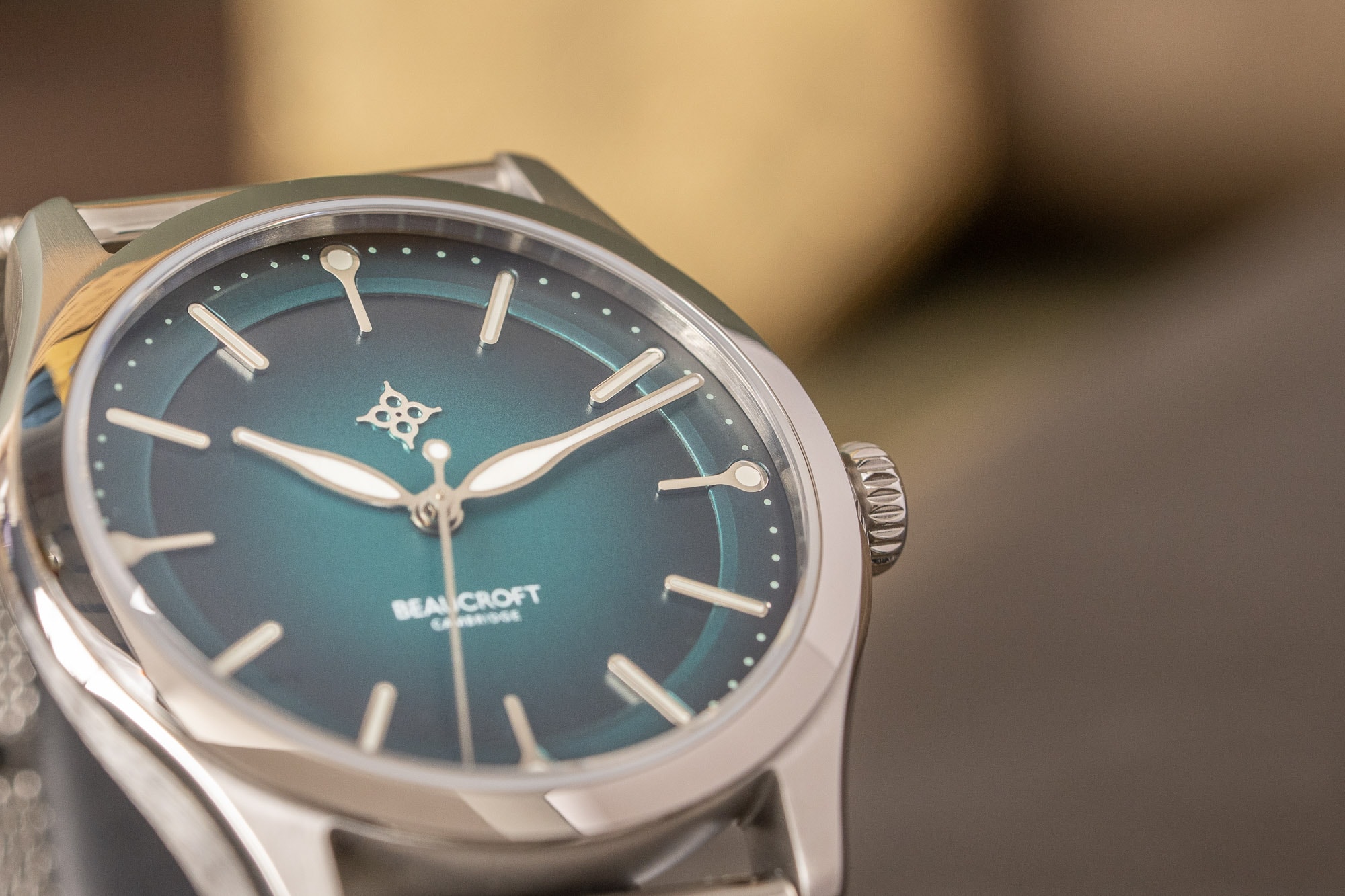
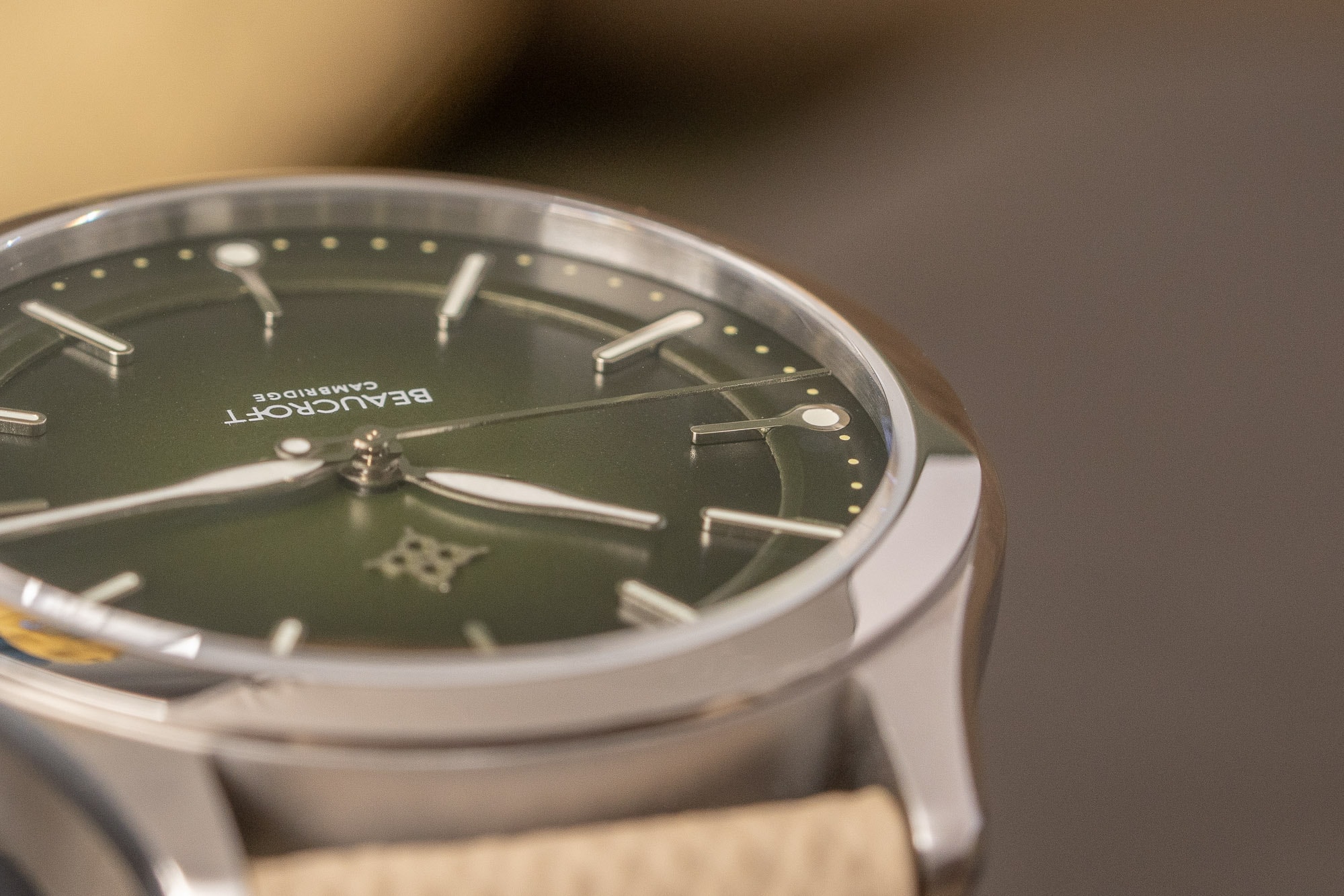
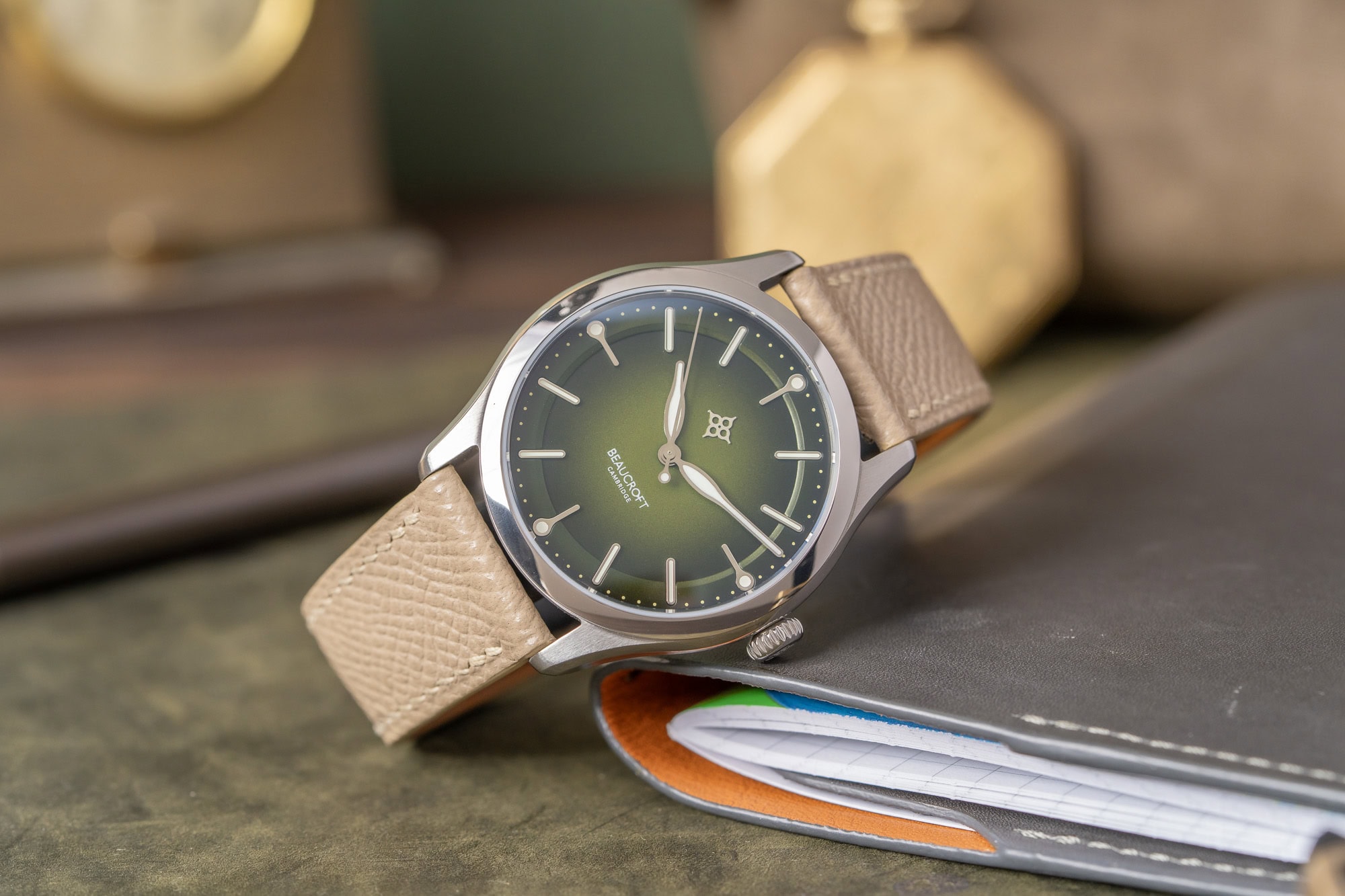
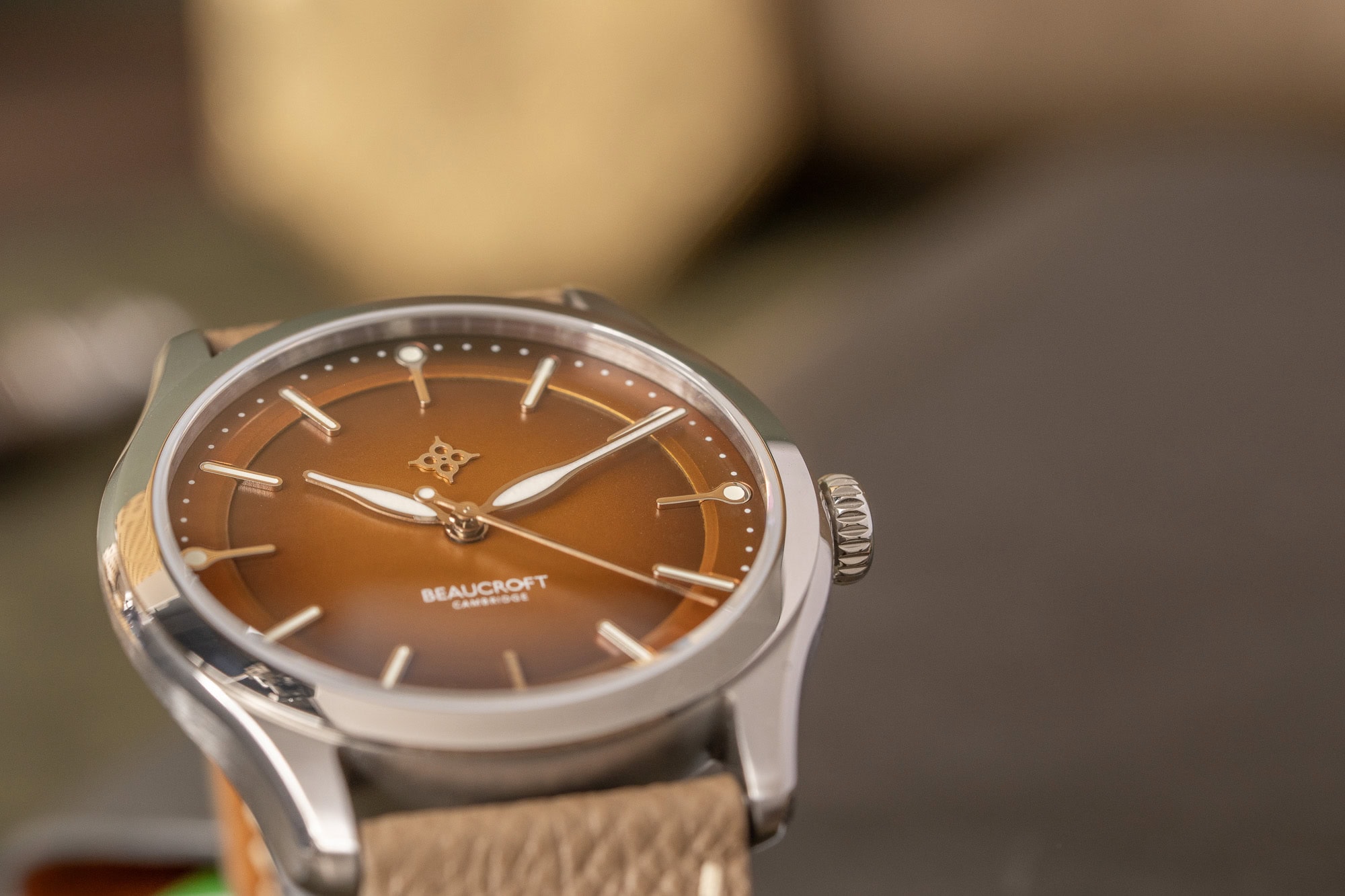
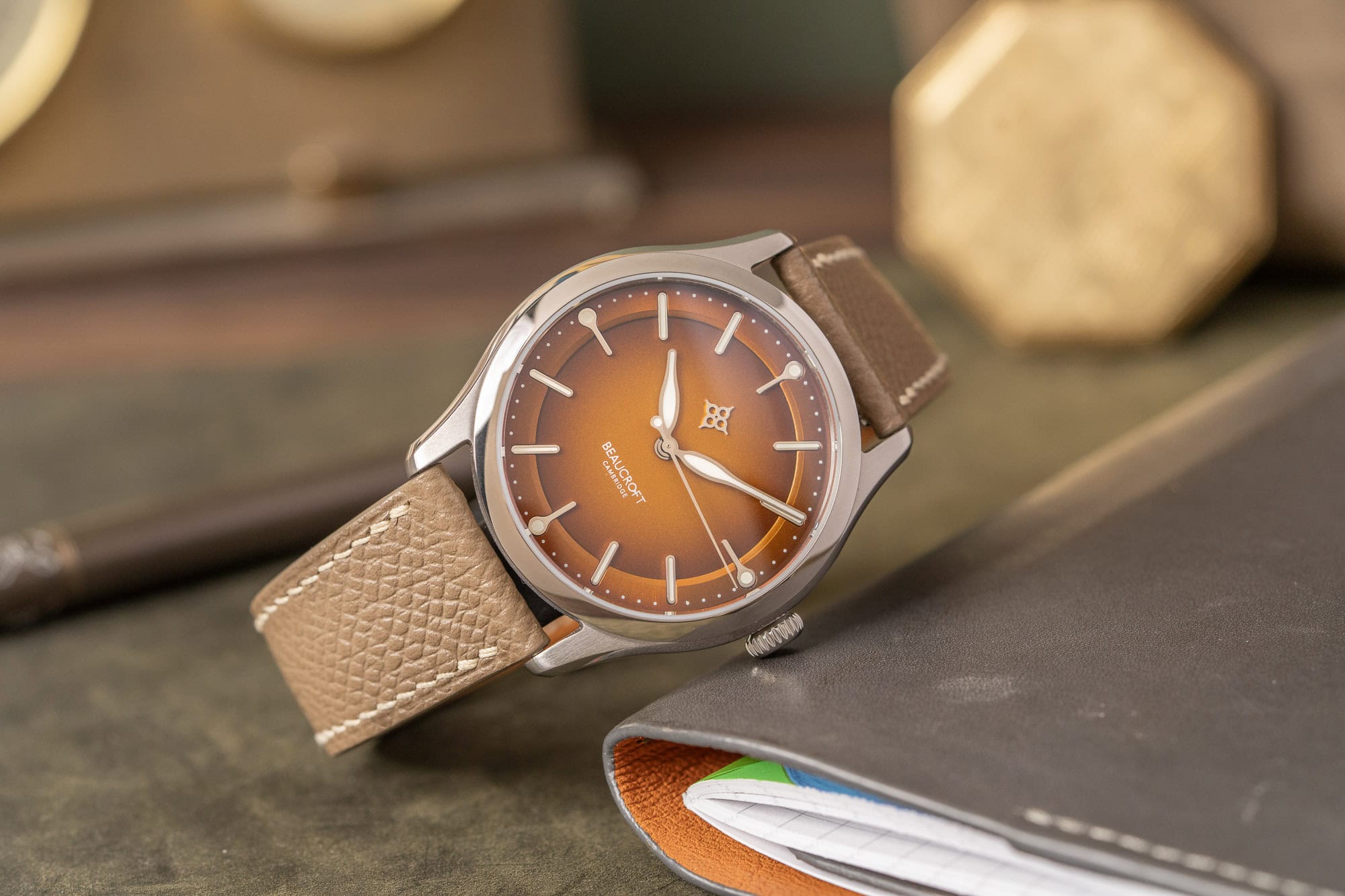
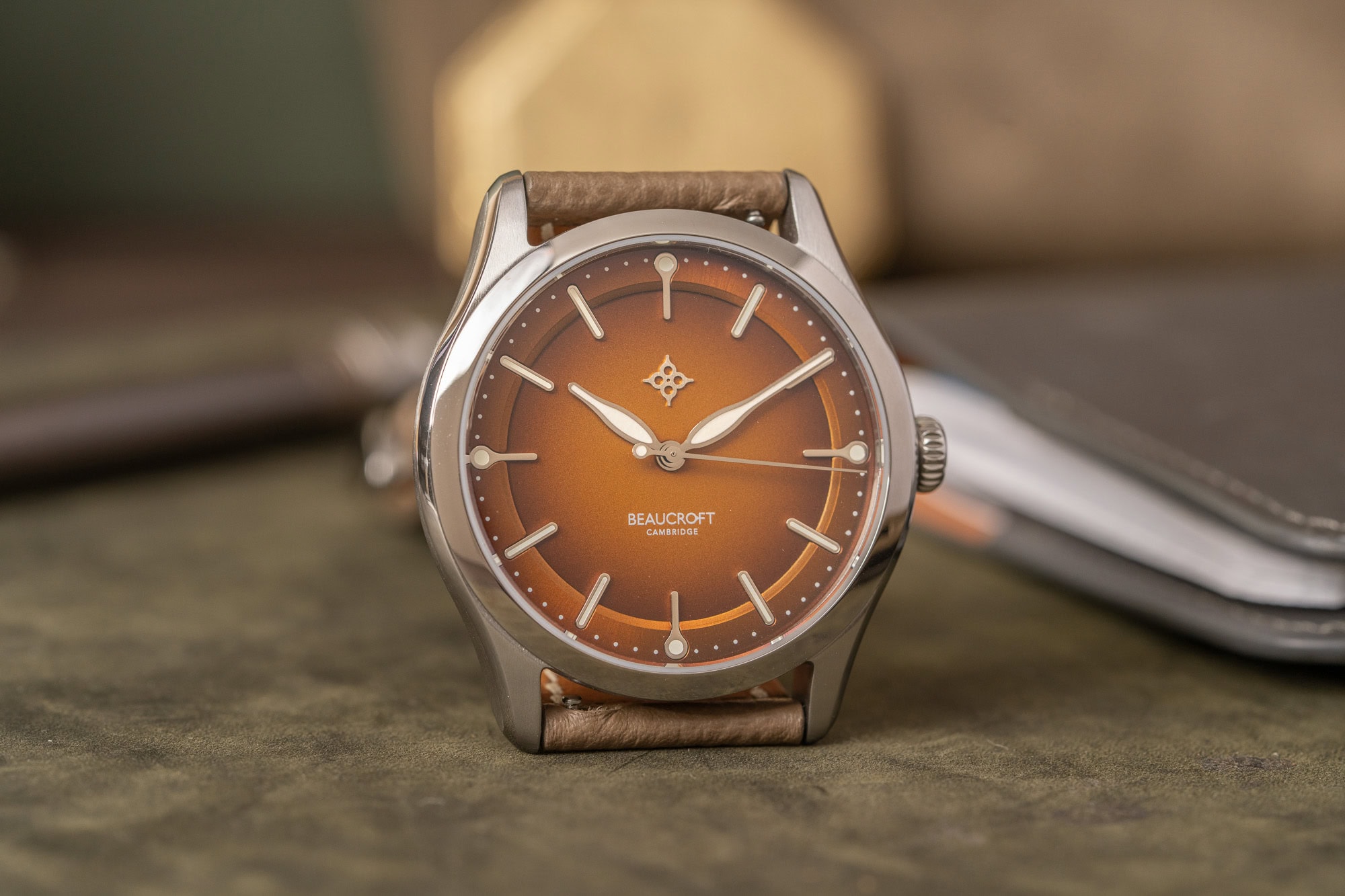
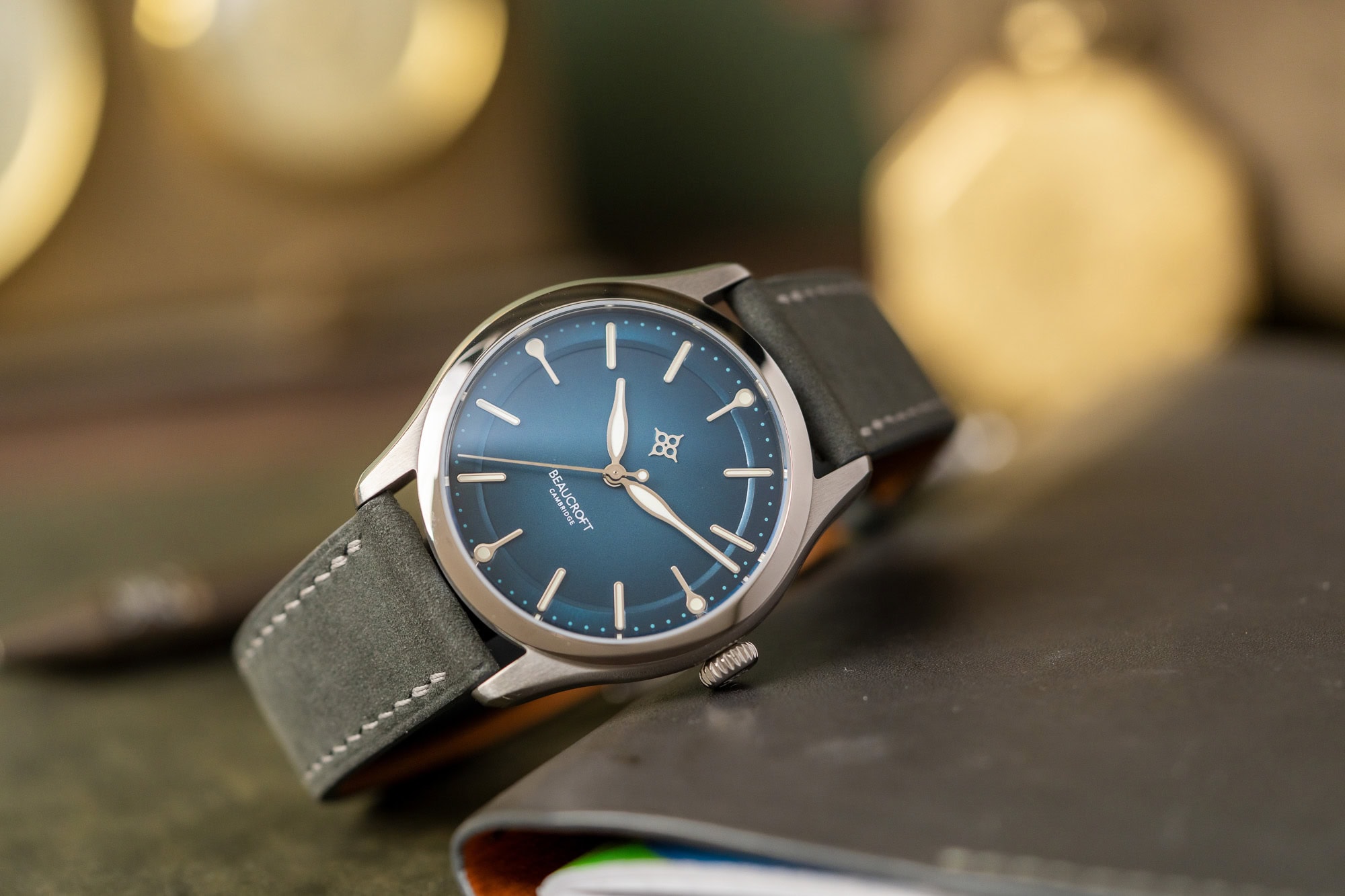
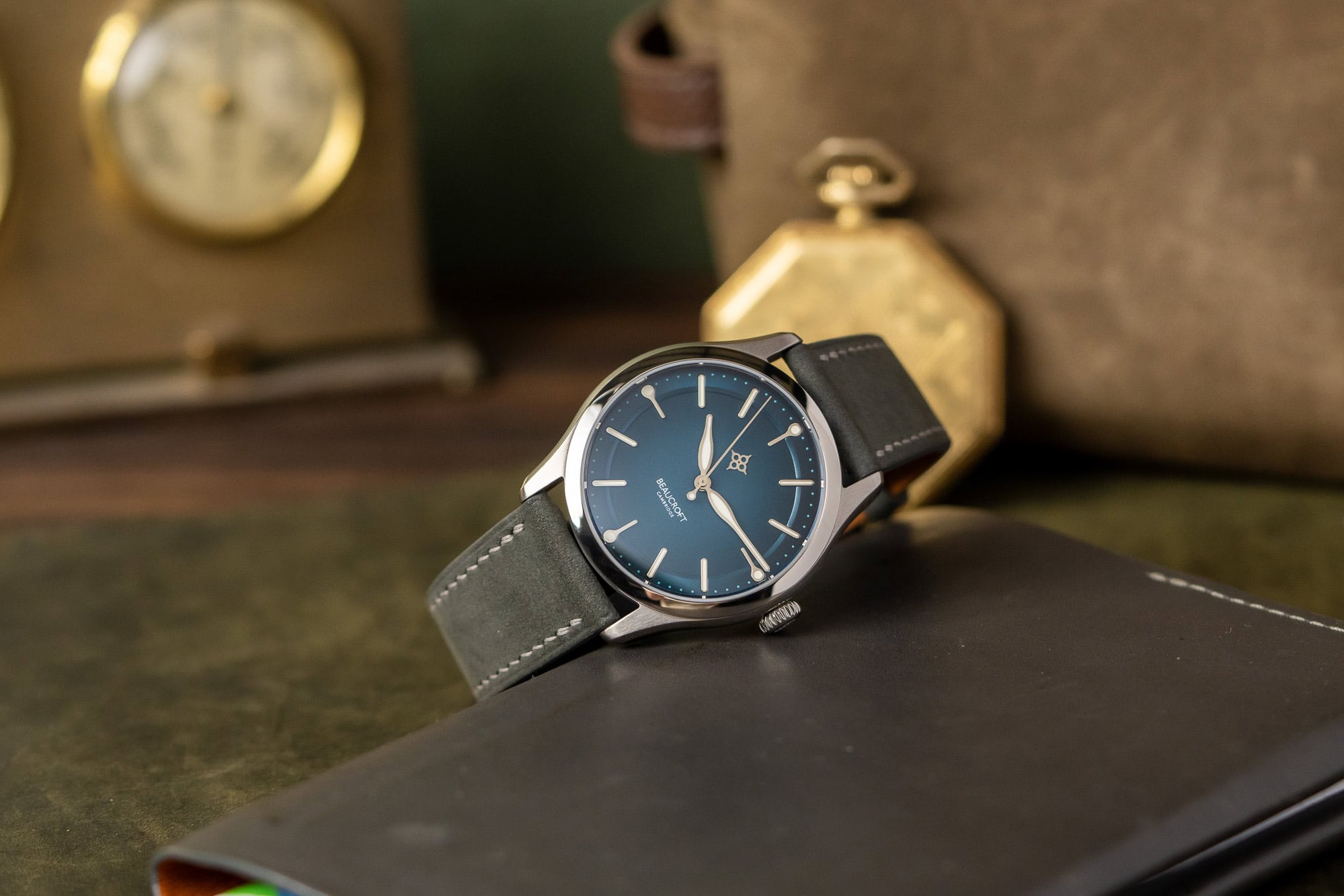
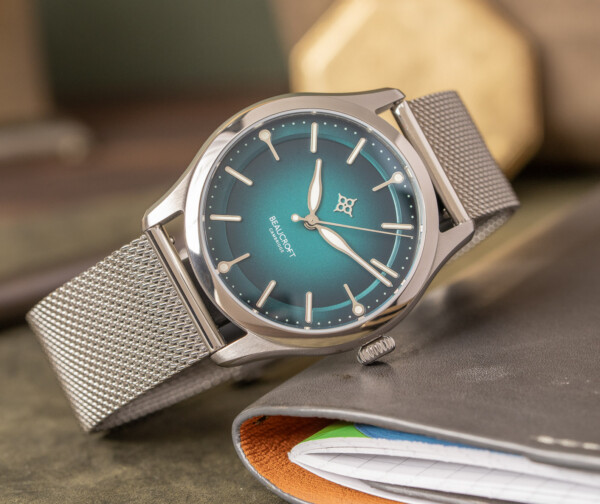
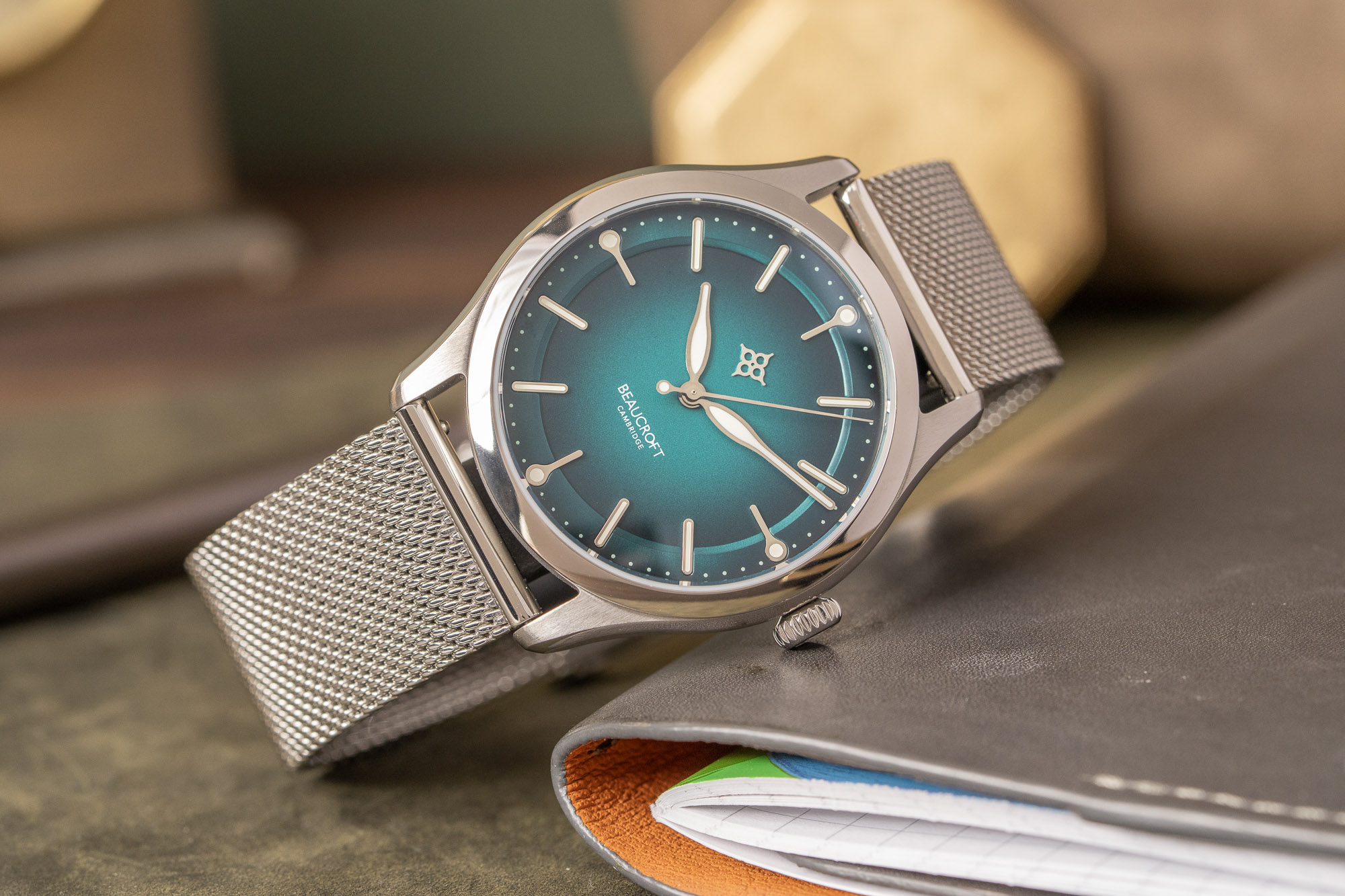
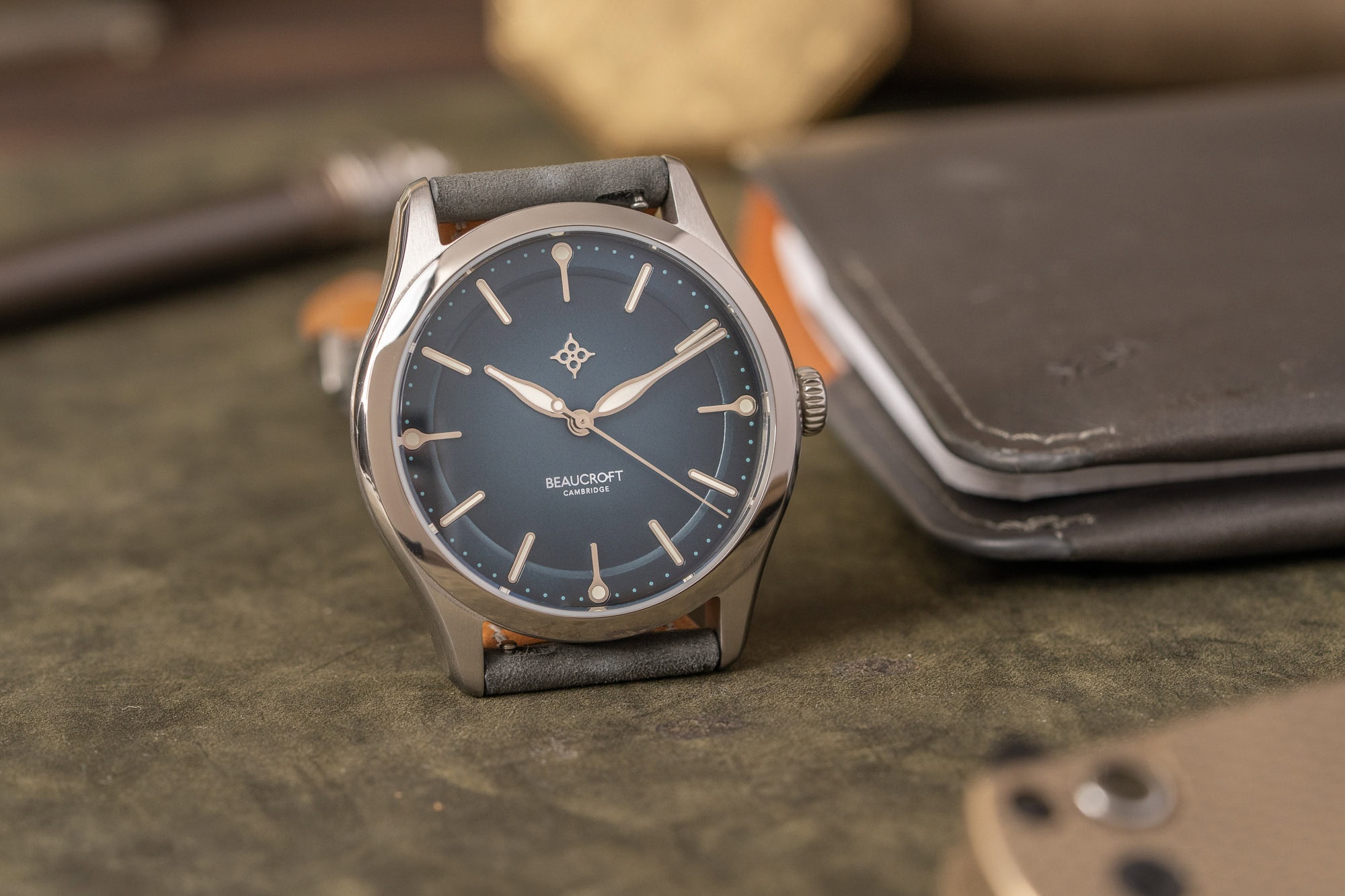
The Arc is an evolution of Beaucroft’s last release, 2023’s Seeker, which laid the groundwork for the watchmaker’s design language. Namely, pill-shaped baton markers with unique markers at 3, 6, 9, and 12 that feature round pips at the end, resembling automotive gauges. Diamond-cut hour and minute hands are shaped like elongated teaspoons, a very British affectation. Both are filled with generous amounts of SuperlumiNova. A stepped section in the dial bisects these markers, and also contains contrasting minute dots; both of these elements break up an otherwise flat dial and bring a welcome amount of depth.
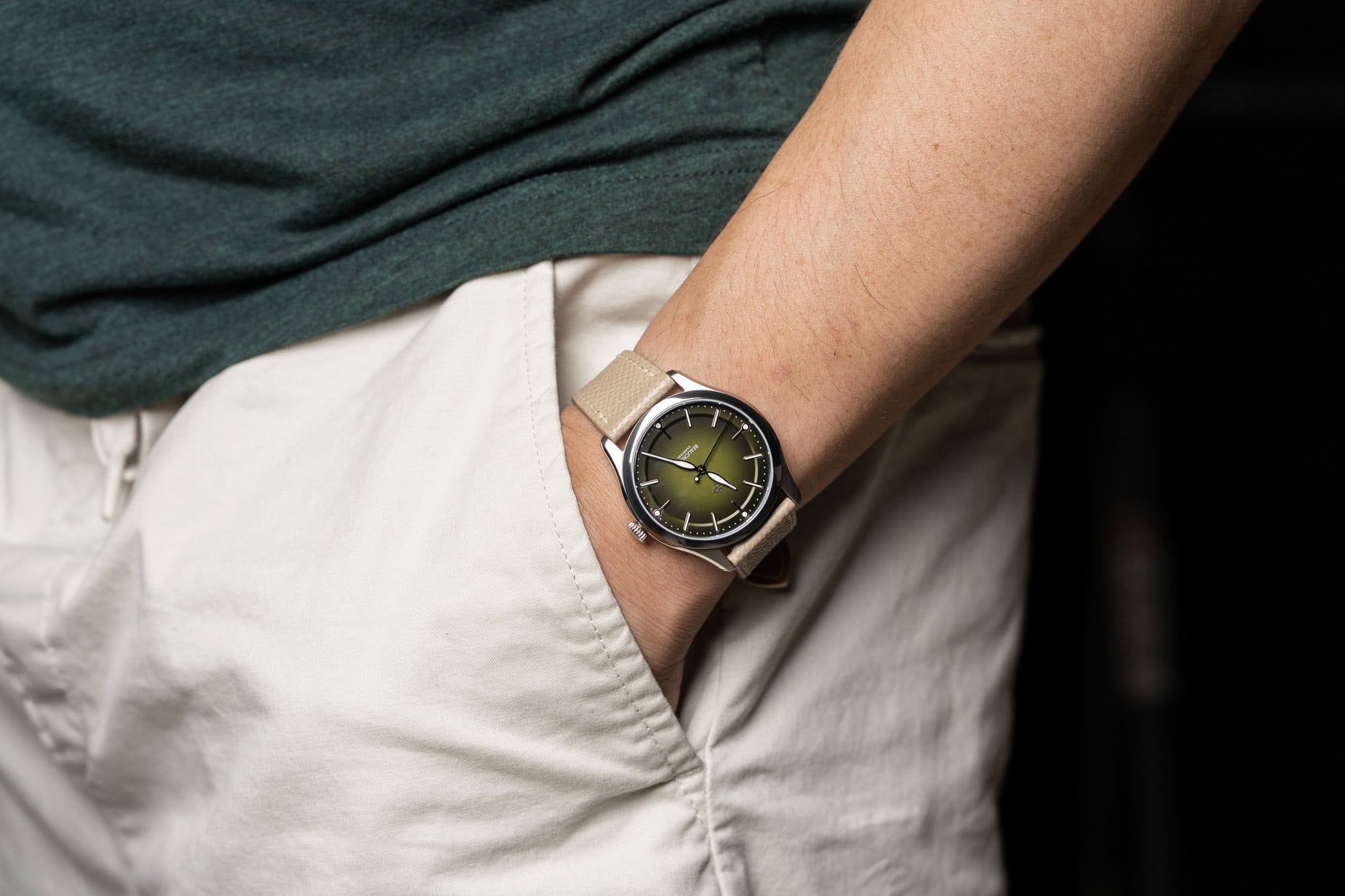
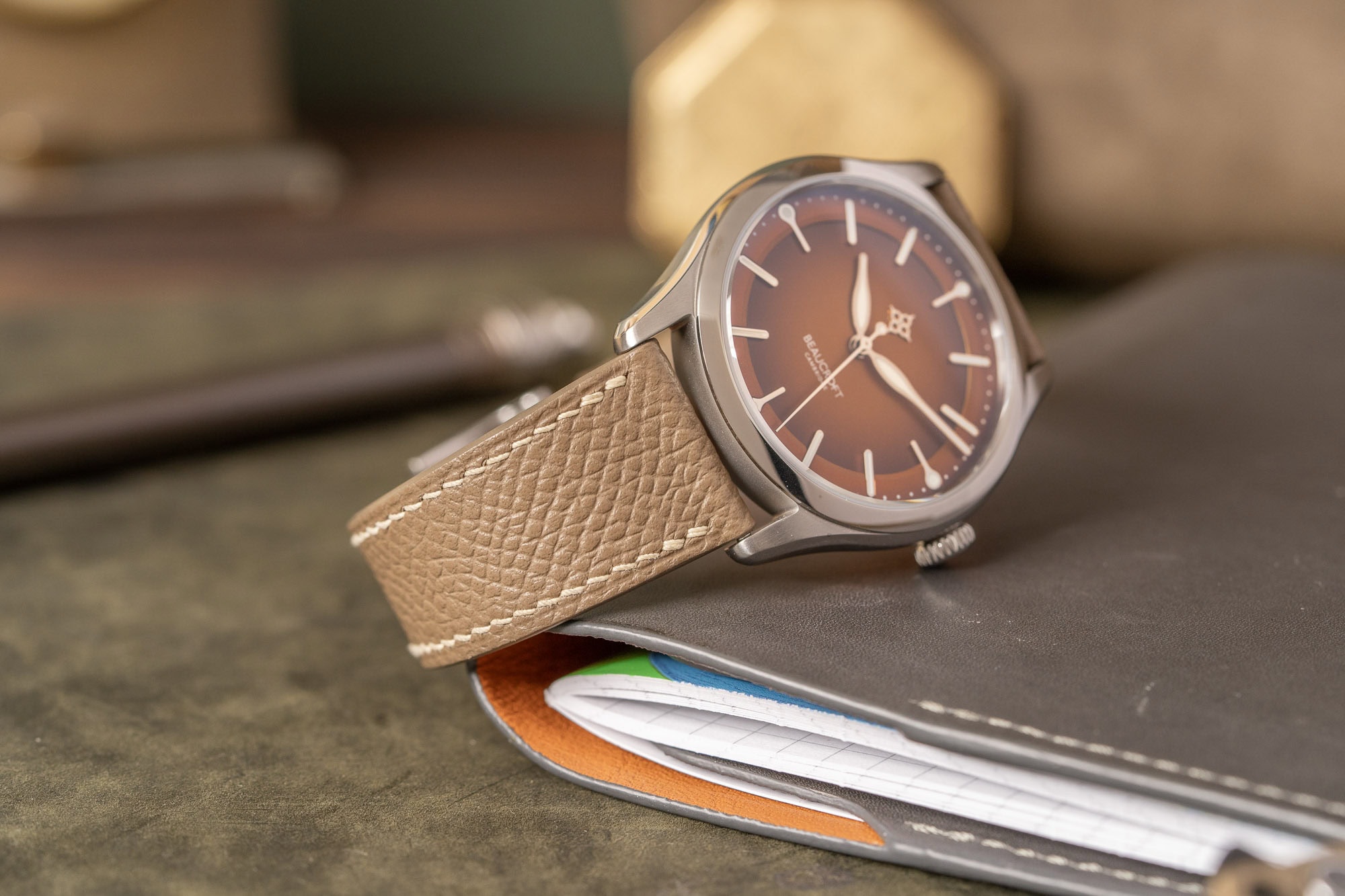
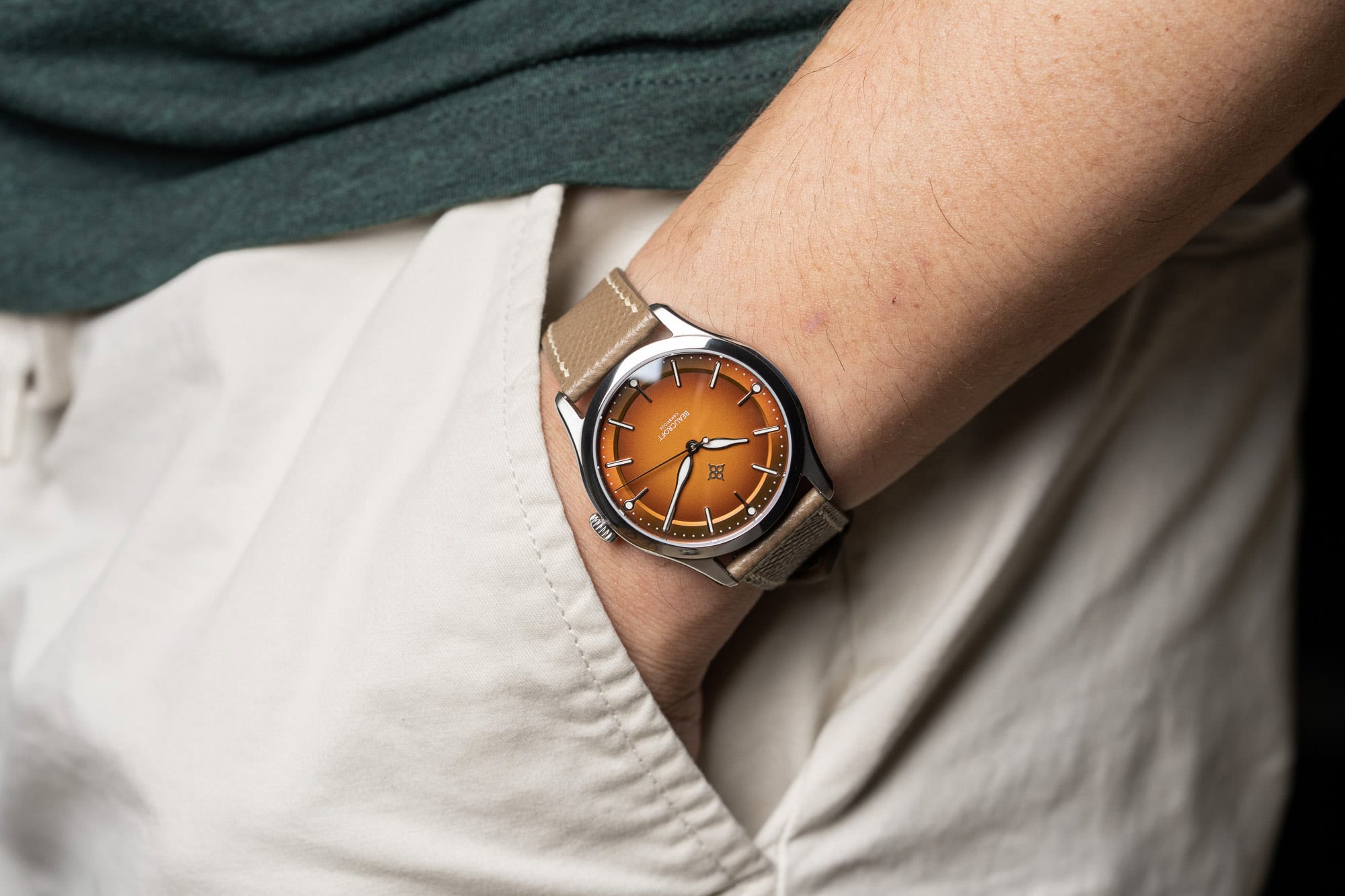
And yet, the first thing that catches your eye about the Arc is the wide-ranging color palette across sunburst fumé coloring that emanates from the center of its dials. Bold, brash, and unmissable dial colors are having their finest moment right now, and here, the brightest color is Burnt Orange, serving as a flagship for the entire range. (Though Beaucroft considers its Teal—a deep and attractive shade more bluer than green—to be their signature color.) The other two colors in the range, Olive Green and Denim Blue, seem too understated that they blend together, with little of the contrast that make the others so distinctive.
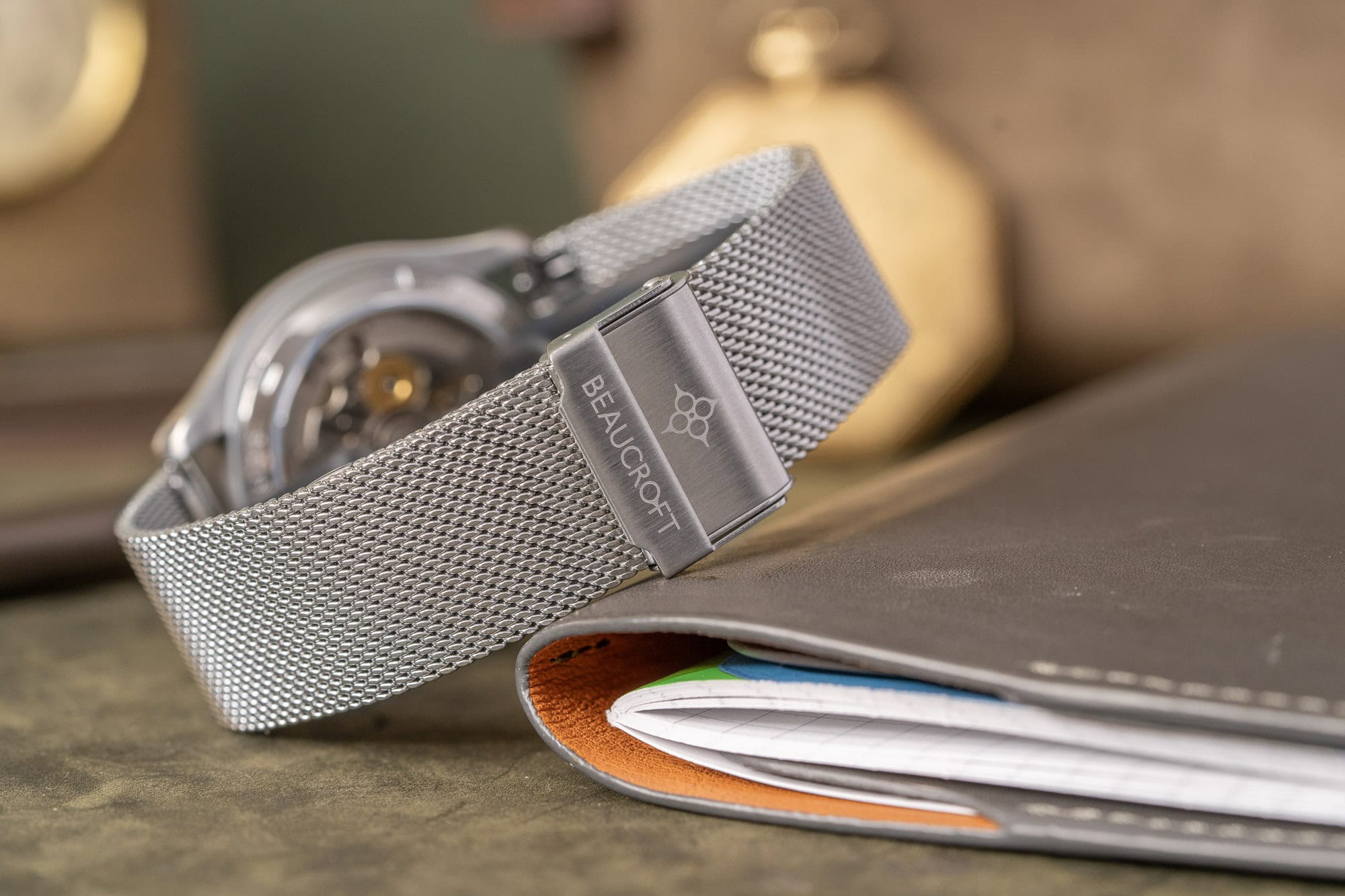
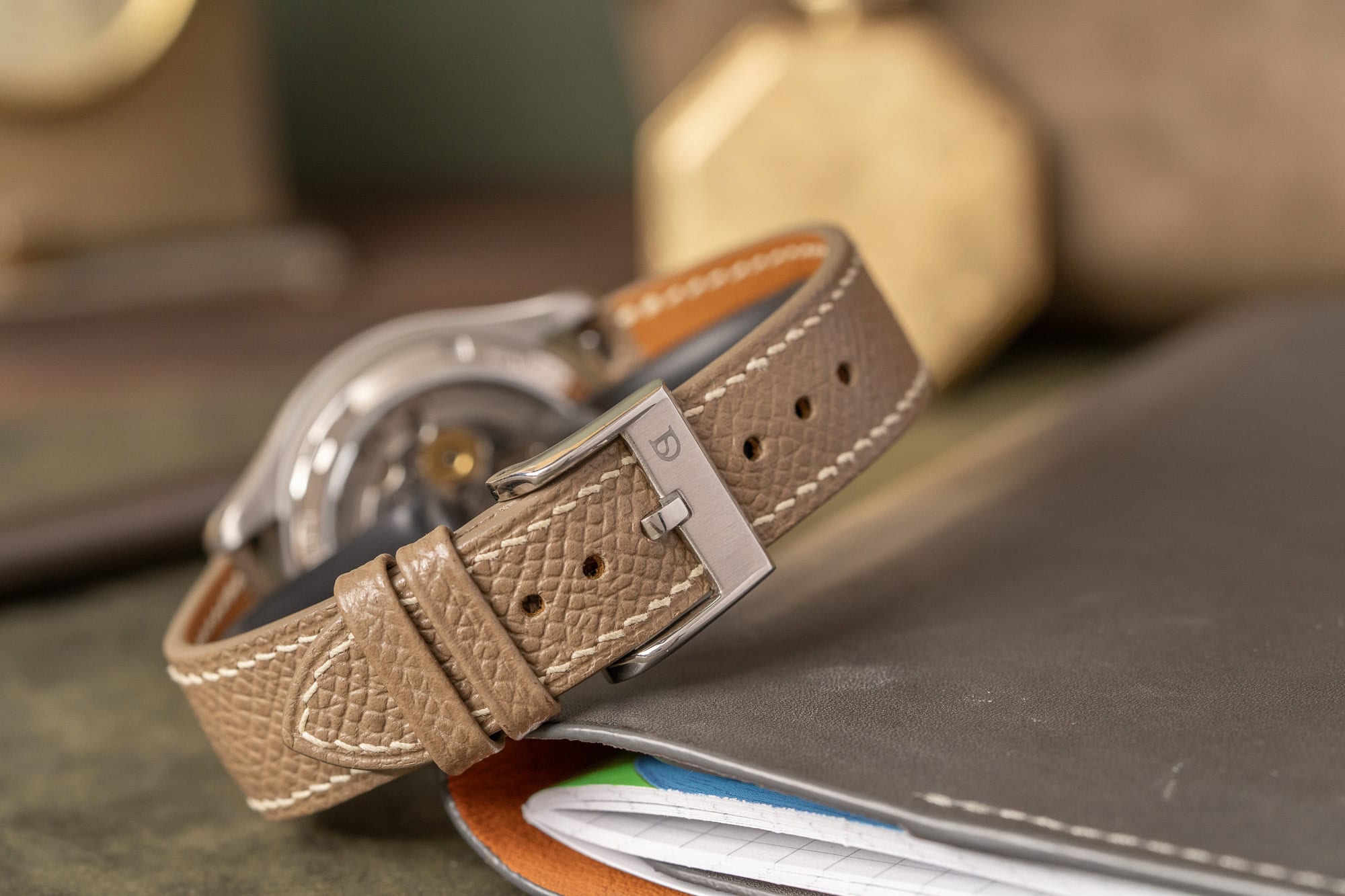
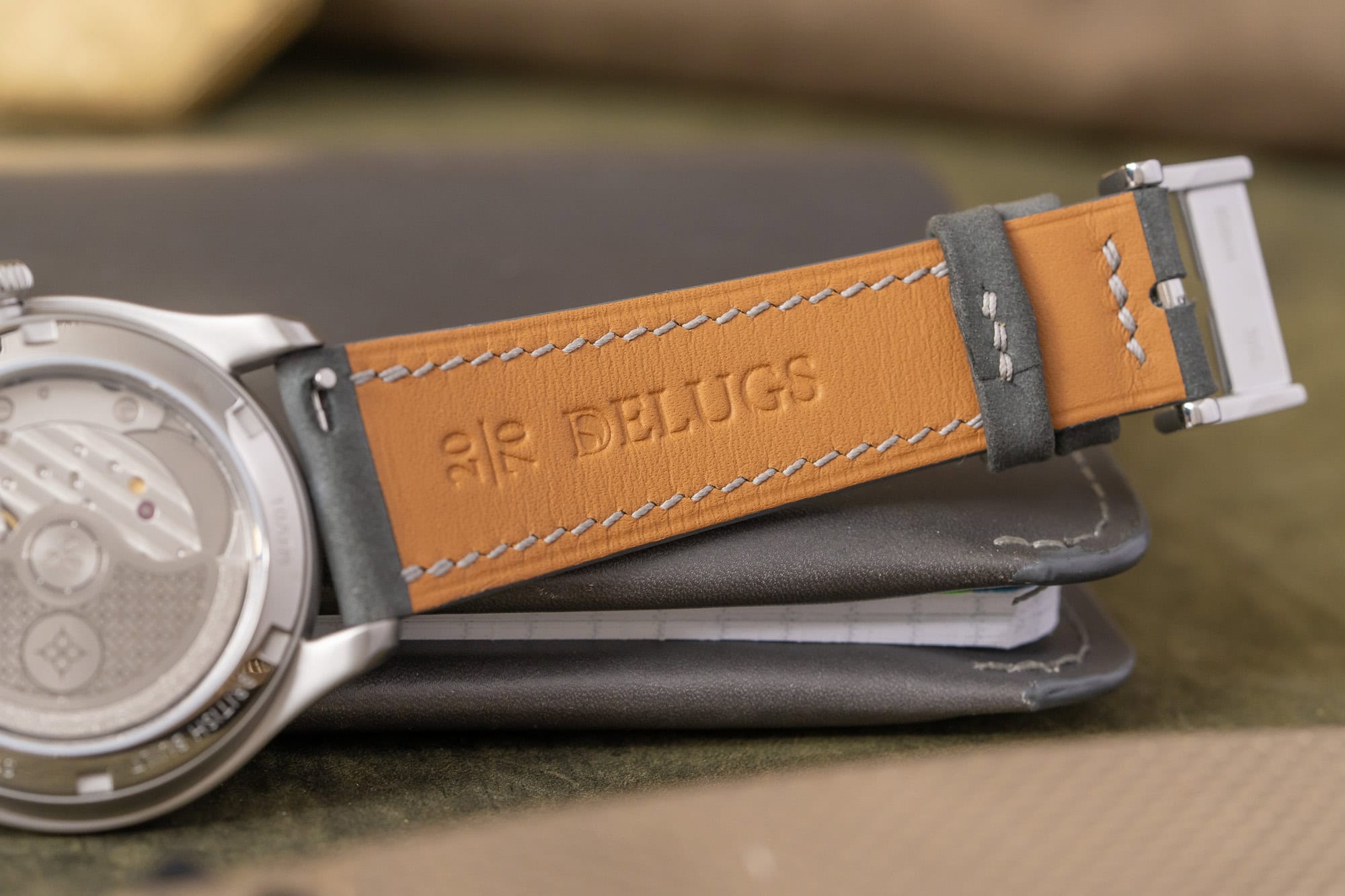
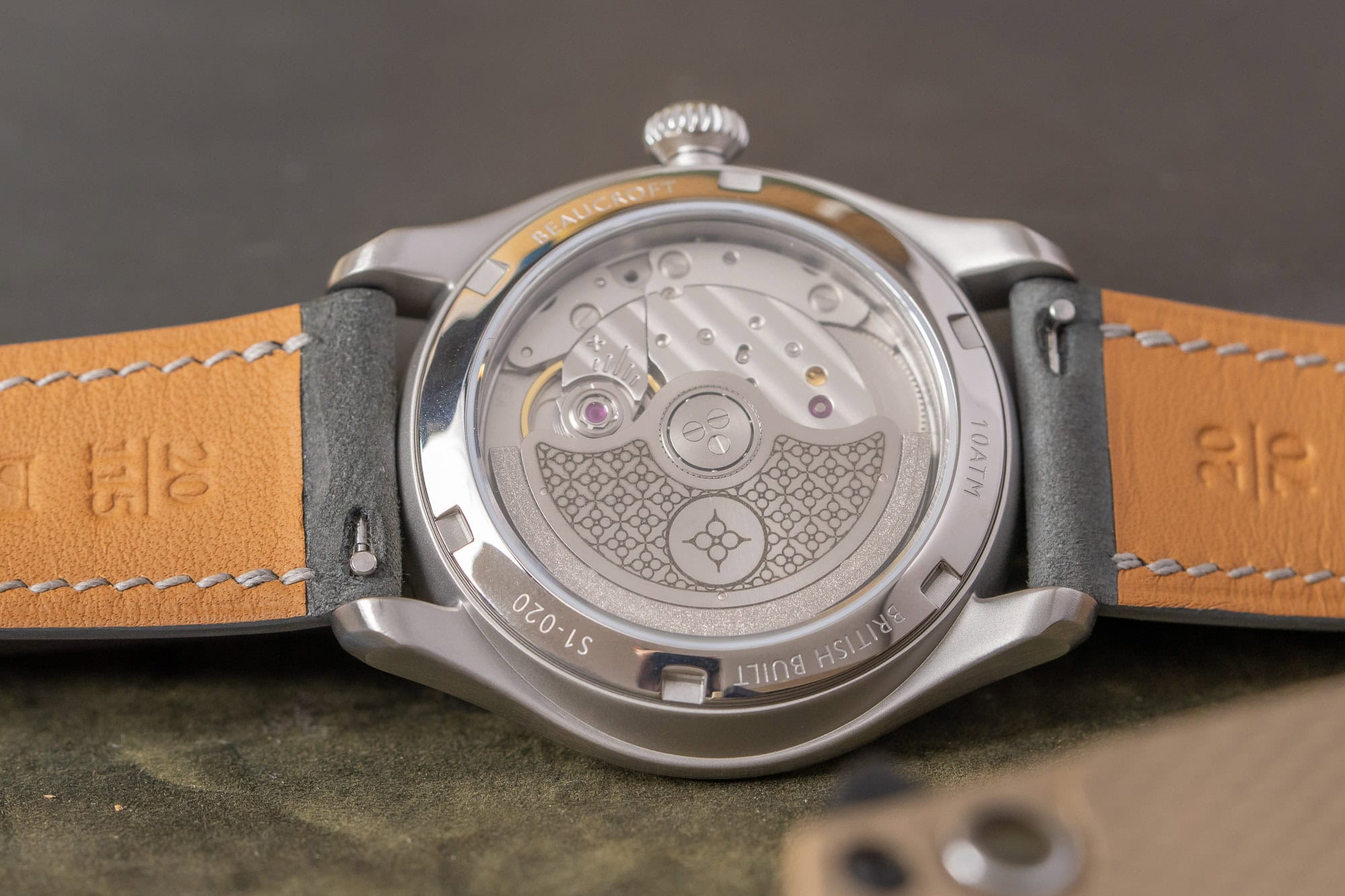
Powering the Arc is a Miyota 9039, a hit among microbrands: it’s a true no-date automatic movement with 24 jewels, hacking abilities and a 42-hour power reserve. Beaucroft regulates it to 10 seconds per day, and through a see-through caseback it imbues the automatic rotor with an engraved pattern of its own logo, which repeats across the half-moon-shaped rotor like Victorian wallpaper.
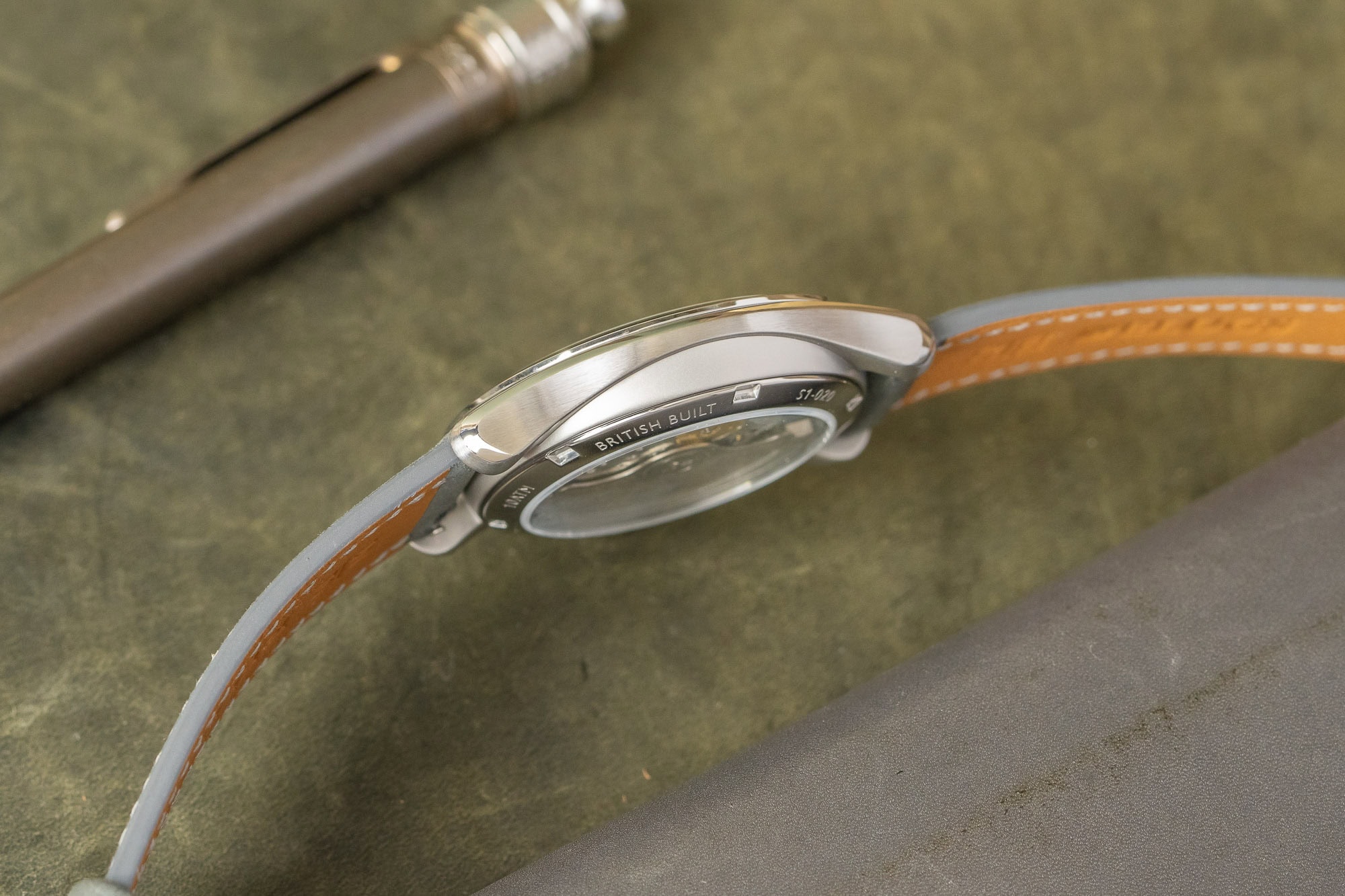
The thinness of the Miyota movement is a perfect match for the Arc, which is just 10.3mm thick, and whose flat and wide profile allows Beaucroft to inject some design playfulness into the case. The sharply rising curve rises from the bottom of the lugs in a single smooth arc, meeting the crown before plummeting back down to meet the opposite lug; evidently, this was inspired by the curvature of the Bridge of Sighs that spans the River Cam, once Queen Victoria’s favorite bridge. Instead of blending in with the sides of the watch case the curved elements jut out with assertiveness, like fender flares on a race car, and turns the caseback and sides into a purposeful design element itself.
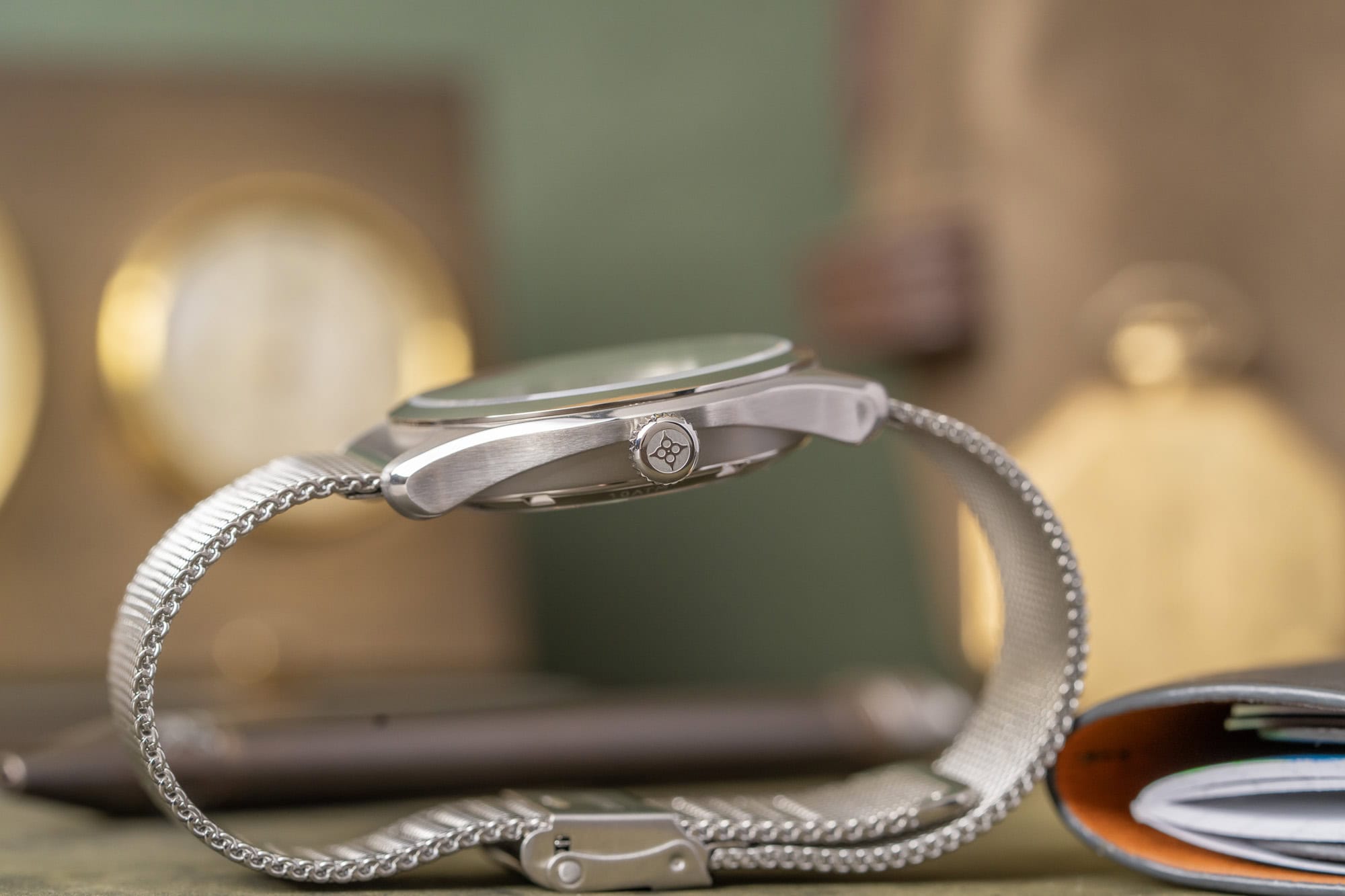
That, perhaps, is the only assertive element of the watch case. The bottom of the watch gets a thoroughly matte rendering, and there’s supposed to be linear brushing across the sides and front of the case. But any evidence of brushing is almost imperceptible. Polished and chamfered sections are meant to break up the shape and delineate these facets. These are thin enough to seem perfunctory. And on the wrist, the lugs don’t seem to curve down enough, floating somewhat awkwardly above the case — which, given how wide and flat the overall watch is, can make it feel like it’s sitting high, no matter how snug the strap is tied to your wrist.
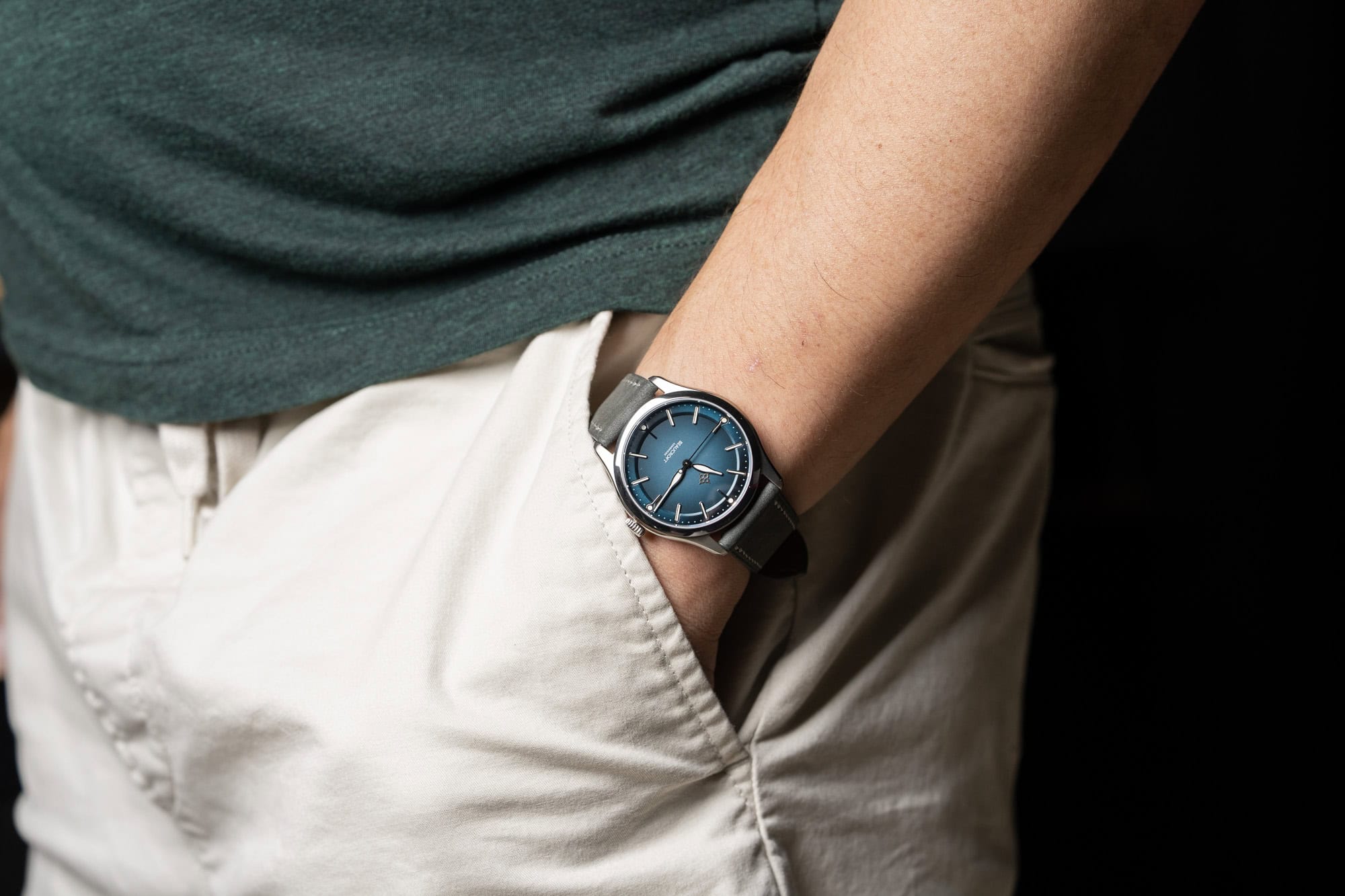
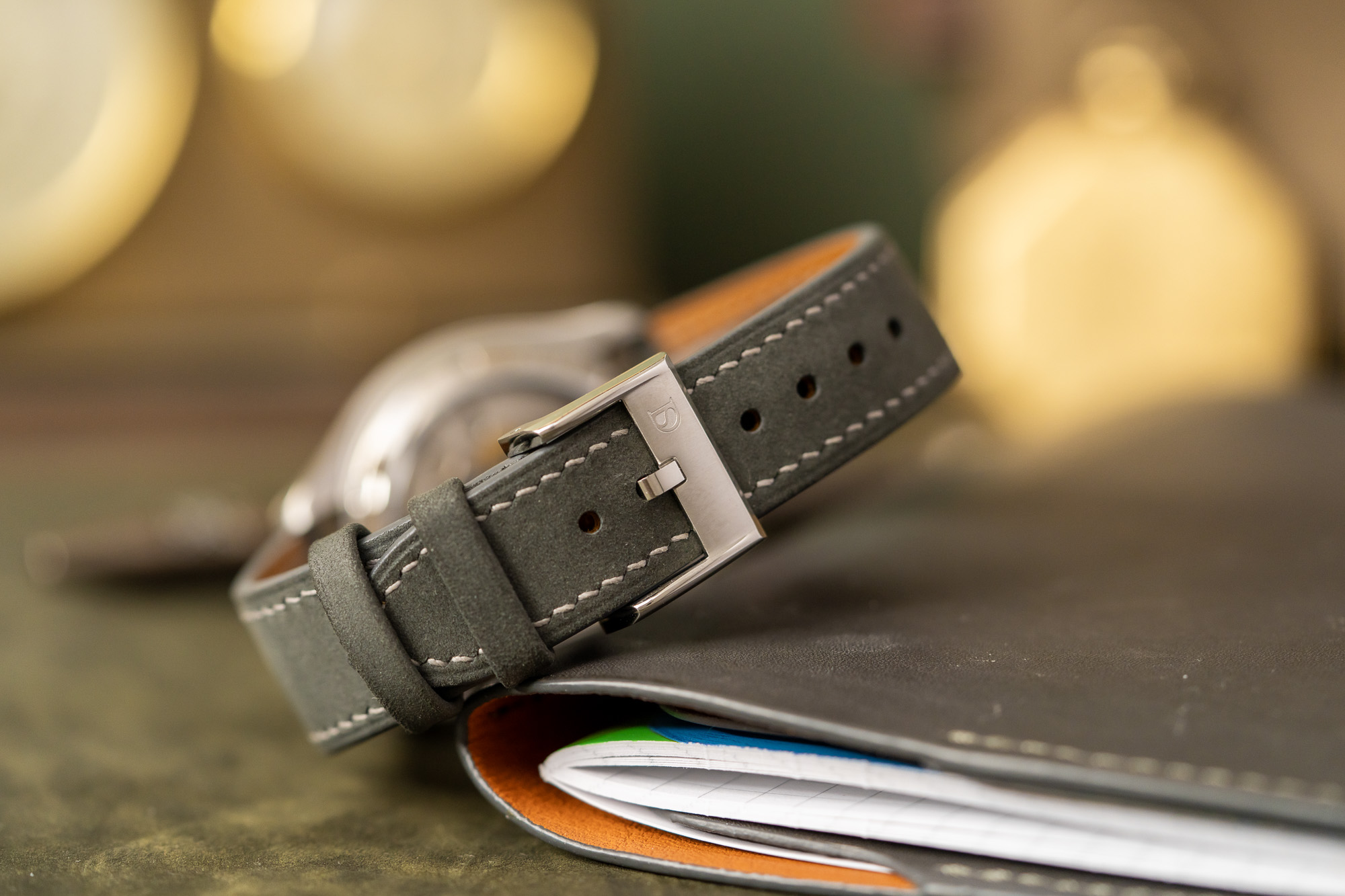
Fortunately, the Arc’s dimensions work in its favor—a compliment to its versatility, something Beaucroft was seeking above the previous Seeker. The straps, made by Delugs in Epsom cross-grained leather (and in the case of the Denim Blue dial, a lovely Nubuck) are thin and beautifully soft enough to contour to any-sized wrist. With a lug-to-lug measurement of 43.5mm from lug to lug, the Arc doesn’t occupy an uncomfortable amount of wrist presence; its 38mm diameter is balanced by a 2mm increase in lug width over the Seeker, from 18mm to 20mm, and in turn it makes for a more balanced and sportier design.
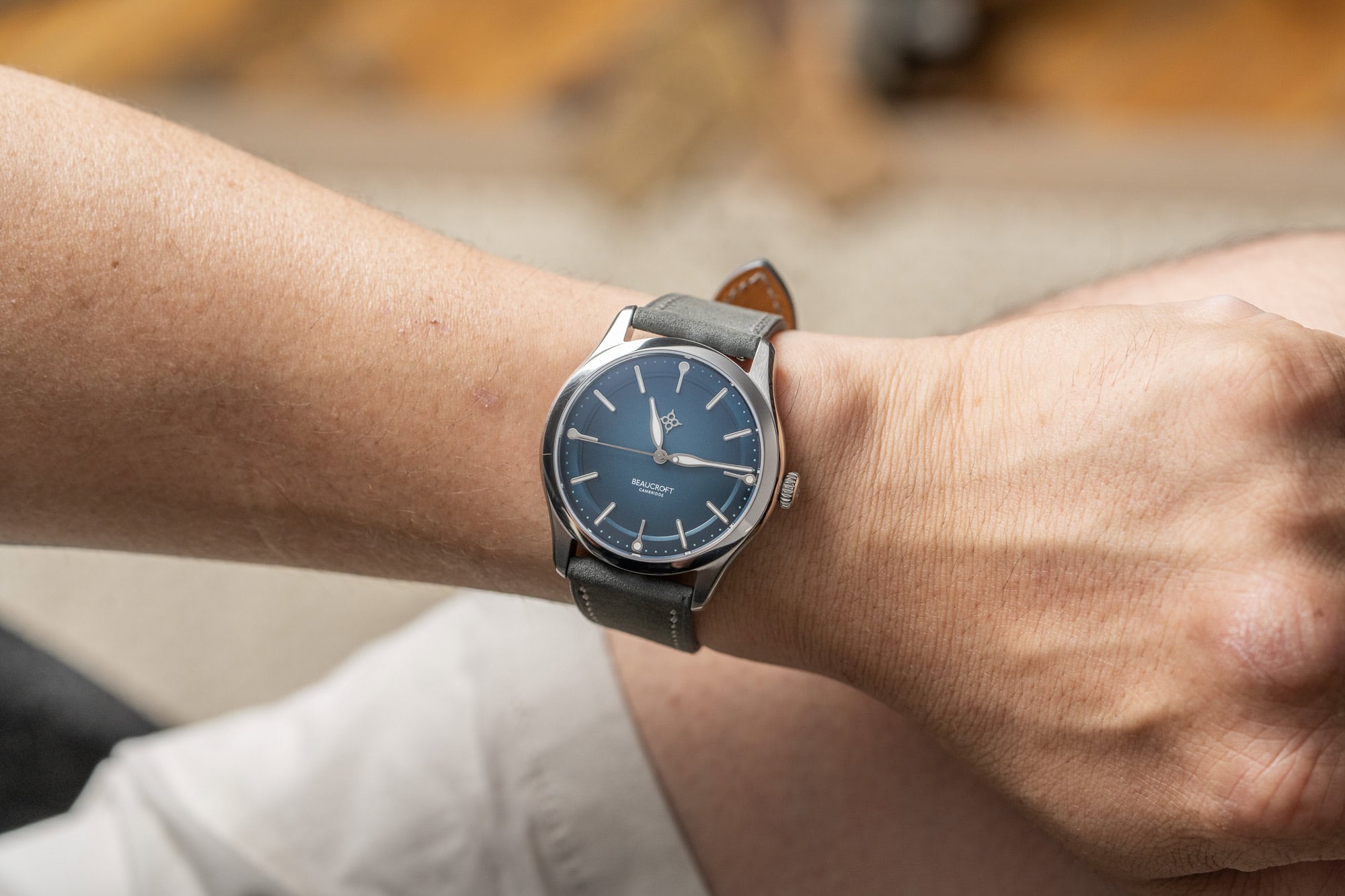
Beaucroft states on its website that the Arc was “created in response to how owners wore the Seeker,” and is thus more in tune with what we expect an “everyday” watch to be. Want something sportier? The brand just launched the Element, a chunkier sports watch with a thick brushed bezel and standard bracelet, and the Contour GMT, which features a 24-hour inner track beneath its dial markers for even more visual depth. Just like the Seeker, the Arc’s 100 meters of water resistance and a hardened case coating (to the tune of 1,200-1,300 Vickers) also speak to this same daily-wear versatility.
But with the Arc, the dial is the star. For the $585 price that it retails at, it’s uniquely compelling: dressier designs from smaller brands pack similar Miyota automatics, but lack the visual wattage. Lorier’s midcentury-inspired Falcon and Astra both start at $599, while the Traska Commuter and Kuoe Royal Smith can both be had for under $1,000. By comparison, the Arc brings a combination of rock-solid movement and an unmissable color-shifting gradient of dial colors delivering a magic show on your wrist, especially in the right afternoon light.
It’s exciting to see this democratization of independent watchmaking, bringing the approachability of established movements to fuel a brand’s inspiration. Beaucroft is drawing on a unified style to distinguish itself in a crowded field, one lacking in aggression or hard-edgedness, and one that seems both as friendly and sophisticated as the official typeface of the London Tube. Its enigmatic logo up top is a four-pointed star interspersed with circles, no doubt reminiscent of imposing church spires; for those of us who weren’t clever enough to attend one of the most esteemed universities in the world, a sub-$600 price is a pittance to study abroad. Beaucroft