
Max Maertens Dishes on His Creative Process in Designing the New MB&F HM12

I first met Max Maertens at Dubai Watch Week last year. The young designer already has a storied career under his belt, working on projects with brands like Chopard, Vacheron Constantin, Cartier, and MB&F, where he started out as an intern. Here, something clicked. For several years, Maertens firmly fell in the “F” or “friends” category of the brand, collaborating with MB&F and L’Epée on the T-Rex clock before being given free rein to create the TriPod and the Orb. But his legacy with MB&F is only just getting started. Through these projects on several horological objects, the brand’s founder Max Busser saw something special and took him under his wing as his protégé and future successor. Today, we see Maertens’ first take on a more traditional MB&F wristwatch – well…. sort of.

Making its grand entrance is the HM12 Guardian, the next chapter in the brand’s horological machines. It started with a “simple” brief (though we all know, nothing MB&F does is simple. “I was in Max’s office, and he said to me,

‘wouldn’t it be cool to create a watch that’s also a robot’s head?’

And somehow, immediately in that moment, a vision popped in my mind of how it should look,” recalls Maertens. “In the end, I would say this final concept of the HM12 is about 80% of what I had in my mind from that first idea.”
Yes, the concept still originated from the mind of Busser himself, but the design of the new HM12 Guardian – a wristwatch with a “very elaborate watch stand” that holds the case and transforms it into a robot desk clock – is the brainchild of Maertens. “I still don’t really have words to explain my design process and what makes an MB&F and MB&F for me,” Maertens admits. “It’s not really about the materials or particular shapes or lines or design language, it’s more about the concept,” he continues. “It needs to make you smile. It needs to evoke your inner child. And it needs to surprise you. But mostly, it’s just a gut feeling.”

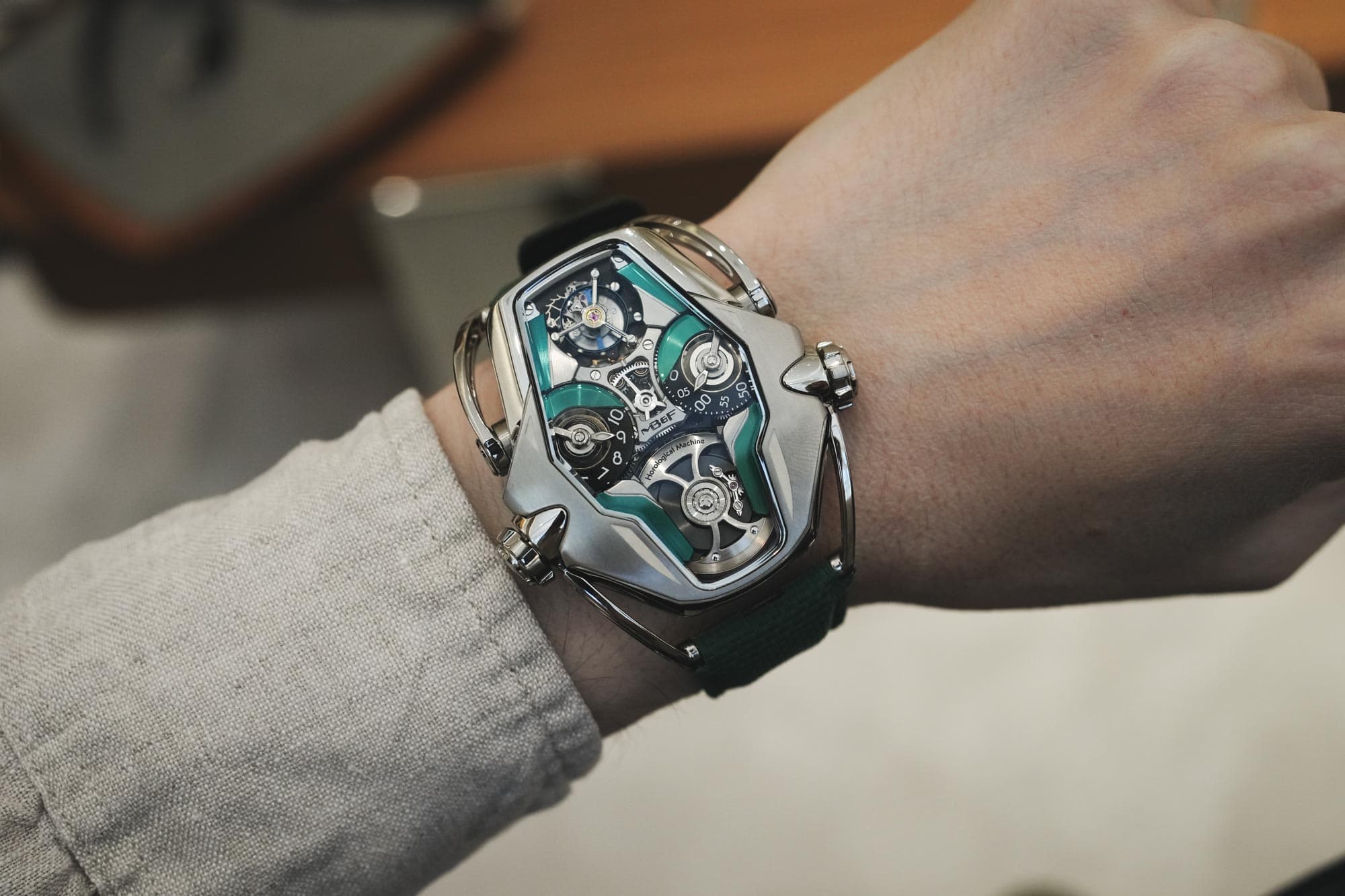
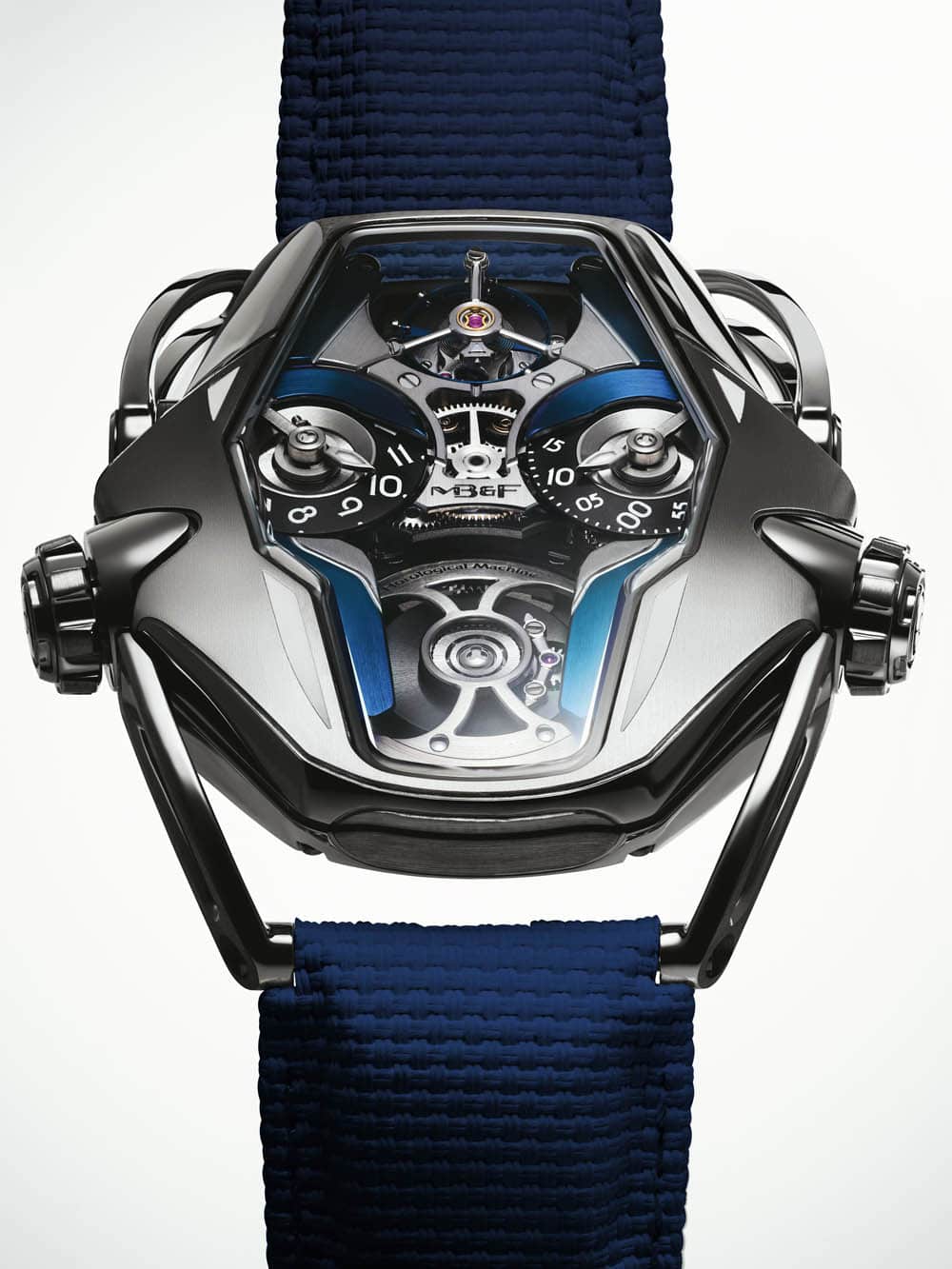
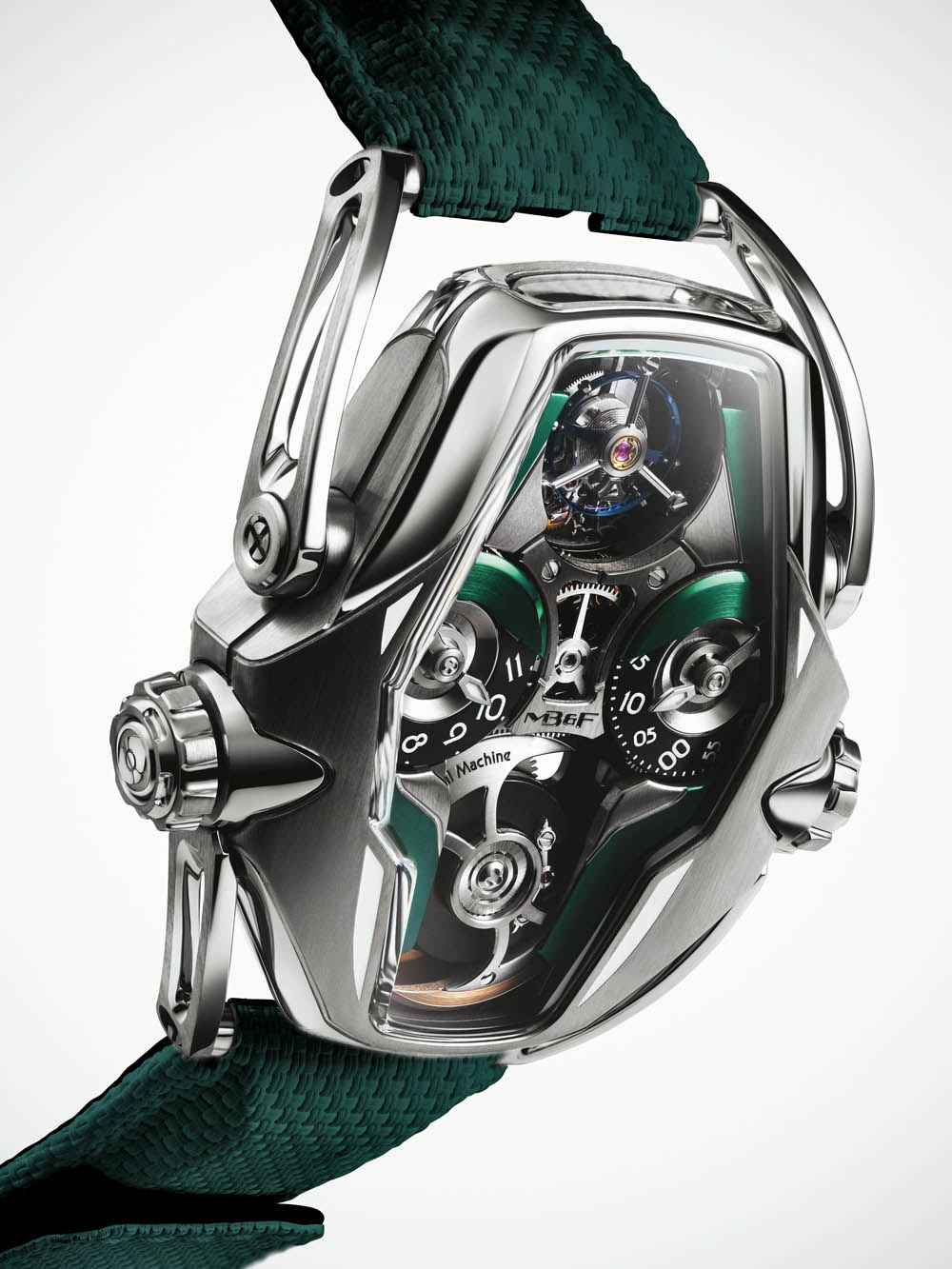
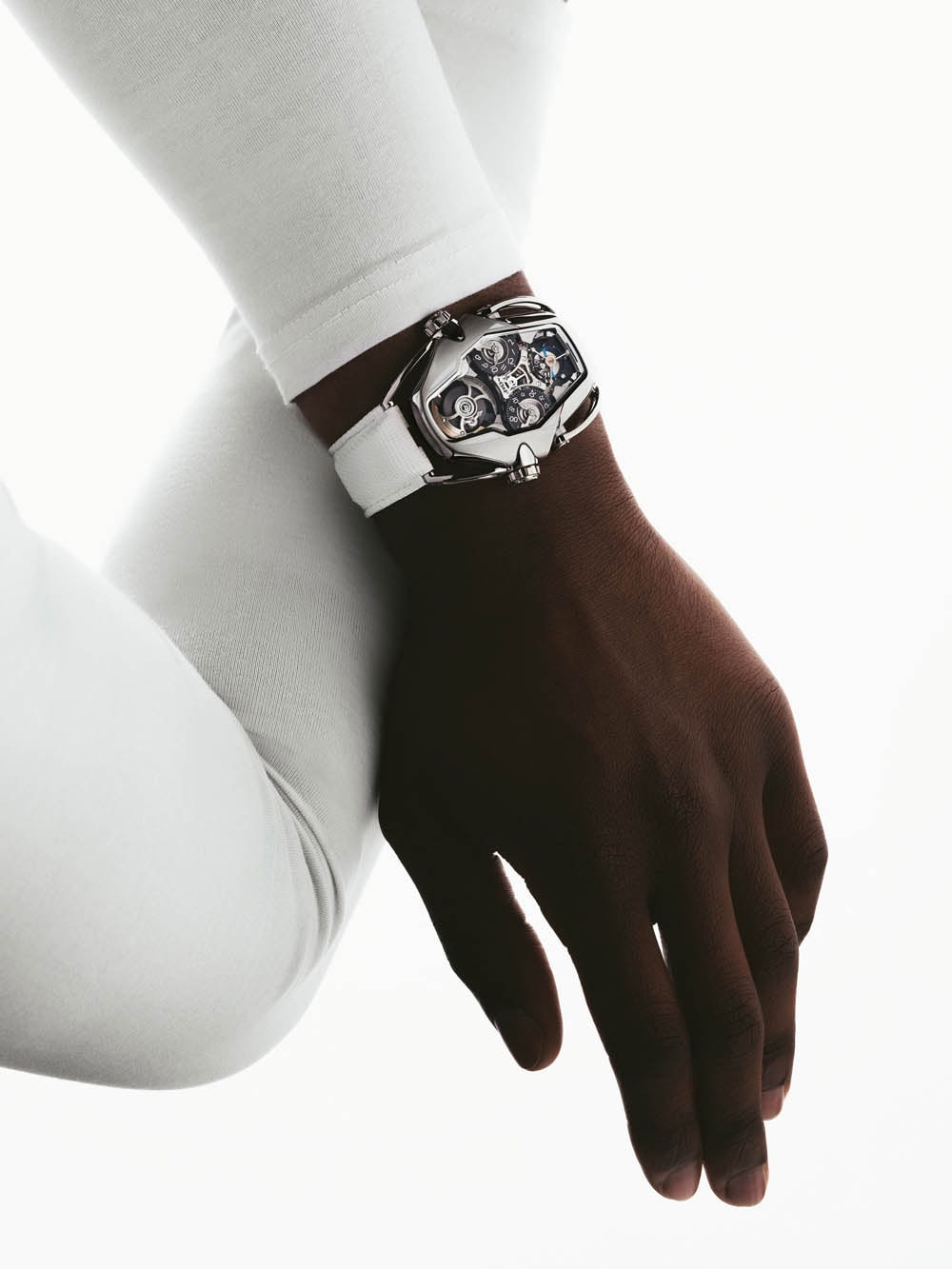
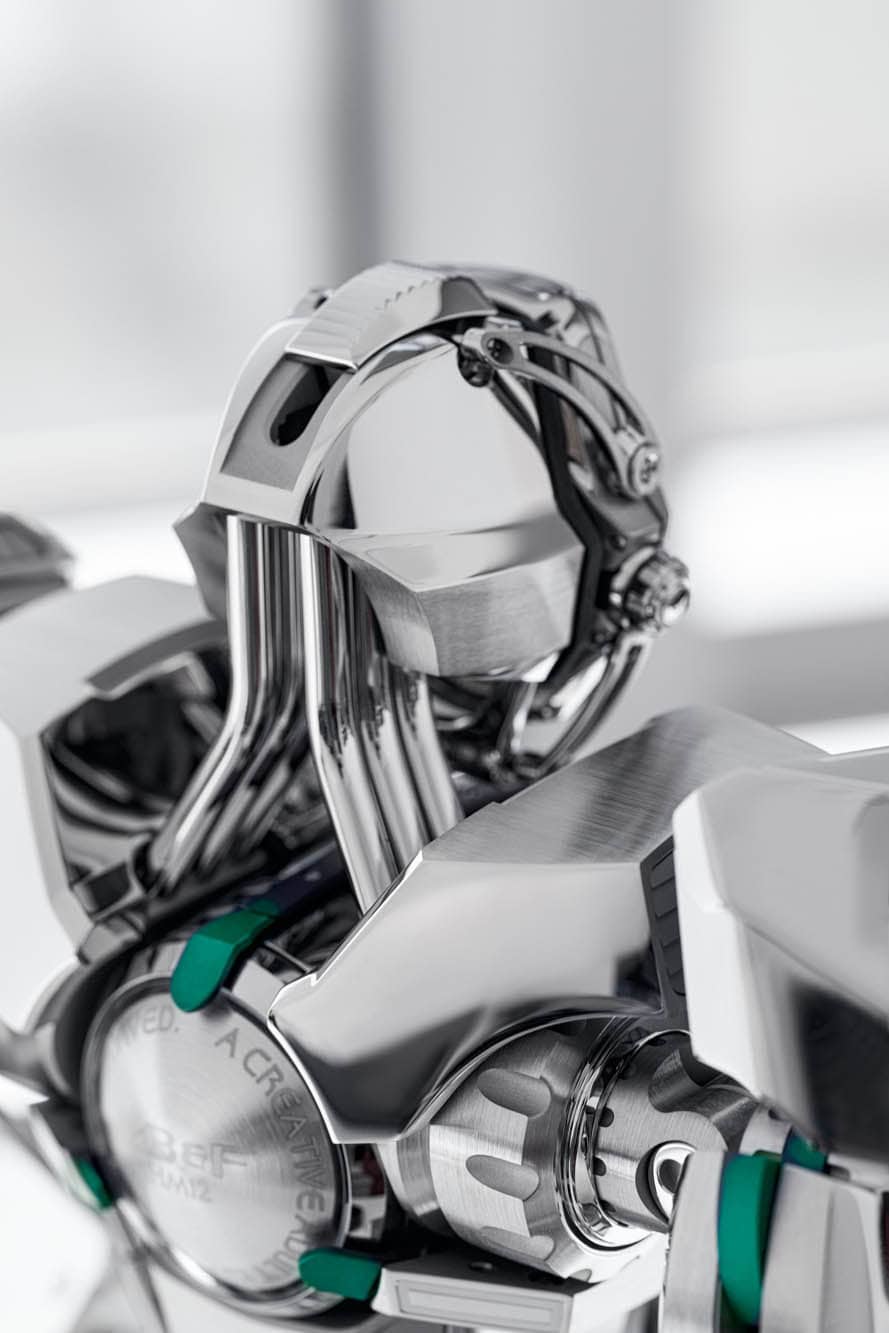
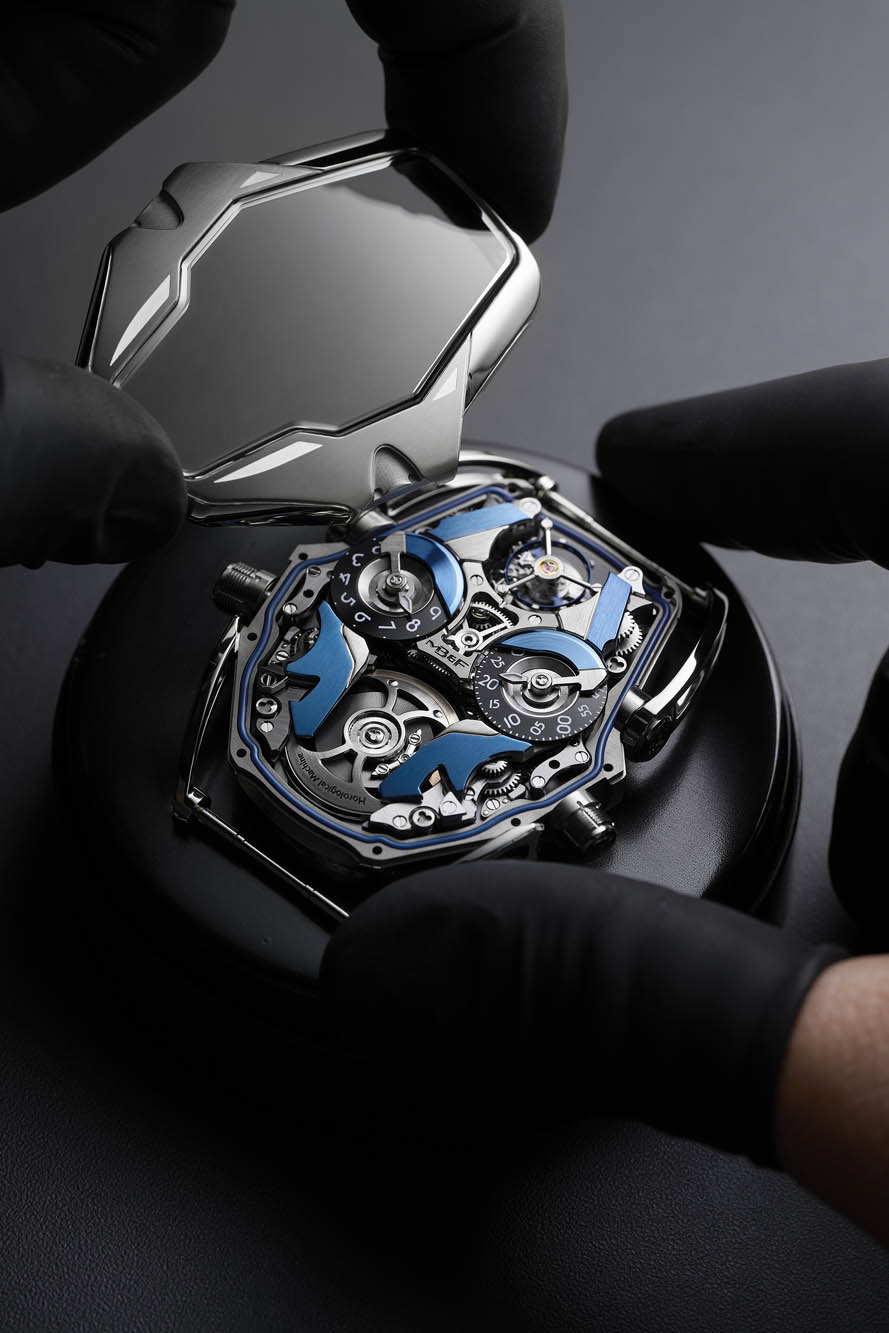
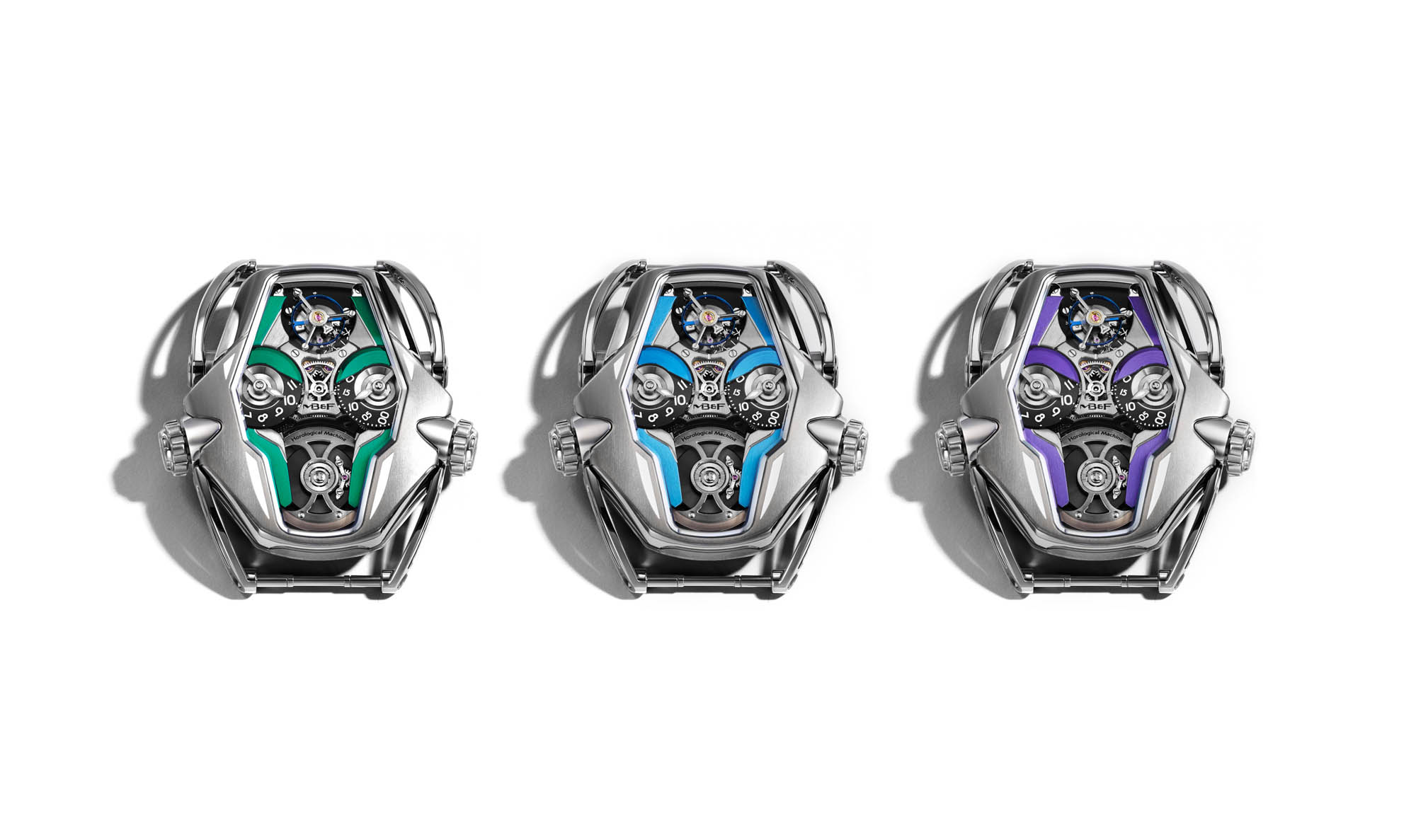
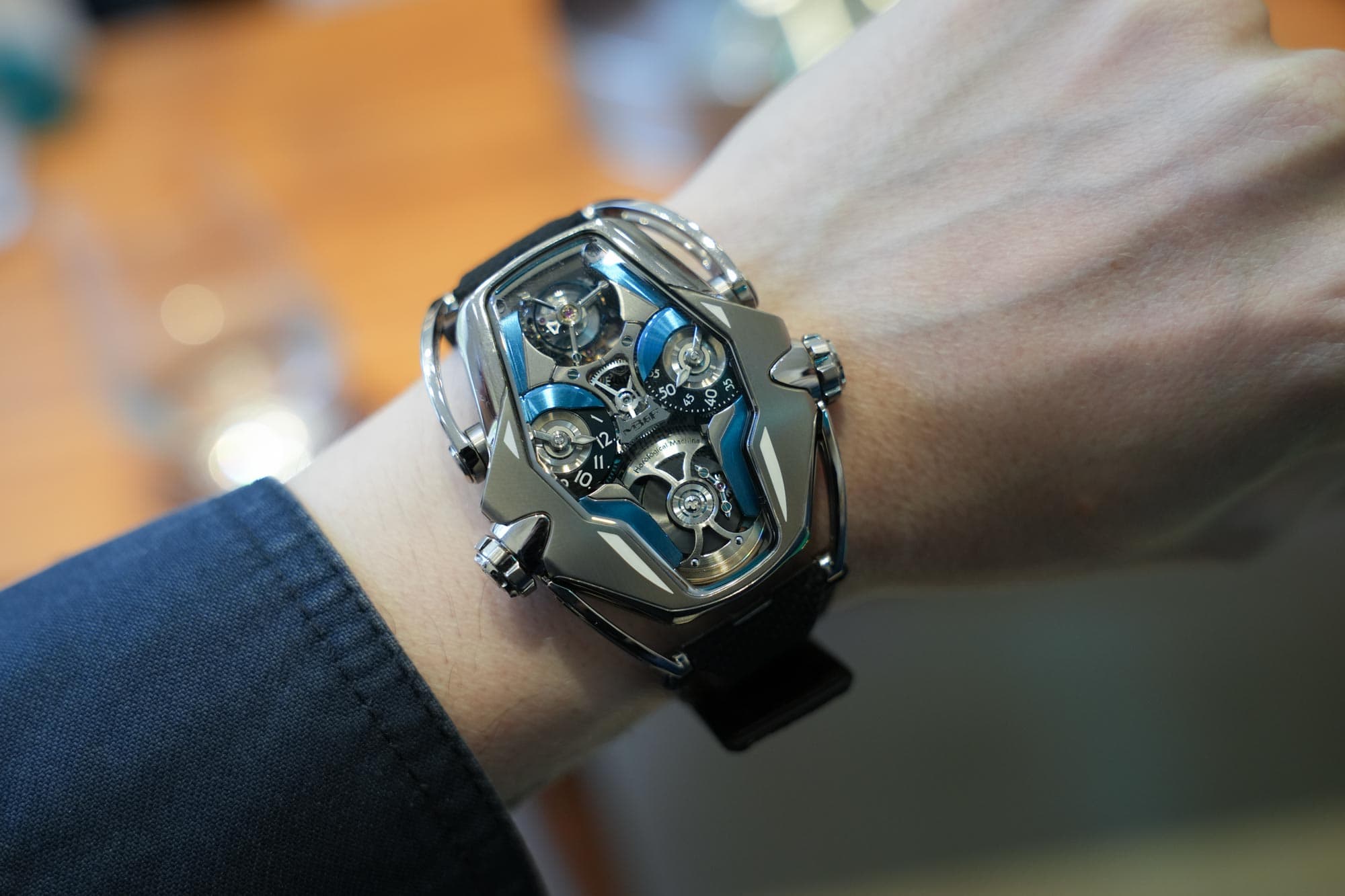
That visceral feeling is brought to life in a highly complex wristwatch featuring a flying tourbillon “brain” at 12 o’clock, symmetrically placed jumping hours and trailing minutes at 9 and 3 o’clock respectively forming the eyes, and a double-sided micro-rotor “mouth” all protected by a novel “face shield” complication. “The biggest challenge was combining two independent systems into one movement with two independent minds bringing them together,” Maertens explains. The genius of creating cohesiveness between these two systems were two of MB&F’s leading movement engineers, Pierre-Alexandre Gamet and Thomas Lorenzato.The newly conceived face shield complication was built completely from the ground up and consists of over 200 parts alone, making up one third of the total movement components. Activated via the left crown, the shields move in a continuous, linear way. The wearer controls how exposed the face remains and can stop at any point, from fully visible to concealed. The crown is declutching, and once the shields reach their stop, it disengages.
Advertisement

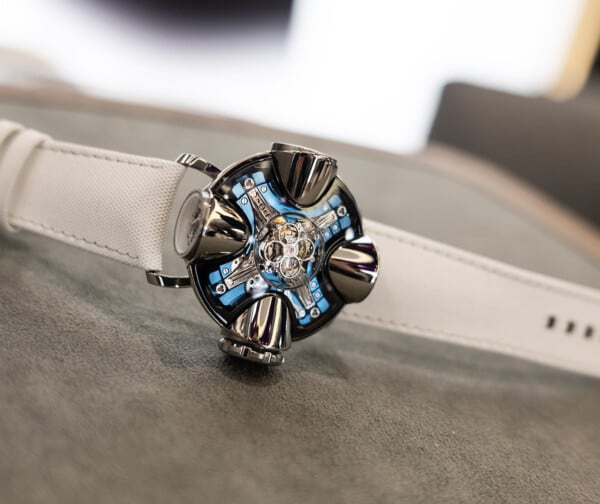
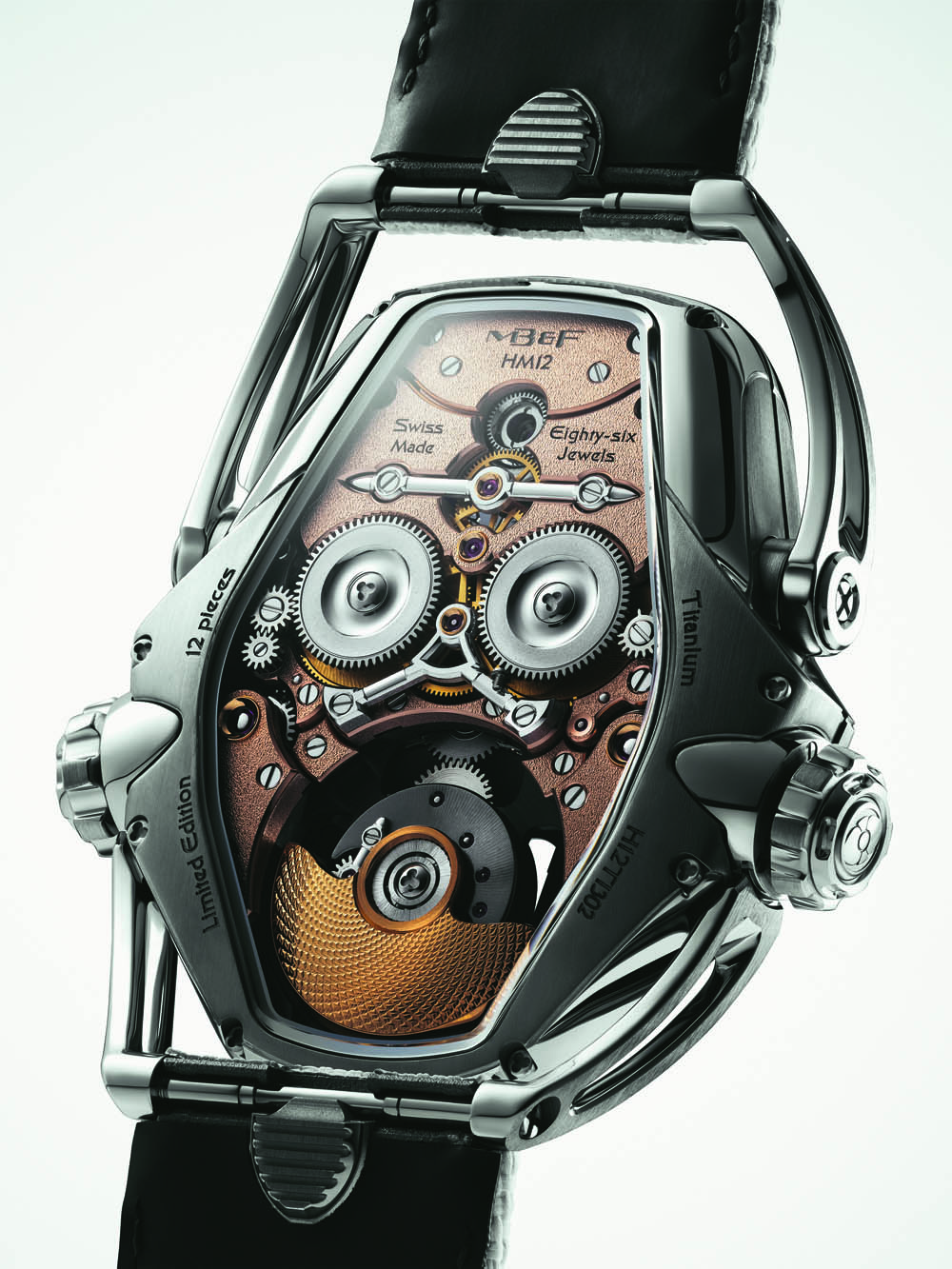
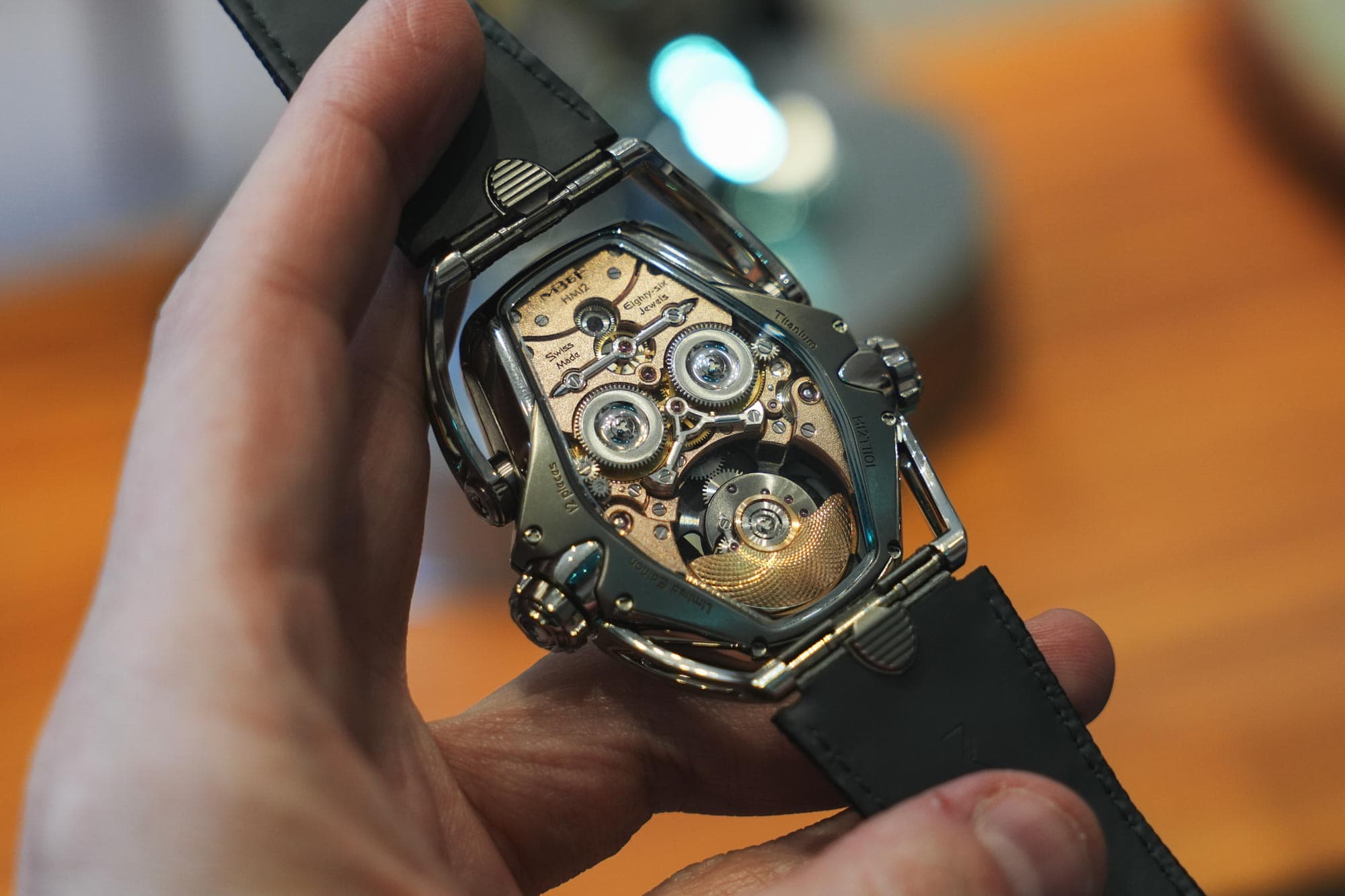
On the other side of the head, you get a glimpse of the movement itself, which follows a more classical and restrained horological language particularly in comparison to the futuristic nature of the rest of the object. Here, another “friend” comes into the mix, with Kari Voutilainen and his team executing the rear rotor, which features guillochage applied to a curved, spherical surface rather than a flat plane. Altogether, the movement retains the proportions of a human face with balance and symmetry, just like the dial side. “Symmetry is something very often found in nature – human beings are symmetrical. For this project and, when I think about it, actually all the projects I’m working on right now, there’s an element of symmetry – I don’t know why I’m so drawn to it,” confesses Maertens. As we went on to discuss this topic a bit more, he expressed that perhaps he should, “not focus on symmetry all the time, otherwise it could get boring,” but, on the contrary, I think that nods to symmetry could become a part of Maertens’ signature in his MB&F creations.

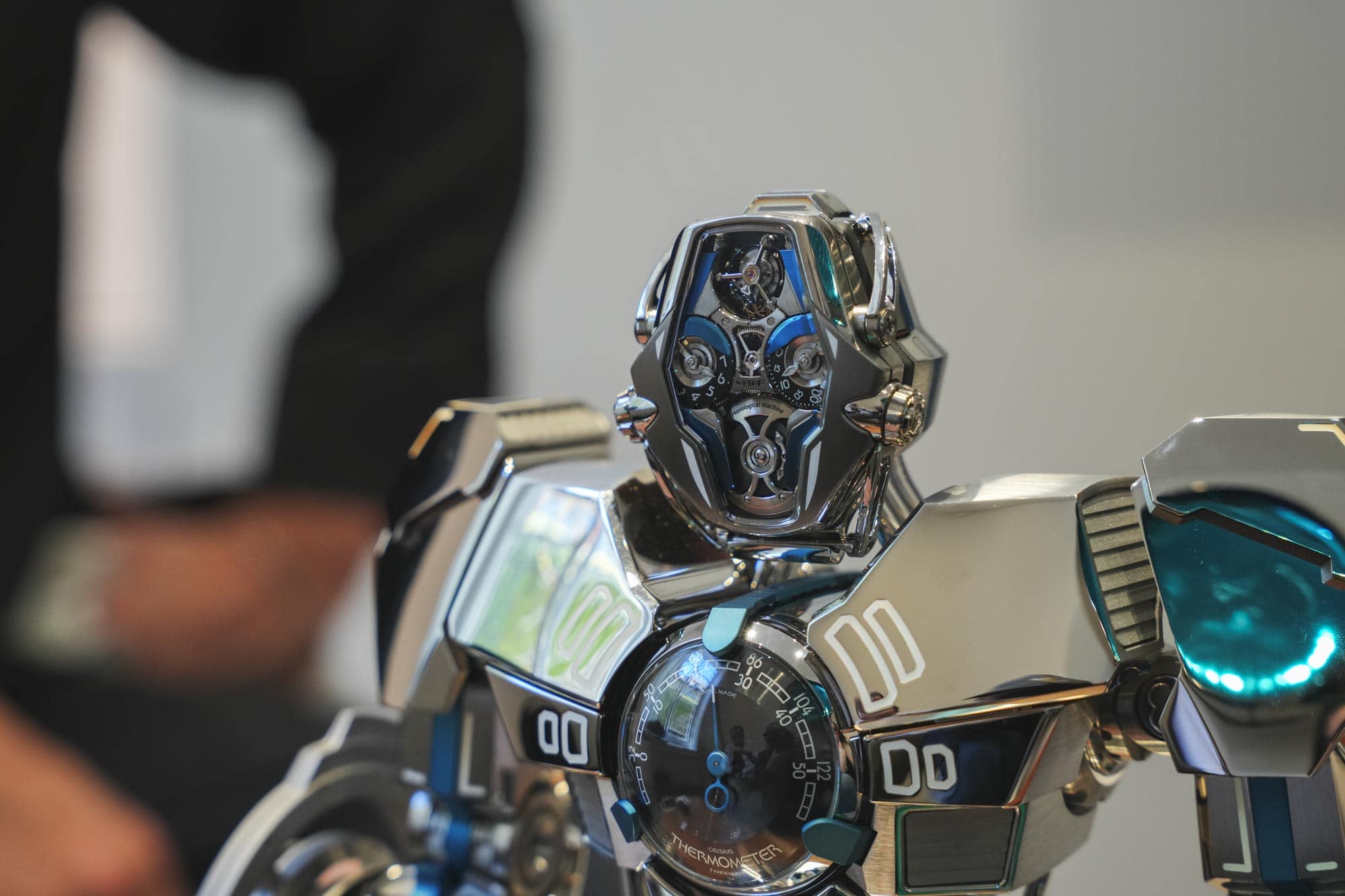
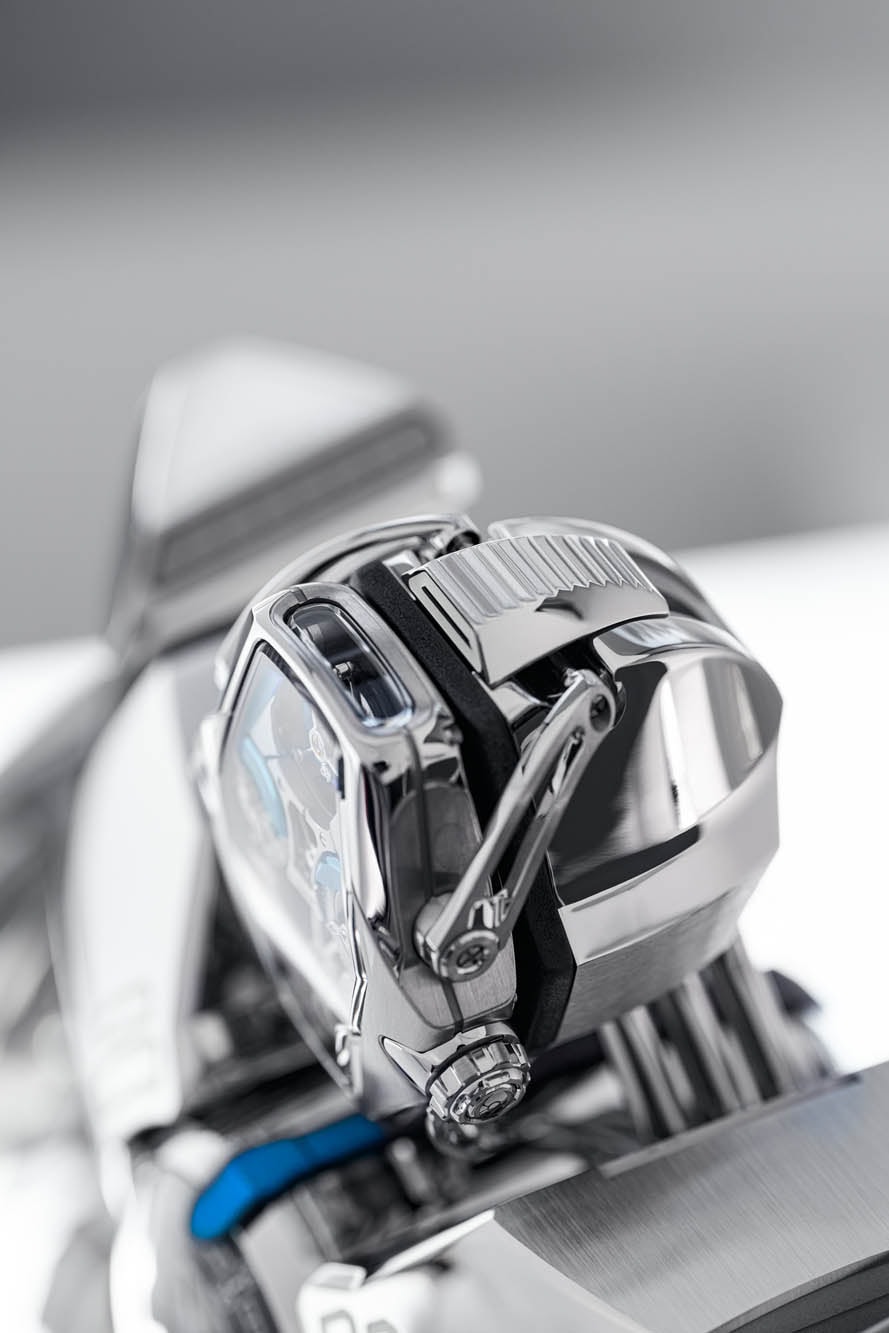
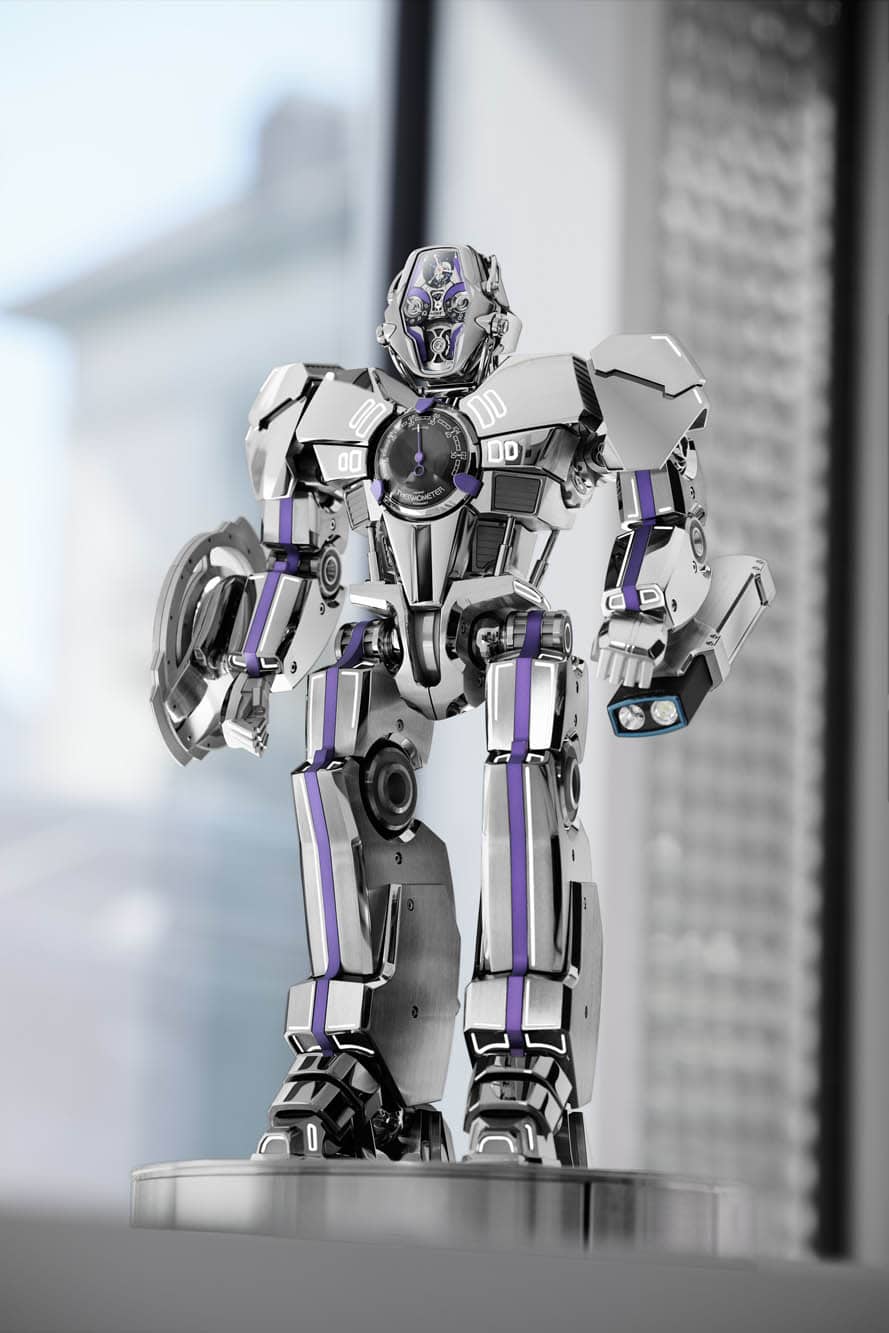
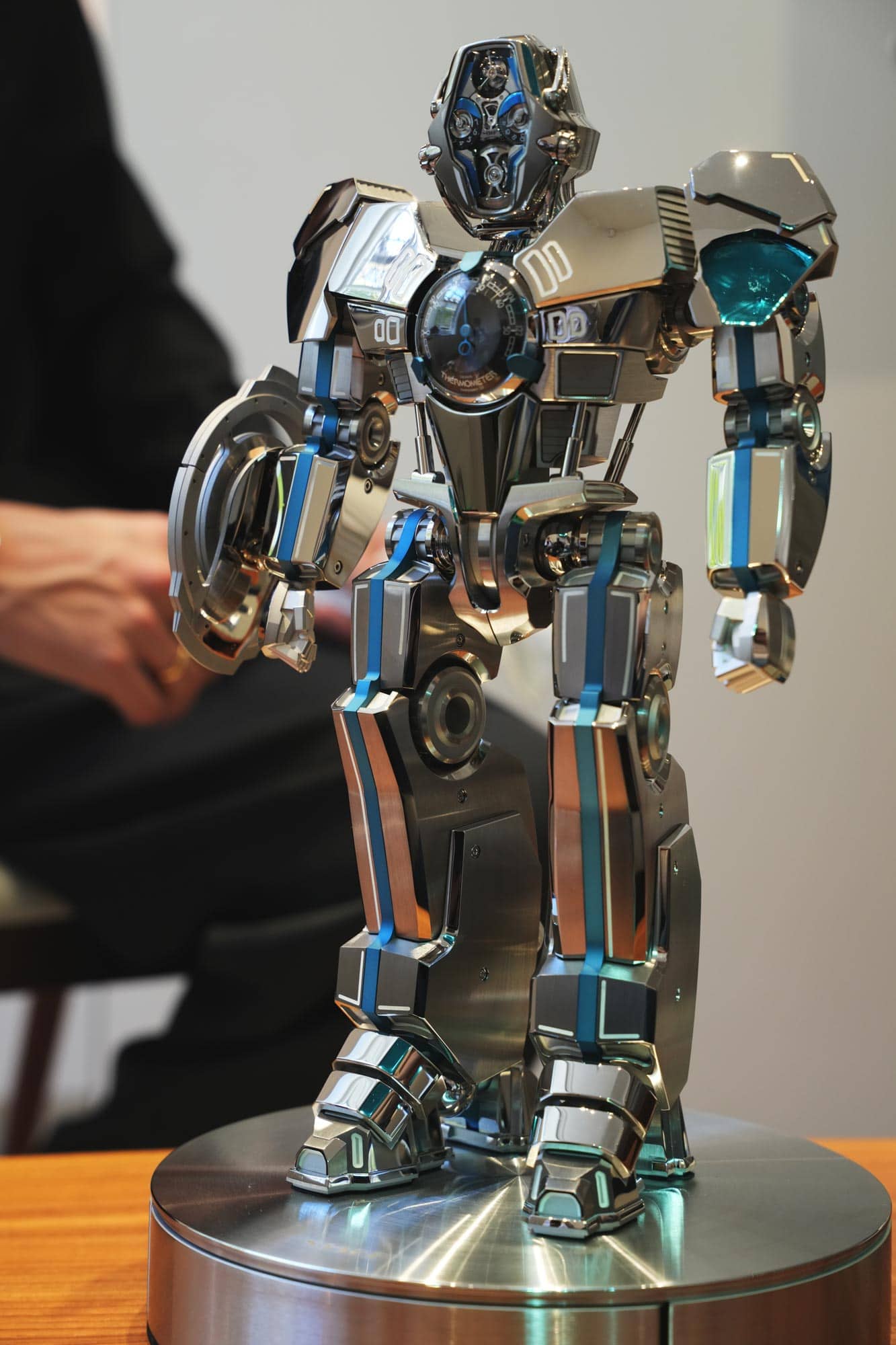
Moving on to the “guardian” of the HM12, the team enlisted the help of L’Epee, their longtime clockmaking partner. “In the entire design process, I reworked the body of the robot about five different times from scratch,” Maertens explains. “I finally landed on a 3D print of this piece,” he gestures to the HM12 Guardian, “and I knew it just felt right. So, we gave my plans to L’Epee – it turned out to be the most complex object they have ever created.” Composed of 755 components, the guardian is magnetically fixed on a base that conveniently features a drawer for the watch’s straps. The robot stands steady, immobile from the waist down and with a mechanical thermometer at its chest that can be calibrated. Each movable arm carries a tool – on one side, a shield that contains a loupe, and on the other, a detachable torch with UV capability, designed to activate the Super LumiNova on both the watch and the robot itself.

The figure is completed by removing the quick release strap from the case, and, thanks to the specially designed lugs – fixed on the 6 o’clock side and mobile on the 12 o’clock side – the case finds a home as the head of the gentle giant. “A body can only work when it’s in perfect proportion to the head,” Maertens insists. “This was one of the main reasons I had to rework the body of the robot several times – we needed to design the head and the body simultaneously to get all the right dimensions. From a design perspective, this was the most critical part.” 

In the HM12 Guardian, imagination is clearly on full display, but at the end of the day, this is a functional object and has to be executed as such. “Of course, the execution is important,” Maertens confirms. “For example, finishings are imperative at MB&F on every element – the front and back and the movement. In the HM12, the attention to finishing is even more like a legacy machine than the other horological machines. Yes, these elements are very important,” he emphasizes, “but the dedication to the concept and telling that story is really more crucial in making it an MB&F.” It’s easy to look at a highly complex object like the HM12 Guardian and assume engineering trumps creativity. However, I think it’s key that we remember the artistry in the art of watchmaking, now more than ever when we no longer need these objects to tell time.

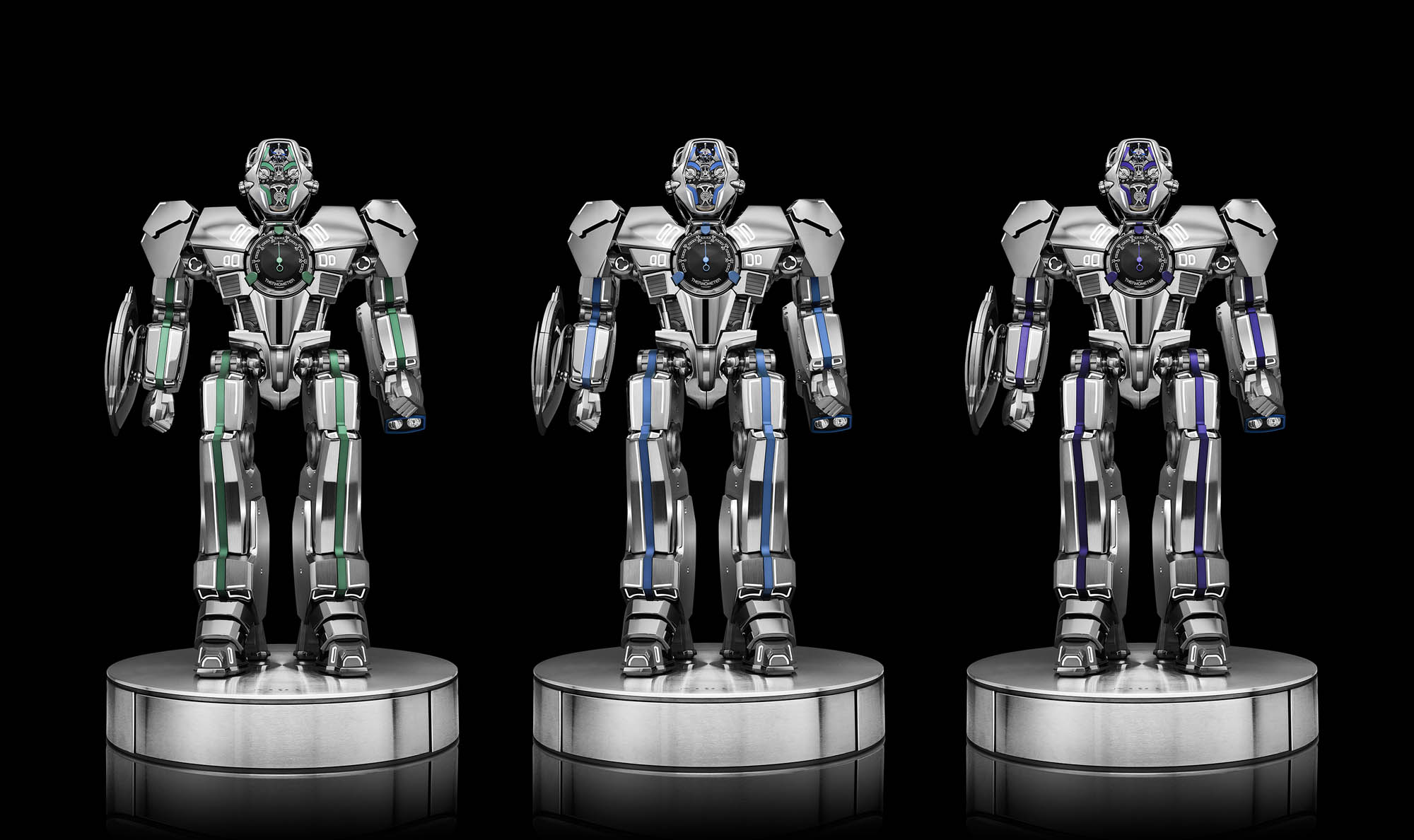
HM12 The Guardian is produced in three limited editions: blue, purple, or green. Only twelve pieces per color, for a total of thirty-six. No more. In addition, it carries a price tag of CHF 280,000 (approximately $350,000 USD at the time of publication). For more information, head over directly to MB&F.

Images from this post:
Related Posts
Cait is a New York City-based poet, enameler, and journalist who's covered watches and jewelry for over a decade. She's been a writer ever since she could pick up a pencil and paper but fell into the world of horology after college, which unearthed a passion for timepieces. For Cait, poetry and watches have surprising similarities: they're both able to convey a great deal in a small amount of space.
Tags: