
Review: the OG Deep Space Blue

There’s a riskiness to Oliver Gallaugher’s approach to watch design that I can’t help but admire. His aesthetic is clean, lending a stripped-down, contemporary look, but his methods are complex, resulting in elaborate manufacturing and higher costs. What looks, at a glance, like something simple, like a hand, never is. In fact, the hands of his watches, of which there have been two series, with the first sold out, are notably complicated, even featuring a “world’s first.” Further, though his watches are two-handers, rather than using a standard Swiss off-the-shelf movement, he has, thus far, used highly finished bespoke calibers. The result, and here is the dangerous part, is watches that don’t scream why they cost what they do. They aren’t for people who want or need an obvious element to point to, like a guilloche dial or a complication.

The OG Watches Deep Space Blue is both a follow-up and an evolution of the Deep Space concept that the brand debuted with. It takes the same overarching concept, a minimal watch with a dial inspired by the night sky, but developed and refined seemingly every element, stripping back further, and yet increasing the complexity of manufacturing. It also uses a bespoke movement from Le Temps Manufactures, which is known for its work with very high-end independents.
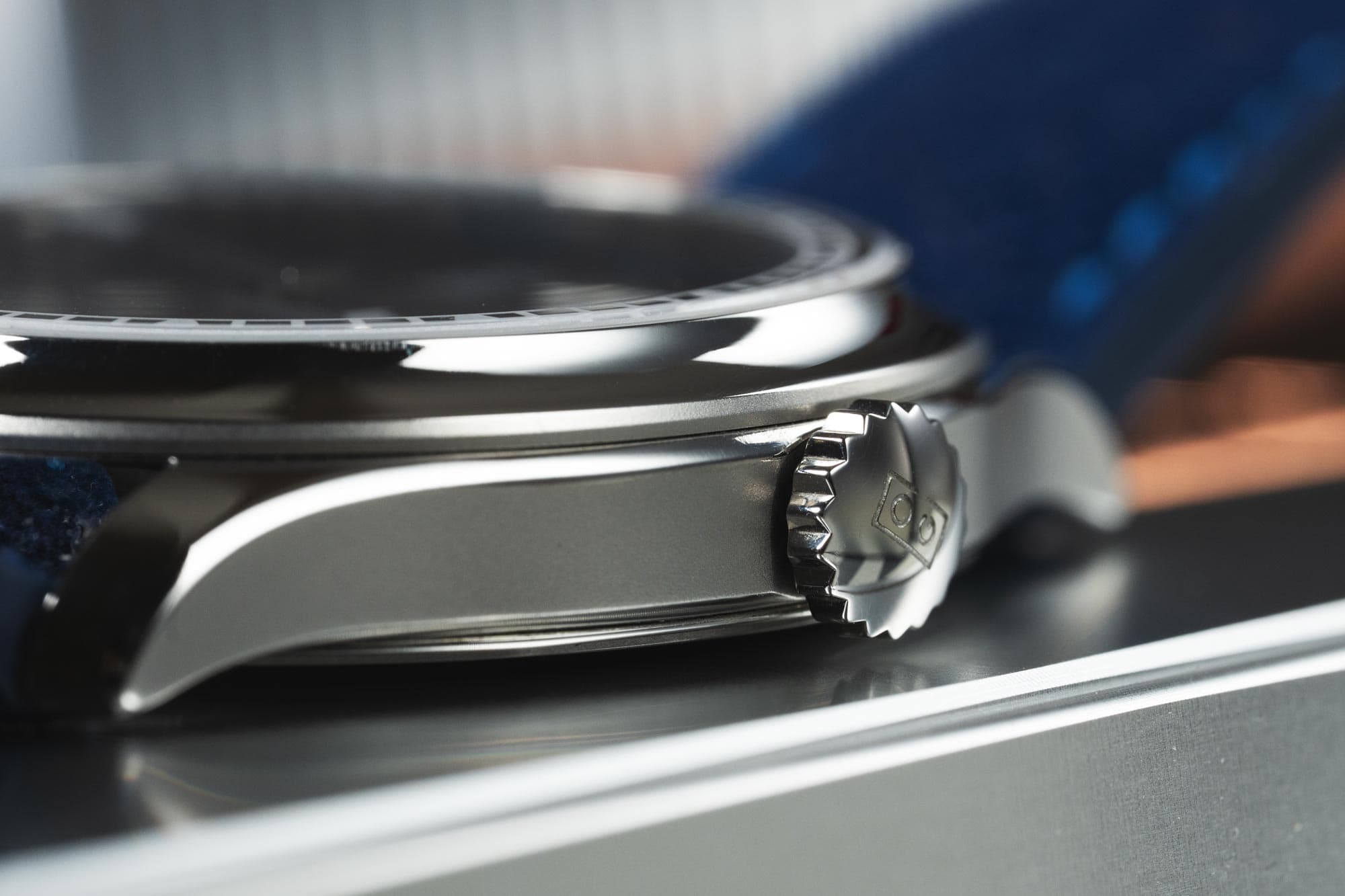

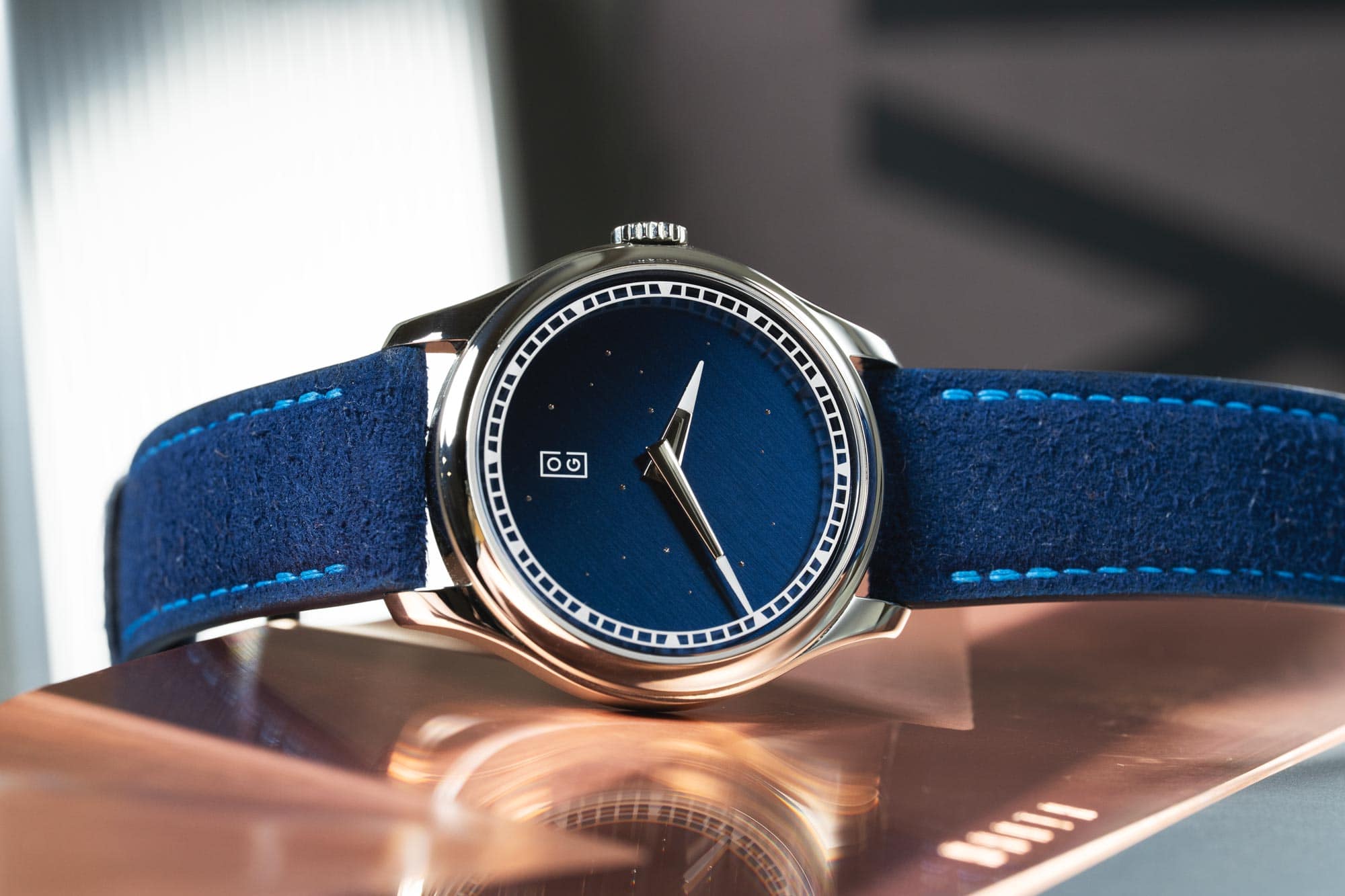
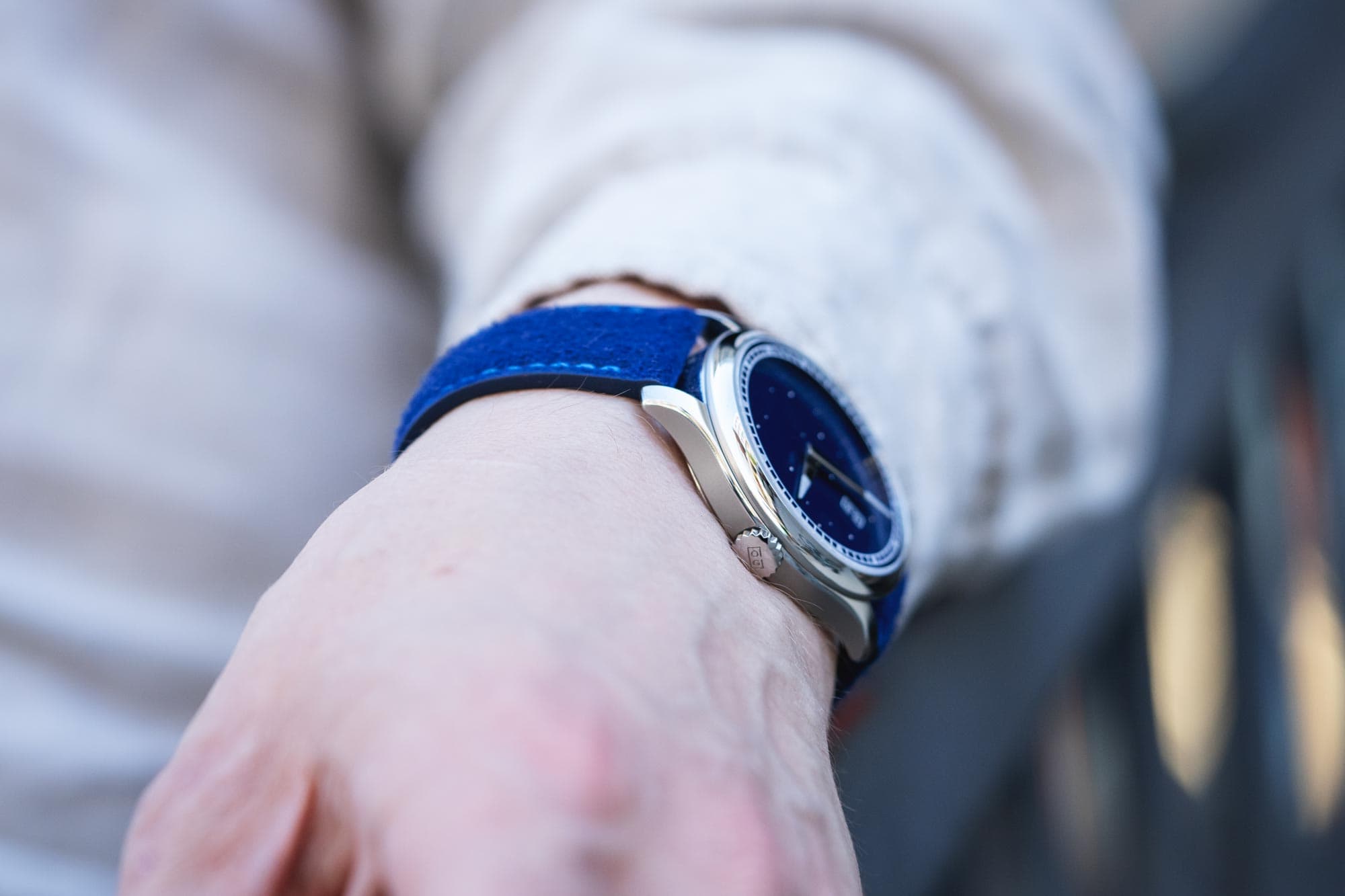
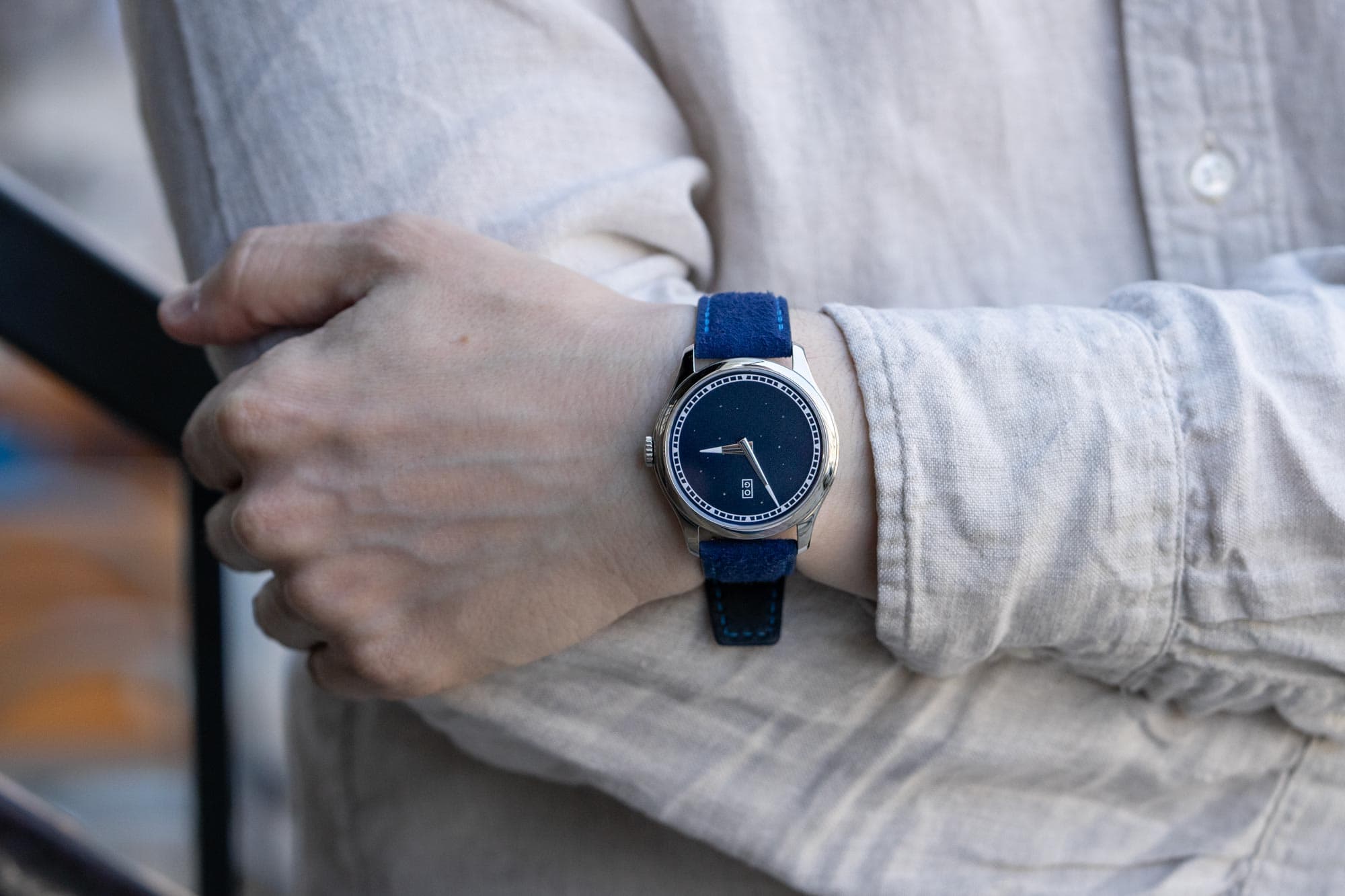
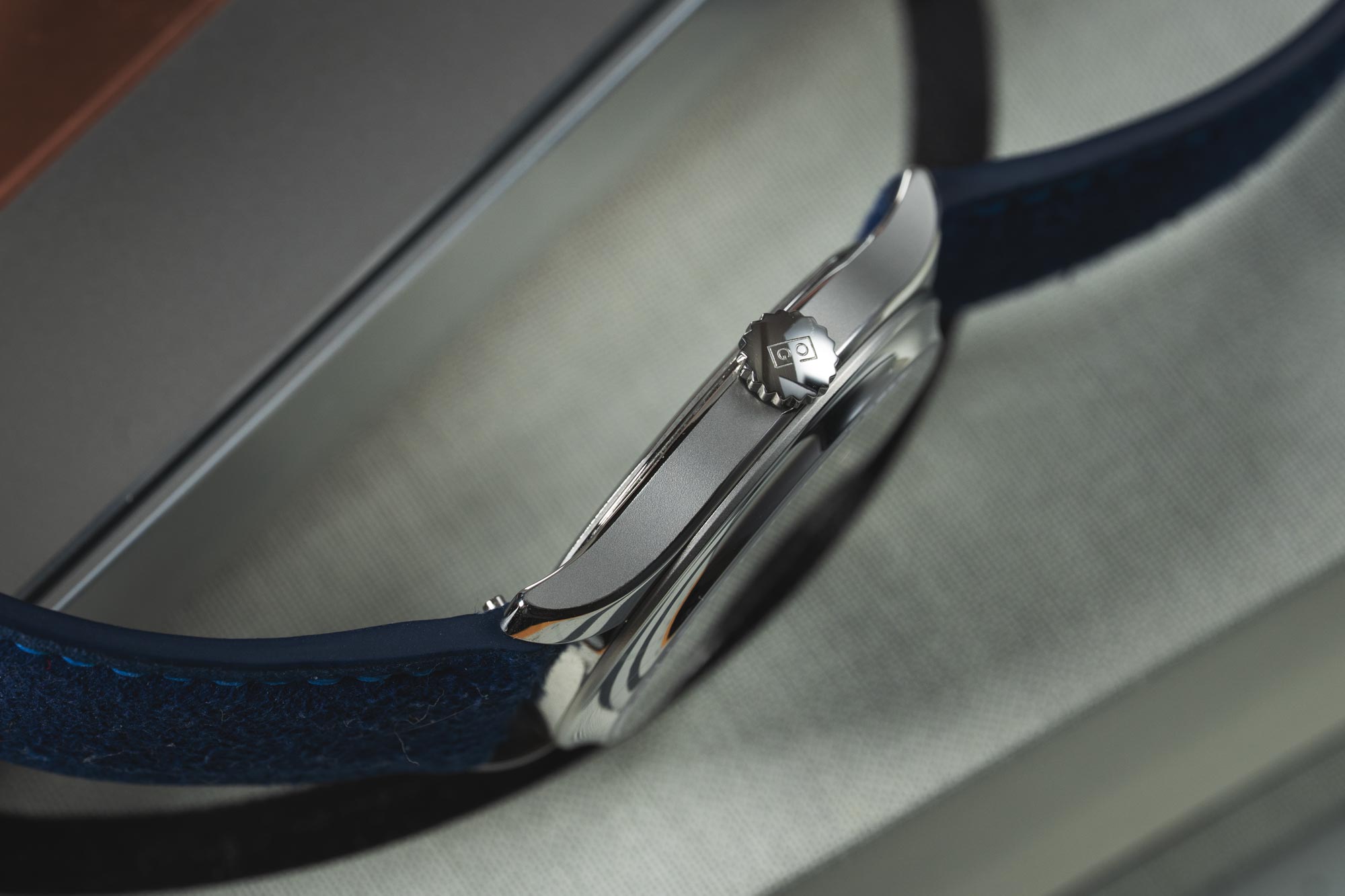
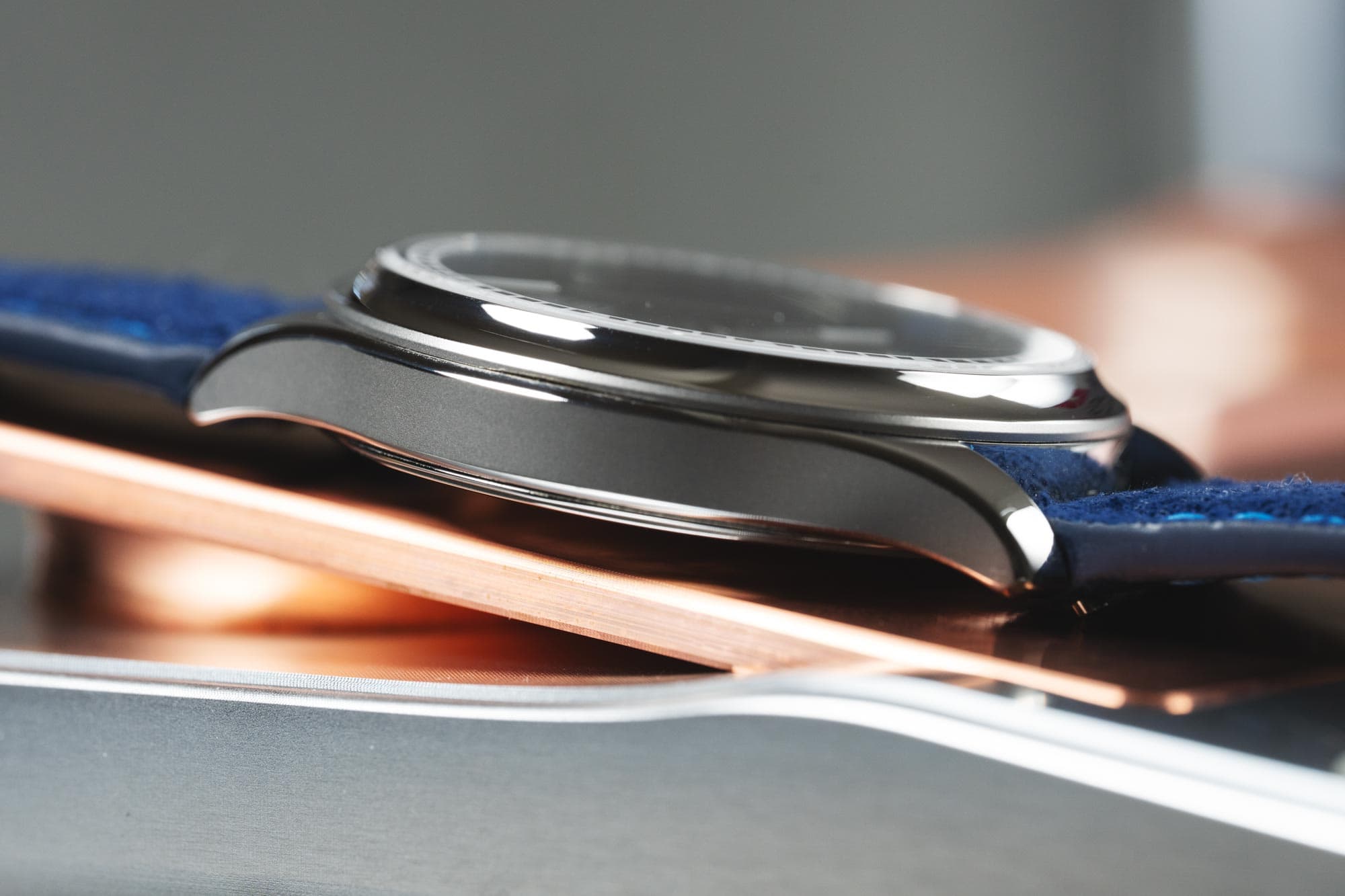
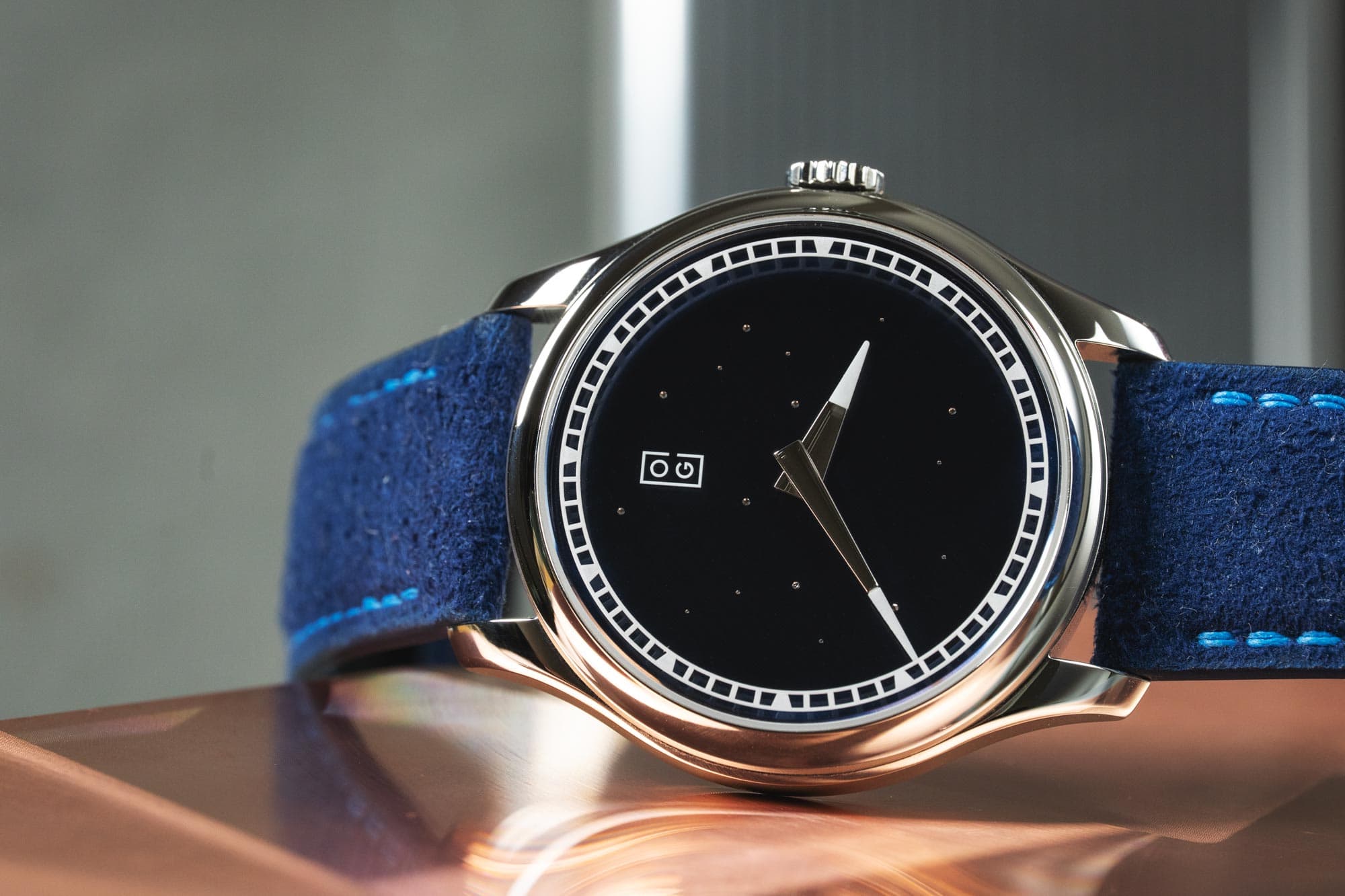
Beginning with the case, the first model was 41mm x 10.2mm thick and made of 316L steel. The new model is 38mm x 8.8mm and made of 904L. Given the spacious dial and large case, the original’s dial opening could have felt oversized. 38mm is big enough to allow the dial to breathe, but small enough to feel contained. The thickness speaks for itself. In terms of design, the case shape is fairly classic, even riffing on vintage designs with a concave bezel. While nothing about it is surprising, it is a very well-executed and well-proportioned take.
Advertisement
$12800

Review: the OG Deep Space Blue

Case
904L Steel
Movement
LTM5000-G by Le Temps Manufactures
Dial
Midnight Blue
Lume
Yes
Lens
Sapphire
Strap
2x Suede
Water Resistance
50m
Dimensions
38 x 44mm
Thickness
8.8mm
Lug Width
20mm
Crown
Push-Pull
Warranty
Yes
Price
$12800

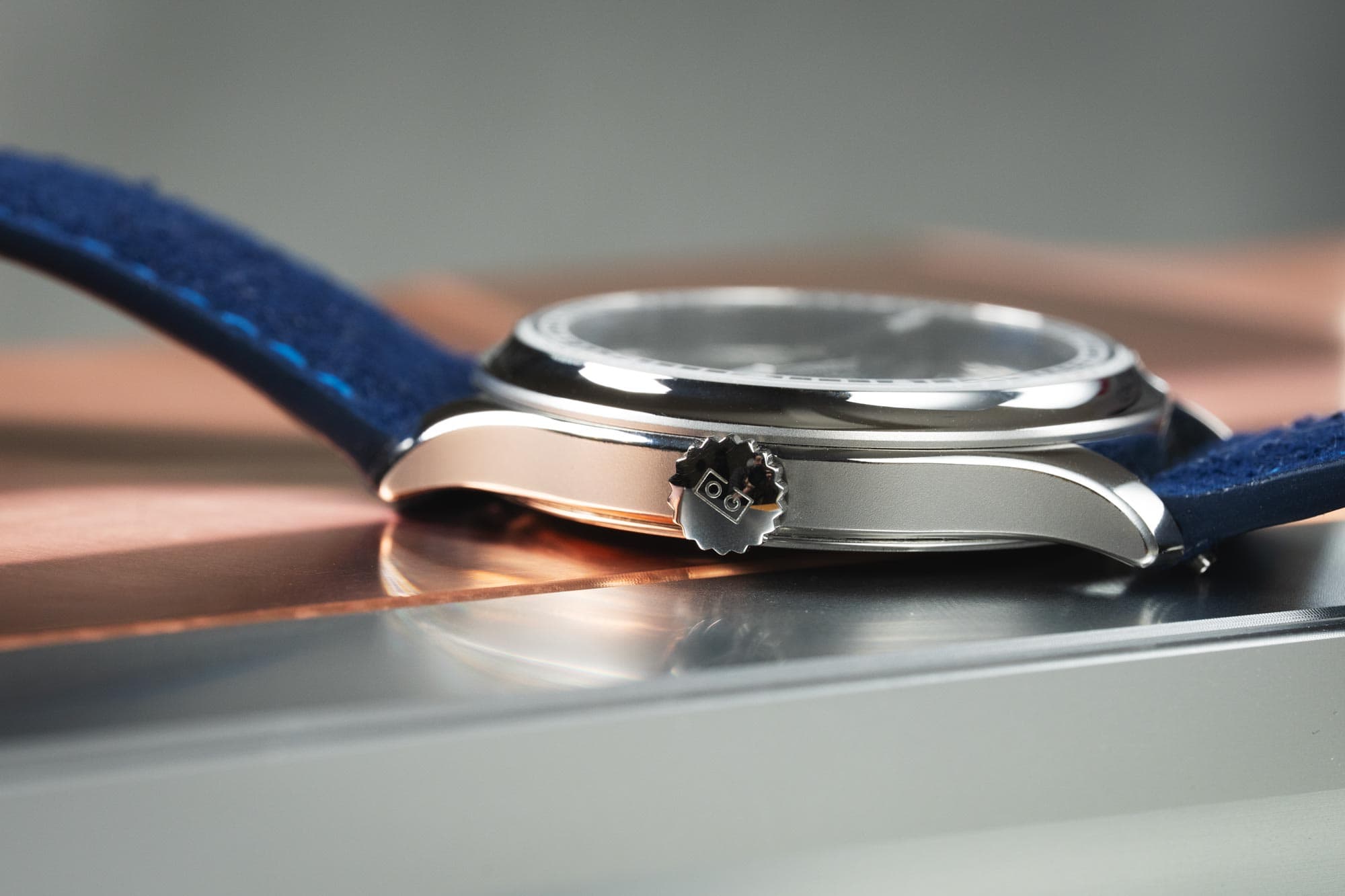
The use of 904L, while slightly more common these days than years past (mind you, Rolex has used it since 1985), is both a little special and adds to the quality of the finishing. 904L is considered “brighter” than 316L, given its composition, making polished surfaces, in particular, pop. This is well utilized on the Deep Space Blue, as the tops of the lugs, bezel, and crown are fully polished and look exceptional. In an interesting move, rather than contrasting polishing with brushing along the case sides and the bottom edge of the bezel, as is typical, OG opted for bead blasting, giving a much darker, flat finish. I really enjoy this detail because it’s unexpected and nudges the watch out of dressy territory.

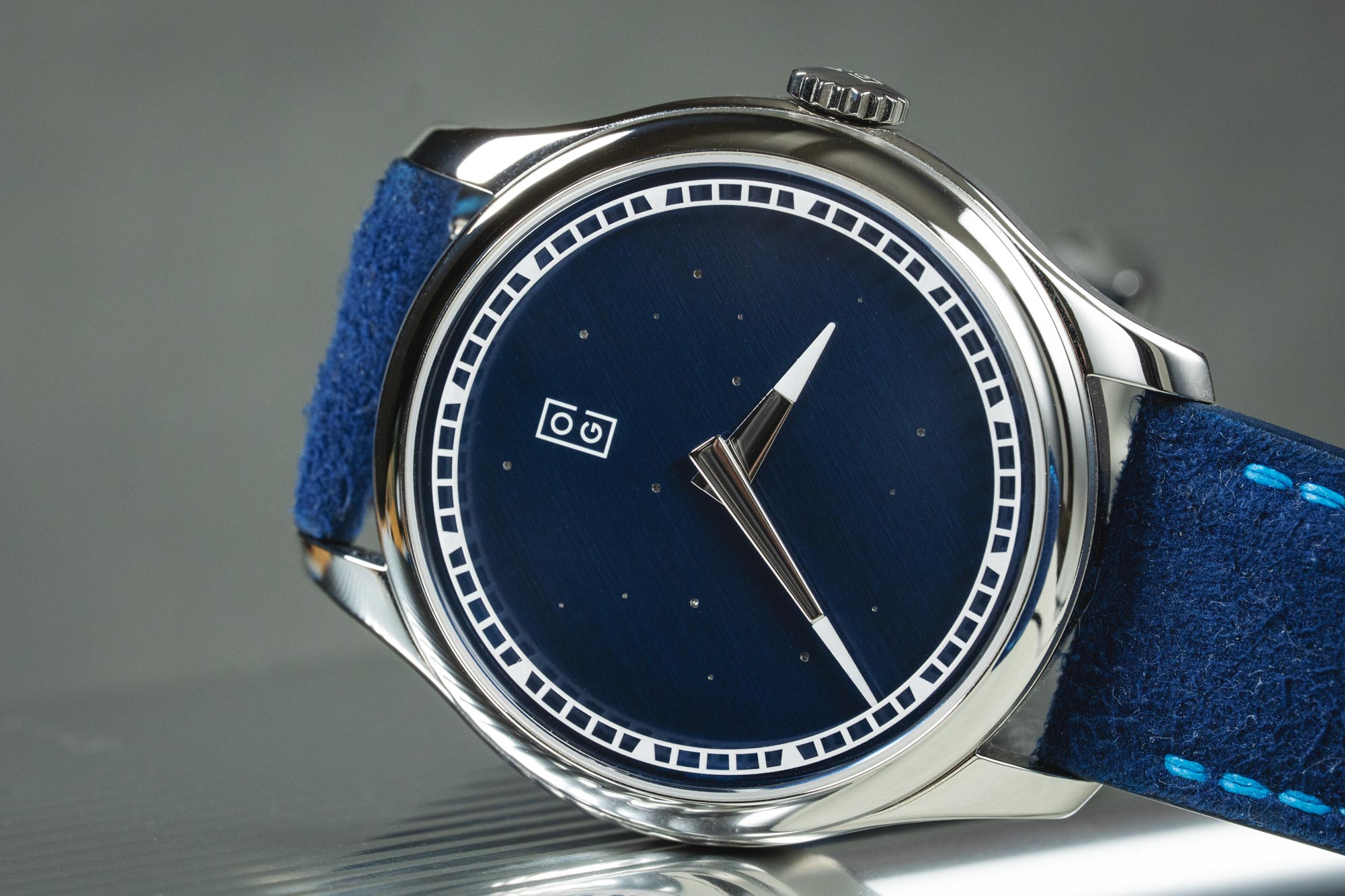
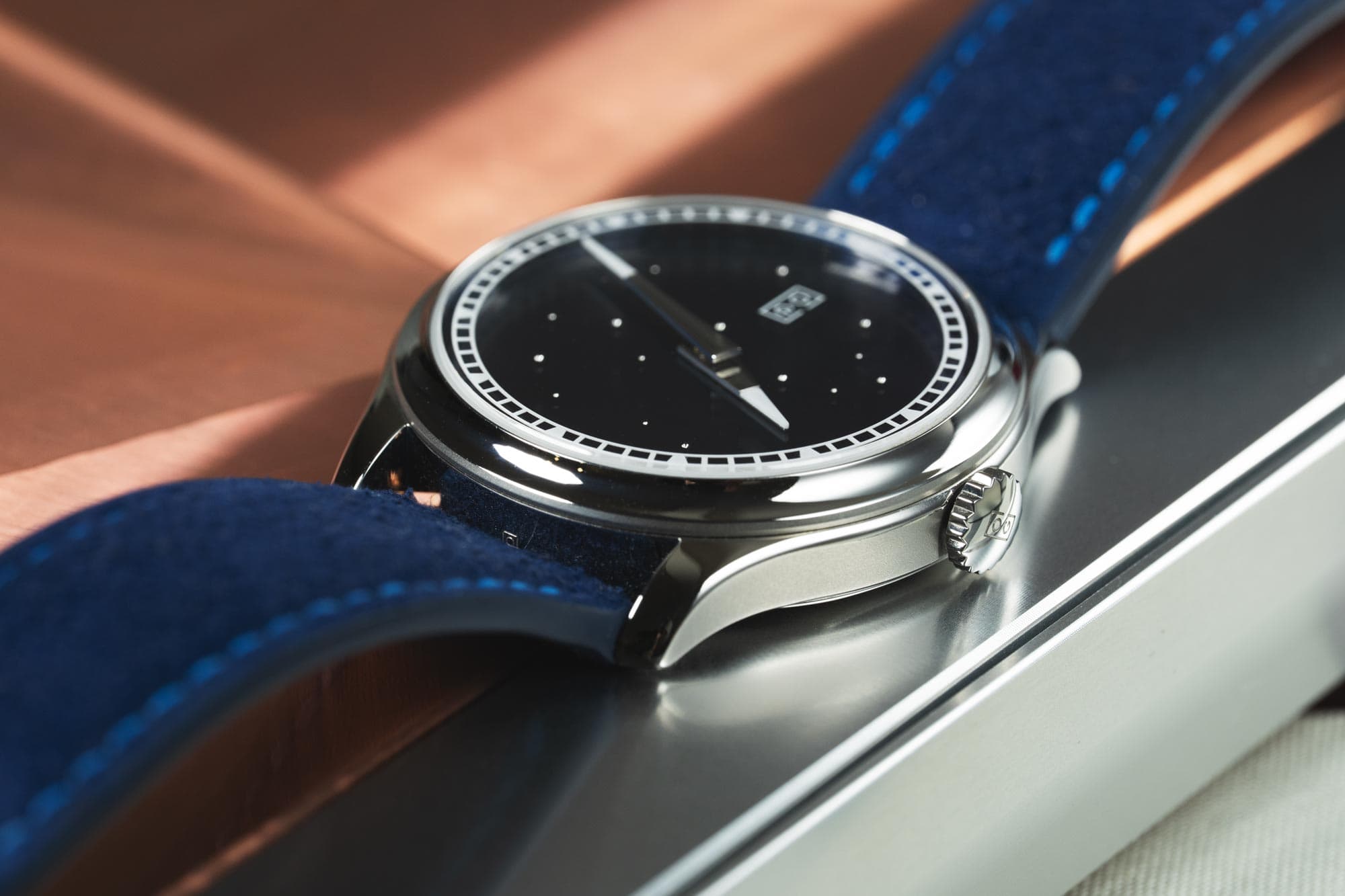
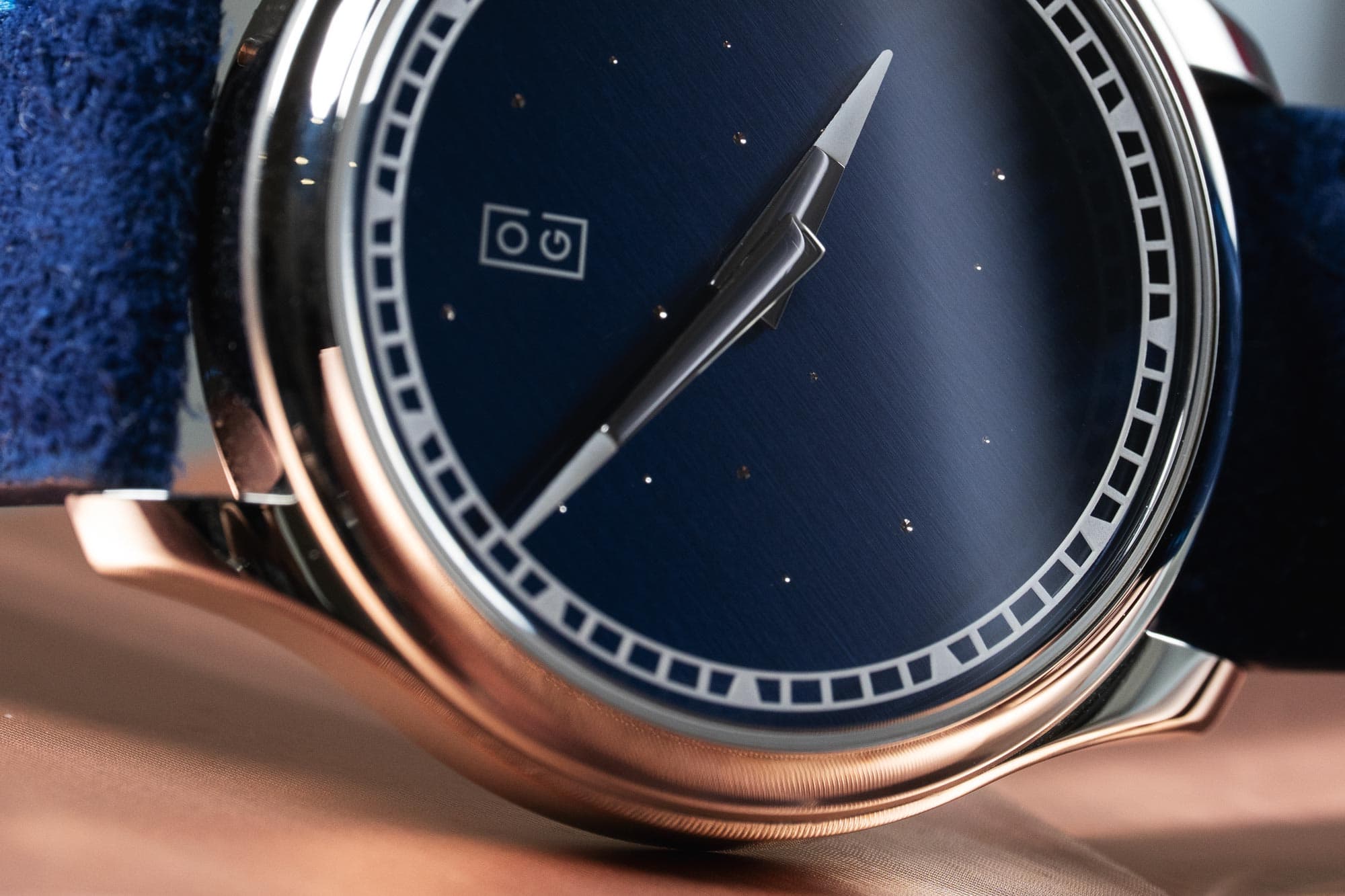
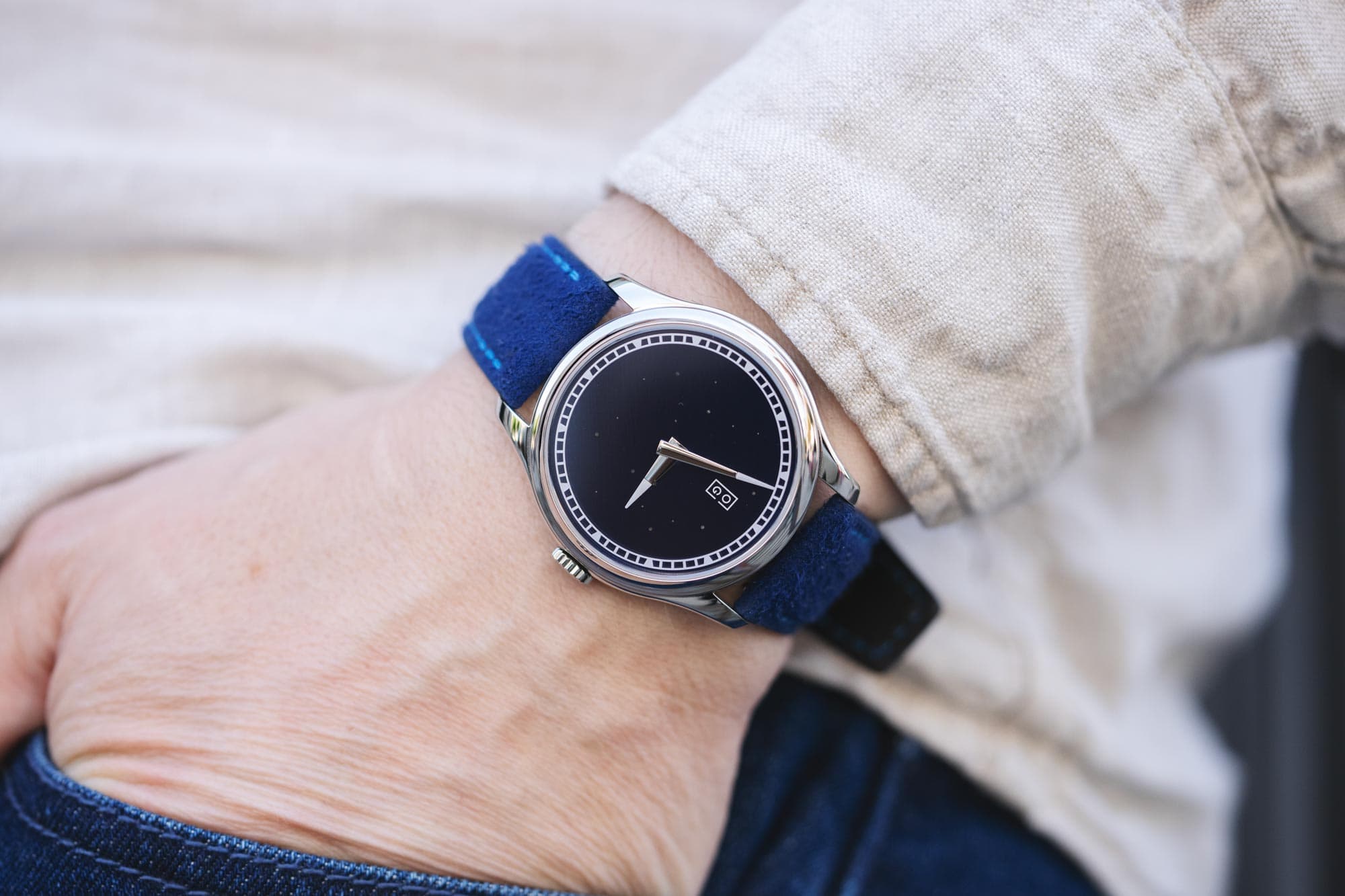
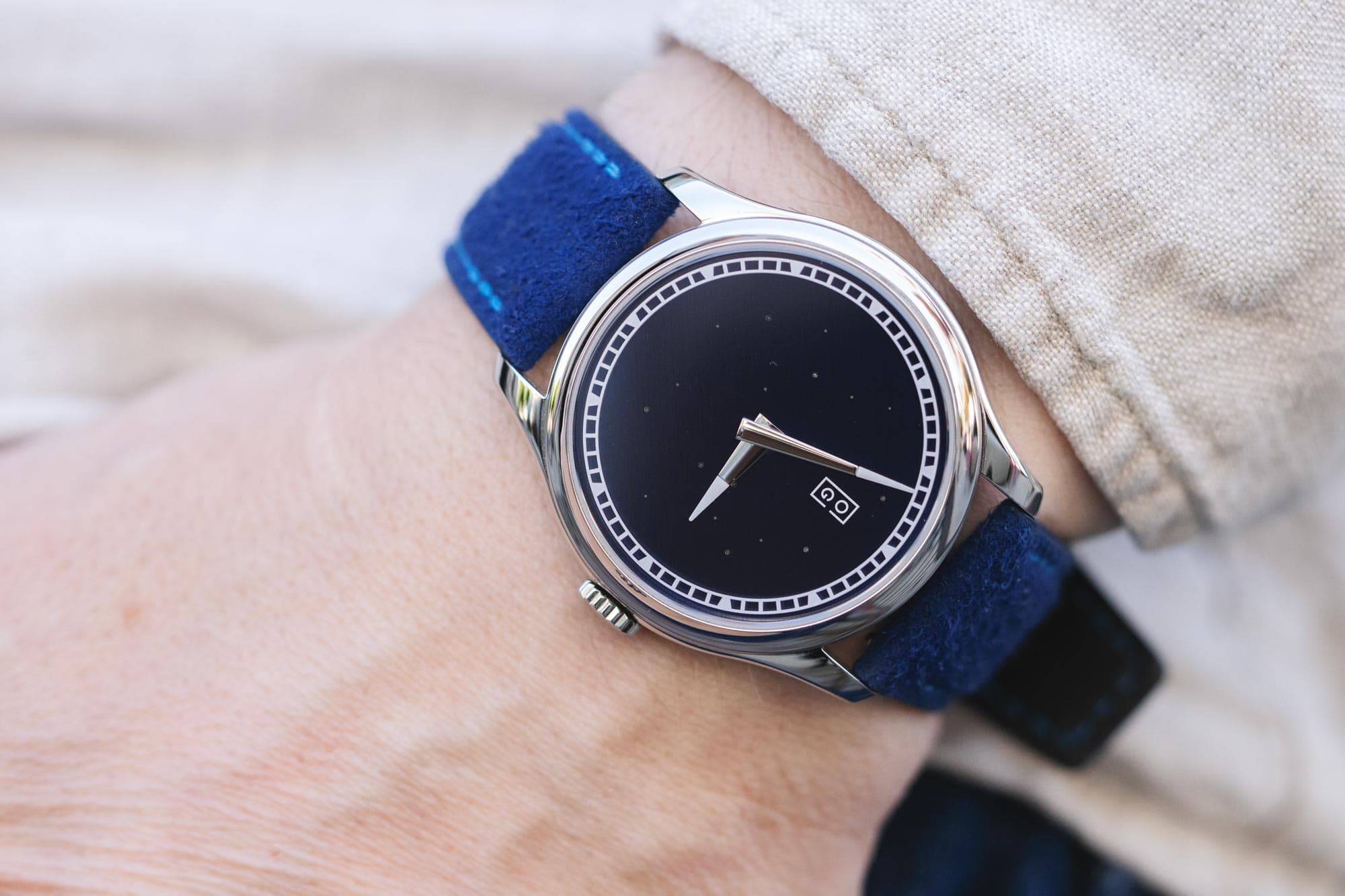
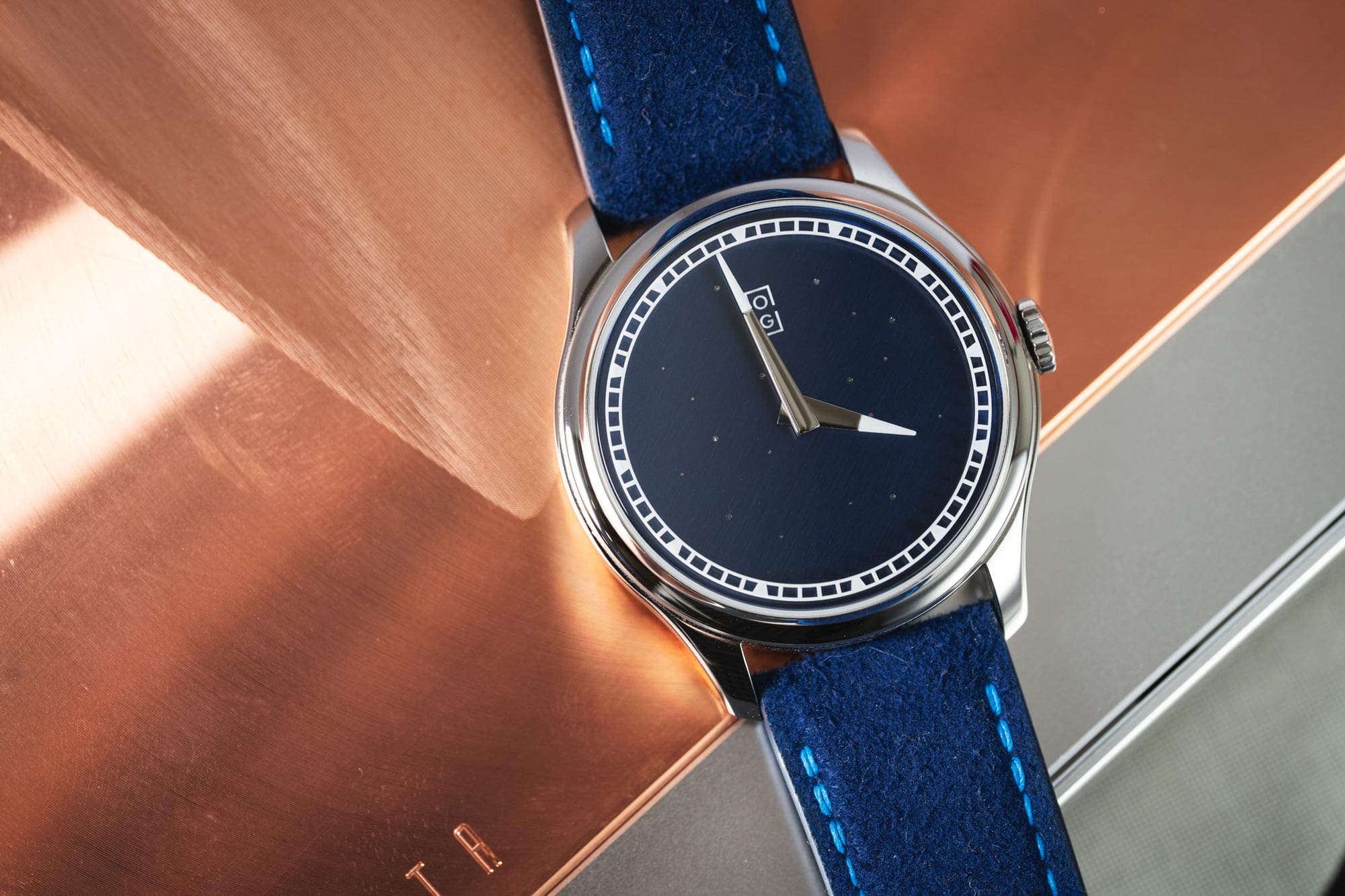
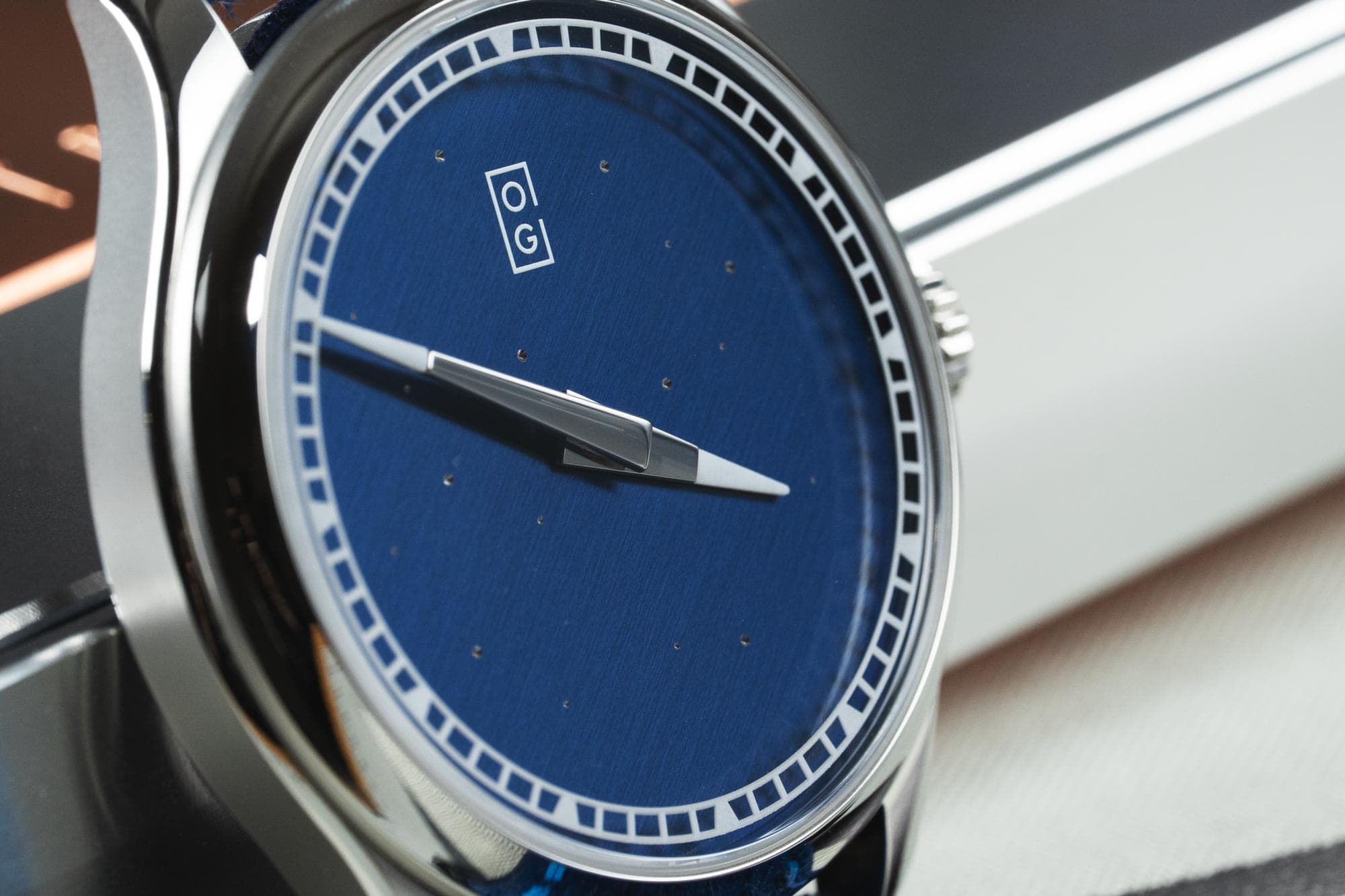
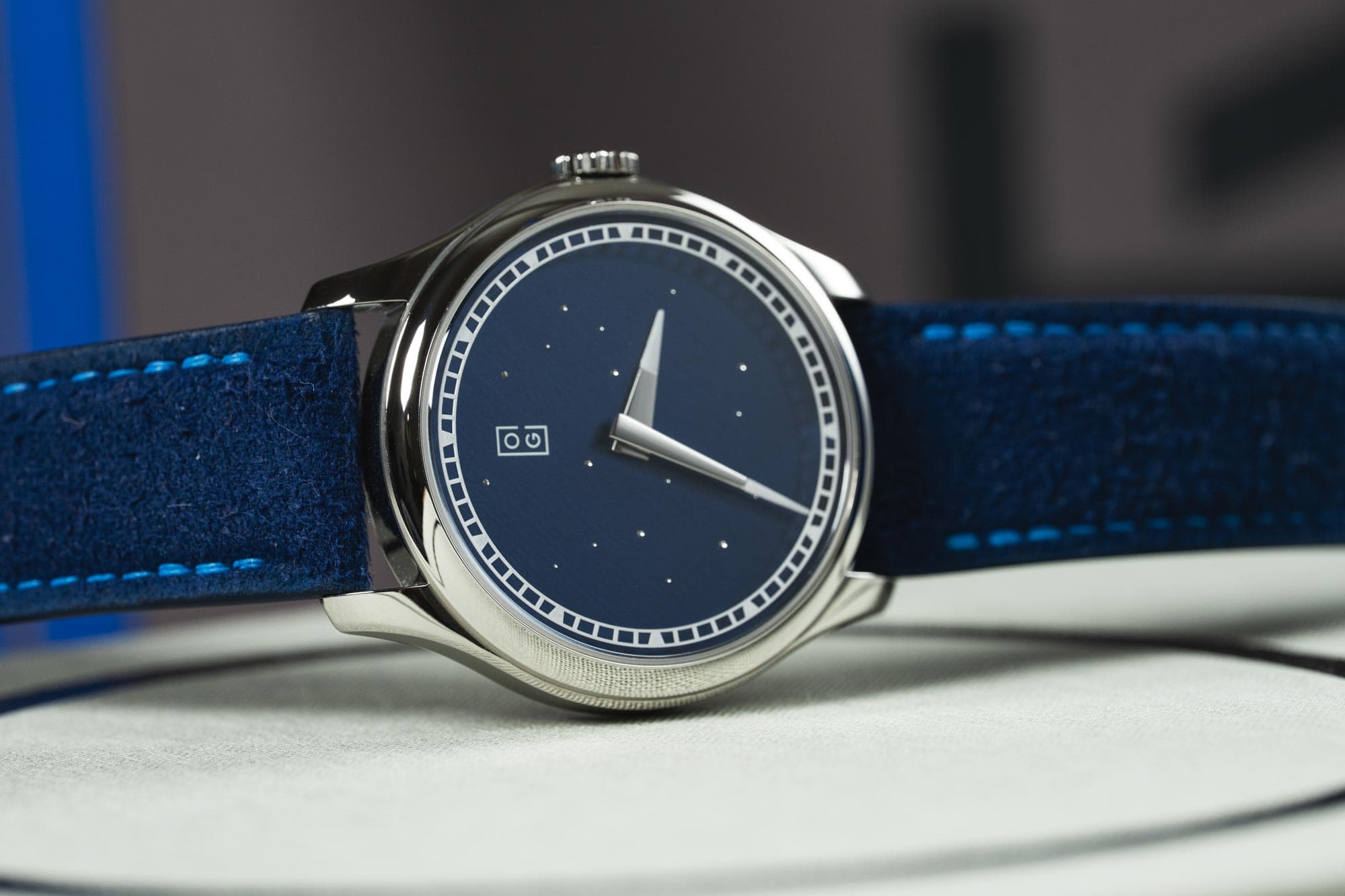
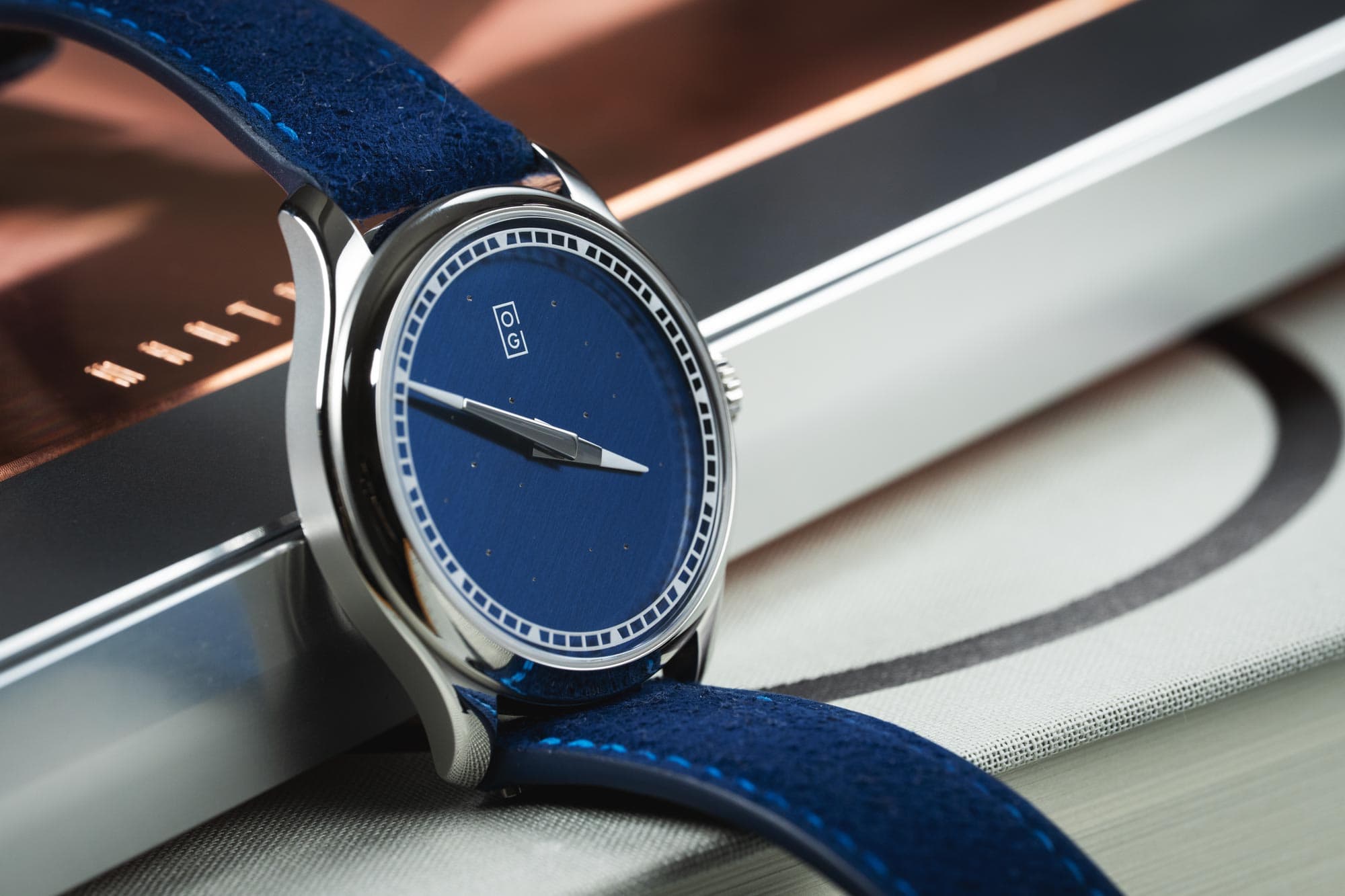
The dial of the Deep Space is meant to evoke the awe of looking up at twinkling stars in the night sky. While that theme is well trodden across many media, in watches it is most often tackled with Aventurine glass. With the Deep Space, OG takes the idea, strips it down to its essential elements, and creates perhaps the most effective take on the concept I’ve seen. The dial is a single surface, colored a truly deep, midnight blue, given an angular brushing that, unto itself, is unexpected, and adds little drilled (I assume) divots that expose the metal underneath, serving as stars. OG Watches

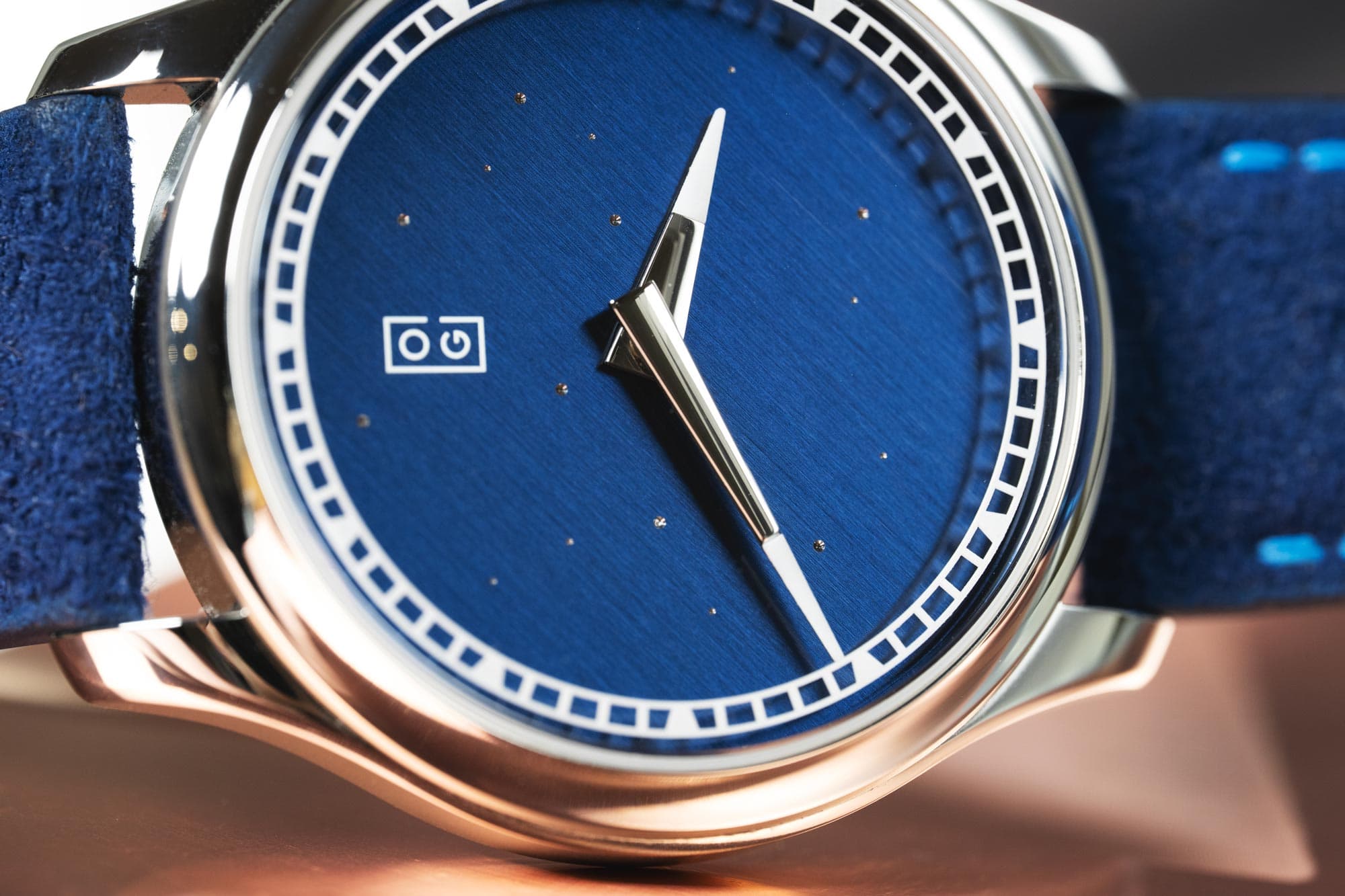
It works well because of how the elements catch light. First, the dark blue shifts from black to a rich, deep navy, evoking the sky at different times of night. The brushed lacquer, which is grained at about a 45-degree angle, rotated clockwise, adds some motion, evoking time-lapse photography. Finally, the divots catch the light at different angles than the flat surface of the dial, appearing bright when the surface is dark, almost floating (like stars) in the space, and occasionally disappearing as well. As the exposed metal is silver, they seem almost lit from within. It’s a nice effect.

While cool on its own, to fully take the concept home, the star pattern on each dial will be customized to reflect a date of the purchaser’s choosing, such as a birthday or anniversary, making each watch a one-off. I’ve seen a couple of brands do something similar, notably Trilobe with their “secret” line. With that said, the subtlety of OG’s approach is commendable.

Rather than traditional dial printing for the minute index, OG opts for using the backside of the sapphire crystal. This was done to create depth, which it achieves in multiple ways. First, it appears very bright because the case’s interior isn’t casting a shadow on it. This immediately makes it feel separate from the surface. Further, it casts its own shadow onto the dial below. My favorite effect, however, is that the minute hand appears to literally touch the index.

On the first model, the index was pad printed white, but on the new model, it’s engraved into the crystal and lume-filled. Obviously, engraving sapphire is a manufacturing challenge, but the effect is seamless. The lume fill is thick enough to appear pure white while also glowing very well. This is another good example of an element that might appear simple, but is quite complex in its execution.

And finally, there are the hands. Seeing hands in a polished silver color is not uncommon, but these aren’t your ordinary silver colored hands. Rather, the large, triangular hour and minute hands are made from 904L steel, which, according to OG, are the world’s first. Furthermore, the hands aren’t flat, but they aren’t beveled either; they are gently domed, which looks simply amazing and is something I can’t say I’ve seen before.

Both feature lumed tips that, once again, aren’t as simple as paint on a hand. Instead, the lume is cast ceramic that is attached to the steel, allowing it to glow with the same intensity as the minute index. Lastly, my favorite detail is that the minute hand has no hole at the center pinion or a cap; it’s simply an unbroken surface. Somehow, this makes the hand feel disconnected, like a ship floating among the stars.

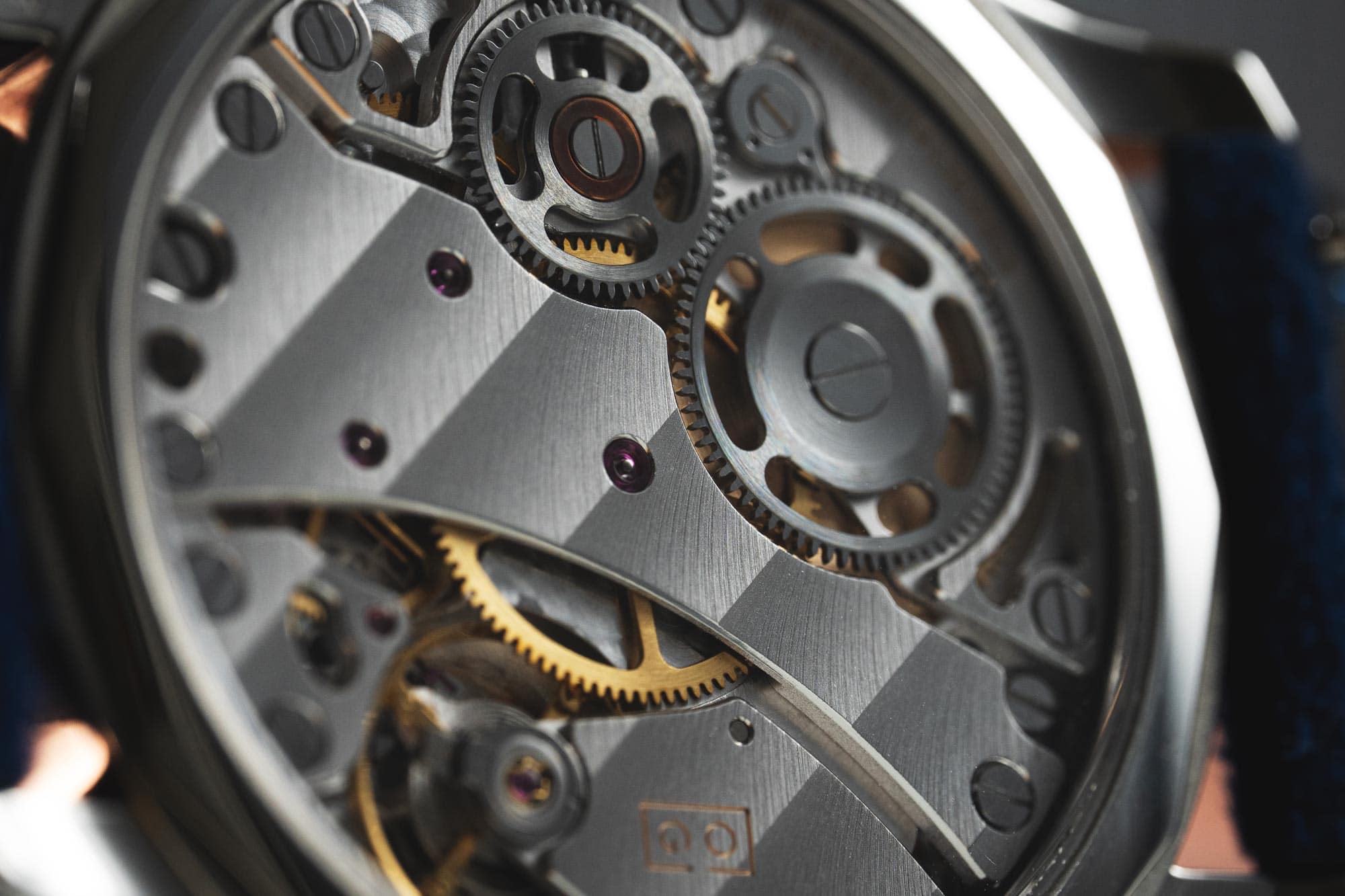
While the story of the dial and case is one of restrained design, finishing, and subtle complexity, the movement is one of modern independent Swiss watchmaking. Inside the Deep Space Blue is the LTM5000-G, a bespoke variation on the LTM5050 by Le Temps Manufactures. If you’re saying “who?” I wouldn’t blame you. LTM is not a brand you hear about often because most of its work is in movement development for high-end brands that don’t have its name associated with. An example of this the Niton NHS01, which was designed by Niton, but co-developed with LTM. It is also said they’ve worked with Cartier, Byrne, UG, Beneron, and others. With that said, they do offer a small catalog of movements that can be ordered, like the LTM5050, with custom decoration, though the OG is the first watch I’ve come across that uses one.

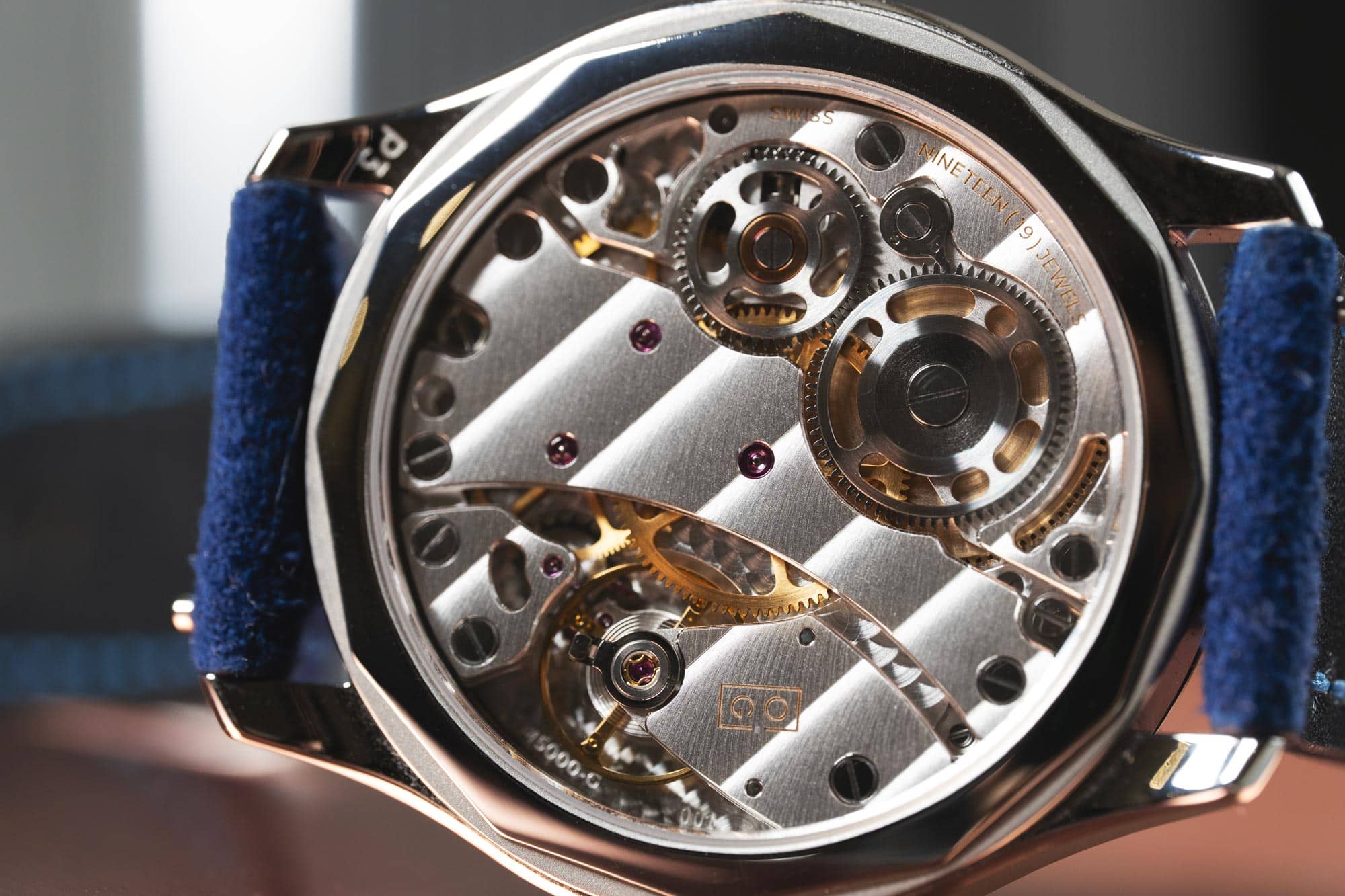
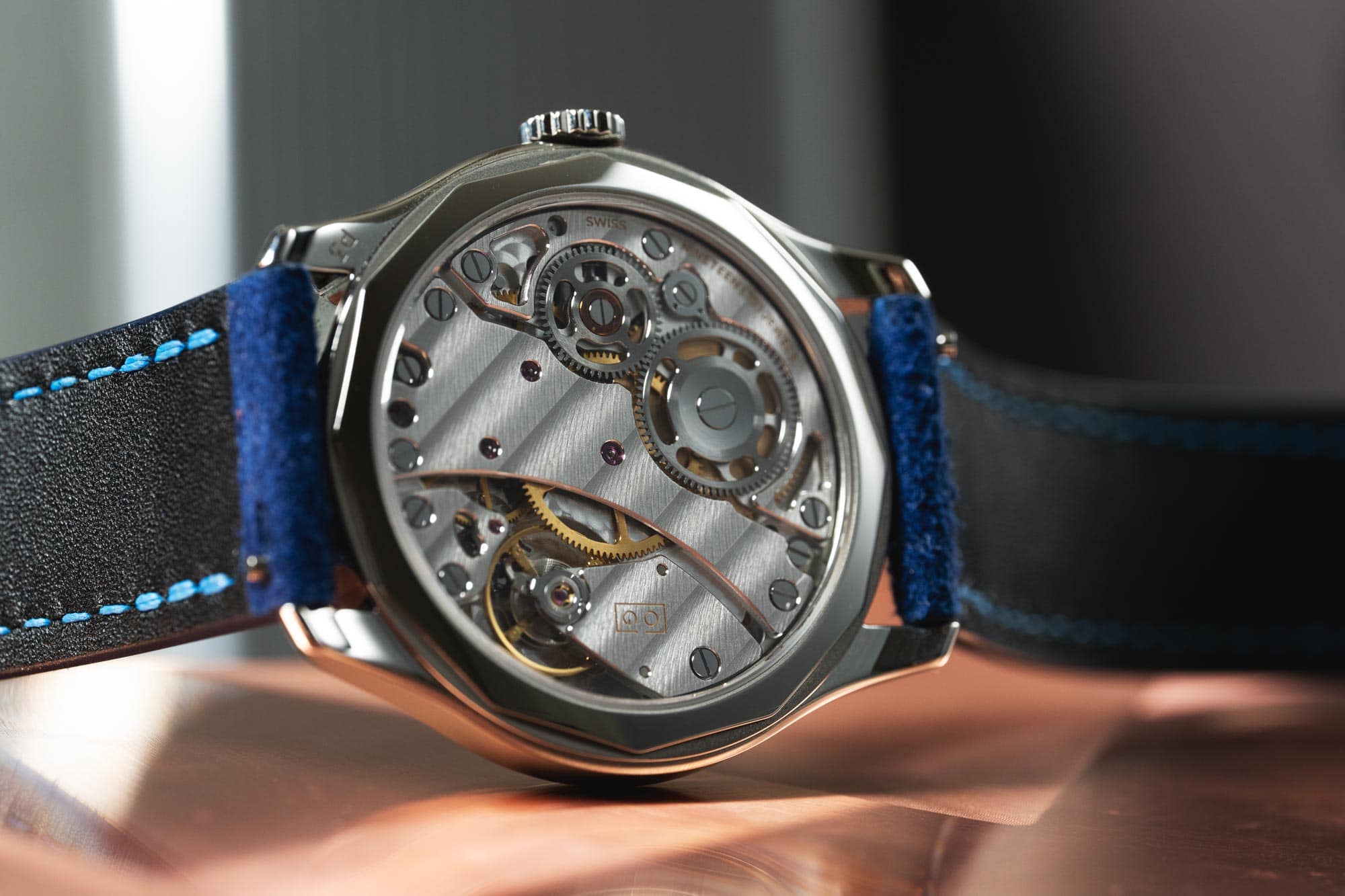
With that said, the LTM5000-G is a fairly straightforward movement, if from an unconventional source. It is time-only, utilizing only minutes and seconds, features 19 jewels, a frequency of 28,800 bph, a 60-hour power reserve, and a freesprung balance. It’s a nice, wide movement at 30mm, allowing it to fill out the case and display window. It’s also relatively thin at 3.3mm, allowing for an 8.8mm case height.


The LTM5000-G features fairly nice finishing. There’s extra-wide Côtes de Genève and polished bevels along the rhodium-plated top plates and balance cock, as well as occasional cut-outs showing plates below that are also plated and feature fairly tight perlage. All of the screws are mirror-polished, as is the winding click. Finally, the crown and ratchet wheels are skeletonized. Winding the LTM5000-G feels very smooth, with almost no perceptible click, either in sensation or sound.

Advertisement

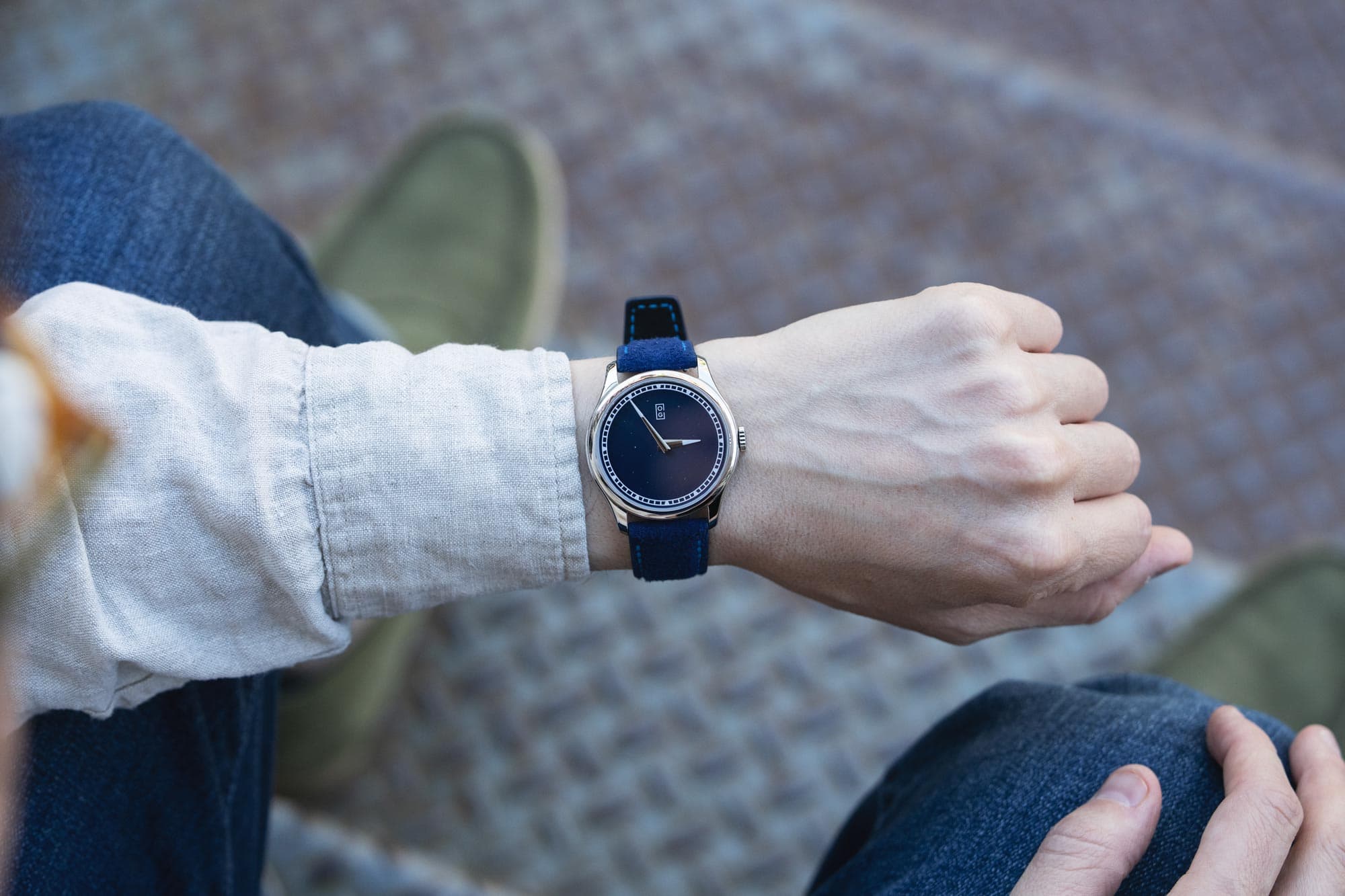
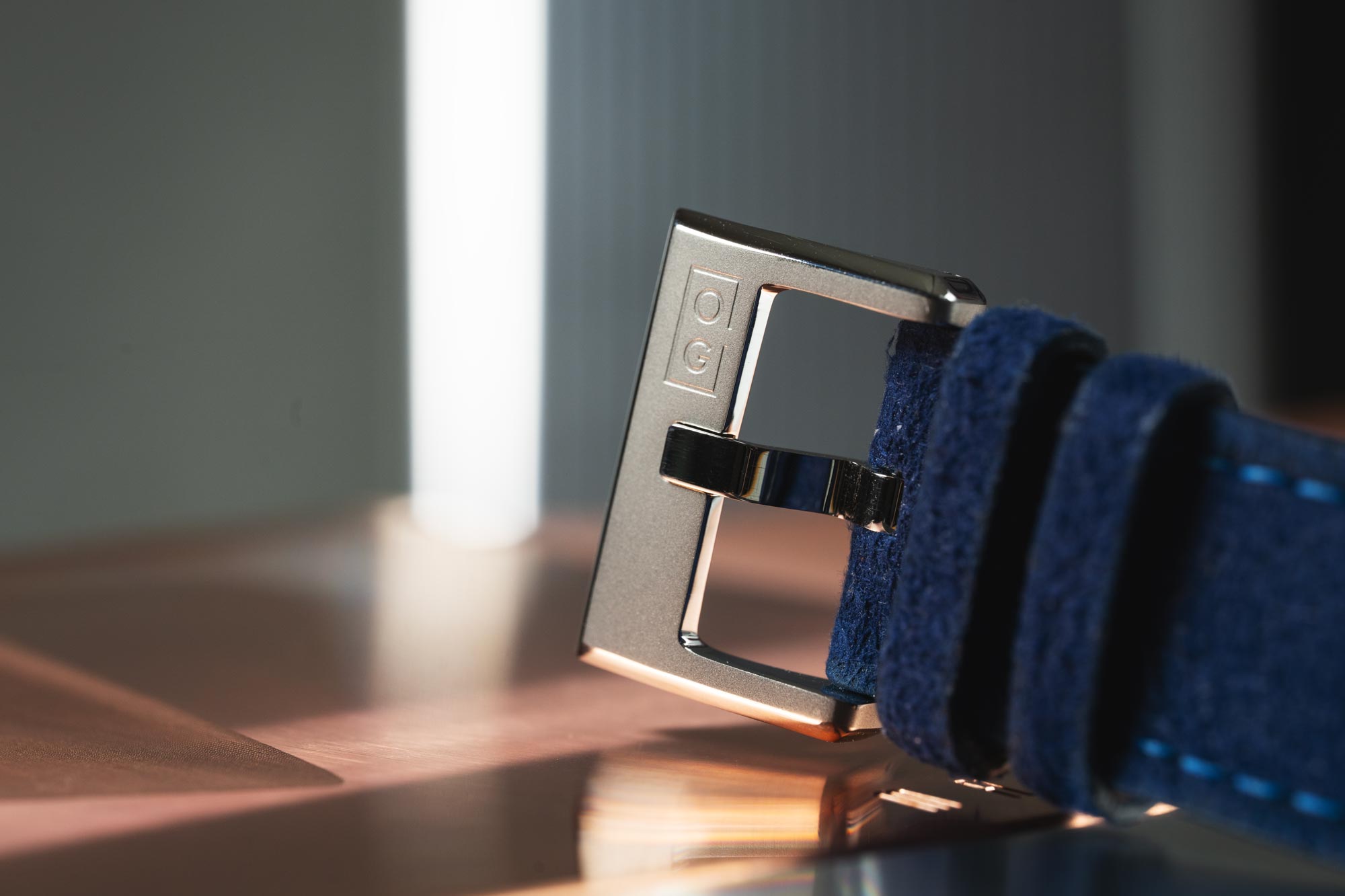
The Deep Space Blue is lovely on the wrist. The dimensions are dialed in for both fit and aesthetics. This watch just feels like it is the exact size it was meant to be. Admittedly, I find 38mm watches are ideal for my 6.75” wrist, so I might be a bit biased, but between the diameter and just sub-9mm height, it feels perfect. And it looks great too. It’s contemporary, but not in a confrontational way, and there are regular moments that catch your eye, whether it’s the shifting blue surface, the sparkling divots, the rounded hands, or the mirror polish of the case. The watch comes with two suede straps, one a rich blue, the other a pale gray. It also features a custom 904L buckle that is beautifully made and finished.

As I said in the intro, OG does things in a way that’s a bit dangerous, which is to say, they don’t make selling these watches any easier. At a glance, things appear simple, but under close inspection, nothing really is. Every choice is the more expensive one. Flipping the watch over then reveals a movement you’re unlikely to see elsewhere. The end result is a watch that appears deceptively simple with a price tag of $12,800.

In terms of the case, dial, and hands, I think all of the right decisions were made. Interestingly, OG is also transparent about where everything is manufactured. They utilize Atmoz, a Hong Kong-based manufacturer, for the case, sapphire, hands, and buckle. Cador from Switzerland for the dial, Handdn from Vietnam for the straps, and, of course, LTM from Switzerland for the movement. Every component is gorgeous and high-end in its execution, but I wonder whether this watch really needed such an esoteric movement to support the concept’s success.

Is it a point of differentiation? Yes, but I also imagine it’s a major contributor to the cost of the watch, and, ultimately, when on your wrist, I question if it is adding more to the experience than some potentially similar movements. After all, it’s ultimately a thin, two-hand watch with no complications. Oliver has said the LTM5050 was chosen first for its size, but there are other manual-wound movements that, based on the watches they end up in, are likely less expensive. The LJP7380 is one such example, used by Sartory Billard, and there’s also the AMT6600, used by Havid Nagan, both in watches that come in under $10k. Admittedly, I believe the latter has a very high MOQ. And then there are even less expensive movements like the LJP D100 or the Sellita SW210, but those perhaps would be too far in the other direction.

Ultimately, of course, this is about Oliver’s vision for the watch and the brand, and if what he wanted was a rare, semi-bespoke movement by a high-end manufacturer, he found it. Does it drive the price up? Potentially, but it also brings an air of high-end watchmaking. That said, based on my experience with the watch, it’s really everything else that makes it special. There are also only 10 being made, so, regardless of the movement, this is one very rare watch. OG Watches

Images from this post:
Related Reviews
Zach is the Co-Founder and Executive Editor of Worn & Wound. Before diving headfirst into the world of watches, he spent his days as a product and graphic designer. Zach views watches as the perfect synergy of 2D and 3D design: the place where form, function, fashion and mechanical wonderment come together.
wornandwound zsw
Categories:
Tags: