 Latest Review






The longer I navigate my watch journey, the more I realize it’s a bit like dating. You get a press kit and metaphorically swipe left or right in a very judging-the-book-by-its-cover type of way. The aesthetics are often the first thing to draw you in and make you curious or to turn you away. In either case, as a good journalist, I’m usually compelled to read the press release and gather a bit more information, skim the profile if you will. I can fully admit aesthetics are highly subjective, but substance is vital. Still, I can’t fully assess a watch without going hands-on. Images can either disappoint or not quite do justice to a design, and the promises spelled out in specs need to be put to the test. Seeing a watch is the real make or break moment to determine if we’re a perfect match.
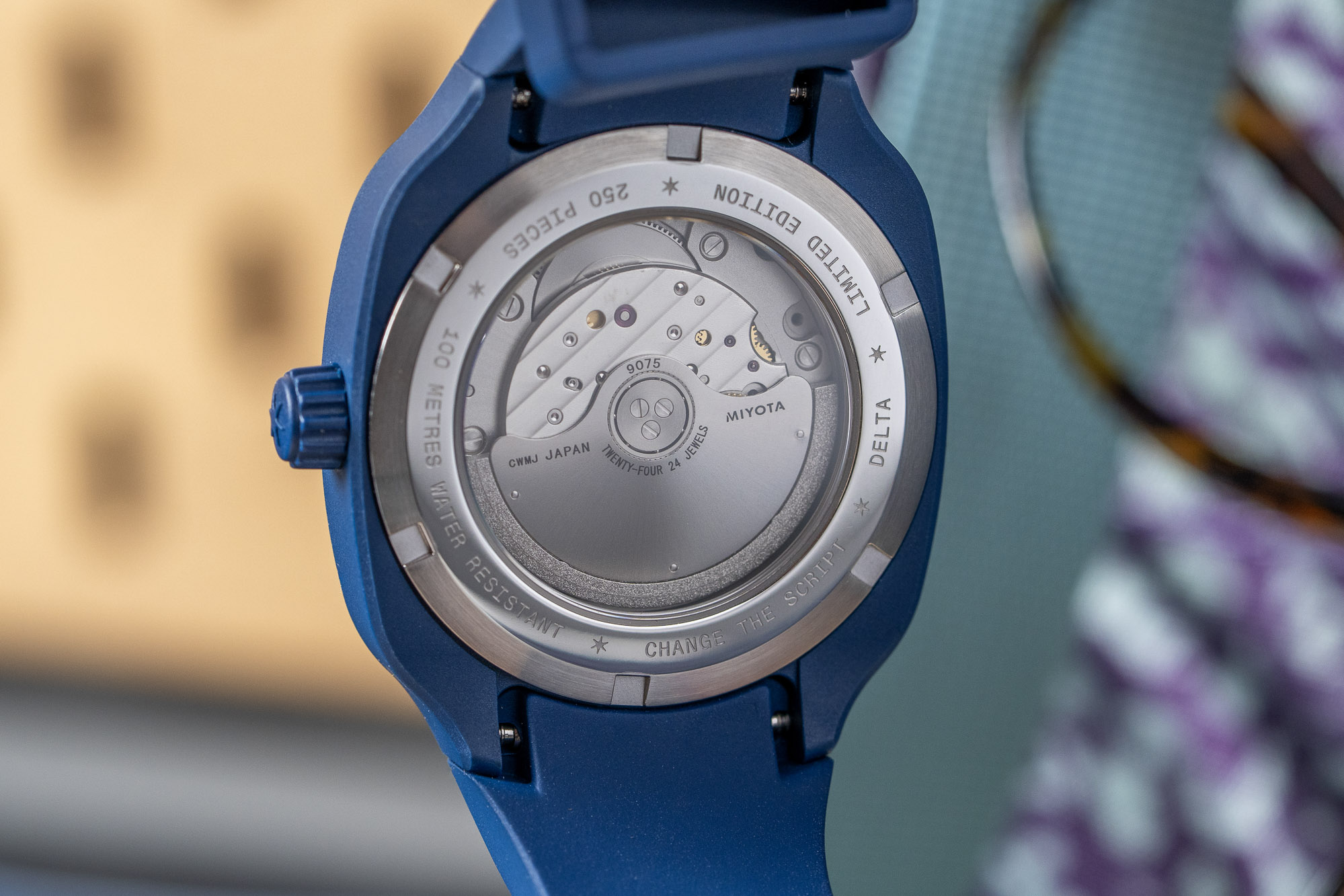
I recently went through this dating ritual with Split watches, a London-based independent brand making its U.S. debut with a new GMT. A few things really stood out to me when I first received the announcement. The look of the watches was interesting, combining unique design elements, shapes, and colors. Reading about the vision behind the design was poetic, drawing from elements of music and nature – two of my favorite sources of inspiration. The watches are powered by the Miyota 9075 true GMT movement – calibers I’ve developed even more appreciation for after visiting Citizen’s movement factory earlier this year.
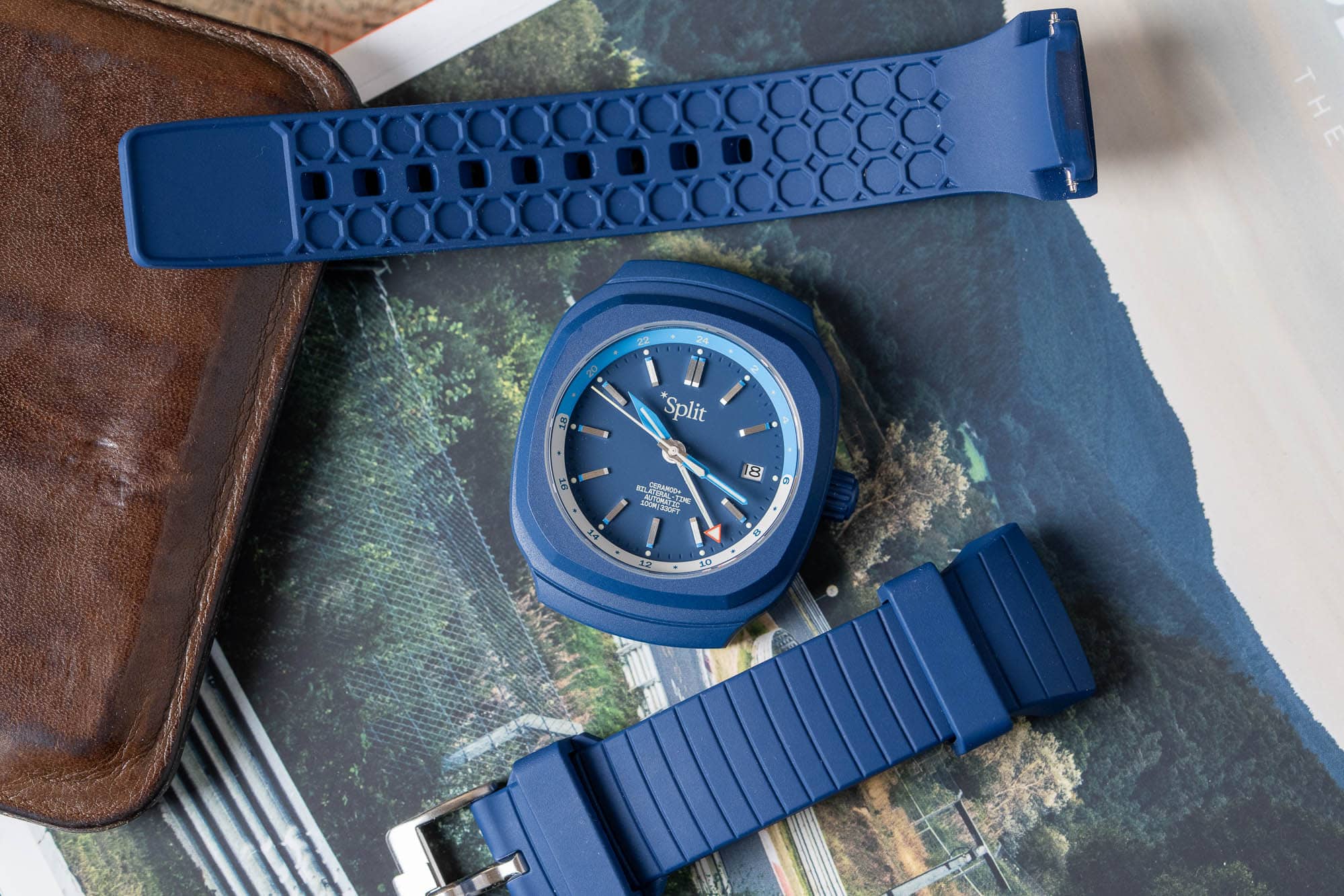
Beyond the watches themselves, I was equally impressed with the brand’s ethos: for every watch sold, Split funds one hour of therapy through its partnership with MusiCares, supporting young people’s access to mental health care. When it comes to spending hard-earned dollars, I love nothing more than that money going to a cause that’s deeply personal to me and aligns with my values. Split’s new GMT was ticking all the right boxes on the page, and I couldn’t wait to get my hands on a sample.
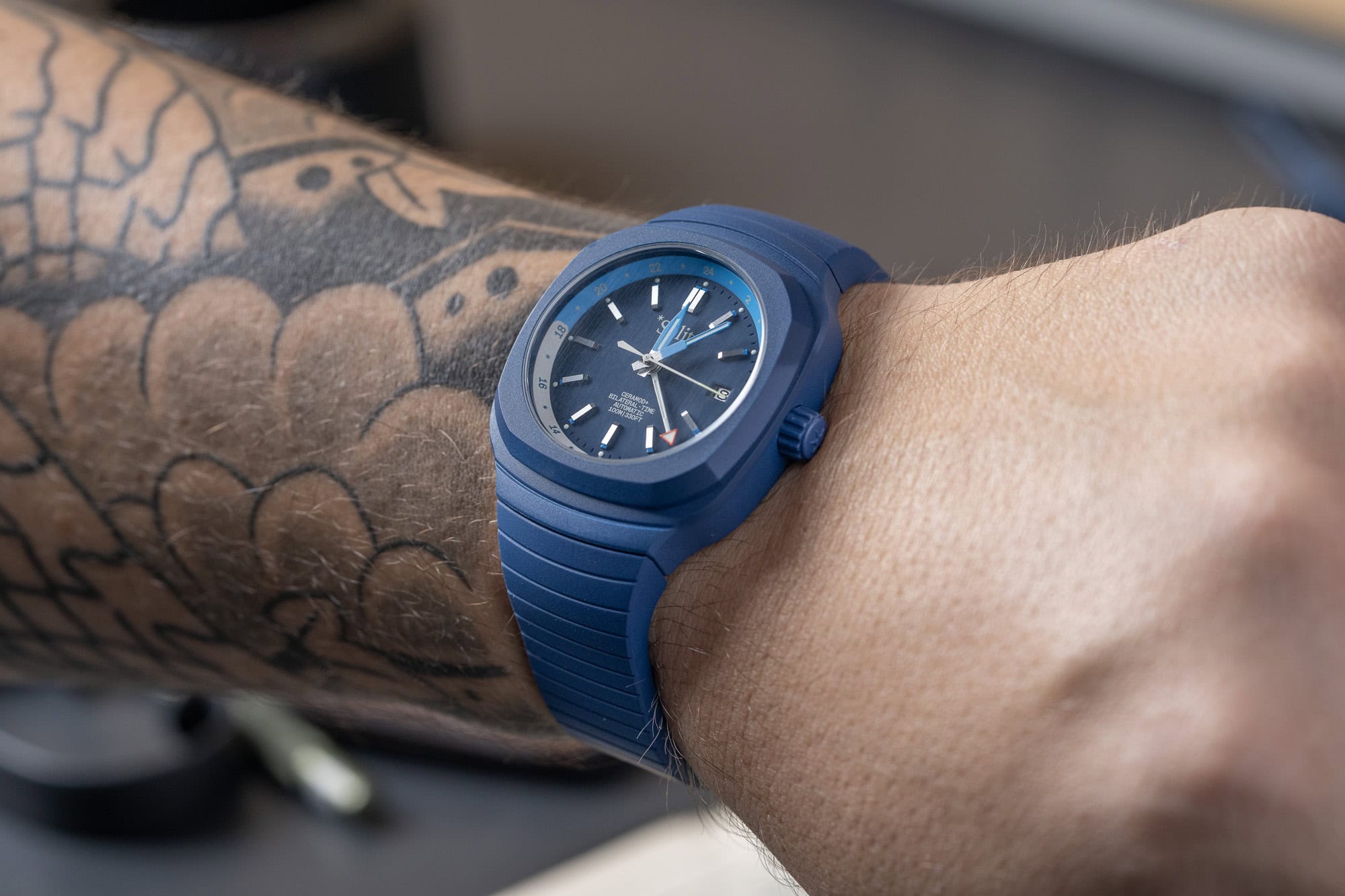
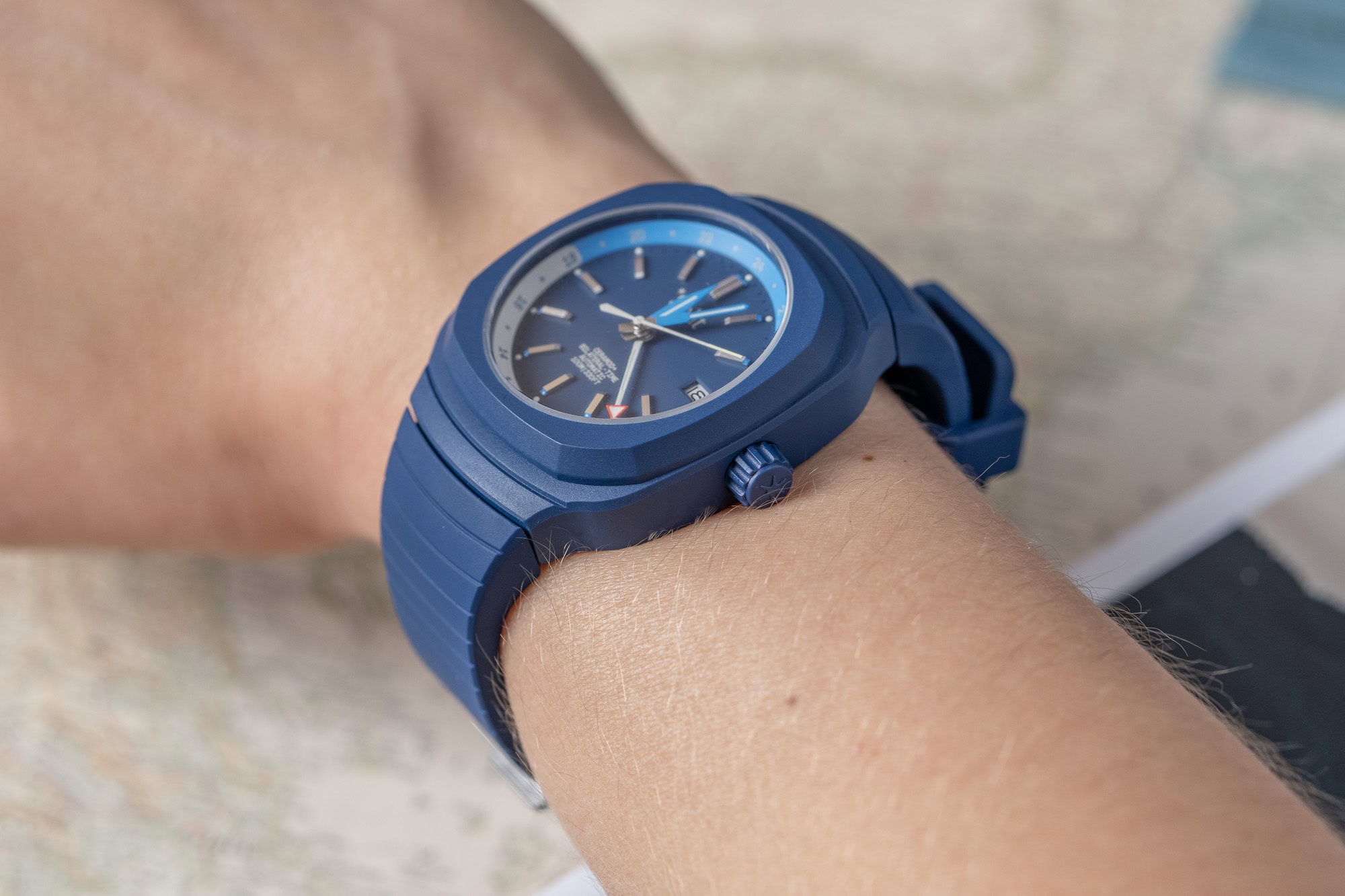
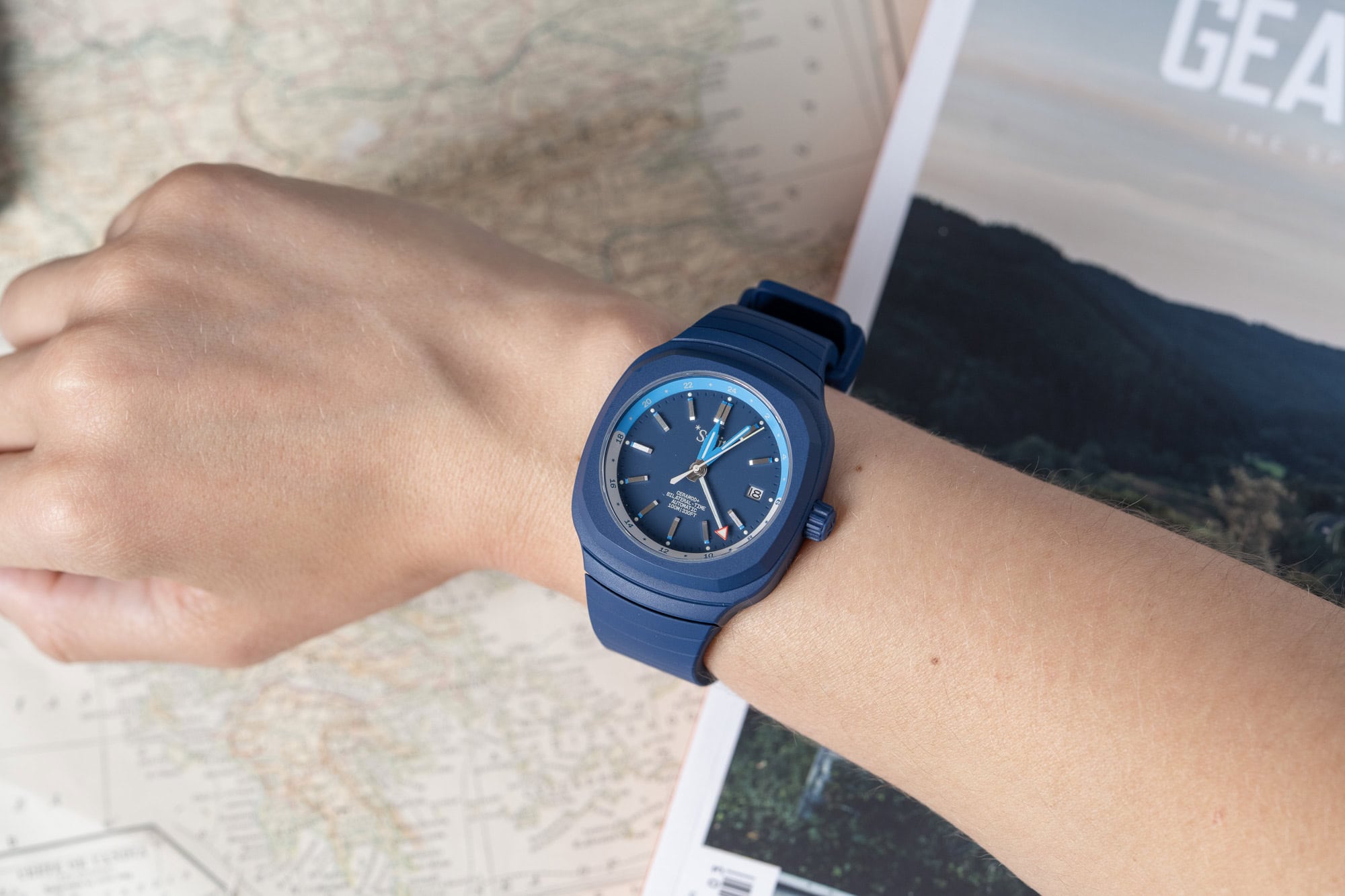
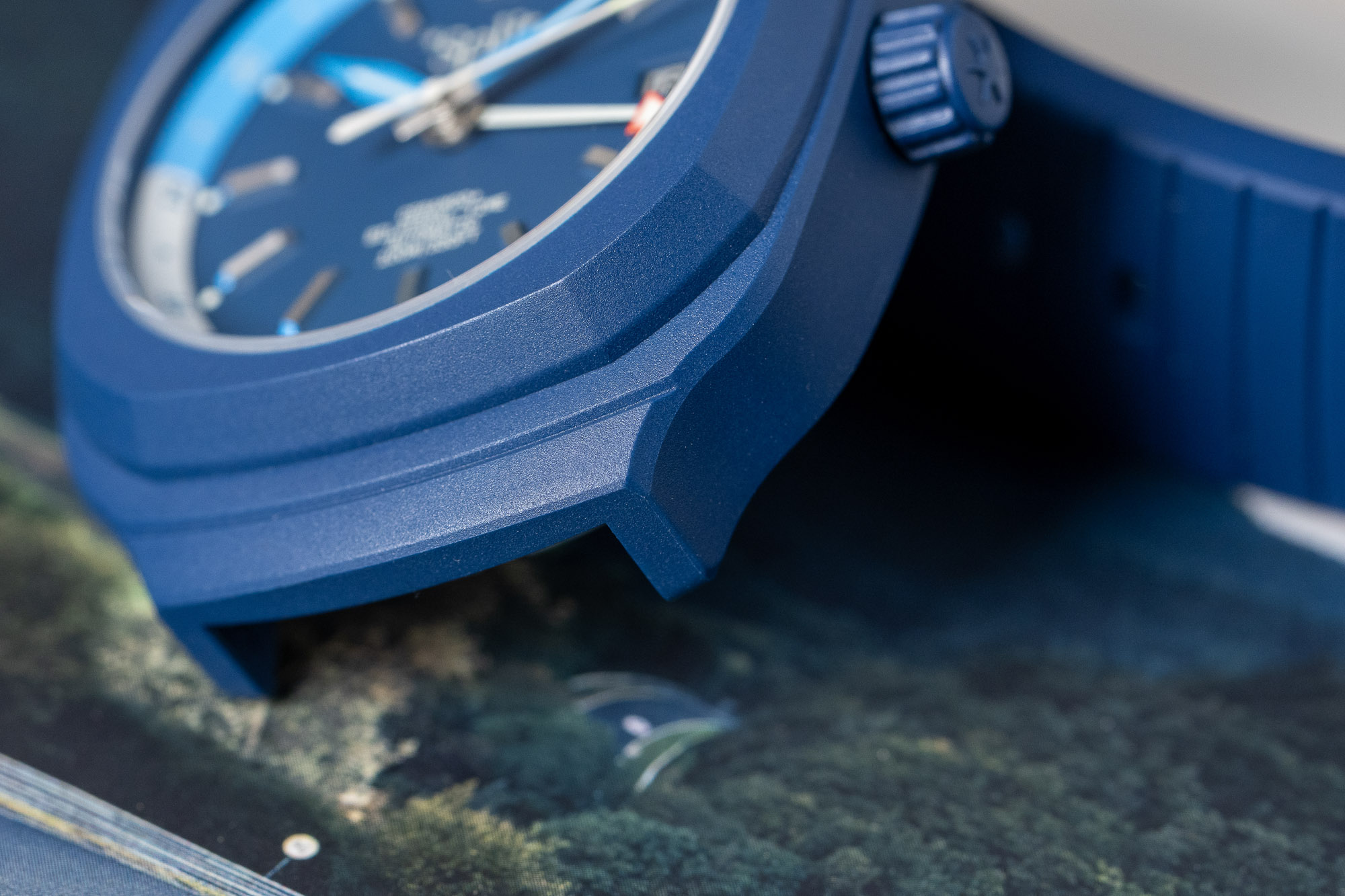
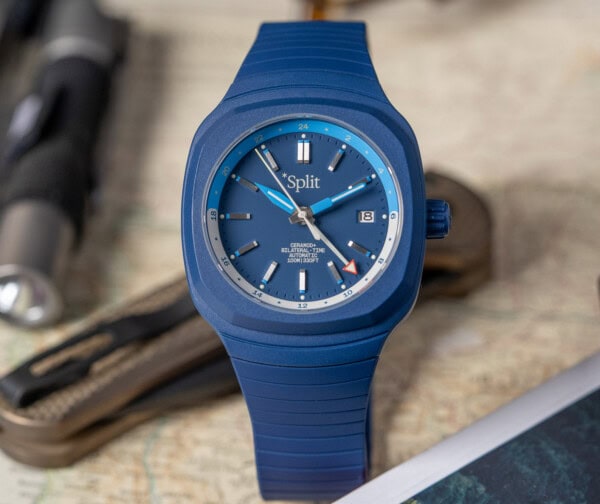
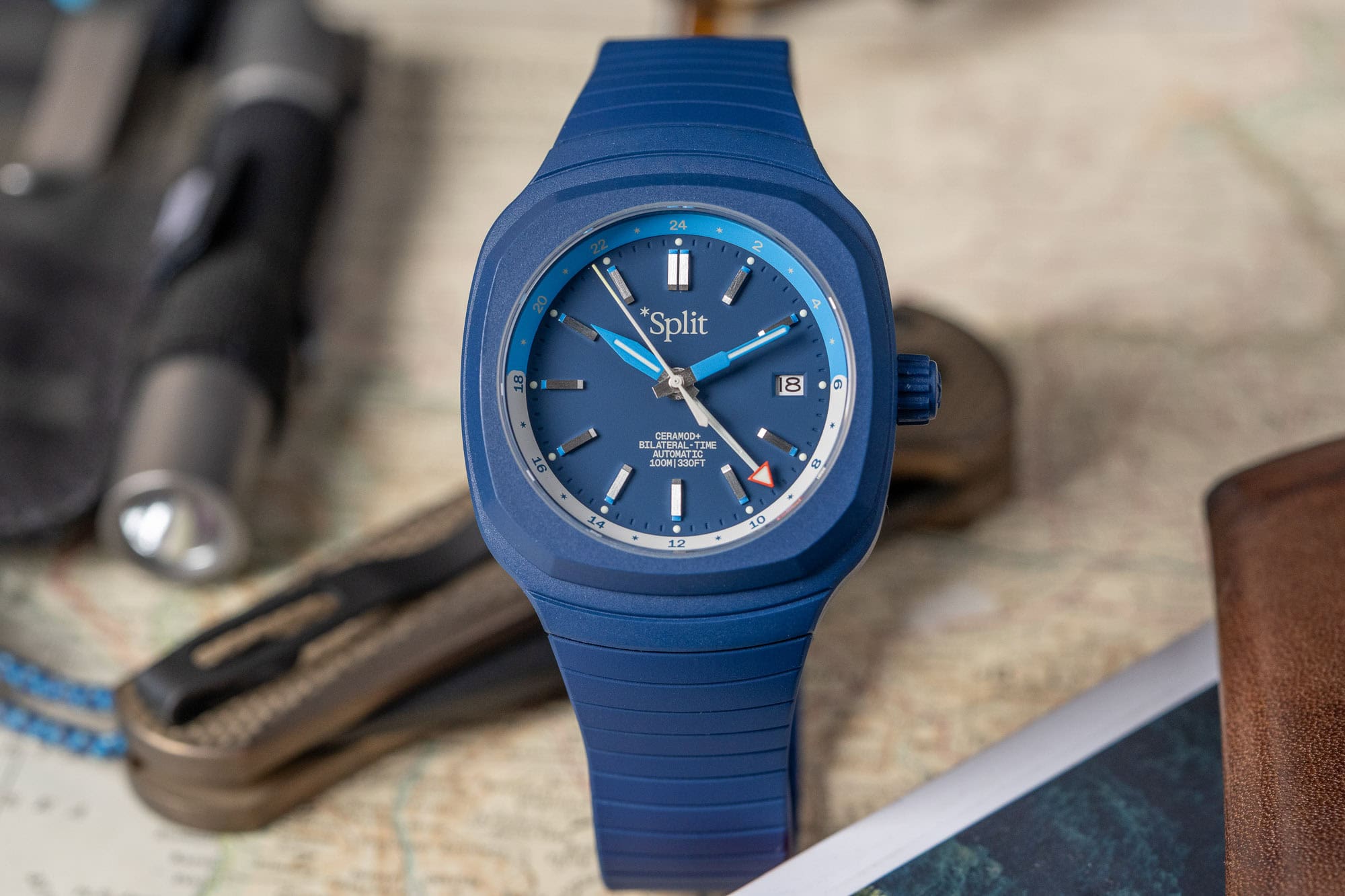
I received a sample of The Delta, the “one with the blues” in the collection whose name comes from the Mississippi Delta – the birthplace of the blues. Right off the bat, I was disappointed because the design of this particular 40mm watch didn’t fit my 5.75-inch wrist, namely because of the case to bracelet integration. I’ve experienced this in countless models adopting the integrated bracelet sport watch design with composite materials like we see here, from the G-SHOCK Mudman to the Hublot Big Bang. It seems no one can quite figure out how to get the drop right so the watch lays supplely to the wrist without adding a lot of extra bulk.
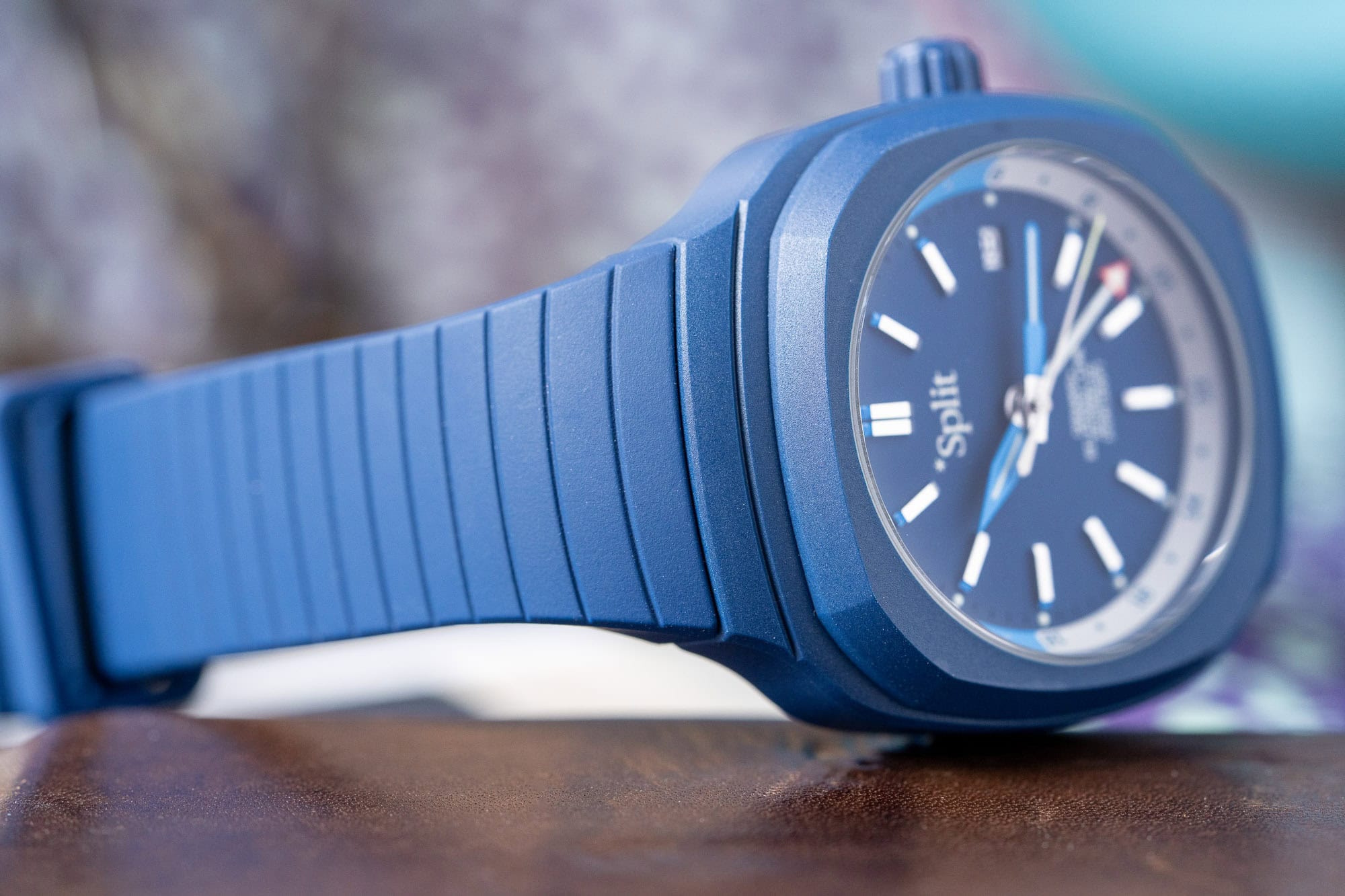
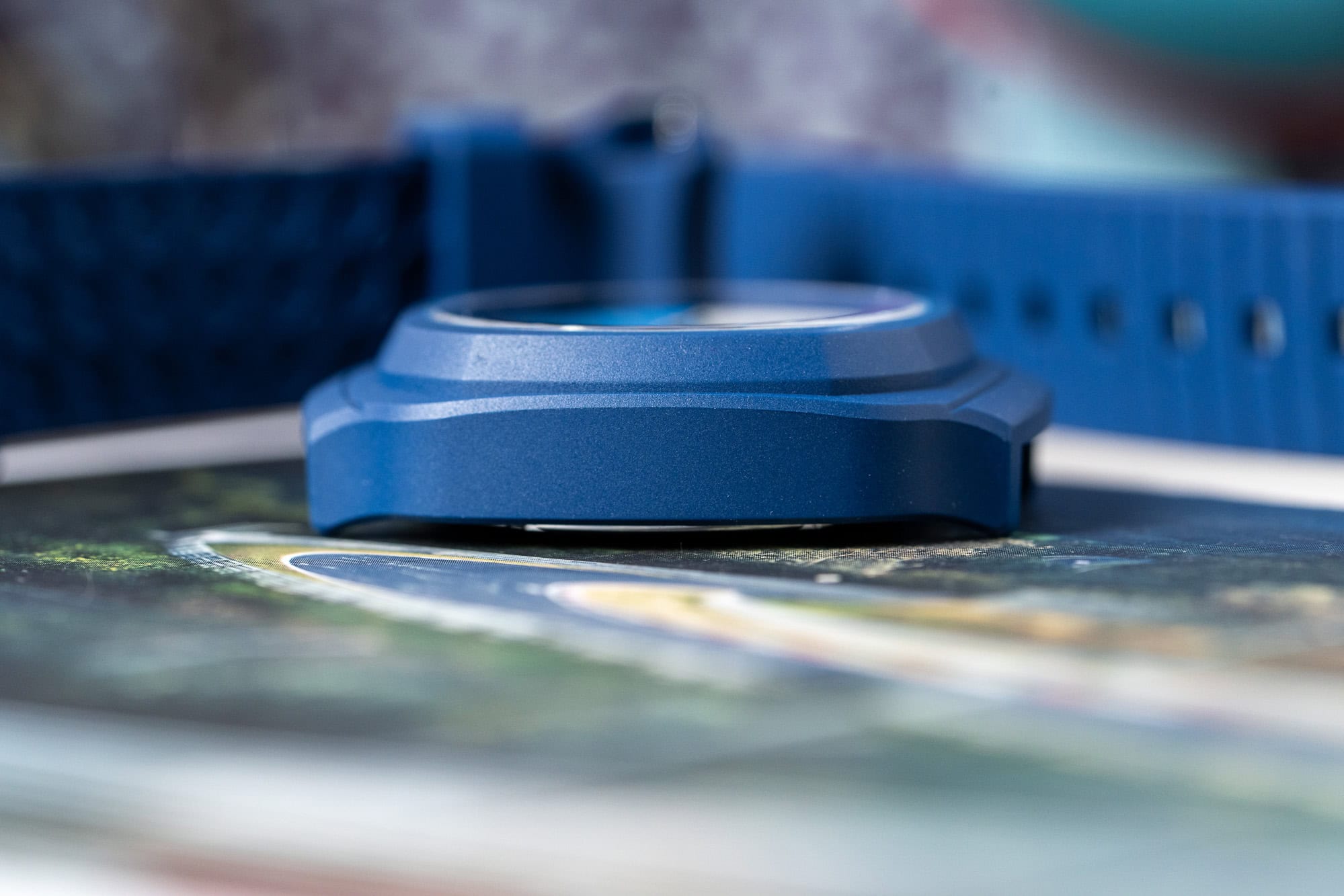
Split calls its material Ceramod+, combining ceramics, nylons, and polymers with a rubber strap. I’ve had a decent education in the application of ceramic in watchmaking, most recently with a visit to the manufacture of one of the pioneers of ceramic in watchmaking, Rado, uncovering the processes behind the brand’s high tech ceramic. Still, I can’t help but question if some more vaguely described ceramic composites are just a fancy name for something slightly more robust than plastic. From some brands, like Swatch, we certainly see them priced as such with its bioceramic models starting at $90 and top tier models like the MoonSwatch hitting $285. That said, while the Split GMT is a relatively affordable watch sitting under $1000, I’d like to better understand the $903 price tag of this particular composite model relative to some of its competitors.
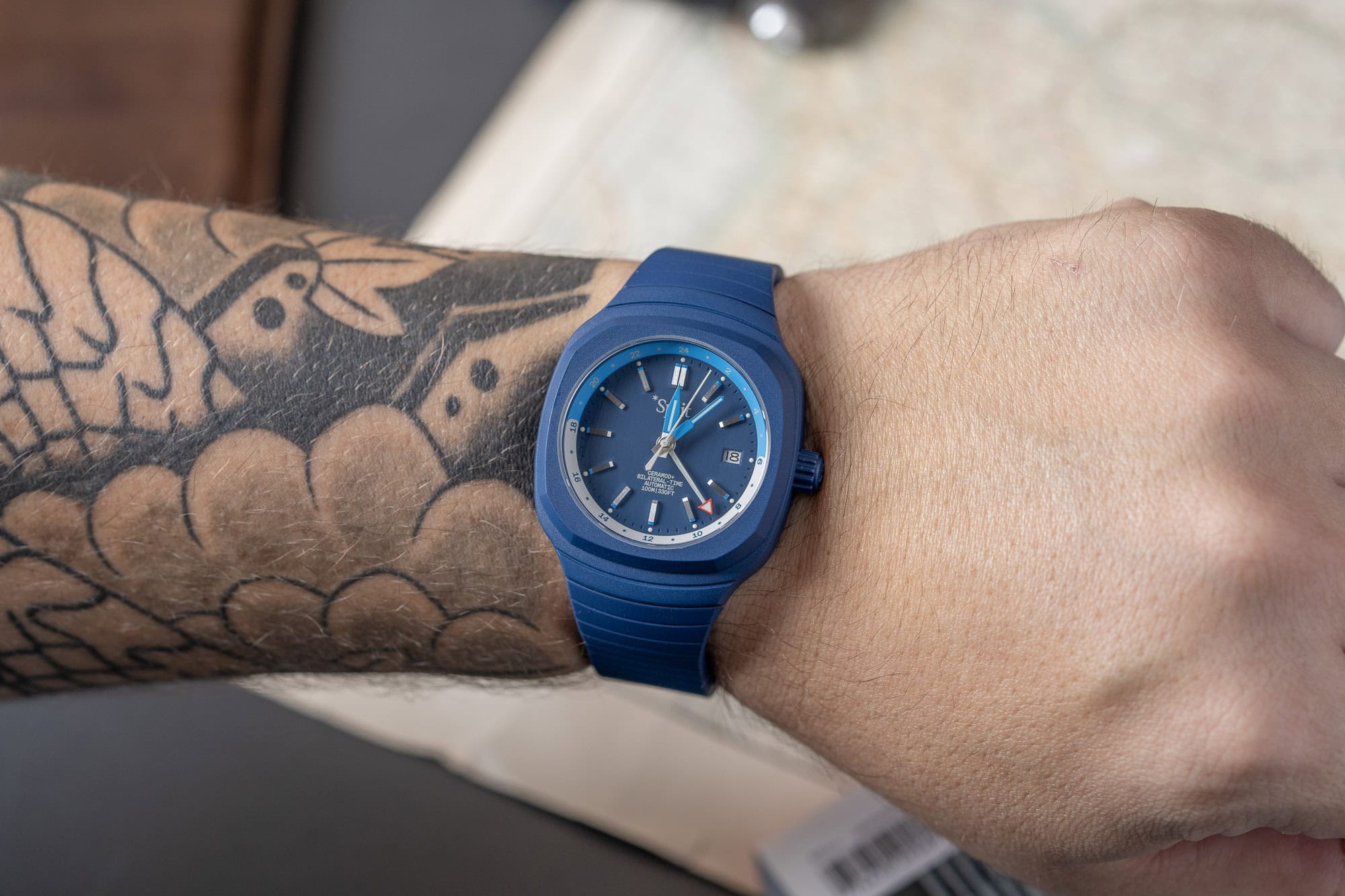
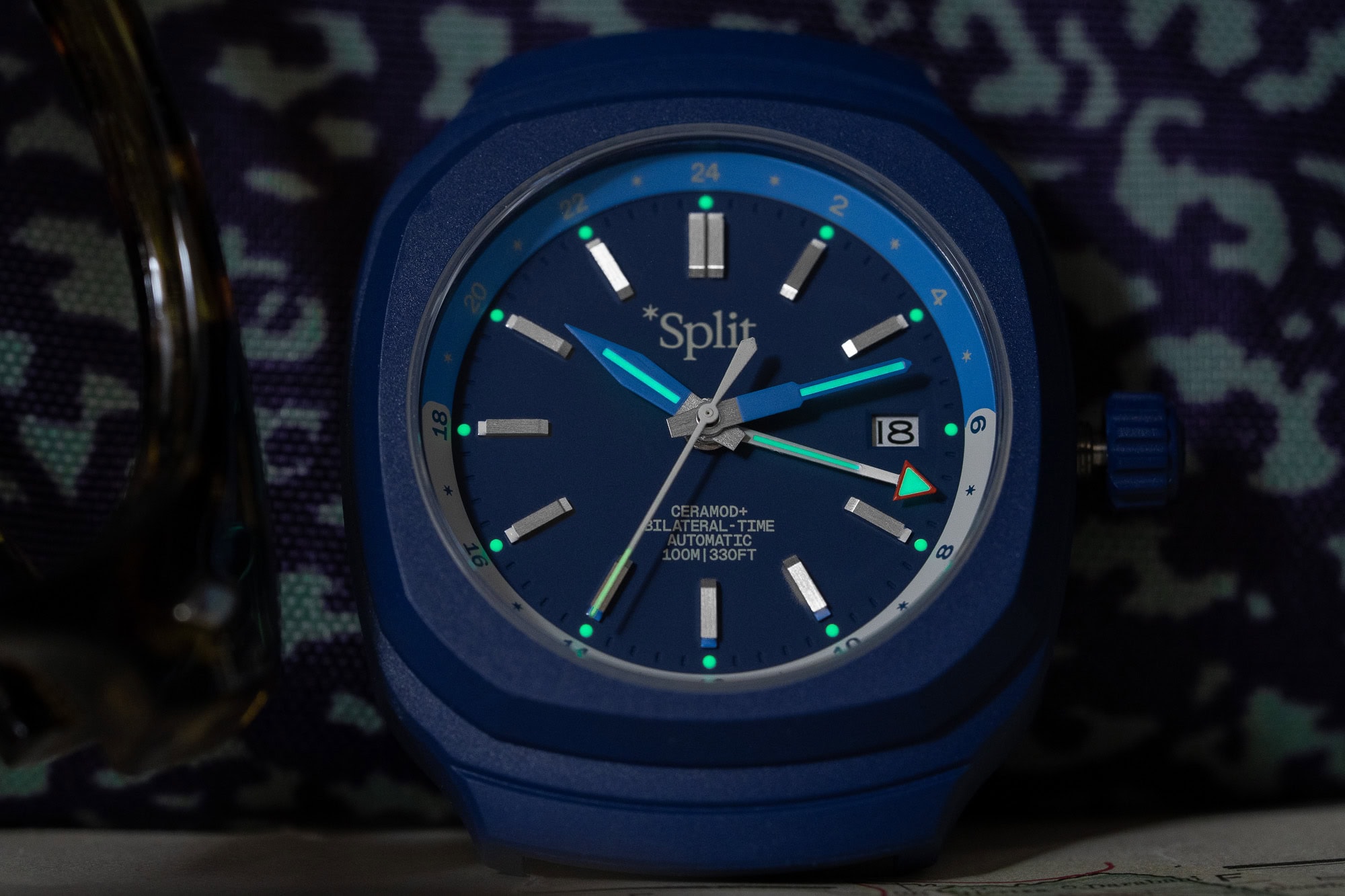
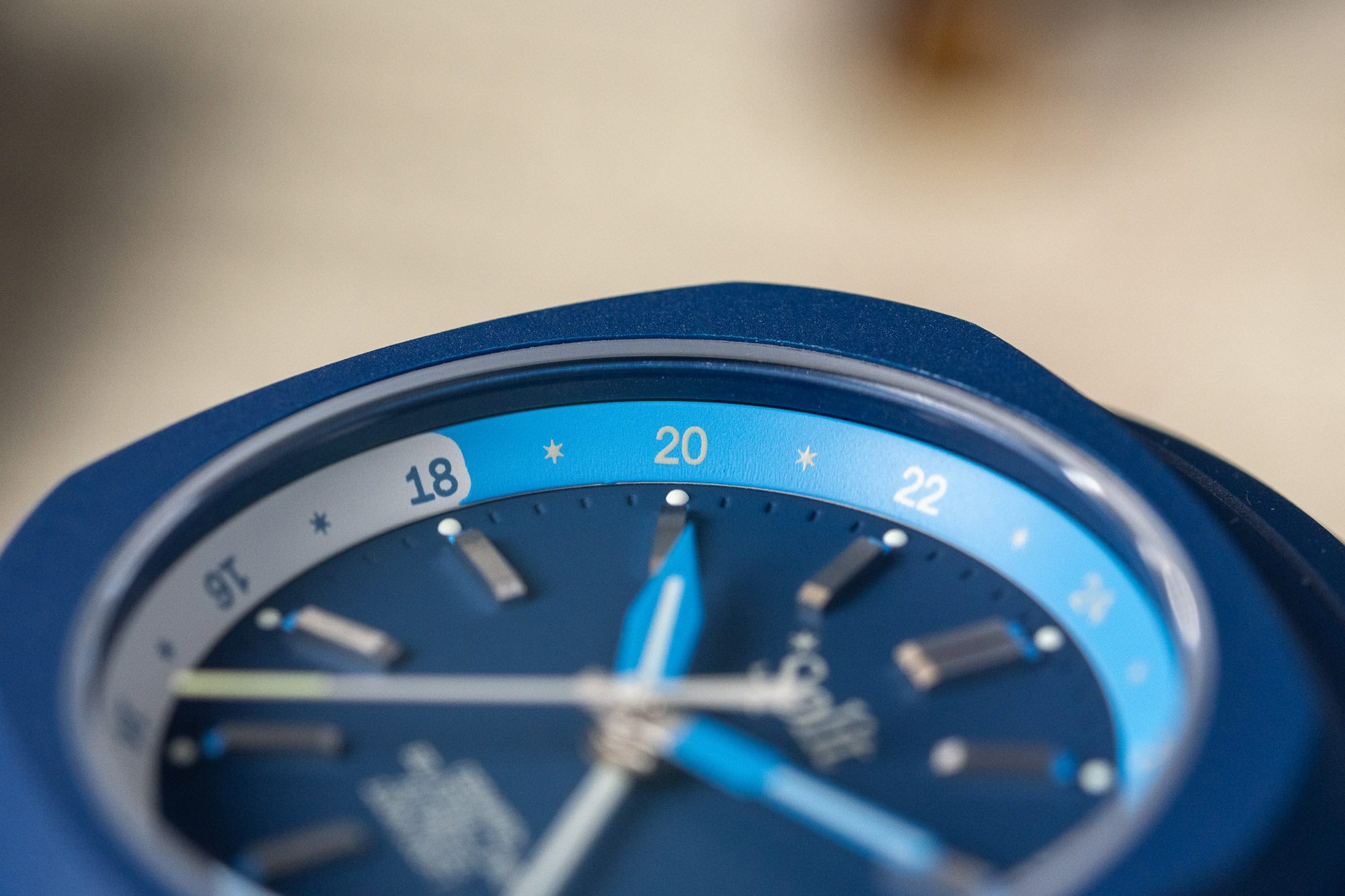
While it was immediately clear this watch wasn’t for me, I’m more than used to my petite wrist being outsized by many great watches, so I pressed onward in my assessment. The dial here is highly legible thanks to a combination of font choices and contrasting colors with the added bonus of a sapphire crystal with antireflective coating. The hour indices are applied, and there are lume dots for each hour marker, along with luminescent treatment on the hands. The use of color combined with the layout also makes for an easy read of the date as well as the minutes and hours in two time zones thanks to the independent local hour hand clearly delineated with a red arrow. The GMT function is made possible thanks to the Miyota 9075, which operates at 28,800 bph, has 24-jewels, and a 48-hour power reserve.
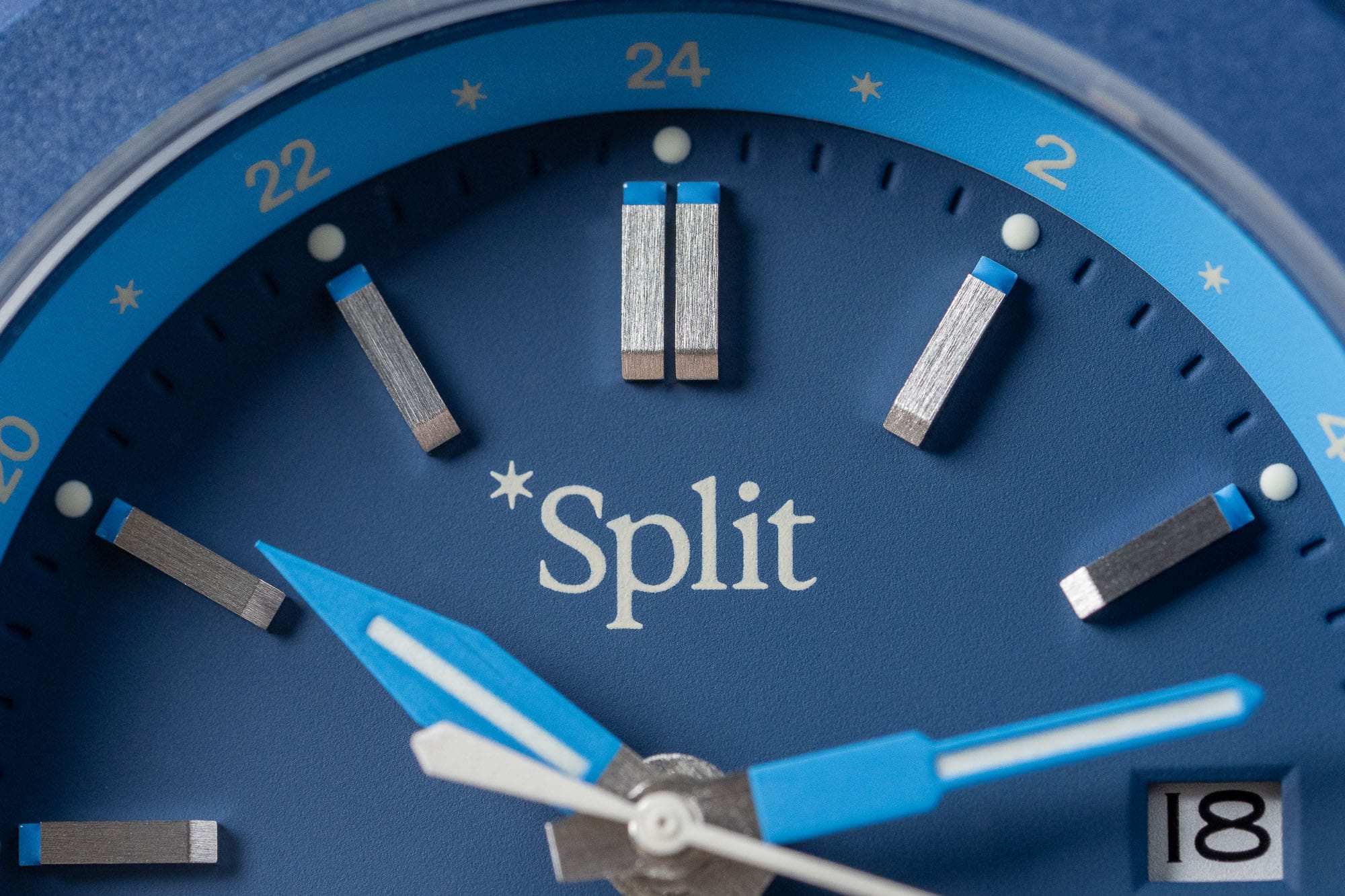
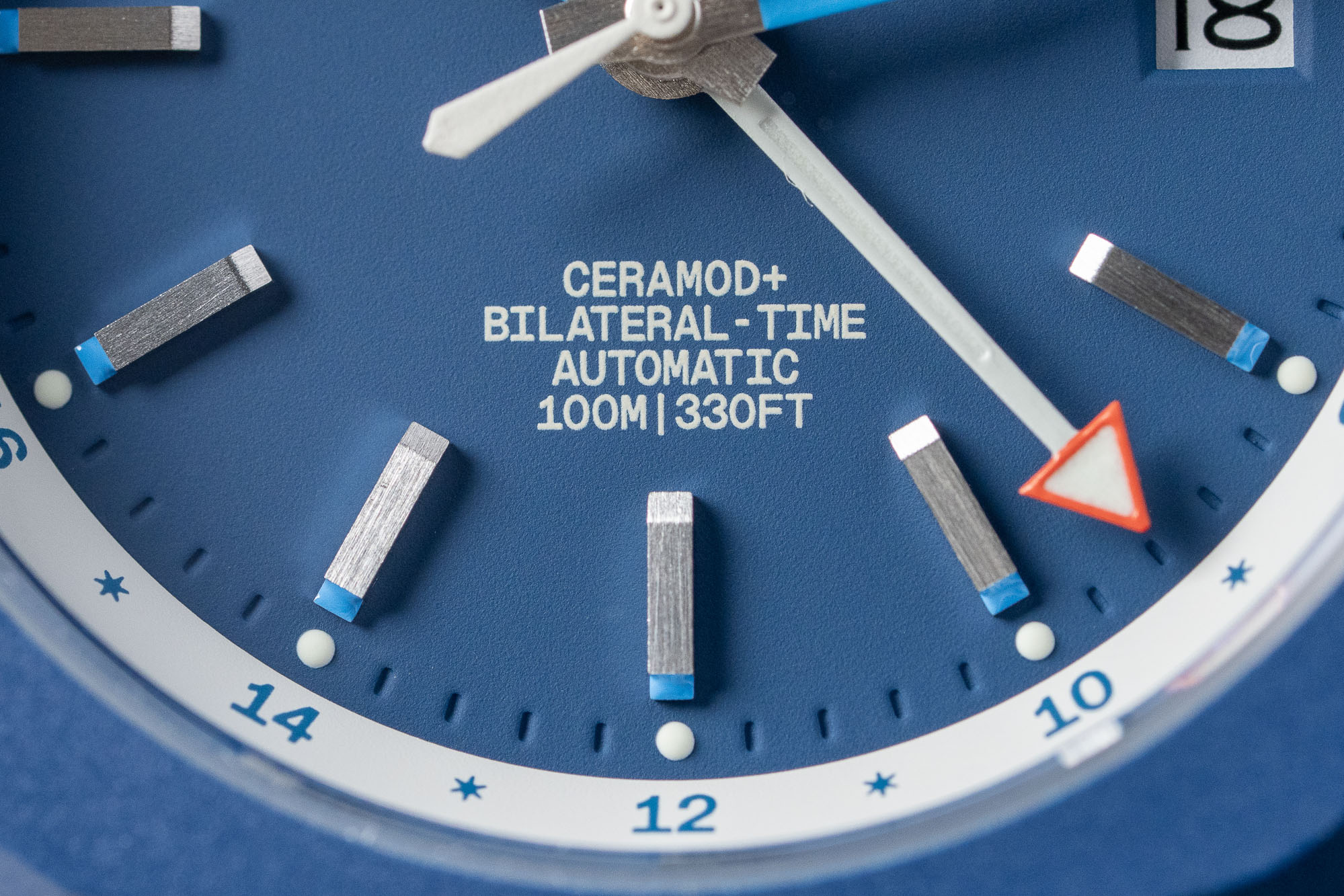
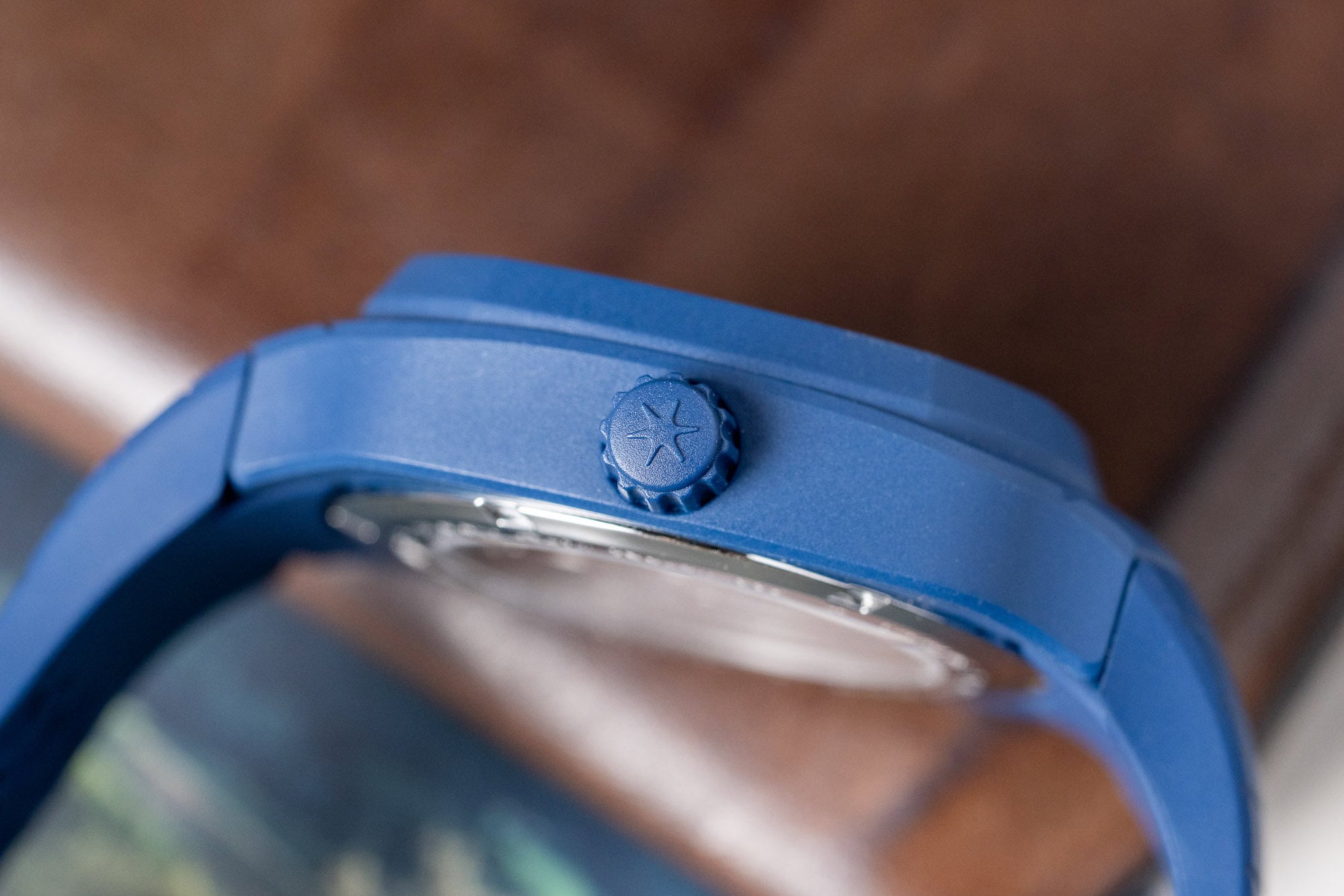
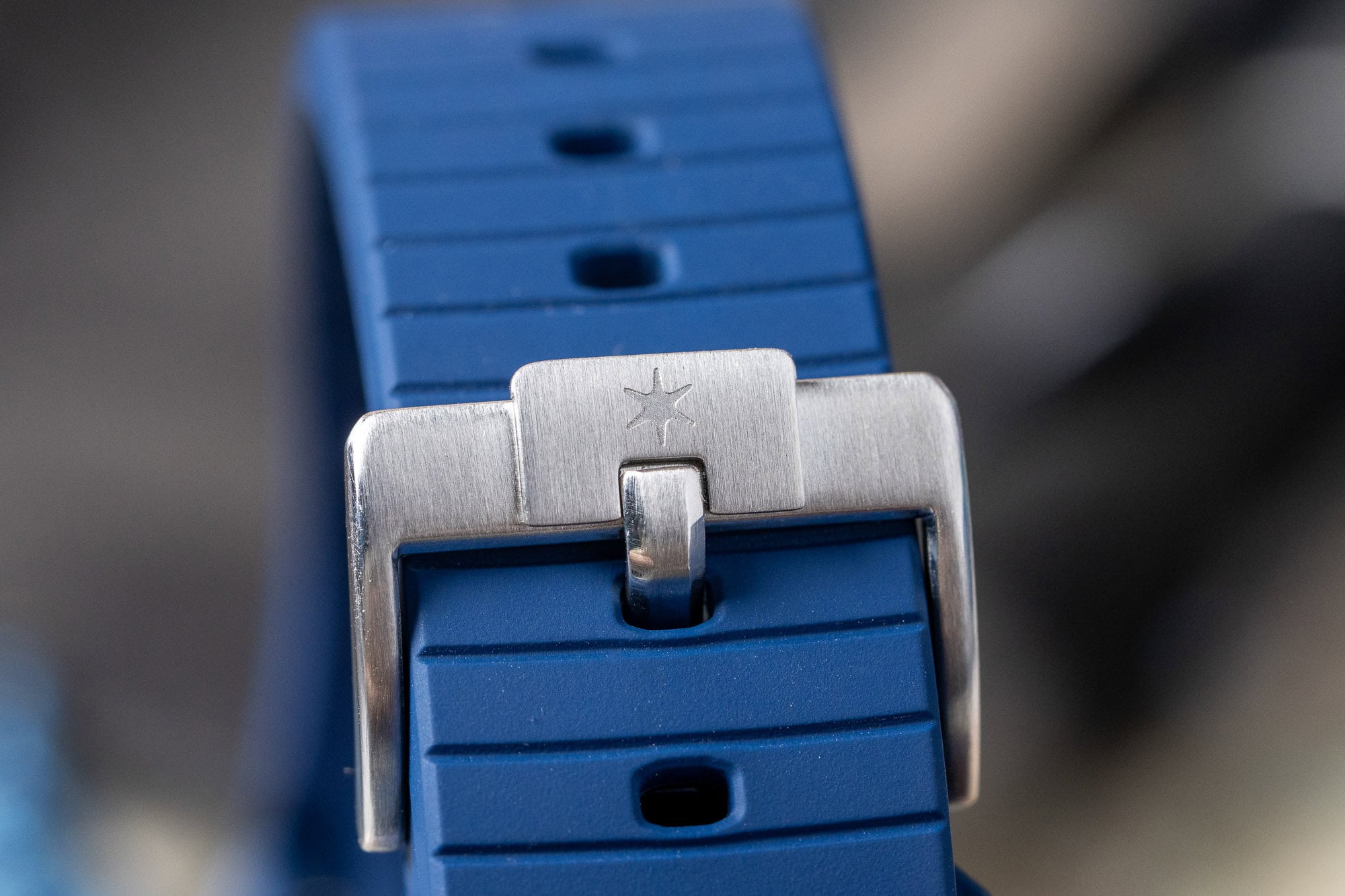
I wish I’d been able to see the other three color variants in person – The Rea (black), which takes its name from a small river in Birmingham, England where pioneers like Black Sabbath and later Judas Priest developed their defining sounds; The Hudson (beige), named after the river running alongside New York City and captures the the CBGB era in the 1970s with edge like the city itself; and The Westbourne (green) as a nod to the River Westbourne running beneath the shops on Westbourne Grove where The Clash were based. However, going off the photos alone, they seem to cover an attractive range of hues, and the shades are nicely color-matched across the composite case and rubber strap. The brand further complements the sporty materials with a screw down crown and 100-meters of water resistance.
So, despite the mismatched proportions of the watch to my particular wrist, would I take the Split GMT out on a second date? I’m not entirely sure. On paper, I still feel the model ticks tons of boxes, but that chemistry just wasn’t there for me upon meeting the watch in person. To learn more and check out the model for yourself, head over to Split.