 Latest Review







Typsim, the Seattle based brand run by Matt Zinski, has been on my radar since the spring of 2023, when I met Matt at the Windup Watch Fair in San Francisco. Typsim was not exhibiting at this show, but that’s frankly sometimes my favorite way to meet a brand owner. The young, hungry brands that show up just to be there, and maybe don’t have a fully baked idea quite yet, are sometimes the most interesting ones to track.
To be fair, I think Typsim was pretty well baked by the time I found out about them – my lack of knowledge before 2023 can be chalked up to my own blind spots and the simple fact that nobody can keep up with everything. Matt’s background is in architecture, and the stated goal of his brand is to create watches with a clarity of design and thoughtfulness that you’d associate with a well conceived building. The first watch he showed me that day in San Francisco was the diver, called simply the 200M, which honestly felt like a fairly generic (though very well made) vintage inspired dive watch, except for one thing: it makes use of an exclusive lume compound that promises to patina with time.
That little detail has been stuck in my head ever since, and I think it unlocks something about the appeal of the brand. Matt is both a genuine watch nerd and a true tinkerer, someone willing to experiment and shoot for details that, realistically, only matter to a very small handful of super nerds, like me, and like Matt, and, I’m sure, like his customers. Honestly, I don’t even really care all that much about lume, or about the fact that every other modern lume compound is going to look exactly like it does today for all eternity (most likely). But the notion that Matt wouldn’t accept the conventional wisdom that today’s lume can’t show its age reveals a lot about Typsim’s goals as a watch brand.

When I saw Matt at this year’s Windup Watch Fair in San Francisco (as an exhibitor, this time) I spent some time focusing on some of the other watches in the collection, and asked him to send me a few to look at after the show. I’ve now spent some time with the Noir, a midcentury-style dress watch, the Architect, a design influenced by the likes of Max Bill and Dieter Rams, and the Timetraveler, a dual time travel watch that, like all of Typsim’s watches, has a strong but not overpowering vintage influence.
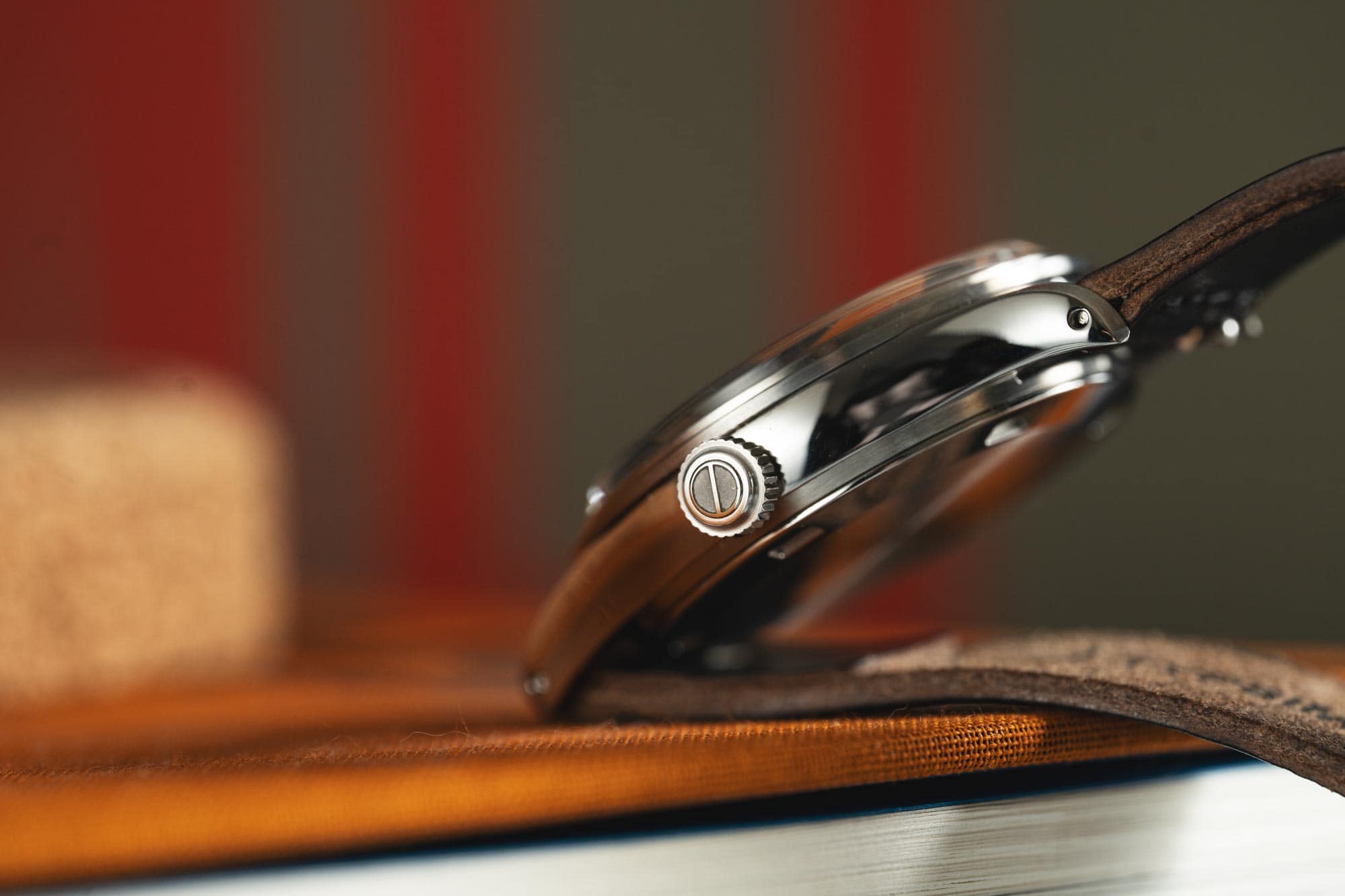
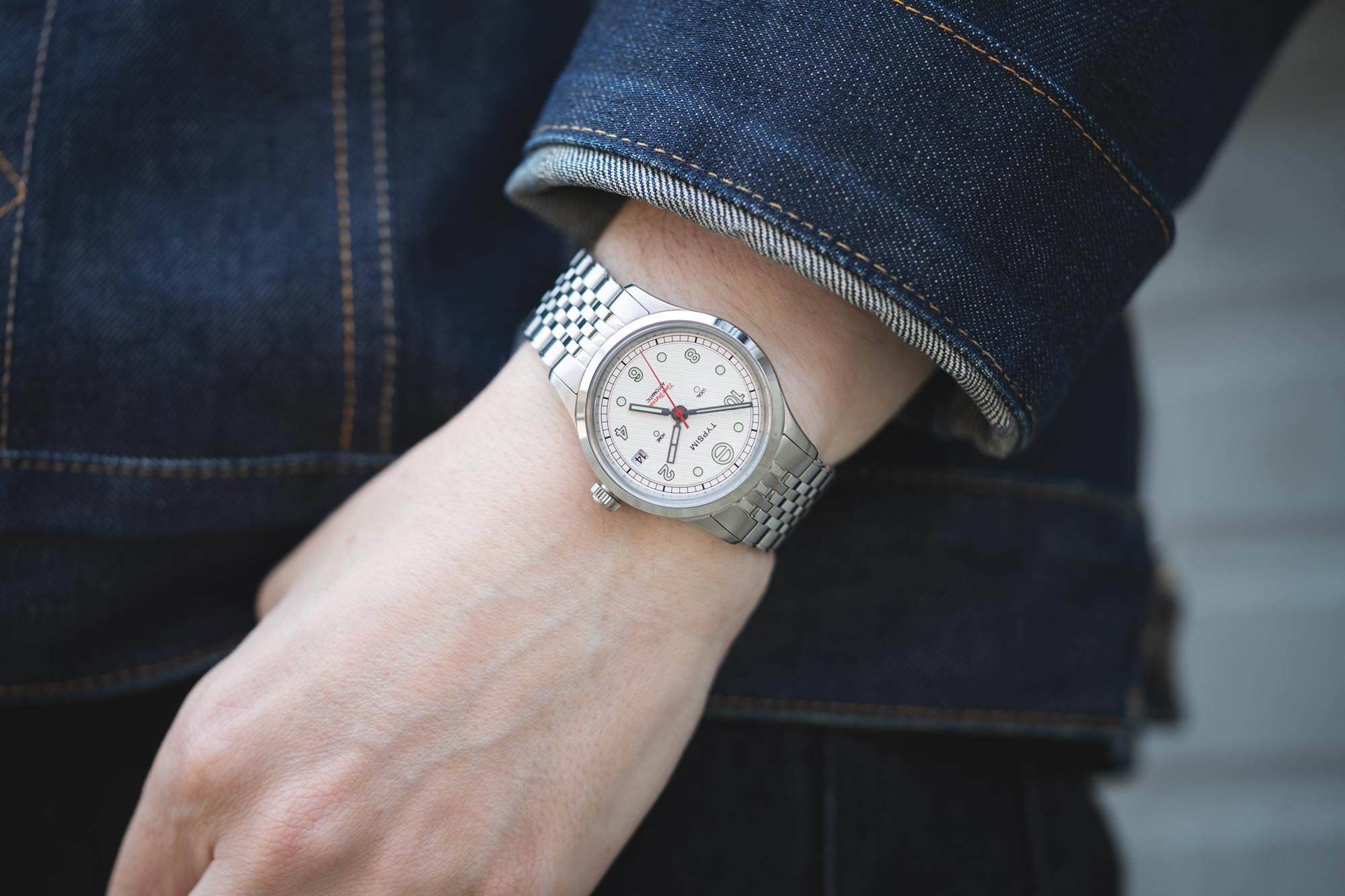
The thing that strikes me immediately about all three of these watches is that they are extremely well proportioned, and I give Typsim a lot of credit for sticking with a 36mm case across all three references. These watches are clearly born out of a love for classic vintage pieces, and it would have been disingenuous to upsize them to 39mm or larger in the name of somehow being more palatable to a wider, larger wristed crowd. As a larger wristed person, I’m here to say that these watches are exactly right at 36mm, and that if you have a 7.5 inch wrist like mine, or maybe one even larger, you can absolutely wear these watches without fearing that you’ll look ridiculous. In fact, not only will you not look ridiculous, you will look completely normal to 99% of the people who lay eyes on you. The other 1% will likely just think you’re particularly stylish and woke up this morning and made a clear decision to put on a watch that is uncompromising in what it sets out to do.
I mention the sizing right at the top because there’s a trend I’ve noticed on social media and some watch websites that’s emerged as the pendulum has swung back to larger watches from a period where everyone was purposefully downsizing. We have, undeniably, shifted back to a period where bigger watches are being thrust upon us once again, and that’s actually fine with me, because we still have the smaller ones to choose from if we want. Choice, as always, is paramount. But an unfortunate side effect of big watches getting a little bit of the spotlight back is the emboldening of a certain type of watch enthusiast, ready to torch a small watch in the comments with notes like “Enough with these teeny tiny watches for teeny tiny people, I’m a giant man, etc.” These guys are equally inclined to comment on big watches with praise, like “Finally, a watch a normal sized man like ME can wear, thank you for this 46mm pilot’s watch that is also 20mm tall.” If you’re as tired of that guy as me, these Typsim watches feel like something of an antidote.
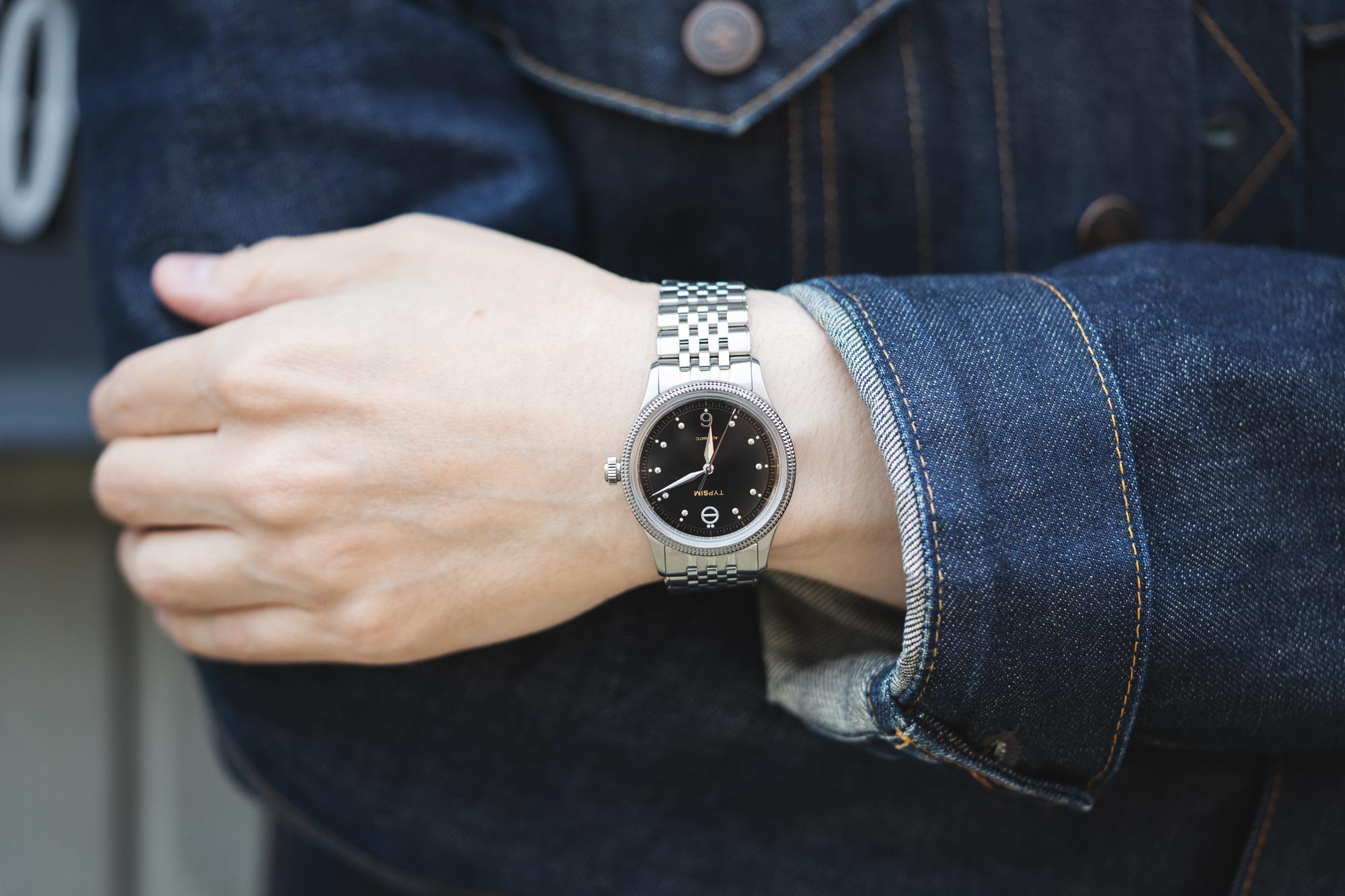
So these watches have something nice going for them immediately when you get them on your wrist, which is a keen feeling of comfort that comes when trying a watch just a little bit smaller than what you’re used to wearing. Watches like these tend to make me wonder why I don’t have more watches of this size in my watchbox, which is not something I’m not quite prepared to interrogate today, but might be in a future editorial. Nevertheless, it’s satisfying to find Typsim, as a brand, embracing this smaller form factor across multiple watches in their collection. As a statement of purpose when it comes to their house design language, it’s every bit as meaningful as, for example, Panerai or IWC honing in on oversized watches, as they’ve been prone to do over the years.
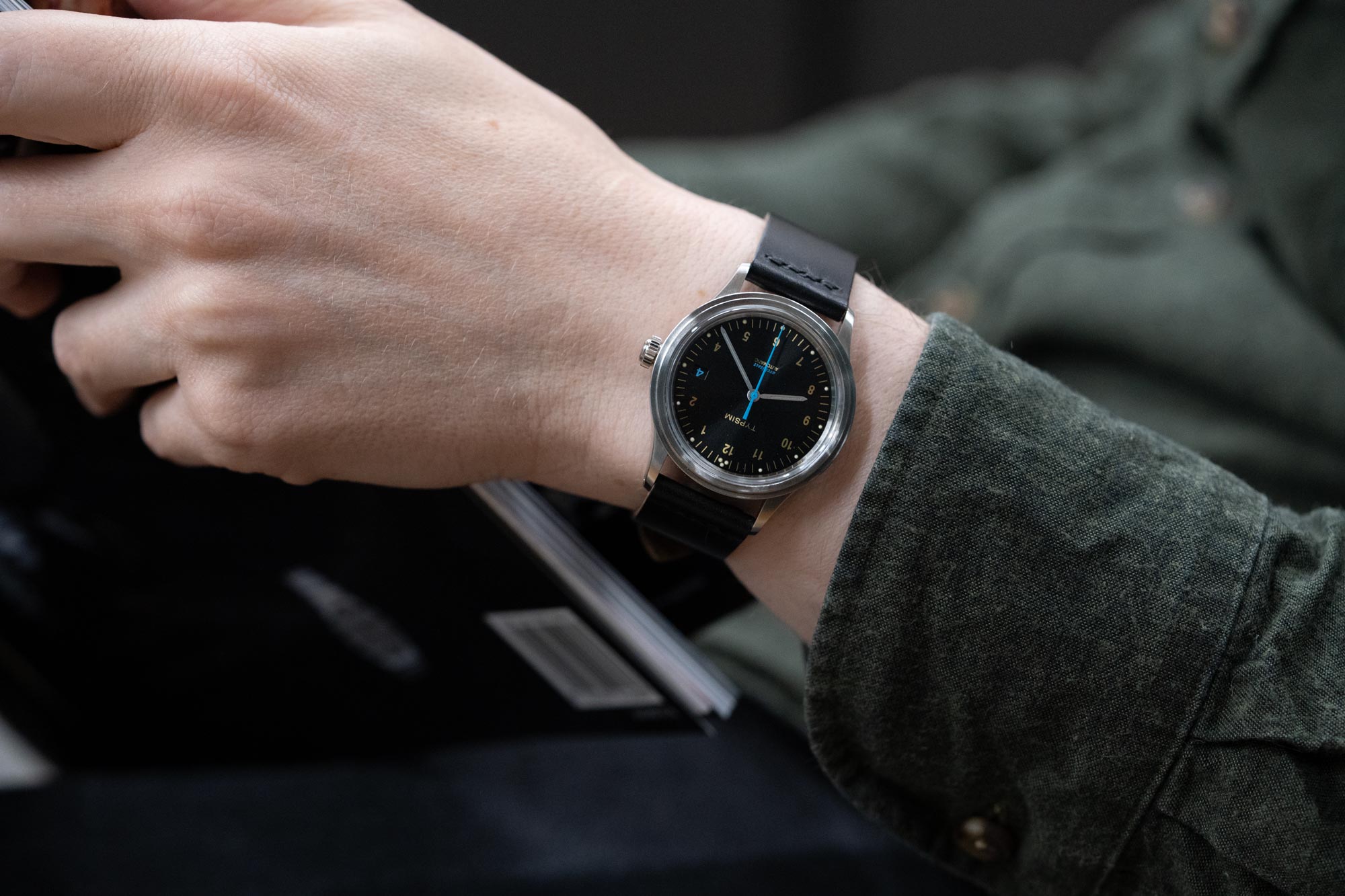
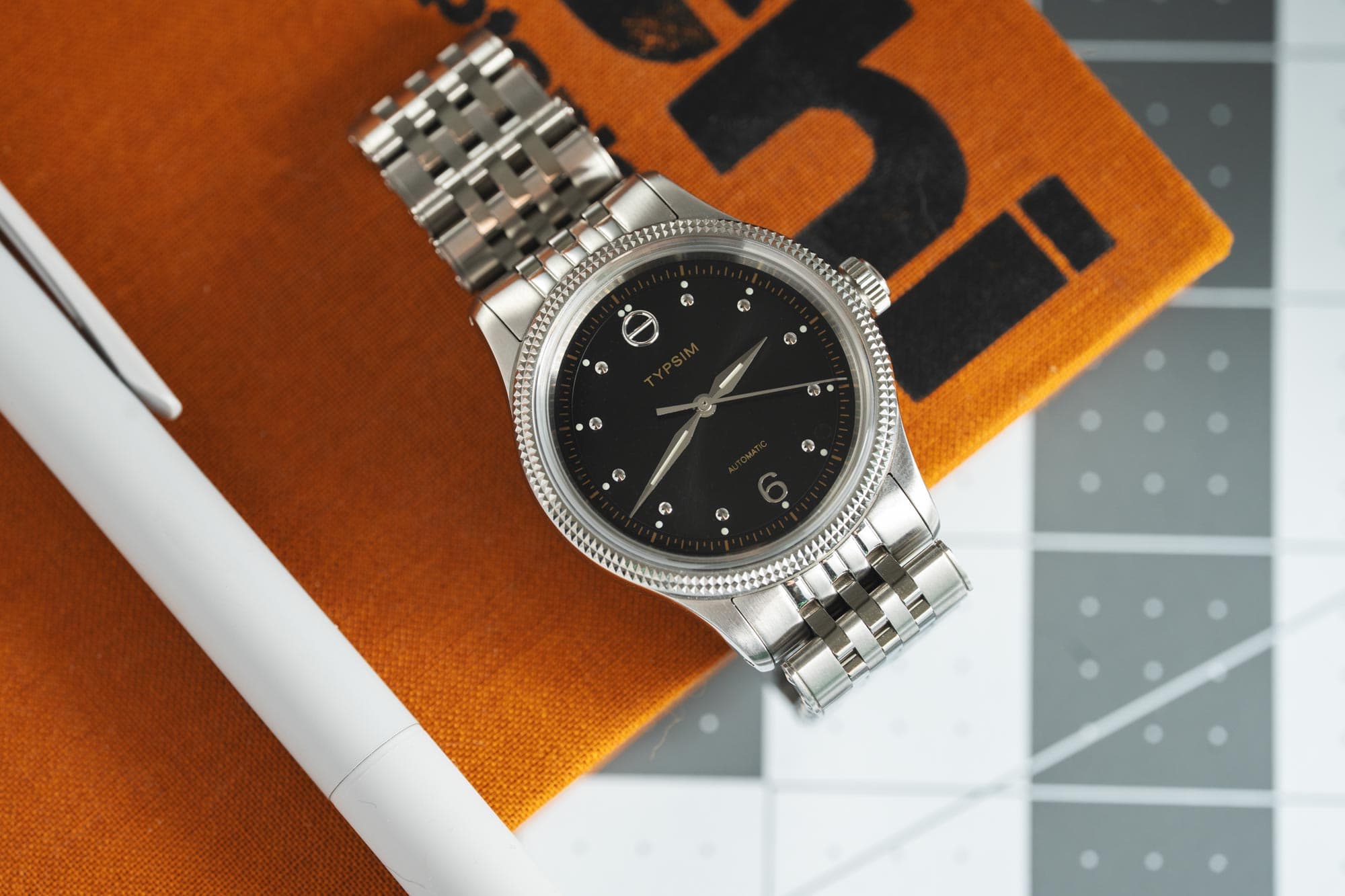
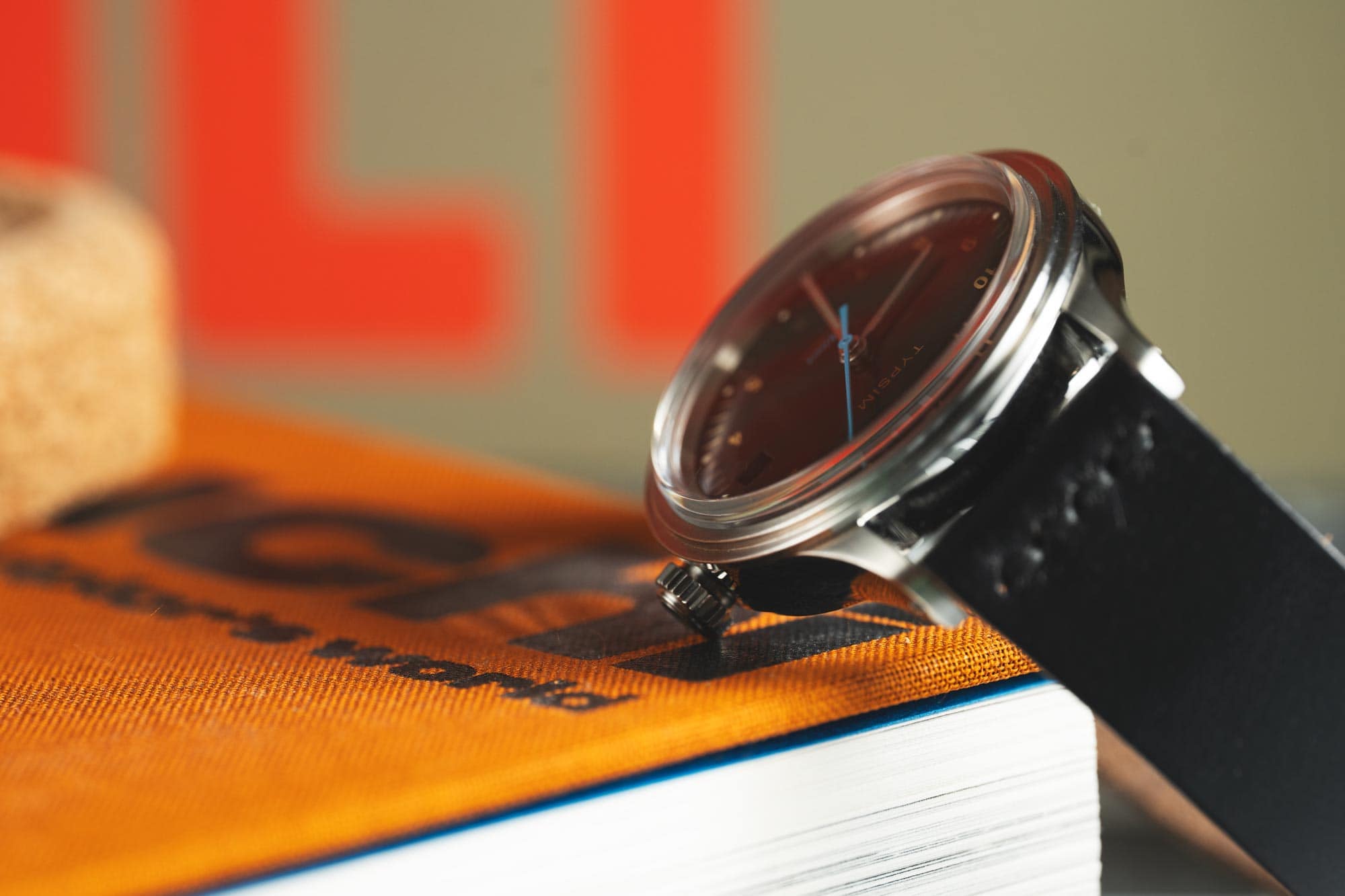
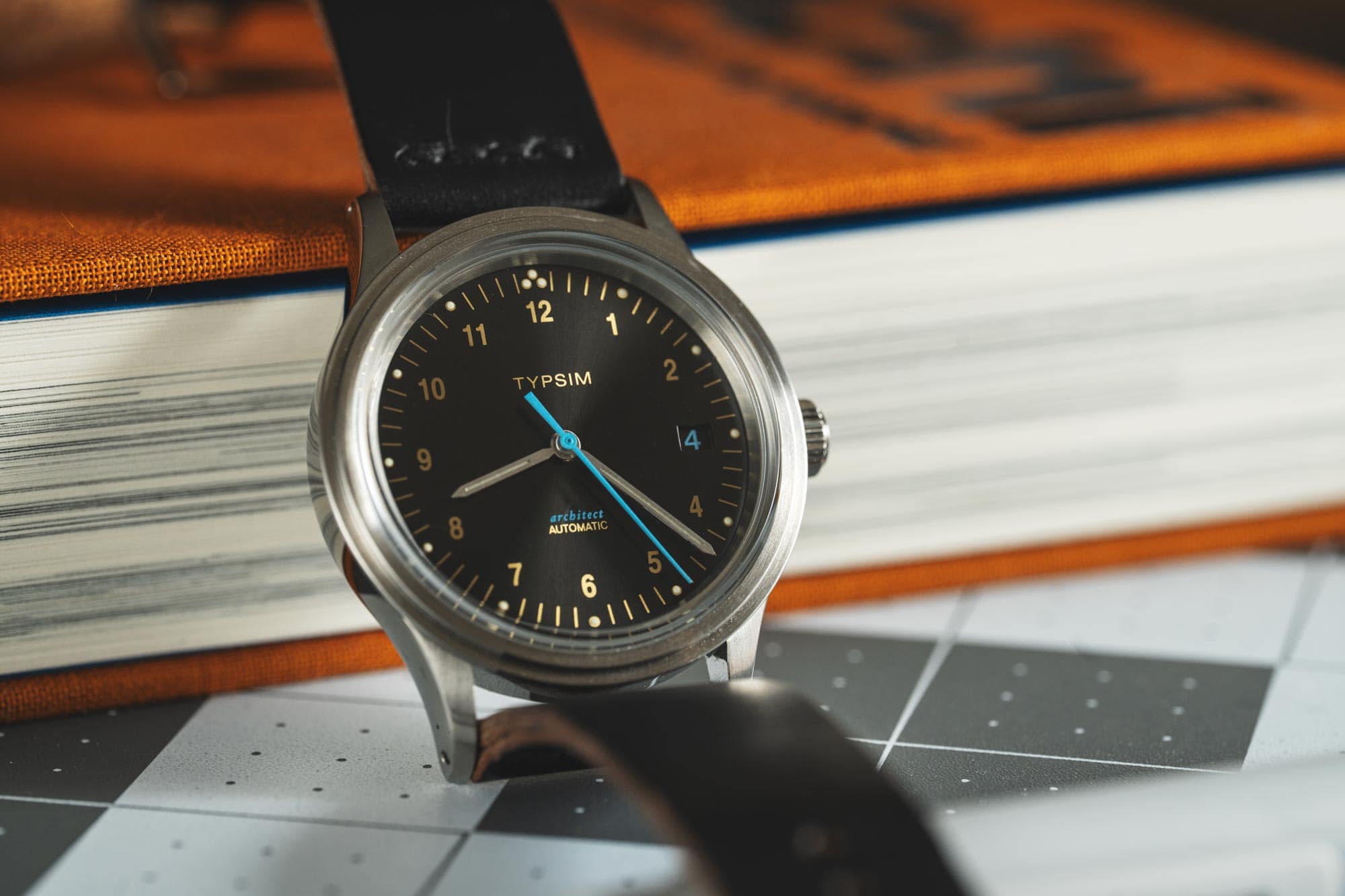
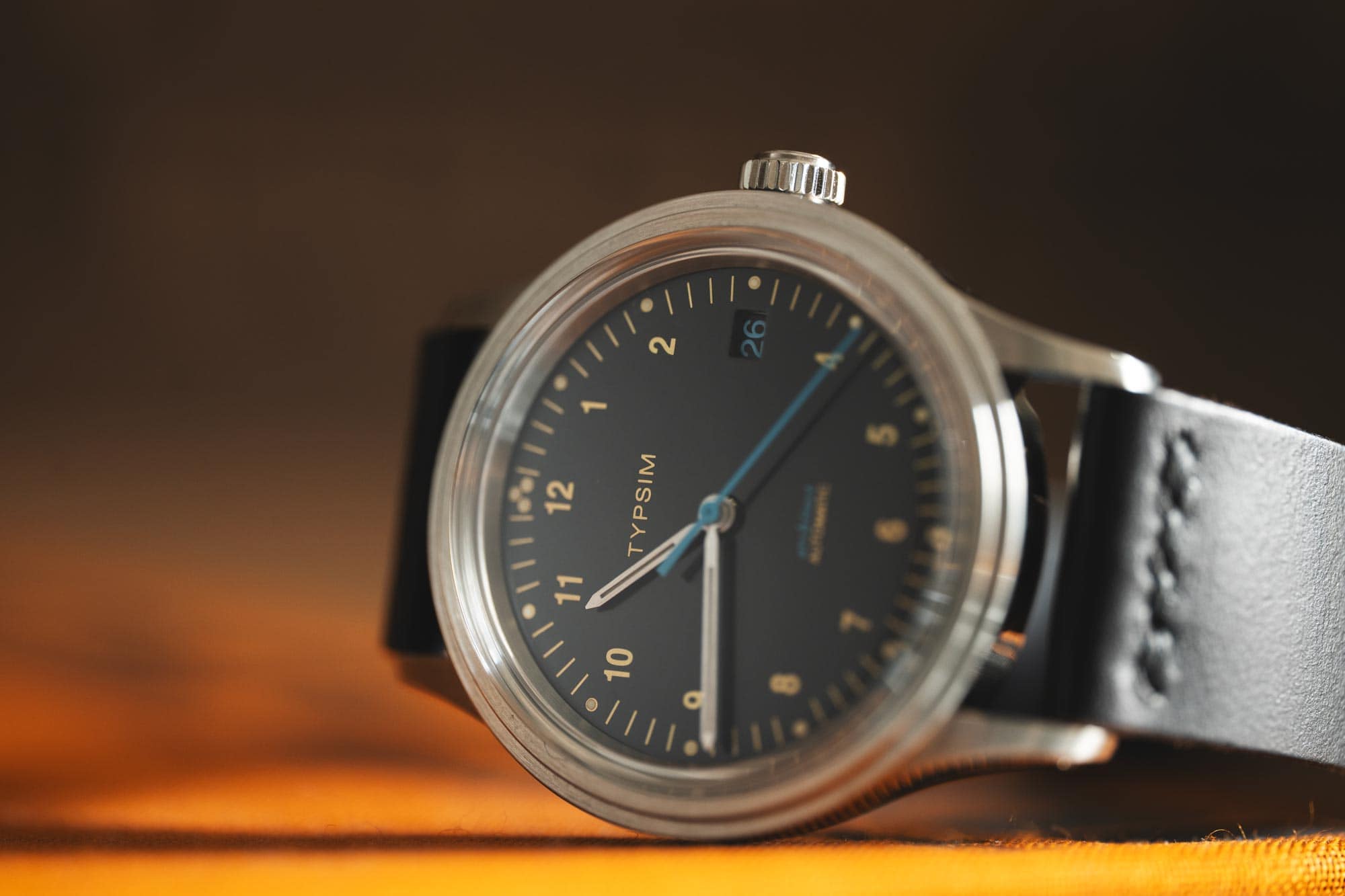
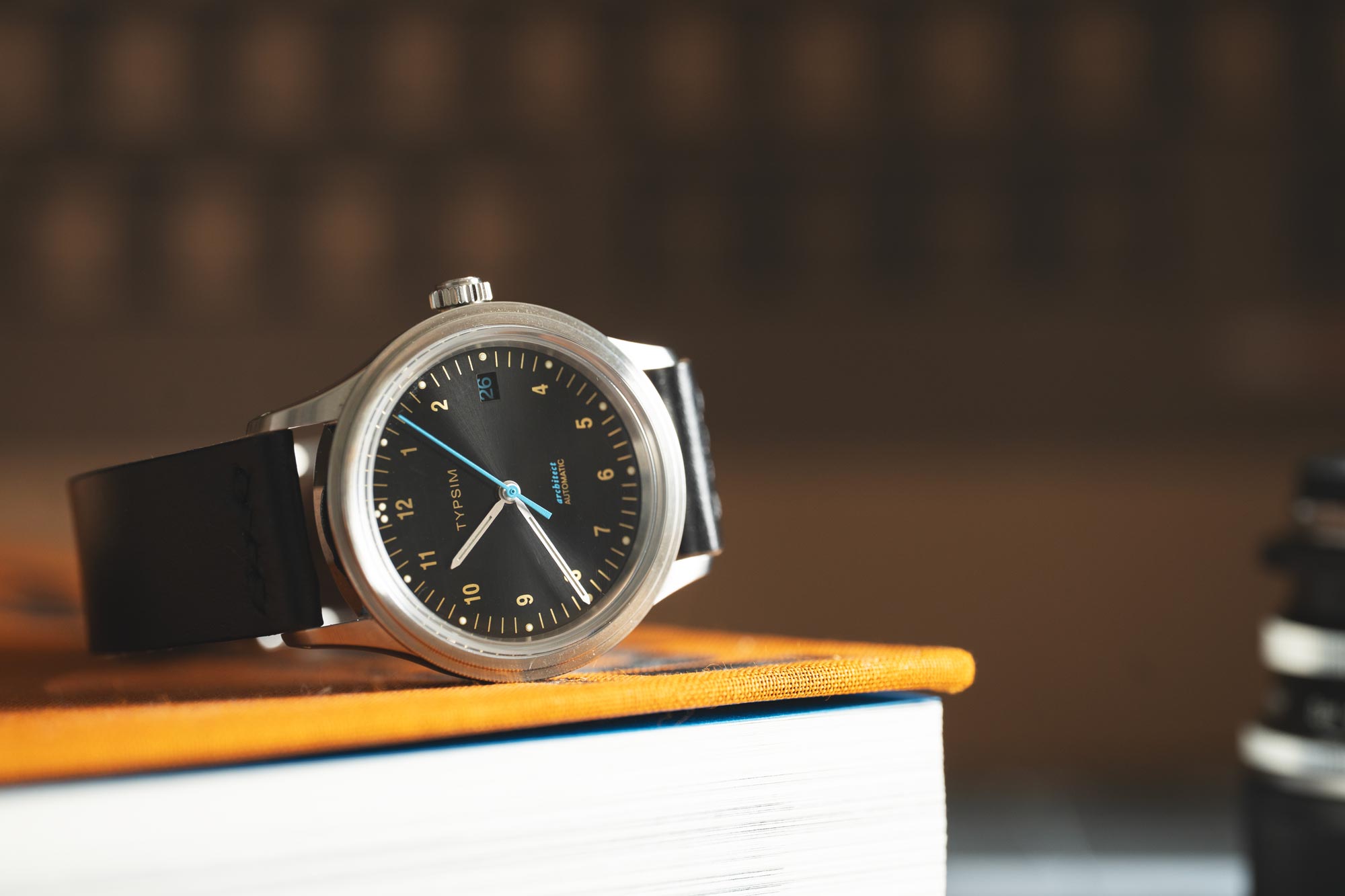
Each of the Typsim watches I sampled have small details that are easy to miss at a glance, but once you notice them they reflect a level of attention on the part of the designer that is uncommon at this price point. Of the three, the watch that I keep coming back to more than any other is the Architect ($999). Black dials aren’t usually particularly dynamic visually, but this one has been given a satin finish with a gilt dial made in a way that most brands simply don’t attempt. The polished dial plate is galvanically coated in black, but the minute markers, numerals, and the brand’s wordmark are untouched. The “gilt” that you’re seeing is actually the exposed dial plate, which plays with light in its own way, rather than a gold or silver colored coating. The result is a very subtle sense of depth when observed from an angle, and a dial surface that offers a subtle shimmer when the light hits it. The cyan second hand, wordmark, and date also work well here, offering a bit of playfulness in a watch that is otherwise quite sober.
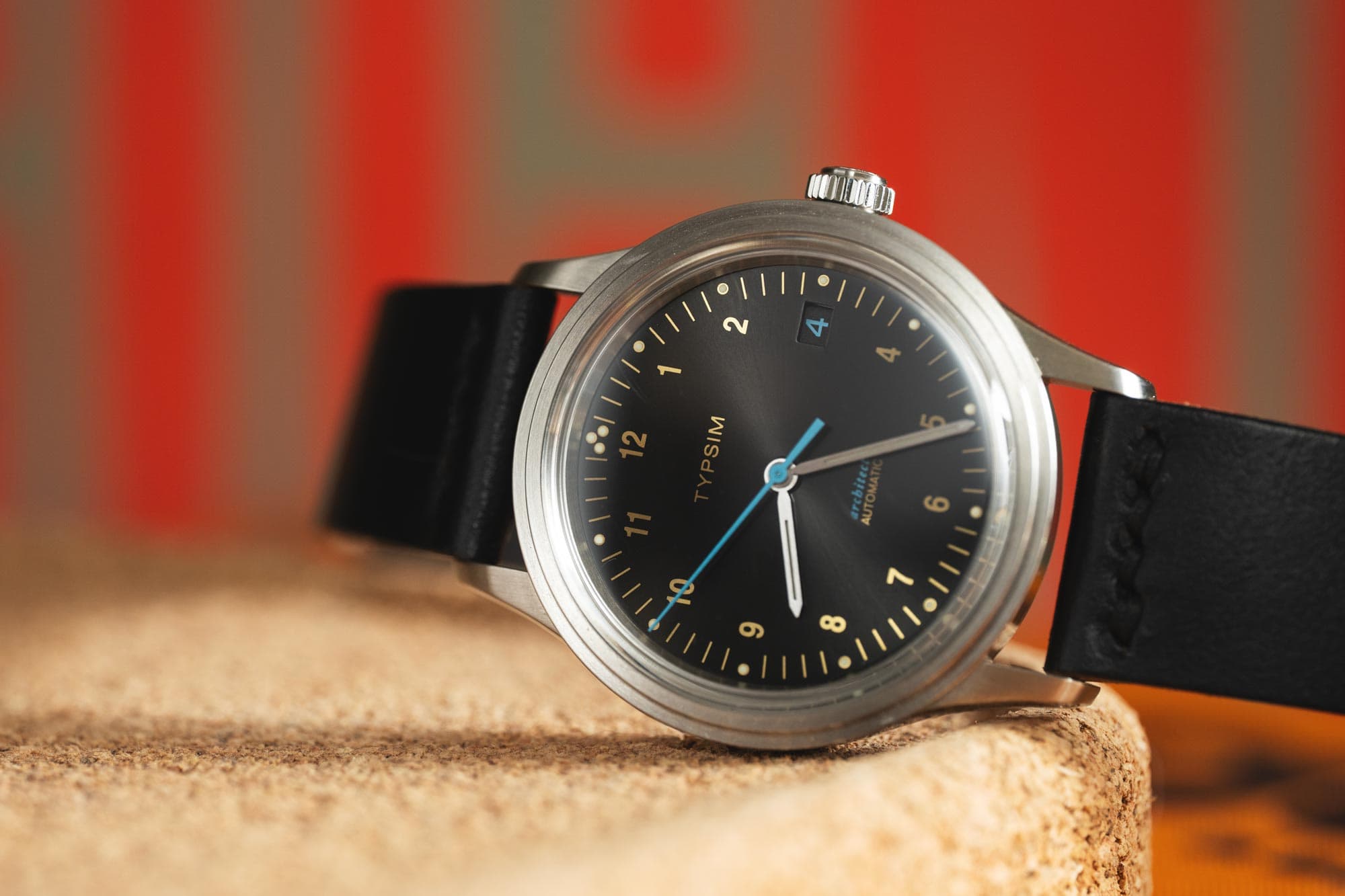
The Architect also uses the same luminous material as the brand’s diver, which they claim will change in color over time. This is a relatively subtle application of lume, but it does glow quite brightly when activated. I won’t have this sample nearly long enough to see it change color.
The Noir ($1,199) is a sort of contemporary dress watch with some very on the nose vintage inspired hallmarks. It straddles the line between something that can be worn very formally, but I think would also be simple enough to dress down. In other words, kind of an ideal everyday wearer, but without many of the obvious visual cues of a contemporary sports watch (it does have 100 meters of water resistance, however).

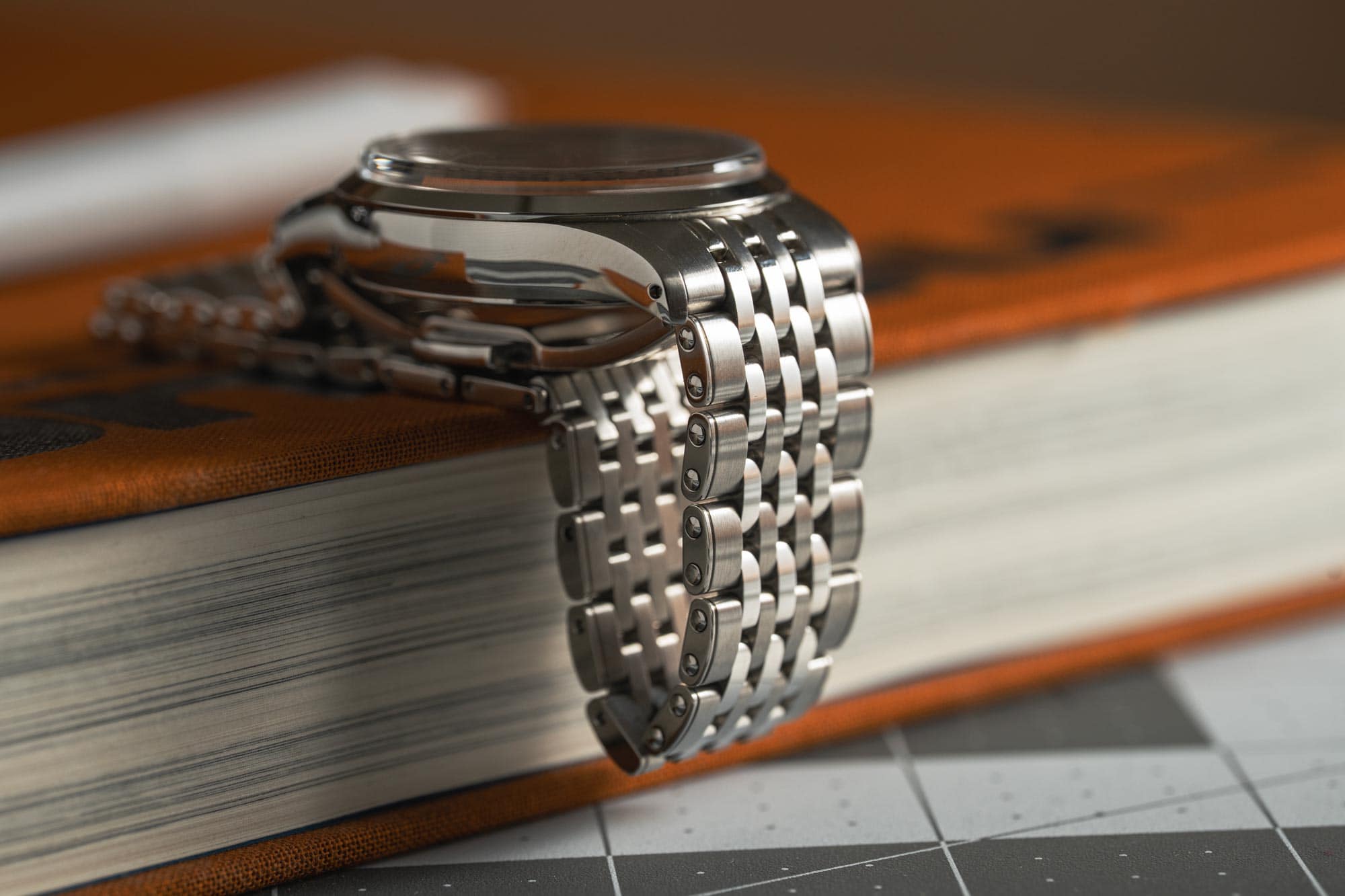
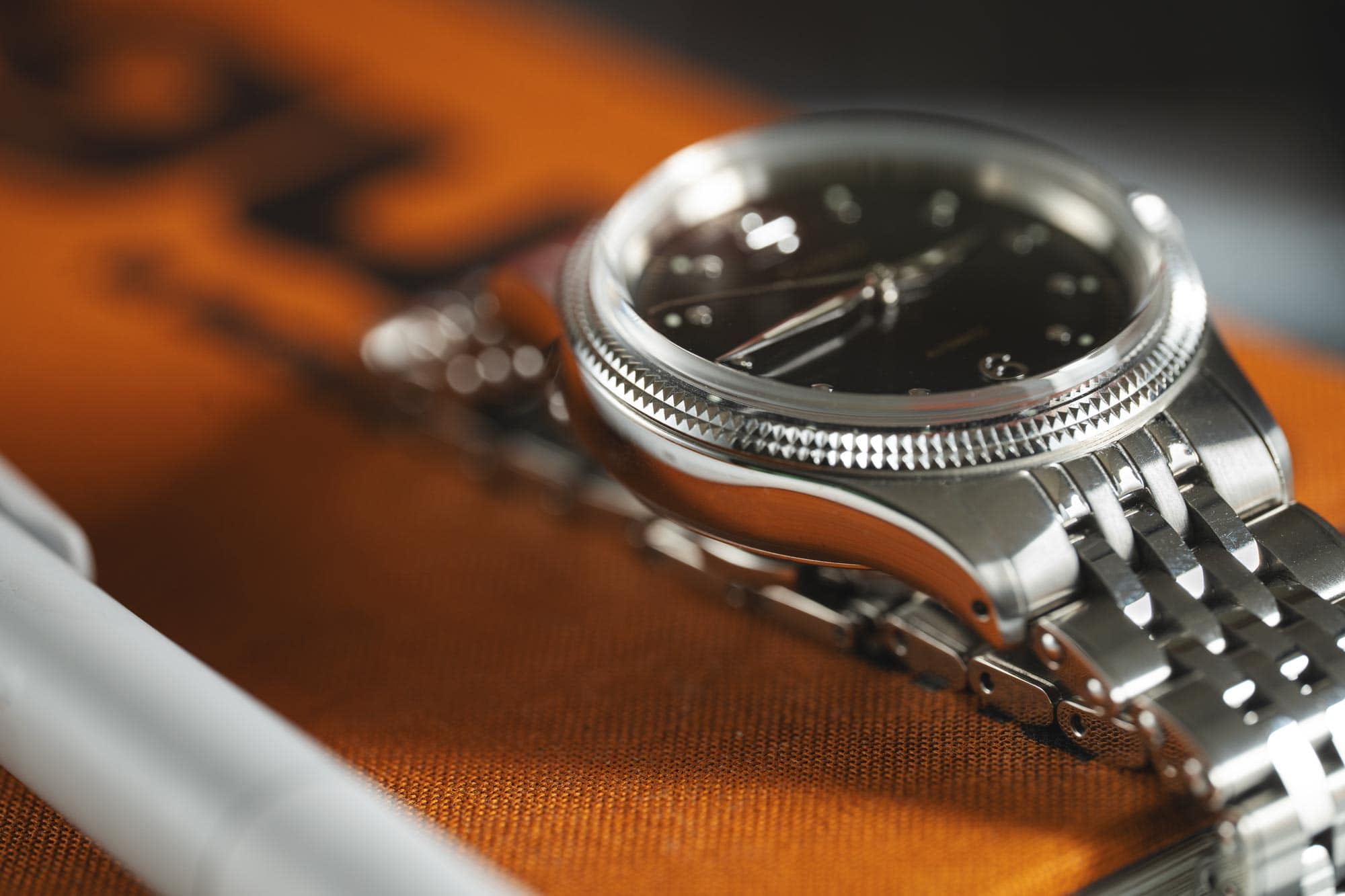
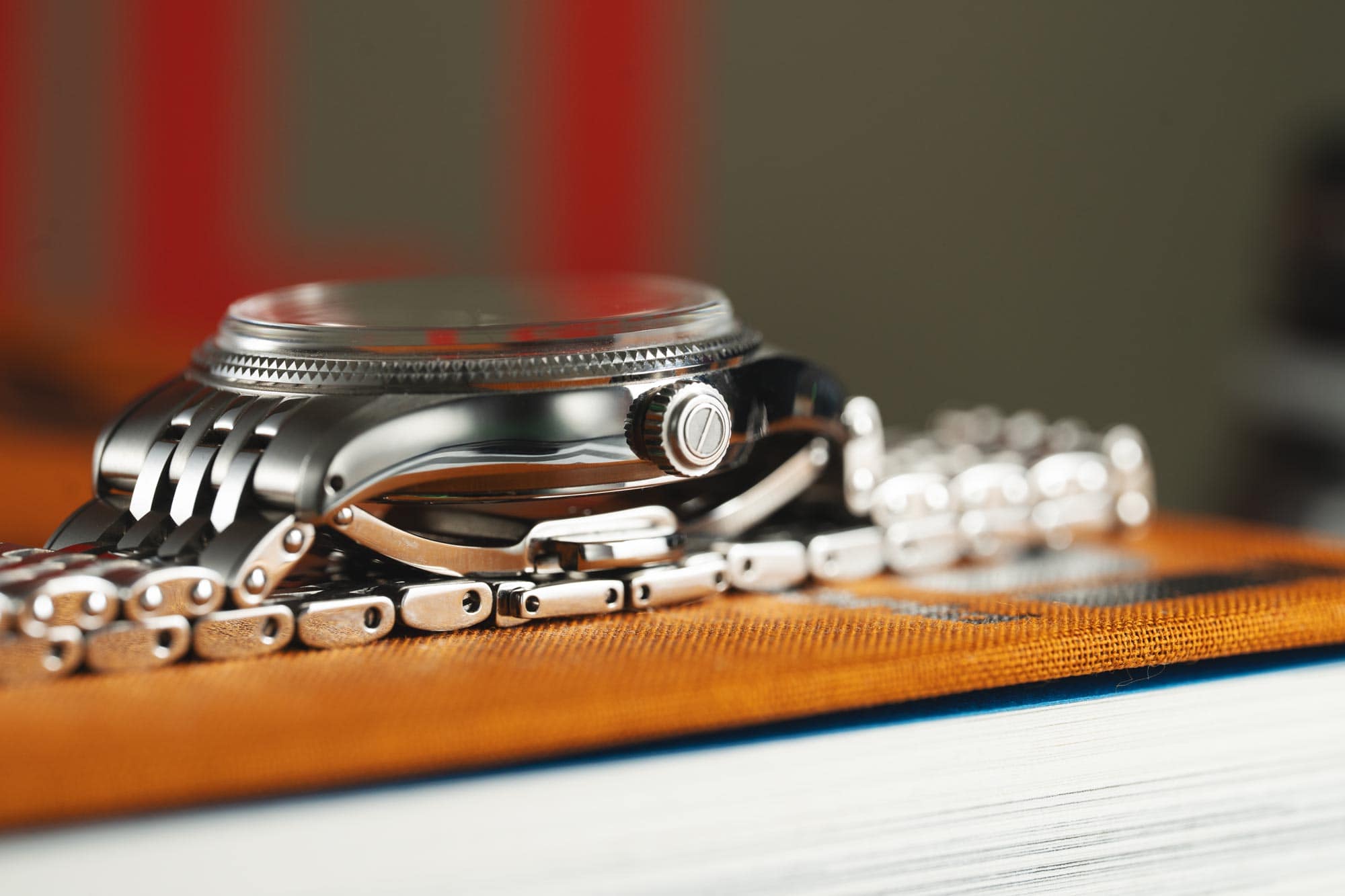
The sample I received is mounted to a slinky seven-link bracelet that’s very comfortable and a nice aesthetic match for the watch itself. This dial has the same gilt, negative relief finish as the Architect, but is a little more complex with the addition of an outer track. We also get stud hour markers and a sole Arabic numeral at 6:00, and the large Typsim logo at 12:00. This is a busier watch than the Architect, and I think some people will have a natural preference for it. In fact, normally this is the type of watch I’d have a natural preference for, but I think I just prefer the spare qualities of the Architect, which make it feel like a watch that has been deconstructed somewhat. That said, I do very much like the hobnail bezel, which is a very cool homage to classic midcentury dress watches and is a real highlight in the way it catches the light when you bring it outside.
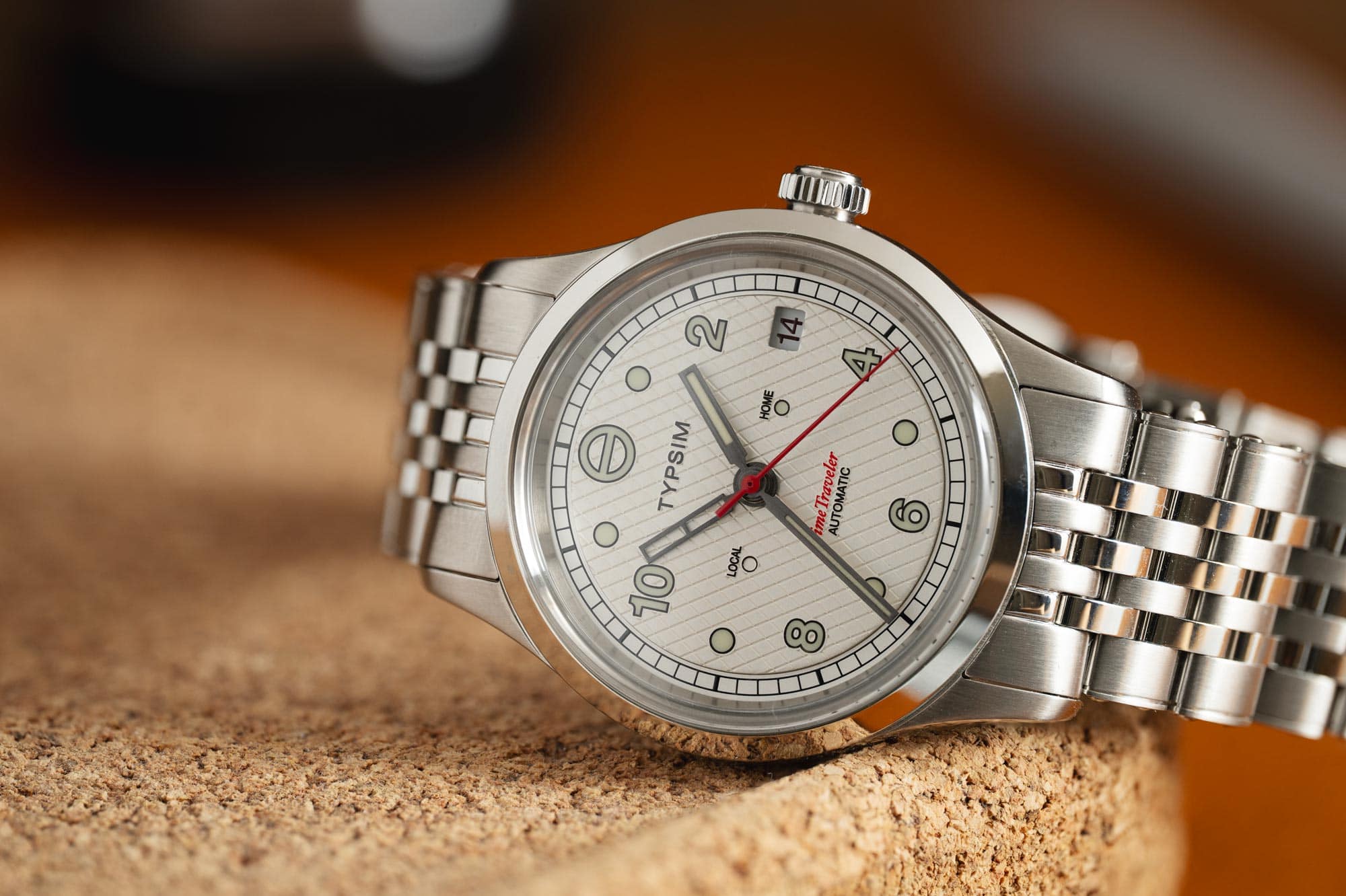
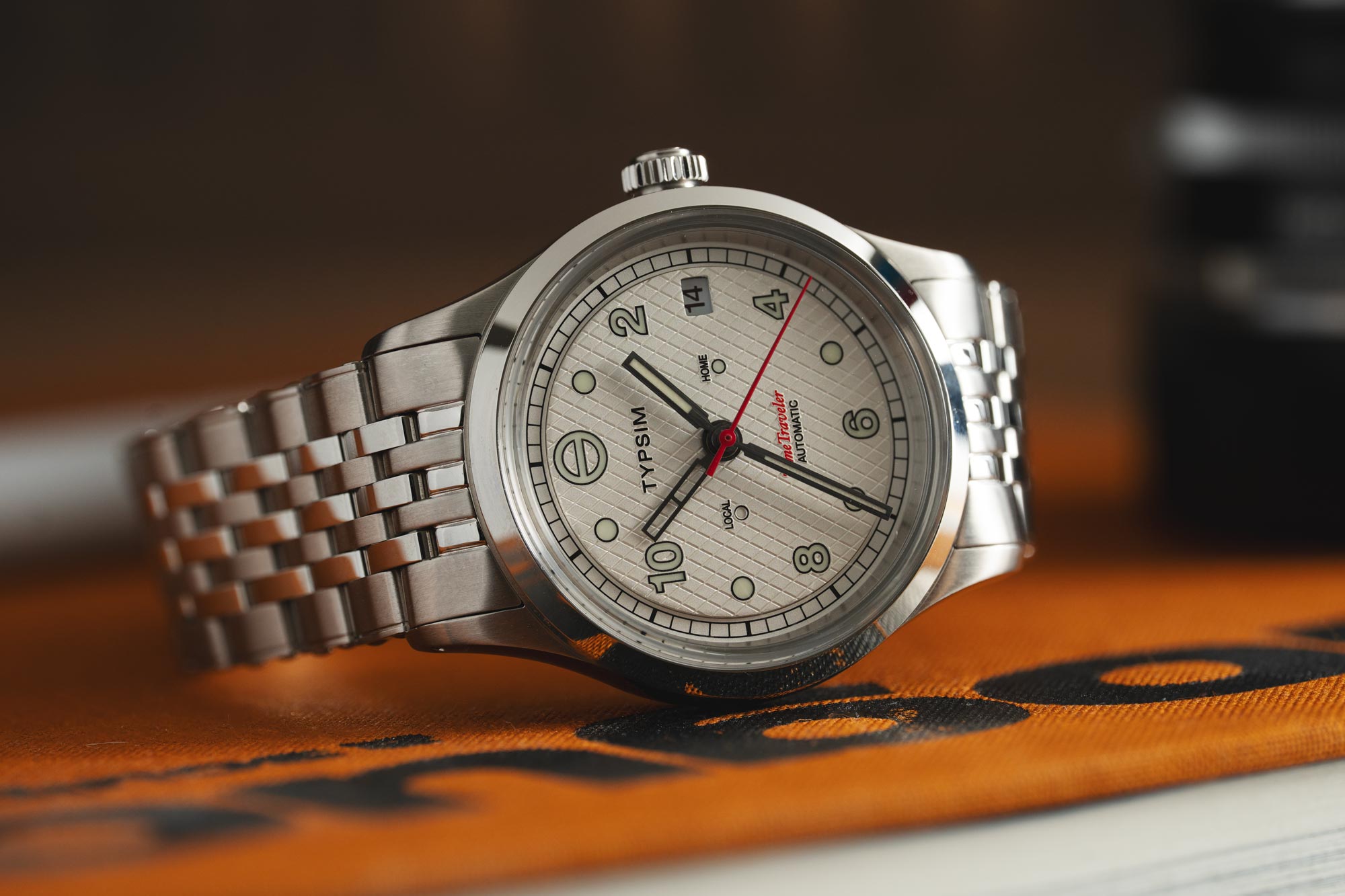
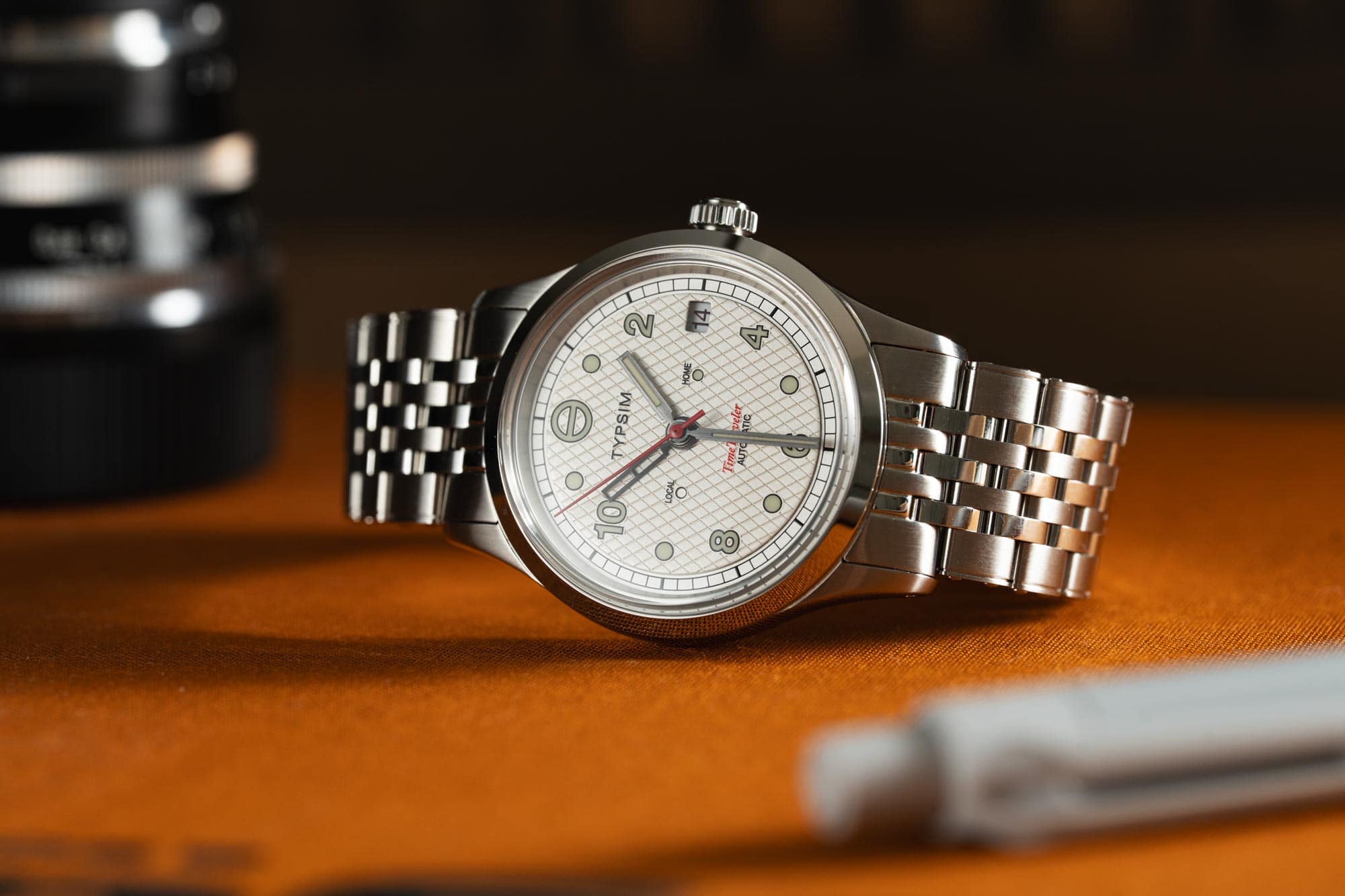
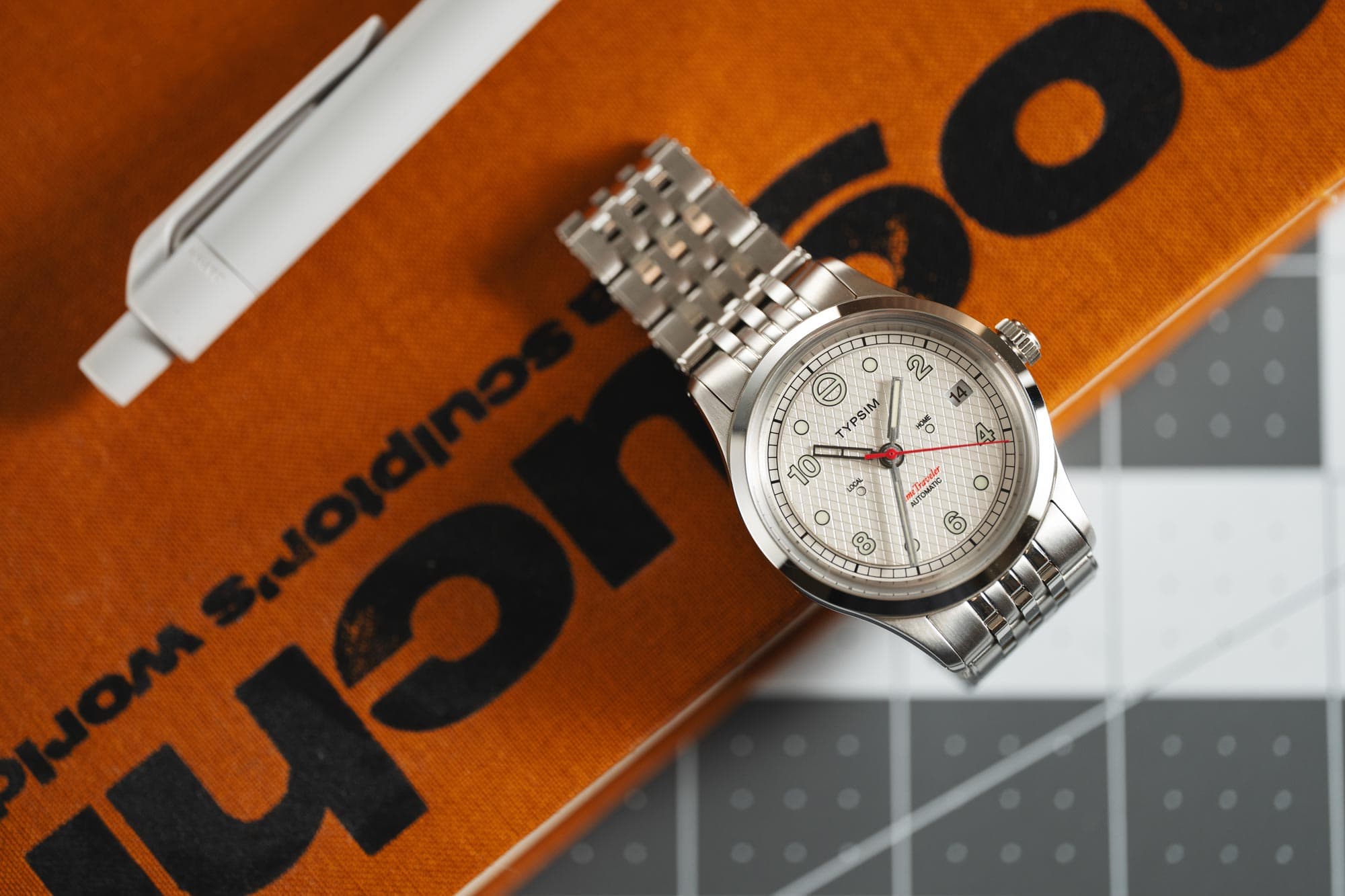
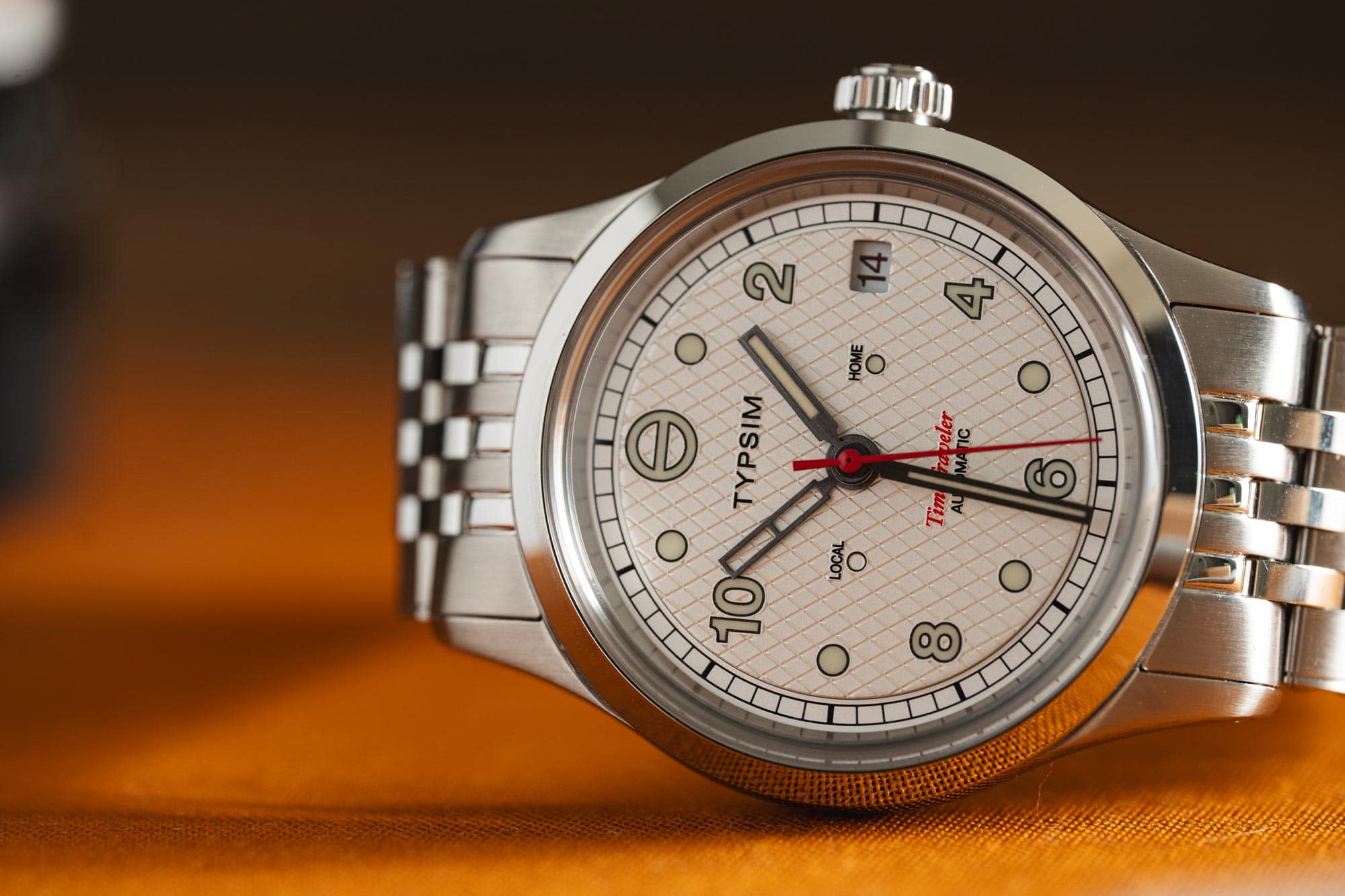
The Timetraveler ($2,100) is part of a new generation of GMT watches that use novel movement customizations to skirt limitations of off-the-shelf, mass produced calibers and enhance features that are already present (the Arken Alterum, which modifies a Miyota caliber with a similar end result but a very different operation, is another example). The starting point for the Timetraveler is a Sellita SW-330, a “caller” GMT caliber used frequently by microbrands and small independents. Your home time is read via the lumed hour and minute hands. There’s a hidden, skeletonized hour hand which can be jumped in one hour increments without hacking the movement in the second crown position. This hand can then act as your local time while traveling, and moved underneath the home hour hand when you return. The date is synched with your home time, and small indicators on the dial tell you whether it’s day or night in each zone, a necessity here because there’s no traditional 24 hour hand.
This customization is made by Zach Smith at Hour Precision, who is having a bit of a moment on the heels of the launch of the Cornell Watch Co.’s Lozier, also produced largely from components made in his shop. That makes the Timetraveler not just a rather ingenious advancement for fans of travel watches, but a part of the now rapidly unfolding story of the revitalizing of the American watch industry. It’s a very clever mechanism, and in my time with it I found it to be intuitive and easy to use, and could easily imagine real life use cases where I’d take it on the road. And it also breathes new life into the SW-330, a movement I’ve never been much of a fan of. Other brands interested in making travel watches with this movement should give Smith a call – turning a caller GMT into a flyer is certainly some type of black magic, and would immediately make dozens of GMT watches I’ve dismissed in the past genuinely appealing.
Apart from the movement functionality, the Timetraveler has a nice aesthetic that follows the rest of the catalog in its broad strokes, with clean lines and an easy to read layout. The dial has a repeating honeycomb texture that gives it some additional depth but doesn’t overpower the watch. The silvery white dial I sampled seems to be in conversation with other white dialed GMTs, a niche that’s become particularly crowded in recent years. But Typsim also offers the Timetraveler in black and champagne dial options. The color of the silver and champagne dials is achieved through a hydroplating process, with a coating applied through an electrically charged chemical bath.
“Charm” is a word that is sometimes overused when describing watches like the ones Typsim makes, but I think it really applies here. That quality, though, lies not just in their aesthetic and how they wear on the wrist, but in all the little nearly invisible details. The multilayer dial treatments, aging lume, and the trick movement feel like little Easter eggs built into these watches for the nerdiest collectors. I’m all for that. As watches from large brands only seem to become more homogenous as the years go by, brands that are willing to do the little things that most people won’t even notice but their actual clientele can’t get enough of will have a real opportunity to stand out. Typsim