



 Latest Review




 December 17, 2025

Seiko launched the Astron in 1969, changing not just the brand’s trajectory but the way watches were made. The first commercially available quartz wristwatch, it arrived in solid gold and cost ¥450,000, about $1,250 at the time, or roughly $10,000 in 2025. Though “vintage” to modern eyes, its design was surprisingly luxurious and quietly radical, blending traditional finishing with industrial design cues in a way only Seiko could achieve.
The exterior, however, was not the main story. The caliber 35SQ inside is what rewrote horology. With a quartz oscillator vibrating at 8,192 Hz, it delivered accuracy far beyond the mechanical watches of the day. It was not only a proof-of-concept that pushed horology into the 20th century, it also proved that Seiko was willing to innovate in an industry steeped in tradition.
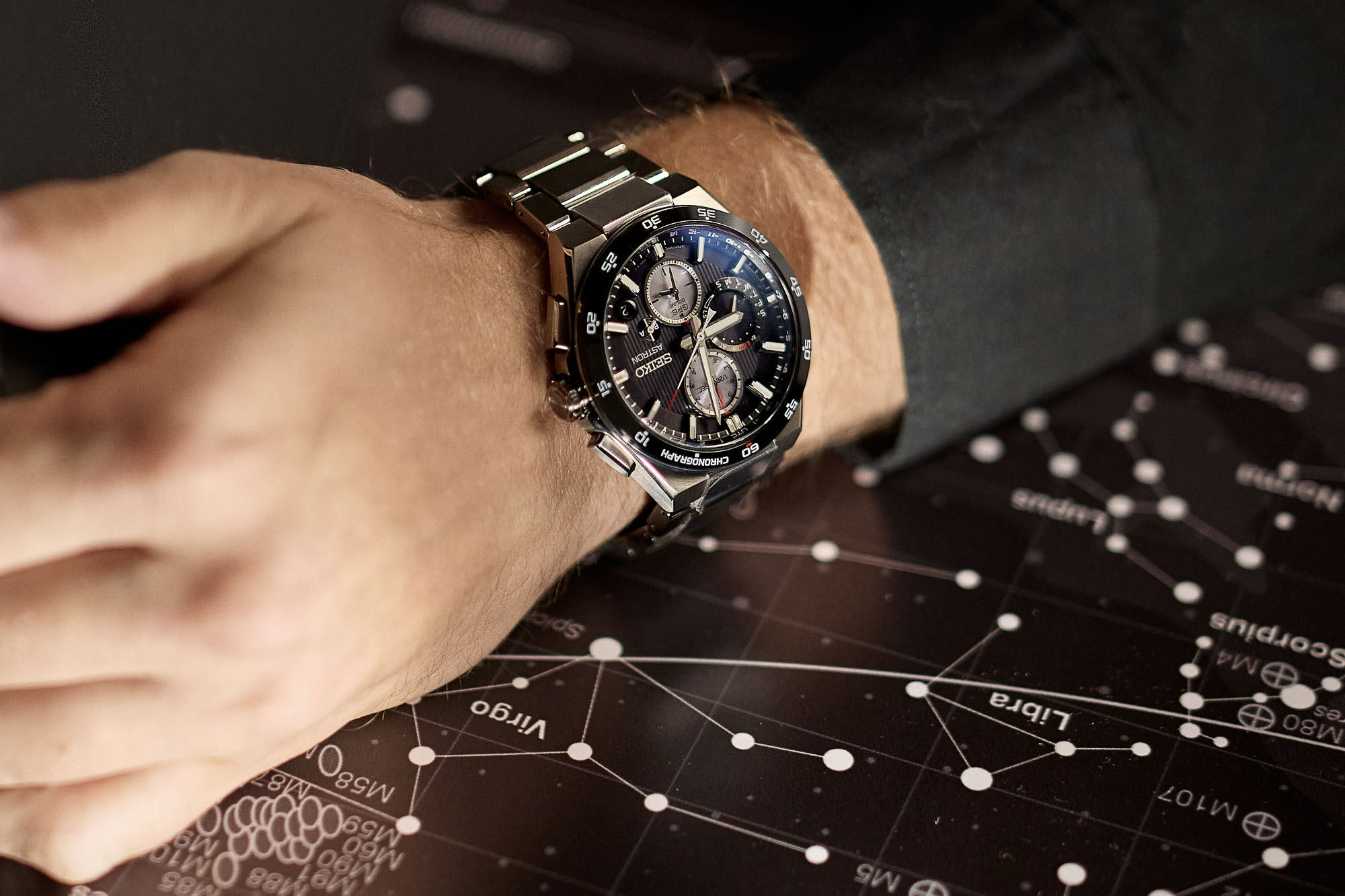
That spirit resurfaced in 2012 with the rebirth of the Astron, now equipped with GPS solar technology supported by more than 100 patents. Still quartz at its heart, the movement connected to global positioning satellites to determine its location anywhere on Earth. With that information, it could automatically adjust the time, date, and time zone. For travelers, it was and remains an extraordinary proposition: a watch that always knows where it is and corrects itself accordingly. Daily syncing ensures near-perfect accuracy, with a deviation of one second in 100,000 years. The fact that this precision is supported by solar charging, and therefore requires no routine battery changes, further underscores the concept’s elegance.
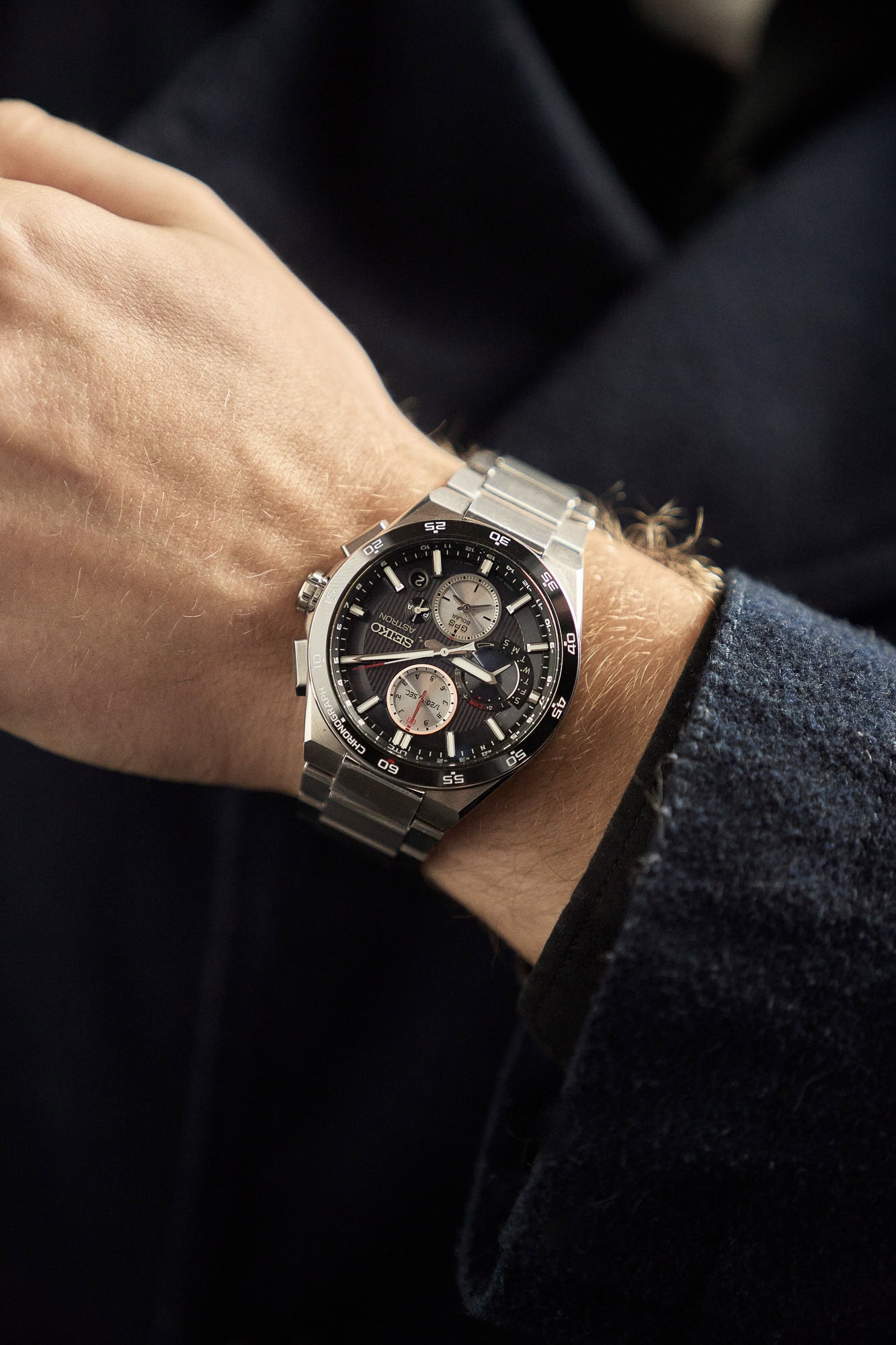
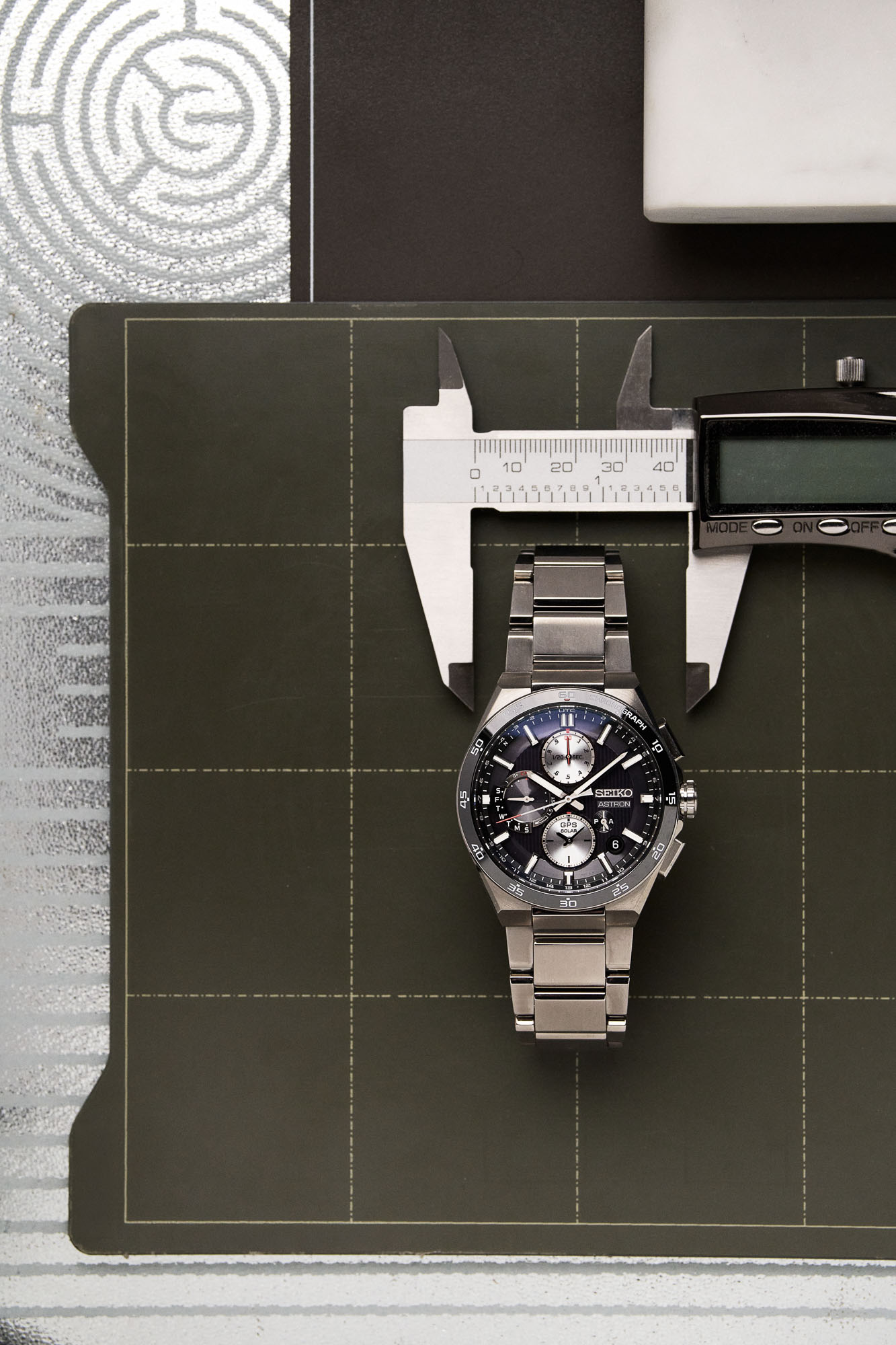
Subsequent Astron generations refined the idea. The 3X and 5X calibers brought slimmer cases, improved charging efficiency, more expressive dial textures, and additional complications. In 2024, Seiko introduced the caliber 5X83, expanding the line again with a chronograph that offers 1/20th-second precision in a classic 6, 9, and 12 register layout.

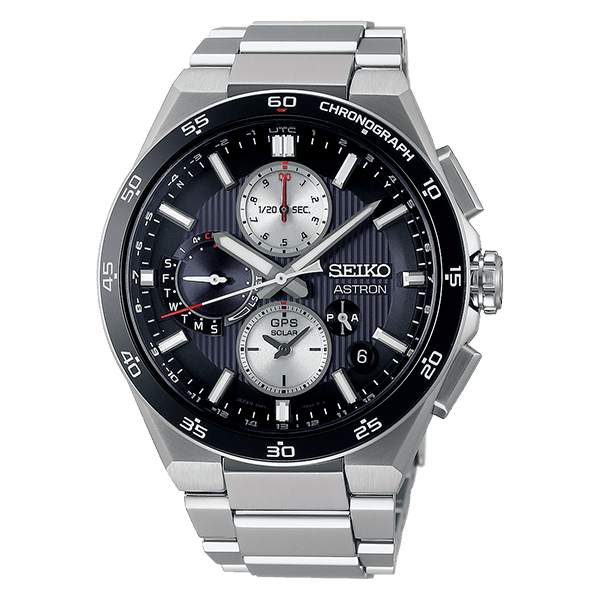
The 5X83 debuted in several models, including the SSH151, each of which embraced a design language guided by function. In 2024 and 2025, the SSH151 received four international design awards: the German Design Award, the iF Design Award, the Red Dot Award, and the GOOD DESGIN AWARD. An uncommon accomplishment for a watch, these awards focus on usability, practicality, and technological achievement, with aesthetics considered afterward. Form follows function in a very literal sense. With that philosophy in mind, the SSH151’s intended role as both a travel tool and a dependable daily companion becomes central to its appeal.

For frequent travelers, GPS is the hero feature. There is no need to manipulate crowns or wait for cell service to re-establish itself. The watch syncs, updates, and simply displays the correct time. For those who spend most of their time in a single time zone, the combination of impressive accuracy and an always-correct date offers practical value. Solar charging removes the risk of a depleted battery or an unwound mainspring, creating a quietly dependable part of daily life. The 1/20th-second stopwatch, which would be extremely rare in a purely mechanical chronograph, adds another layer of capability.
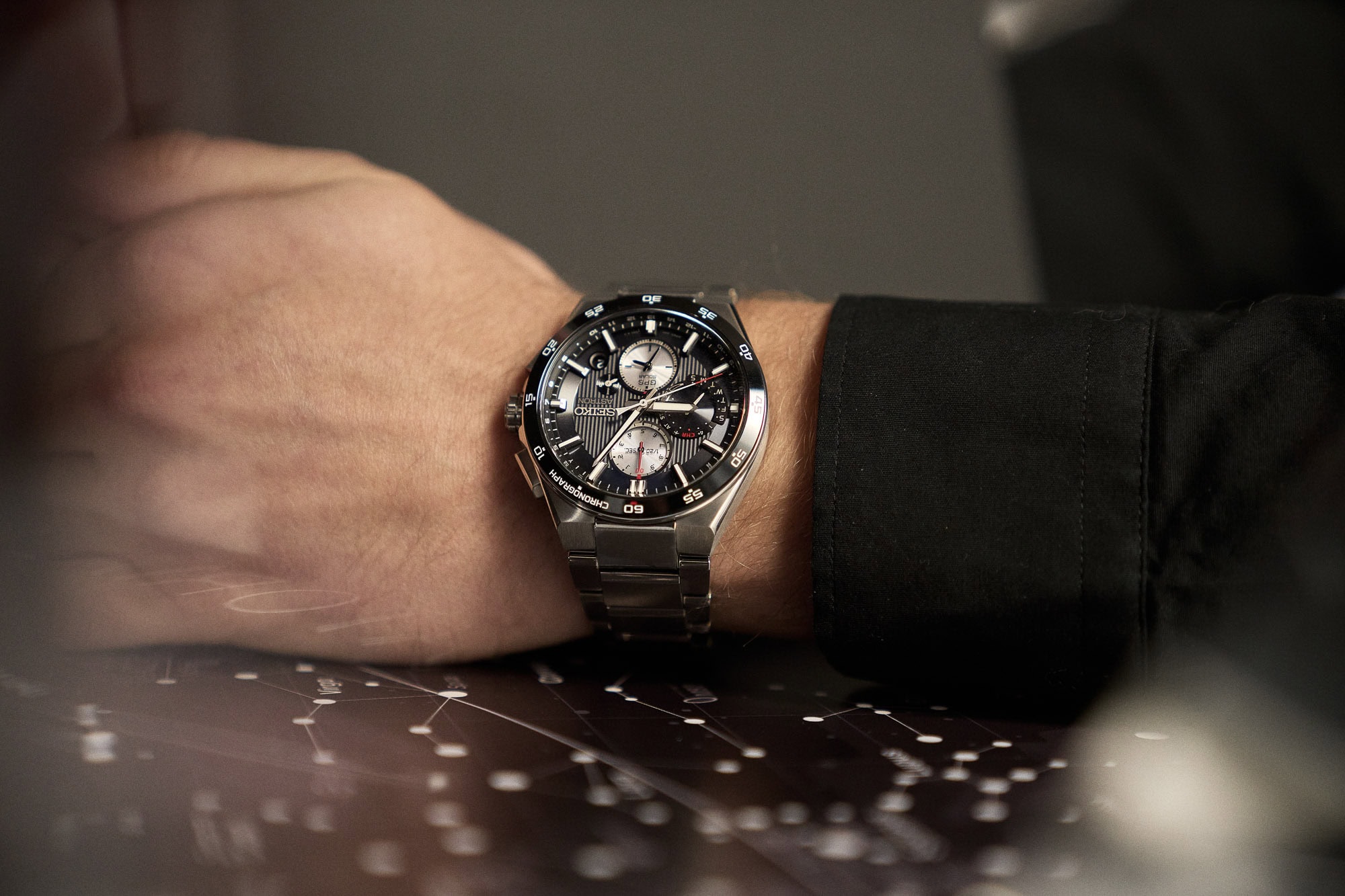
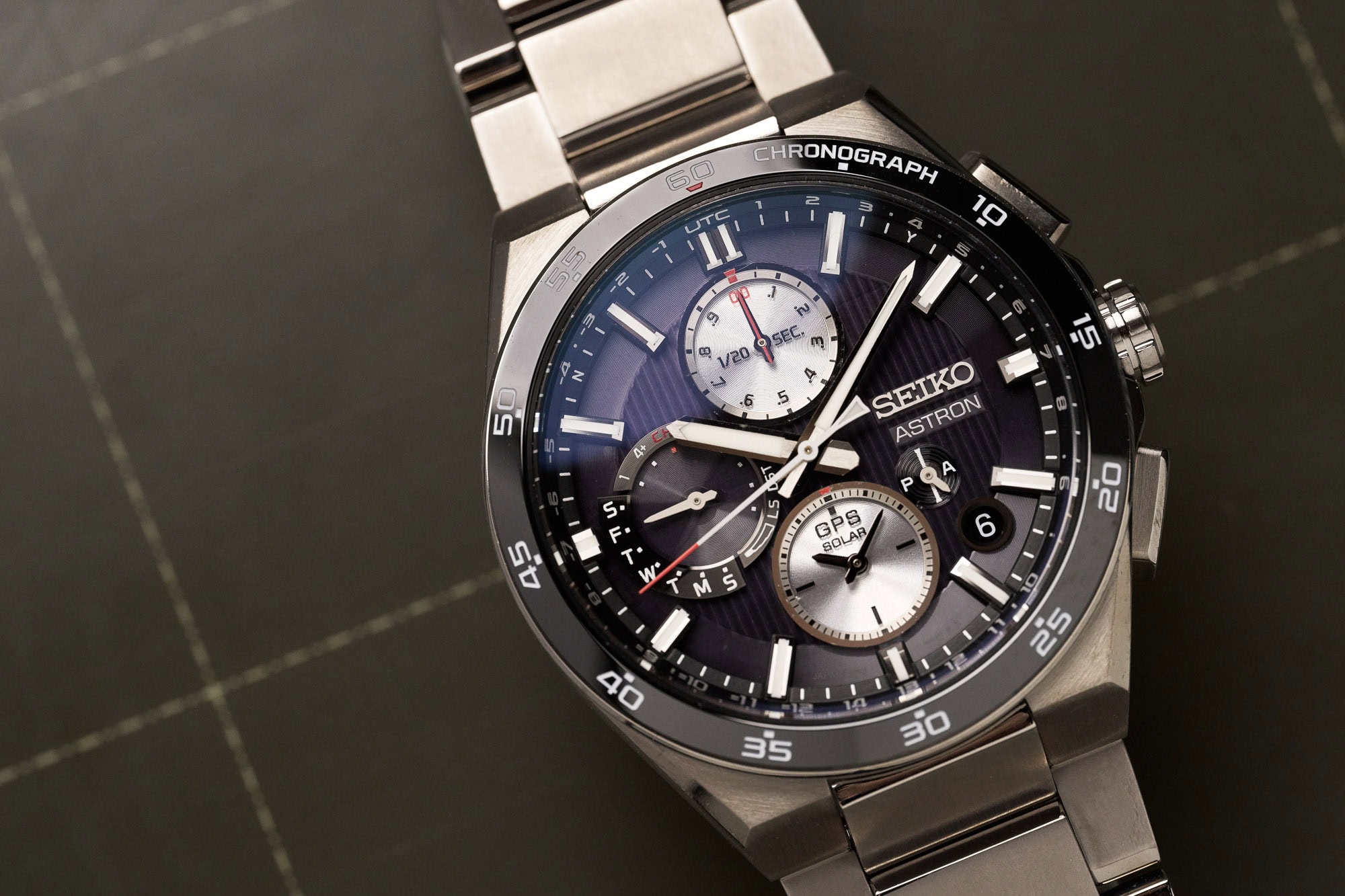
From an industrial and graphic design perspective, the SSH151 handles a remarkable amount of information. It features dual time, a chronograph, a date, a day indicator, an AM/PM indicator, and a local time display. Clarity becomes essential. Large applied markers, crisp typography, well-defined depth, and clear textural zoning work together to maintain legibility. Dimensional pinstriping across the center of the dial divides auxiliary functions from the primary time display. Raised, contrasting sub-dials emphasize hierarchy. Lume-filled hour and minute hands remain visually distinct from the sub-dial indicators and are supported by tall lumed hour markers.
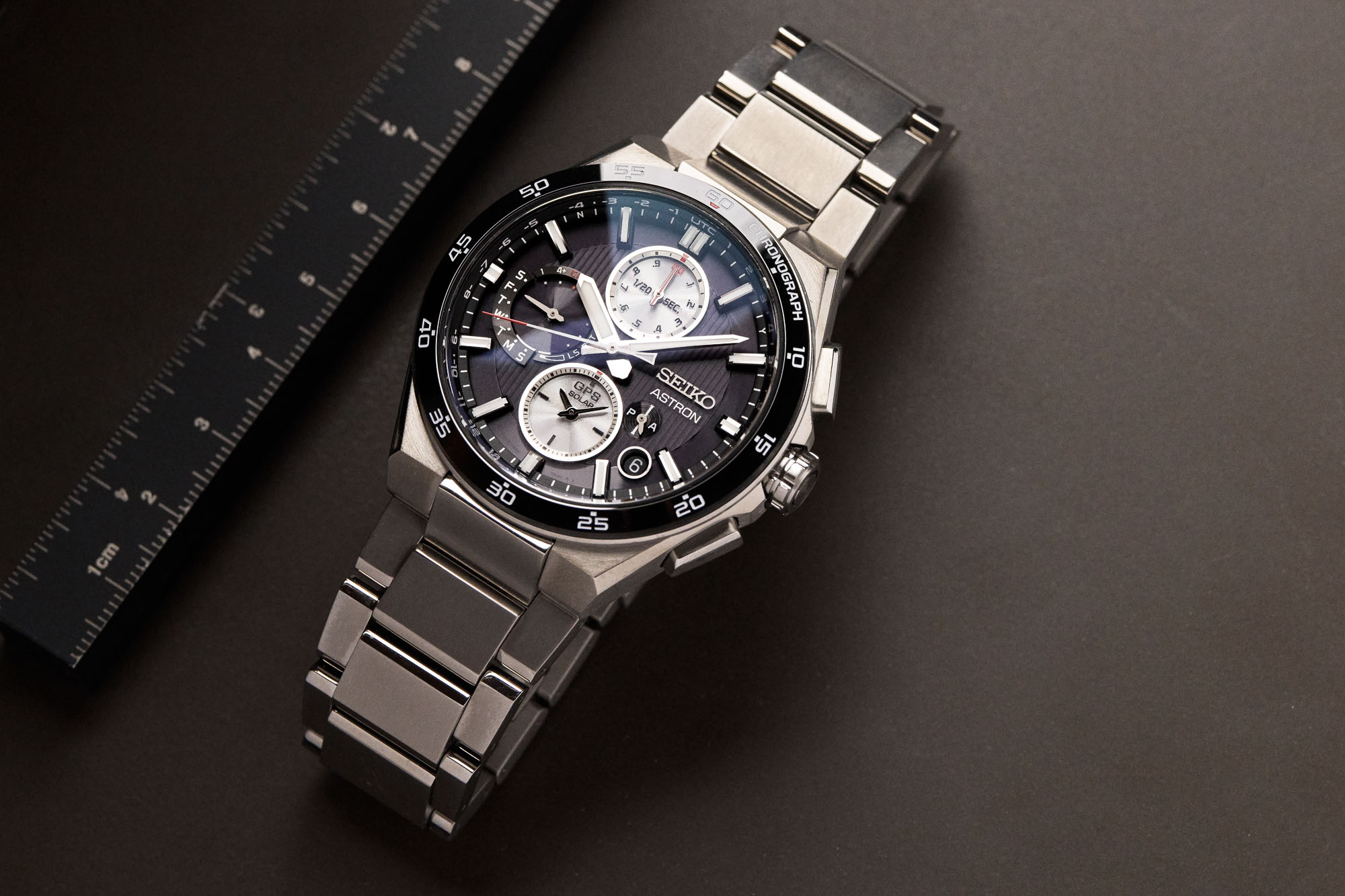
When the chronograph is activated, the central seconds hand becomes the elapsed-seconds counter, read against the ceramic bezel’s scale. The sub-dial at 12 o’clock tracks 1/20th-second increments. Minutes and hours for the chronograph appear via the dual-time register, which stacks both indications. The date sits just past the four o’clock marker, angled for natural alignment. The day display, rendered in low-contrast white-on-black, recedes appropriately as a secondary detail.
The titanium case, an integrated design measuring 43.3mm by 49.5mm by 13.4mm, reinforces the watch’s technical posture. The form is angular but controlled, with elongated pushers, a wide-toothed crown, and a mix of brushed and polished surfaces that leans toward the utilitarian. The matching bracelet continues this approach with three-link construction, raised center links, and polished bevels.

Titanium reduces weight compared to steel, improving comfort during extended wear. Its hypoallergenic nature ensures compatibility with most users, and its clean, industrial character suits the watch’s technical intent. Paired with a ceramic bezel, the overall composition feels modern, durable, and appropriately functional.
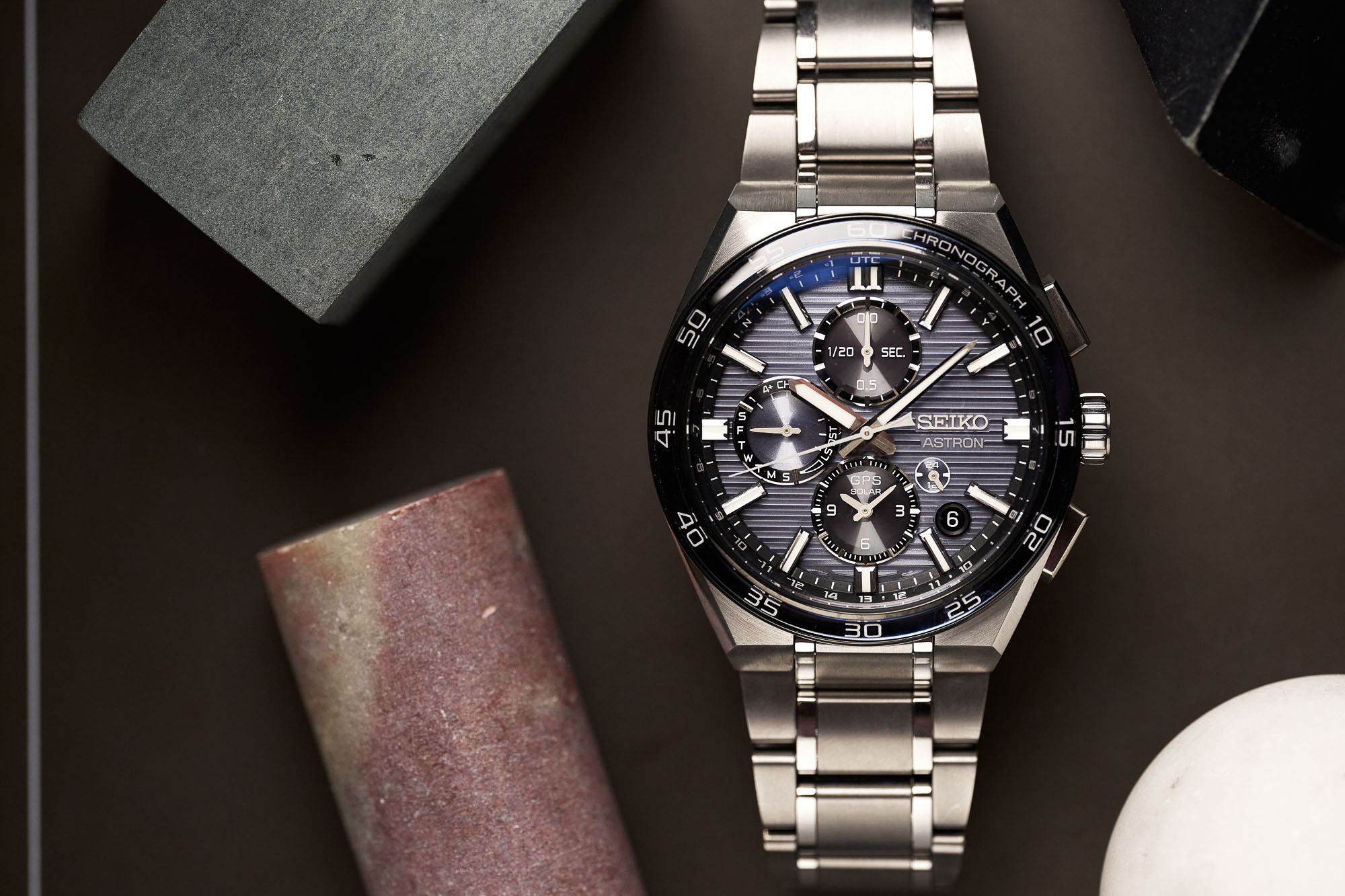
Internally, the 5X83 movement enhances the user experience. Seven high-torque micro-motors drive the hands independently, enabling fast and precise repositioning, especially during time adjustments and mode changes. A perpetual calendar automatically accounts for varying month lengths and leap years through the year 2100. Time-transfer allows the main and sub-dial time zones to swap quickly. Additional quality of life features include a push-button power reserve display and an airplane mode that prevents syncing while in the air.
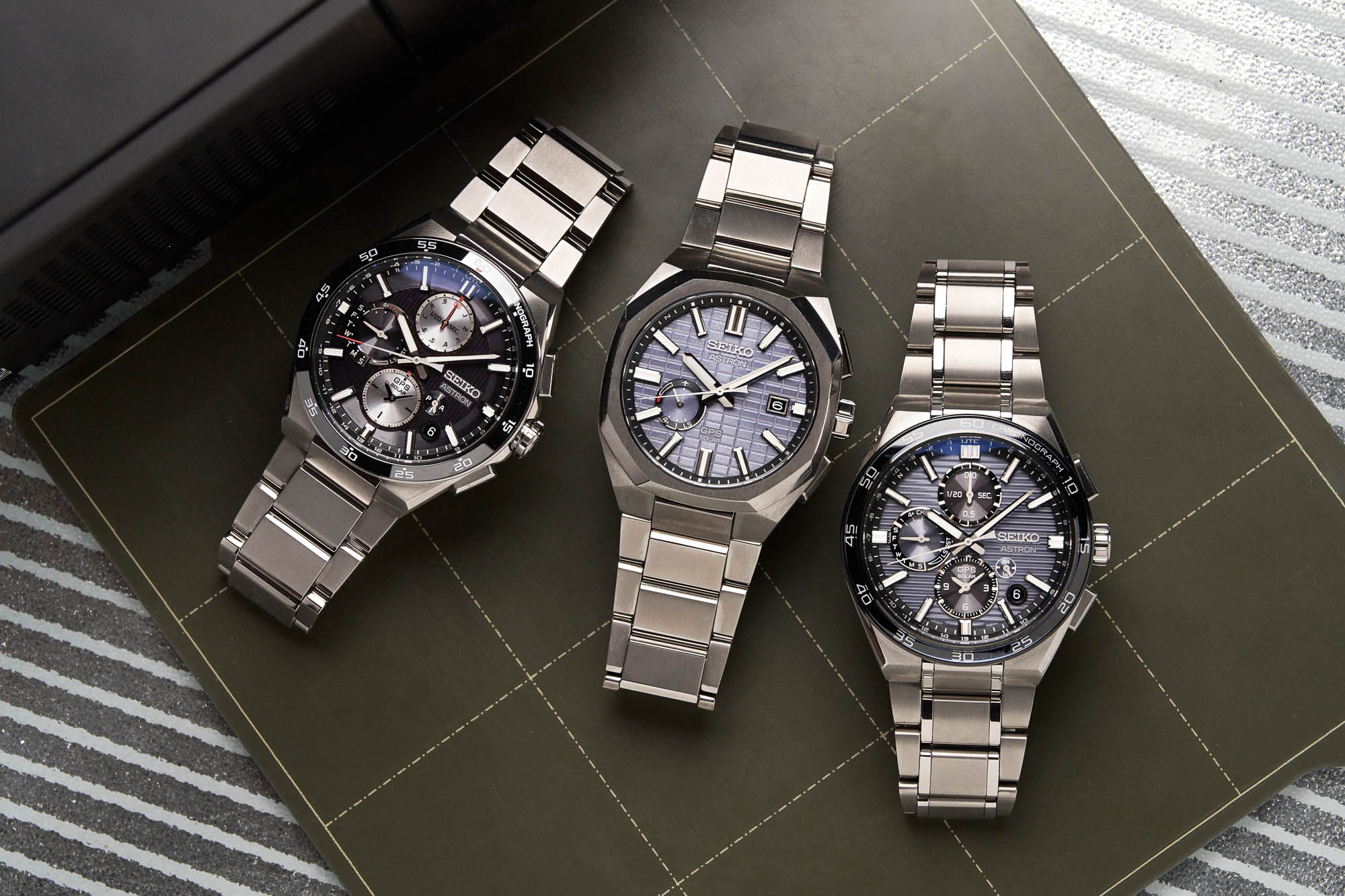
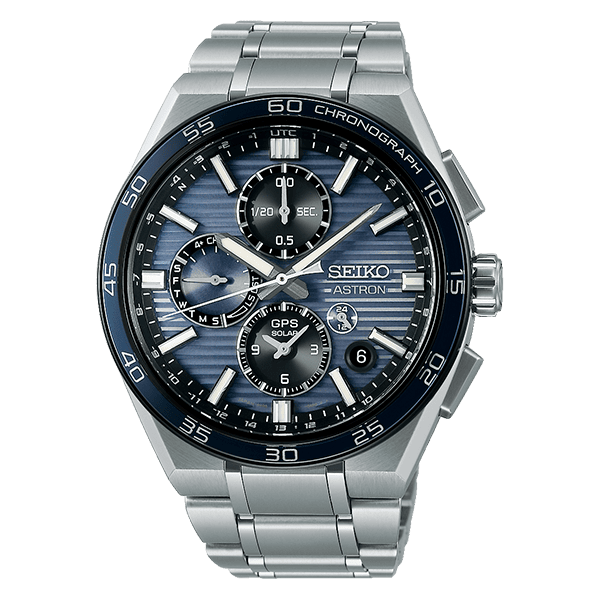
Living up to the legacy of the first quartz wristwatch is not a simple task. Through continued innovation, Seiko Astron models, such as the SSH151 and its siblings the SSH175 and SSJ013, rise to that challenge. In an era in which accuracy is assumed, smartwatches dominate the technological conversation, and nostalgia-driven mechanical watches command cultural attention, a modern tech-forward watch must offer genuine utility and thoughtful design to remain relevant. With GPS solar technology, meaningful refinement, added complication, and a function-first approach, the Seiko Astron continues to provide a compelling and singular alternative.


