 Latest Review






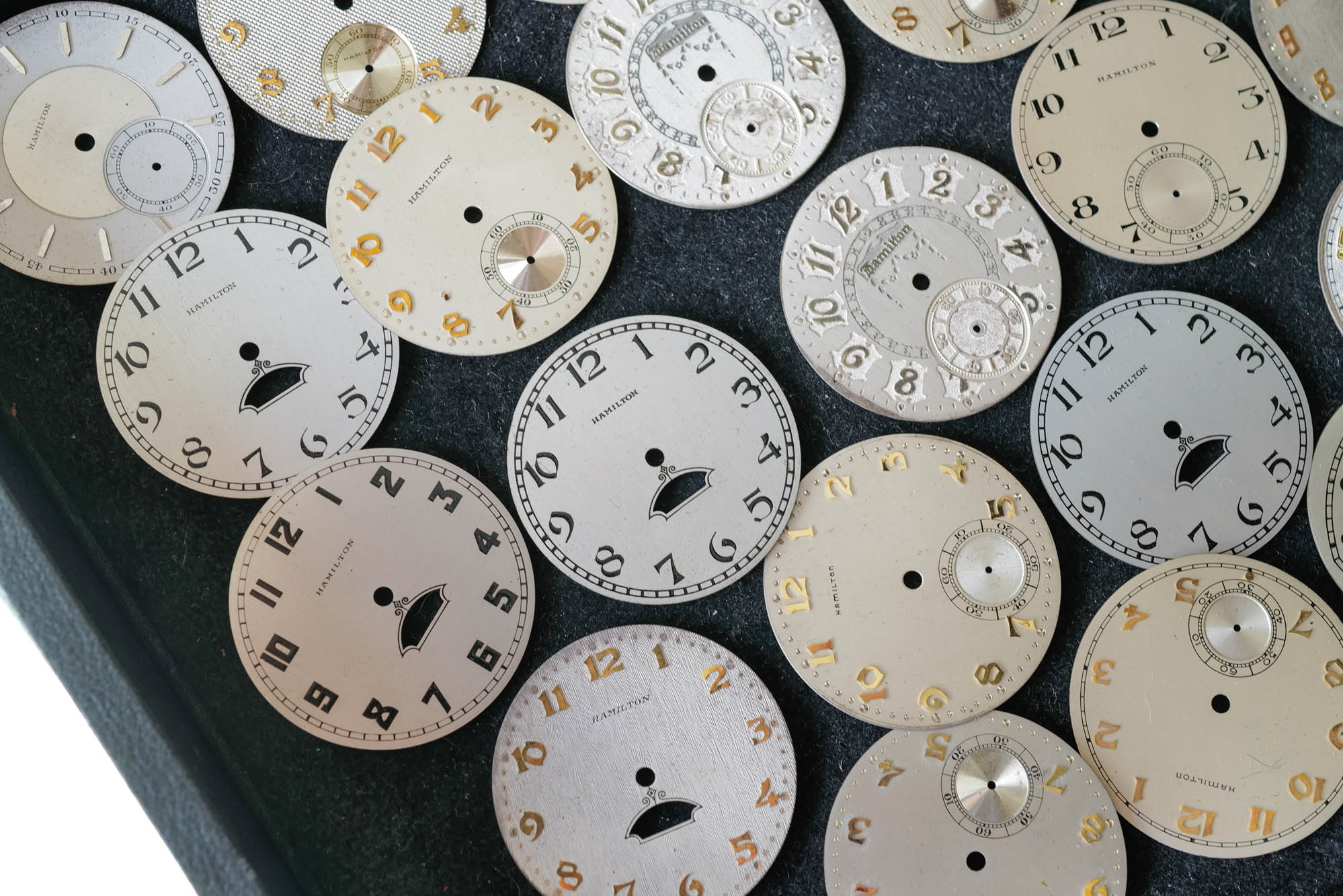
Back in March, I found myself on an Amtrak train from Philadelphia to Lancaster, PA, a small city that many think of as the ancestral home of American watchmaking. I’d been to Lancaster before, with Hamilton, some years ago, and even though their old factory is no longer in use, the brand’s history is woven throughout the town in any number of ways. But I wasn’t traveling to Lancaster for Hamilton, I was there to see RT Custer, founder of Vortic. The coincidental nature of the line that connects Hamilton, RT, Vortic, and the city of Lancaster is almost beyond belief, and a new layer to that connection would be added in a matter of hours, as RT worked to secure a purchase of vintage pocket watch movements that would take his brand through another year (at least) of production.
RT grew up in Lancaster, and his father still lives in town. Hamilton’s history there, of course, would have been something he encountered in his younger years, working its way into his memory the way a knowledge of baseball might if you happened to grow up in Cooperstown, or movies if you grew up in Hollywood. I don’t know, though, that anything could have predicted that RT would one day find himself running a company that would be so inextricably linked to the history of American watchmaking.
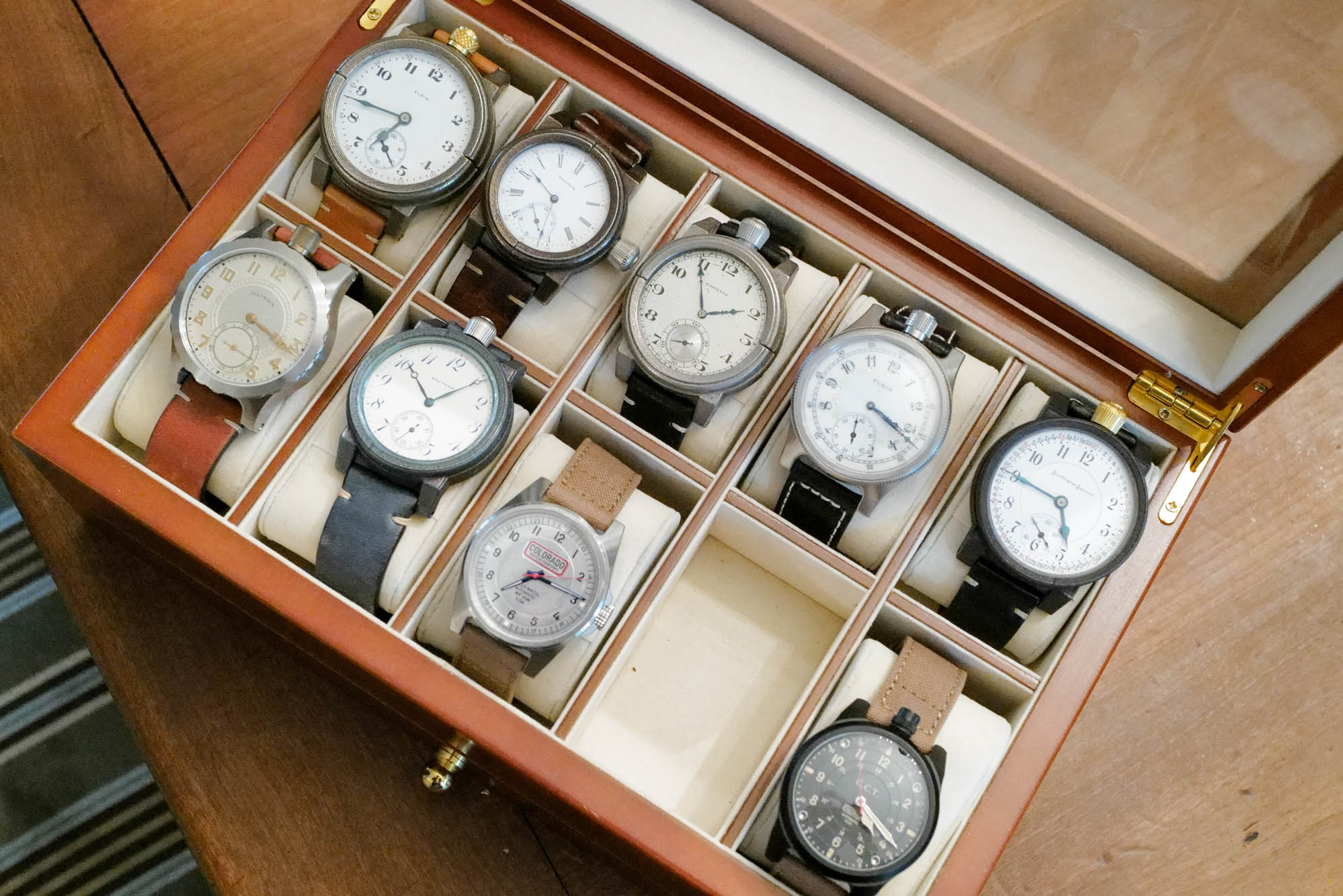
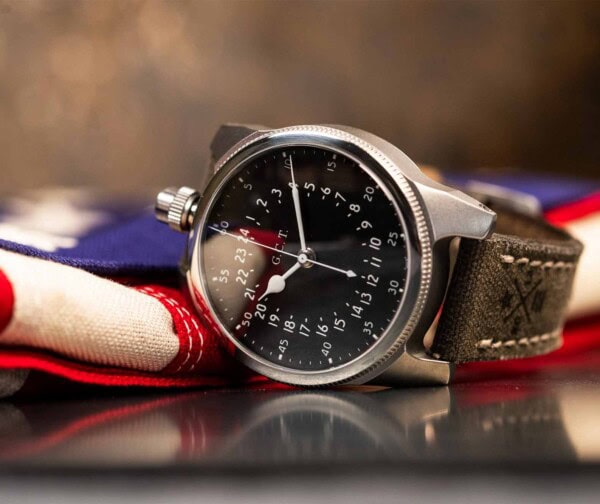
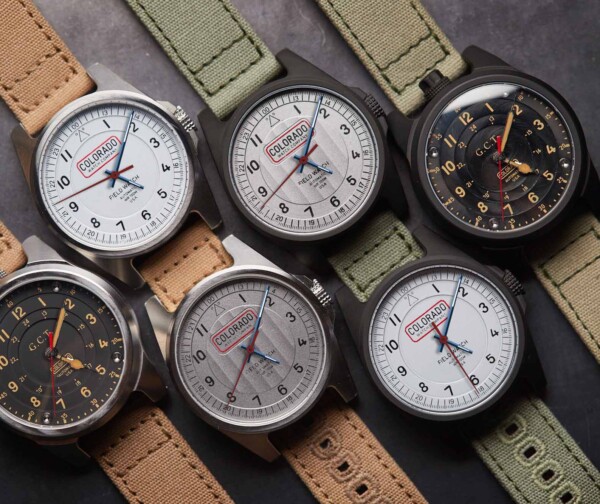
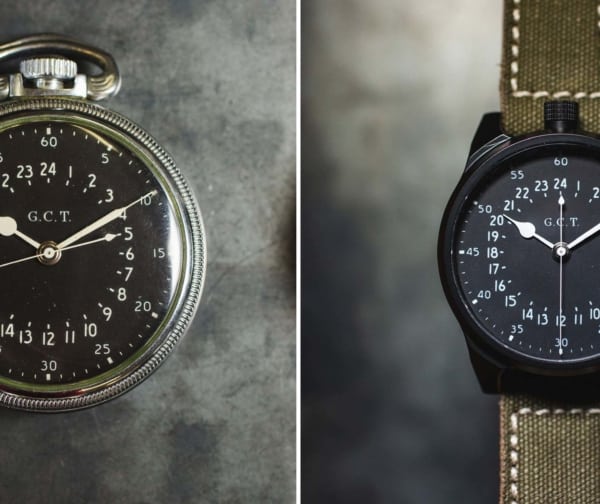
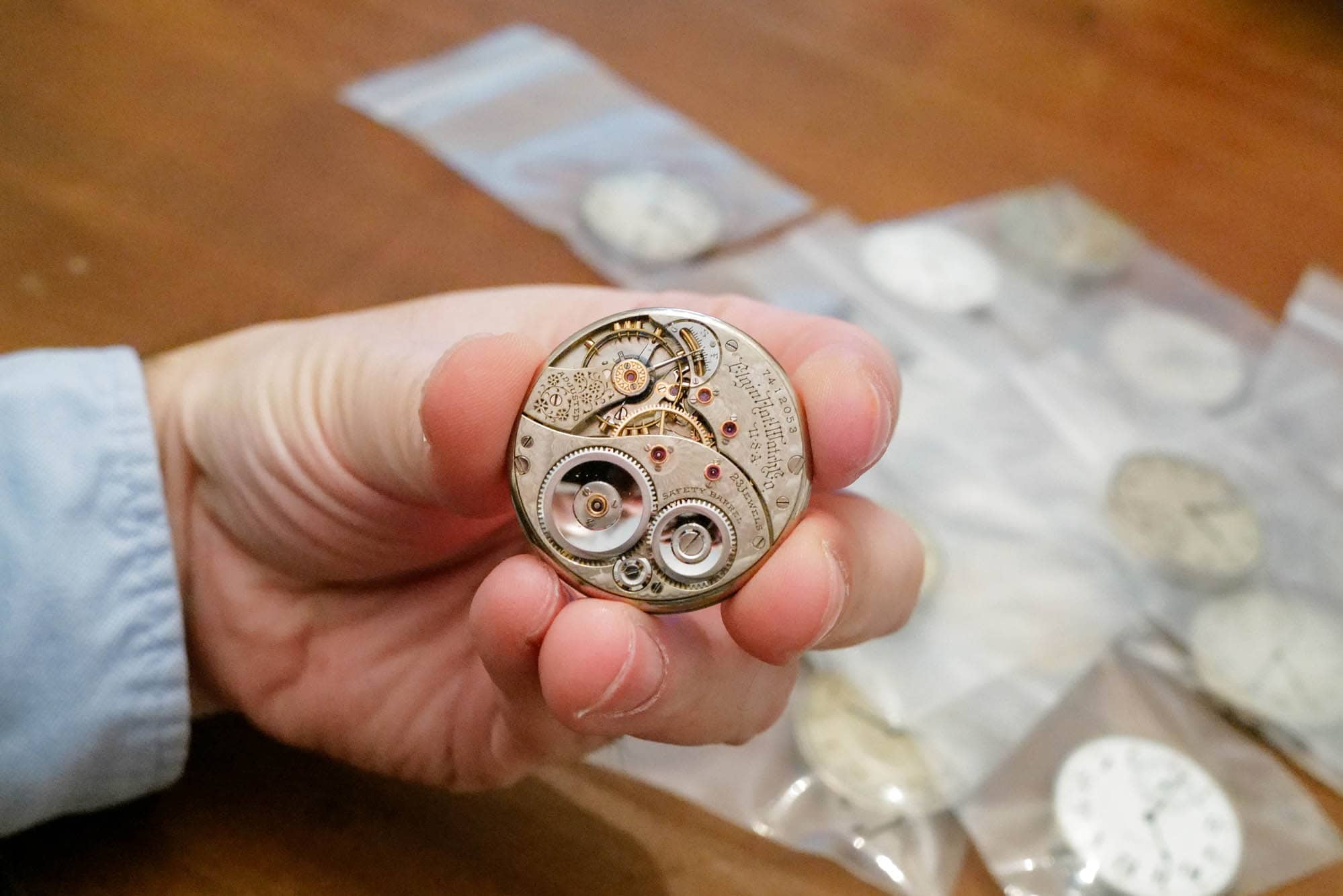
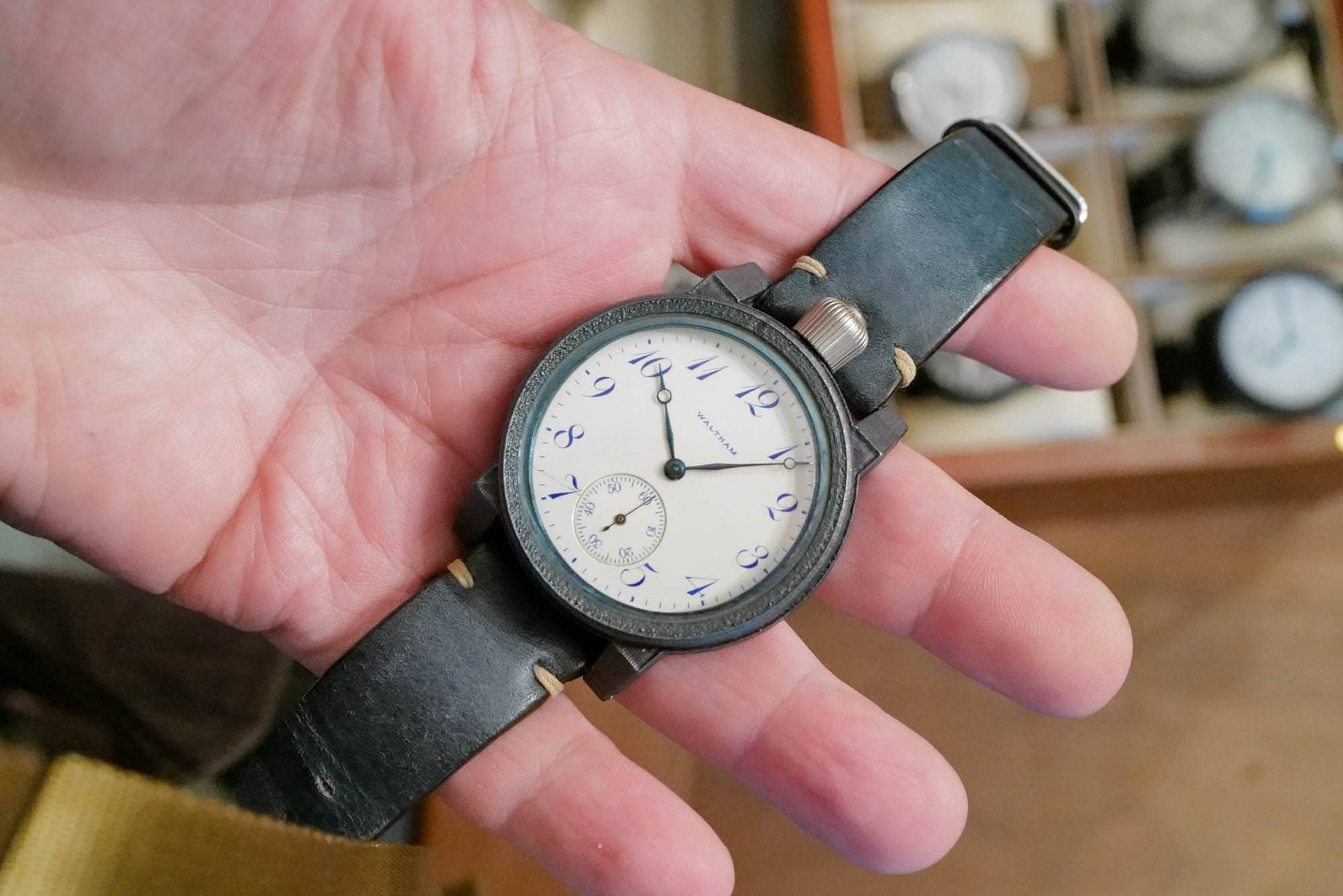
Vortic is one of the most unique watch brands you’ll ever encounter. Founded in 2013 and based in Fort Collins, CO, Vortic repurposes vintage pocket watch dials and movements by turning them into unique wrist watches, each essentially a one-of-one piece, worn in their custom cases fabricated in their own facilities. Vortic not only builds the cases for their wrist watches in-house, but they also service the century-old movements, refurbishing and replacing parts as necessary, so their watches can be worn reliably day to day.
The way Vortic is able to both showcase the history of watchmaking (each watch has an exhibition caseback, showing off movements that are incredibly beautiful but would have been largely hidden, by design, in pocket watch form) and push forward with an unapologetically modern design language is quite remarkable. Their case designs are not exercises in classicism that are obvious matches to the era the movements and dials originate from. Instead, they are contemporary in their appearance, often by necessity – the size of the pocket watch movements often require cases that are 45mm or larger.
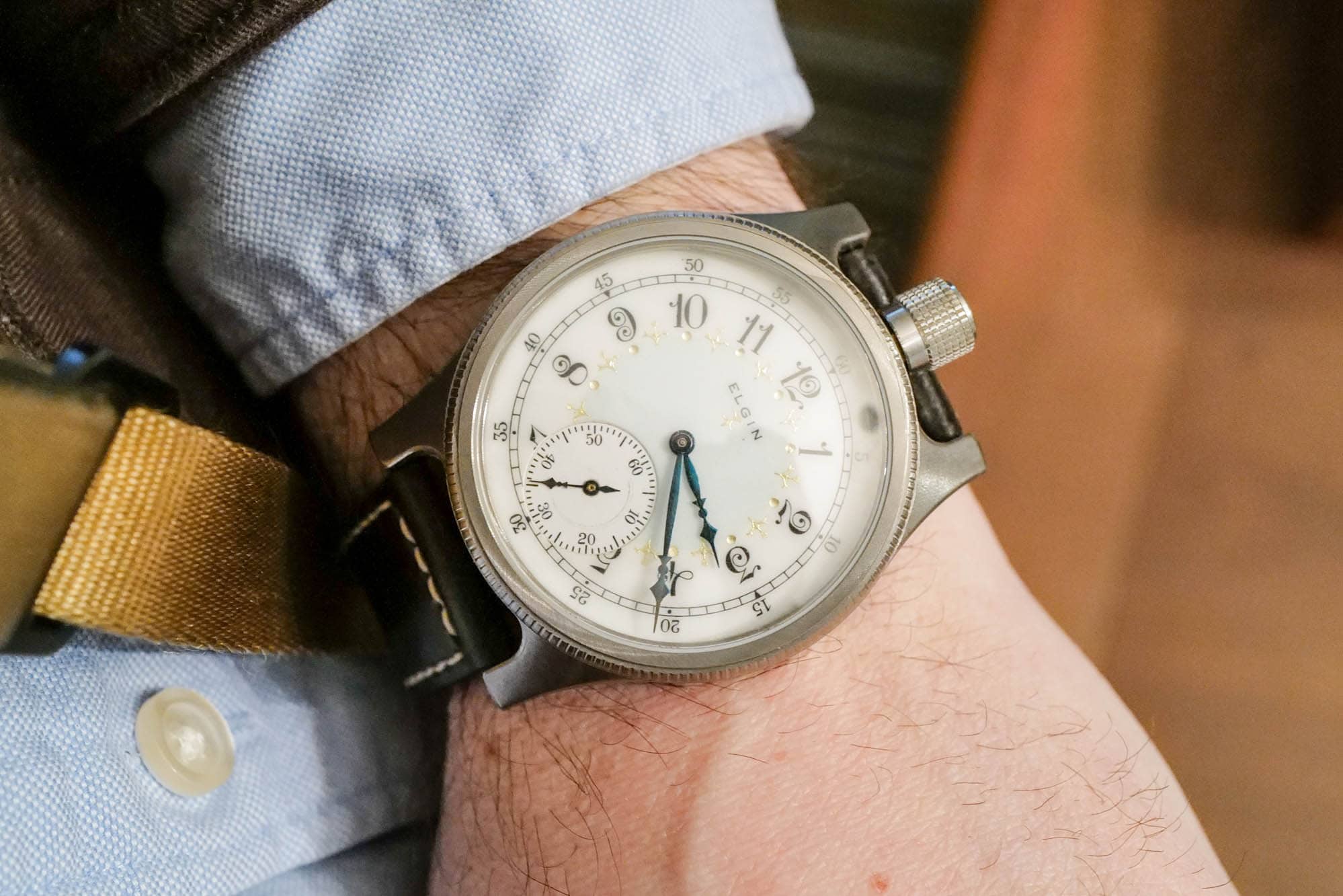
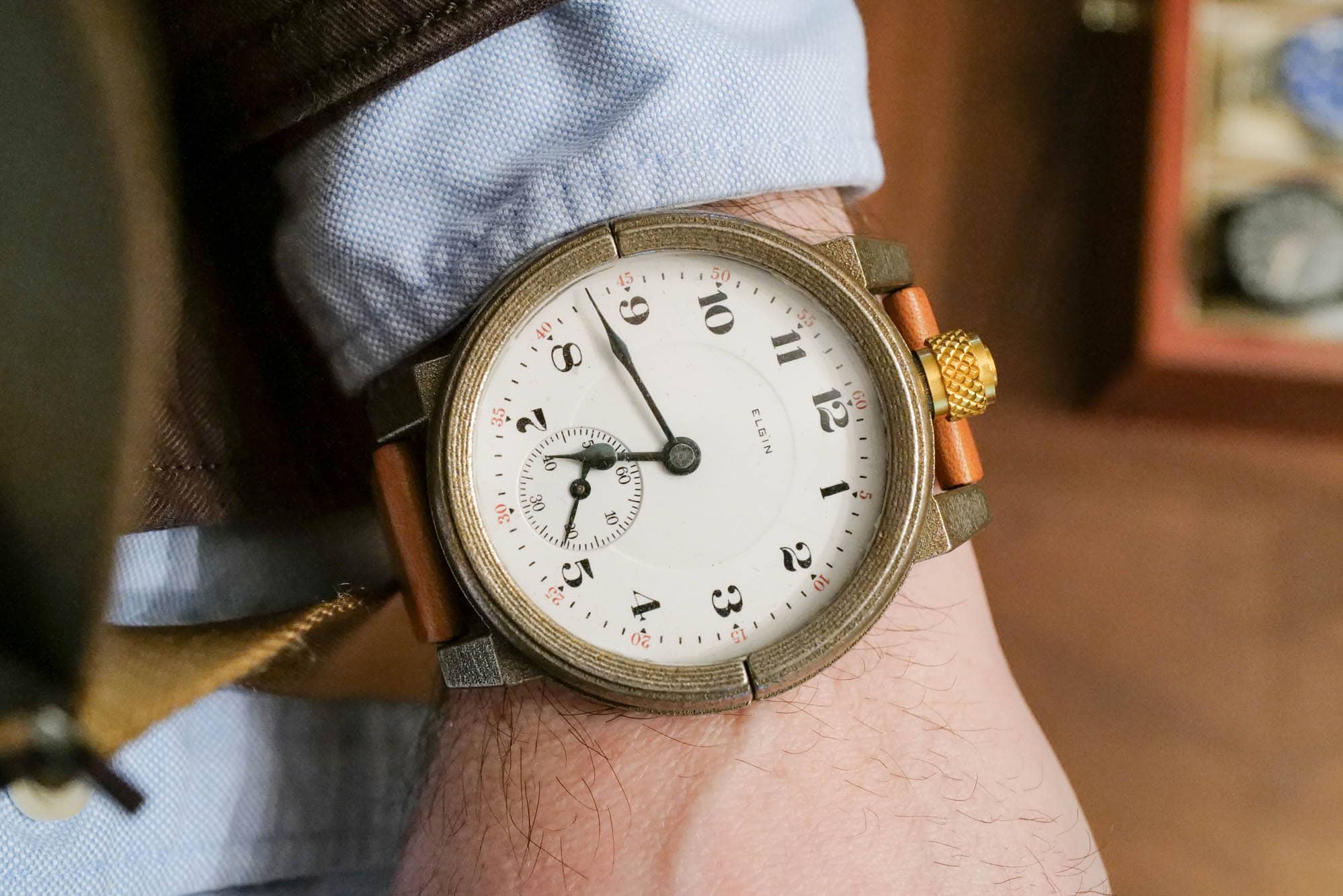
Vortic is extremely niche, and the brand has always appealed to a certain pocket watch curious subset of watch enthusiasts, but also to many outside the traditional watch enthusiast community. That includes pocket watch collectors, of course (one of the services Vortic offers is turning your own family heirloom pocket watch into a one of one wrist watch) but also history lovers, collectors interested in mechanics, and anyone drawn to Vortic’s brand story, which has always been centered on American manufacturing and a joyful entrepreneurism.
And that largely comes down to the enthusiasm of RT Custer. Since the founding of the brand, RT has been relentless in selling it, getting the word out in any way he can, and telling Vortic’s story. He is the face of Vortic, seemingly personally involved and invested in the story of every watch that leaves their headquarters.
If you’re a regular Worn & Wound reader, or a regular attendee at our Windup Watch Fairs, you likely already know that RT had a near fatal stroke last year. For a time, it wasn’t clear what would become of Vortic in RT’s absence, even if it was to be temporary. Thankfully, RT has made an incredible recovery in a relatively short period of time, and he’s back to running the company day to day, joining his team at Windup events, and appearing in social media clips as he’s always done, spreading the word about his brand.
I’ve gotten to know RT over the last seven years or so, and it was personally gratifying to reconnect with him both in Dallas at our Windup event and a few weeks later in Pennsylvania. You kind of expect a near death experience to have an impact on a person, and RT is no exception. As we made our way from Lancaster to rural Pennsylvania to meet with his watch dealer, the conversation was focused mostly on non-watch topics. In the past, I may have expected RT’s focus to be on business, entrepreneurship, and the pursuit of a unique brand of American watchmaking that has been the guiding principle behind Vortic from the beginning. On that day, however, much of the conversation was centered on insights about life since his stroke, the importance of family and continuity, and a deep sense of nostalgia tied to Pennsylvania.
There was also a positivity about the future of Vortic. The reason RT was in Pennsylvania that week was to meet with a watch and antique dealer that he’s worked with since the earliest days of the brand. His dealer, who wanted to remain anonymous for the purposes of this story, deals in a high volume of pocket and wrist watches, and so many other odds and ends it’s hard to quantify, out of his home.
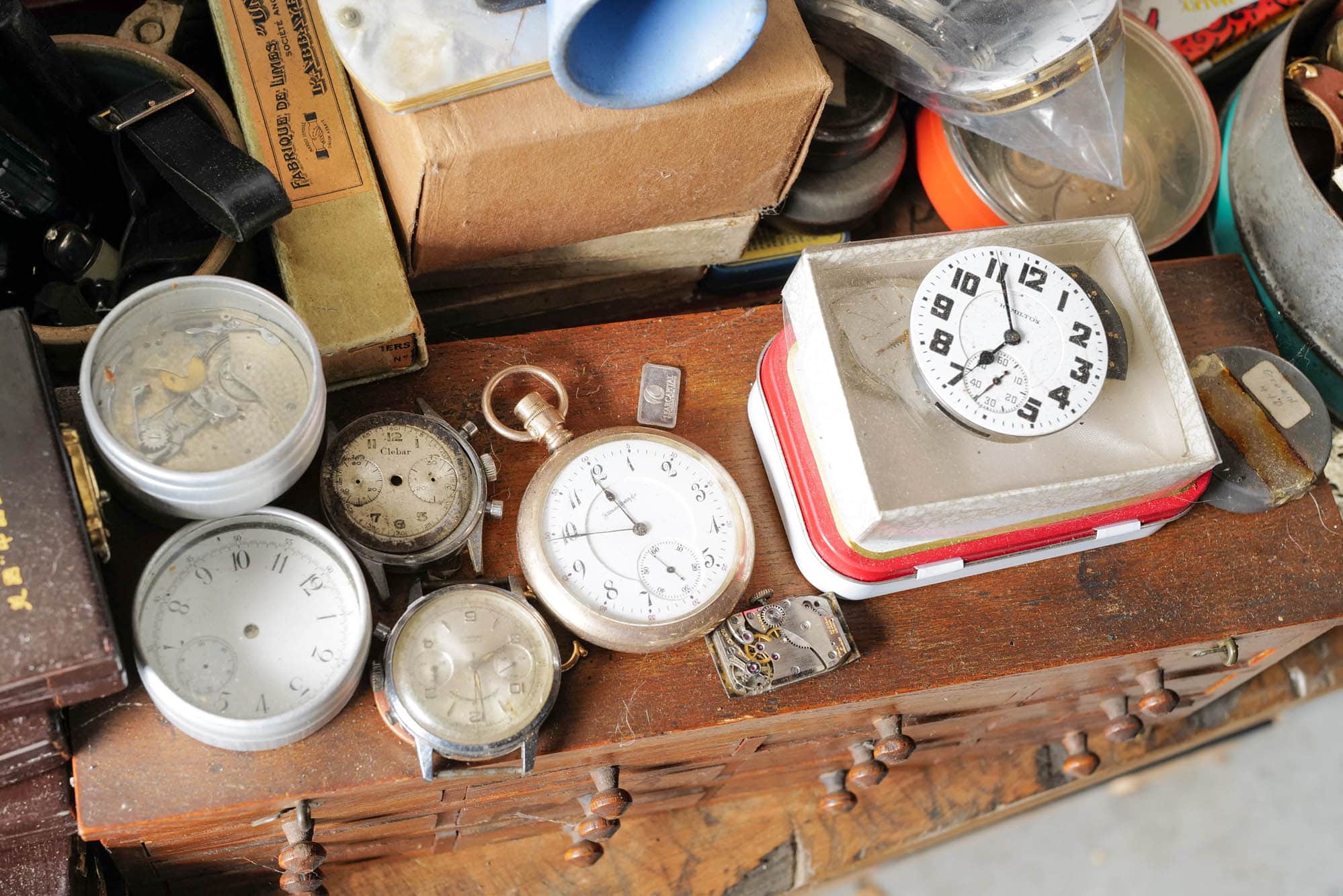
Social media and YouTube has created an image of the watch dealer in the mind’s eye of everyone who consumes a certain type of watch content. Whether it’s Diamond District flippers or the erudite experts on blue chip vintage, the watch dealer has become a well defined type. The reality, though, is that sometimes a watch dealer is just a guy working out of his garage, in gym shorts, surrounded by boxes of pocket watches and all the ephemera you’d expect to be acquired over a career’s worth of estate sales.
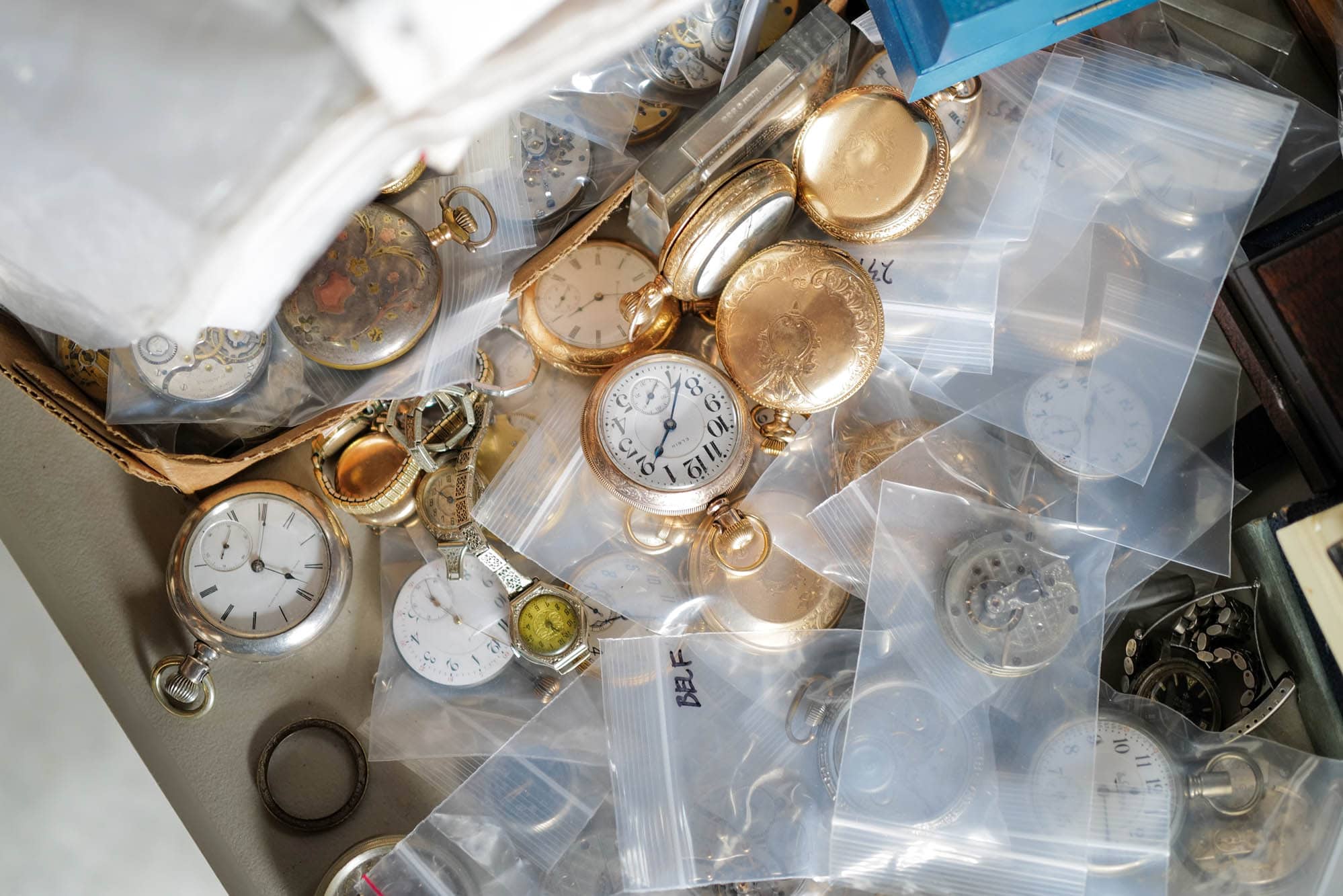

The watches RT was about to purchase came from the collection of a Pennsylvania based fruit seller who passed away some time ago. Described as something of a hoarder, there are apparently multiple properties that are part of the estate that have yet to be touched. “They don’t have a key,” I was told, by the watch dealer, and they literally don’t know what they’ll find once they eventually get into these buildings. More watches, for sure.
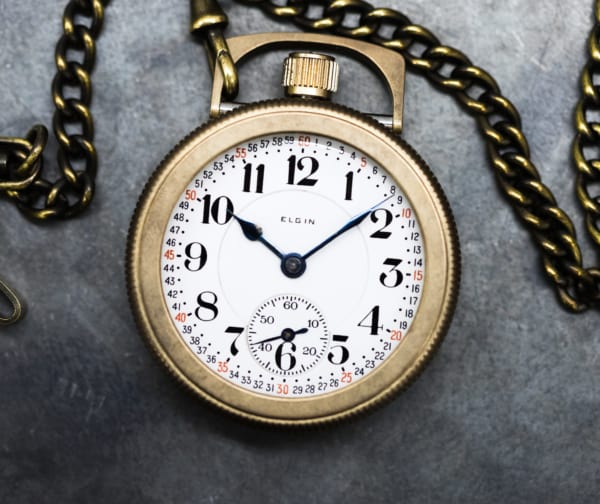
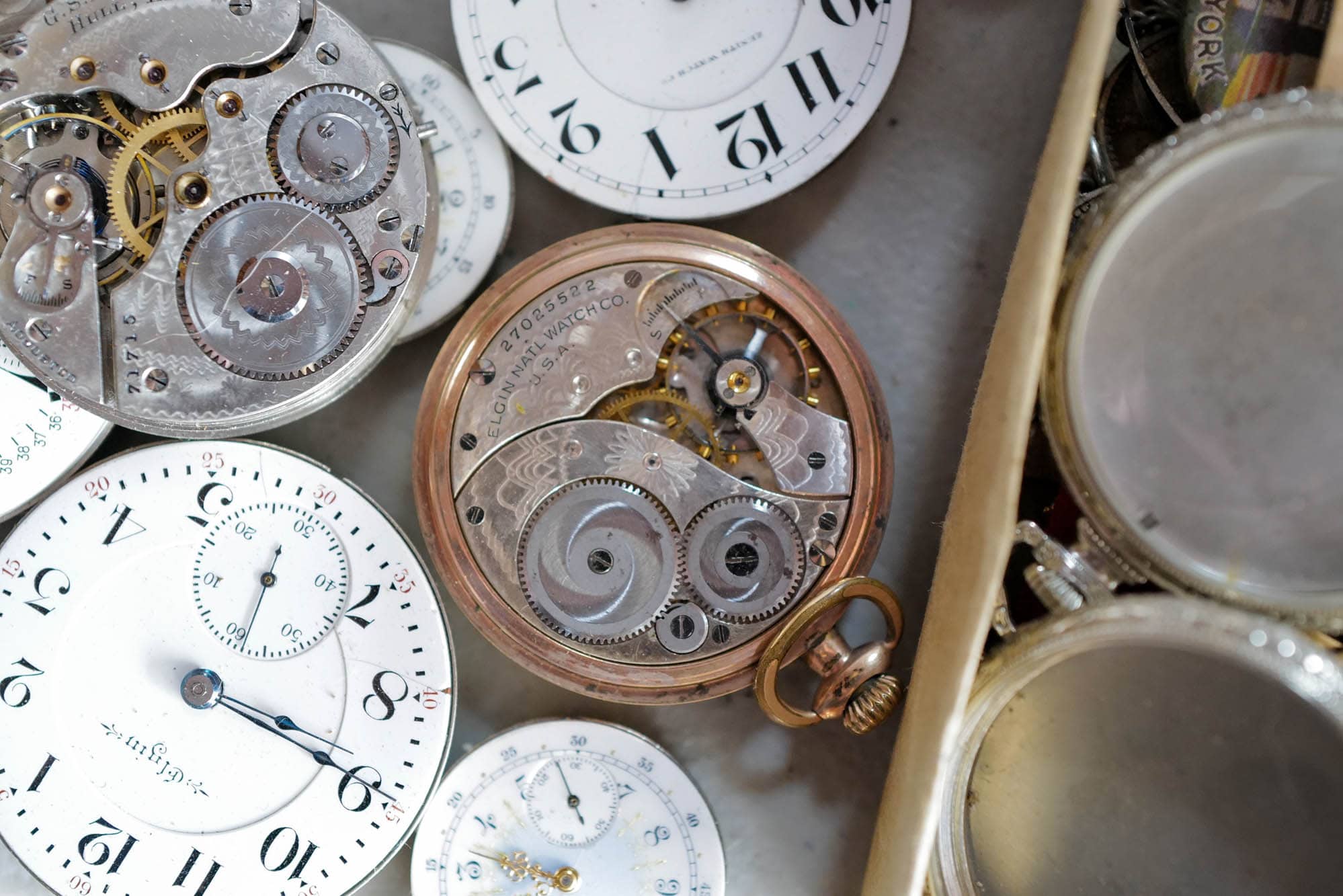
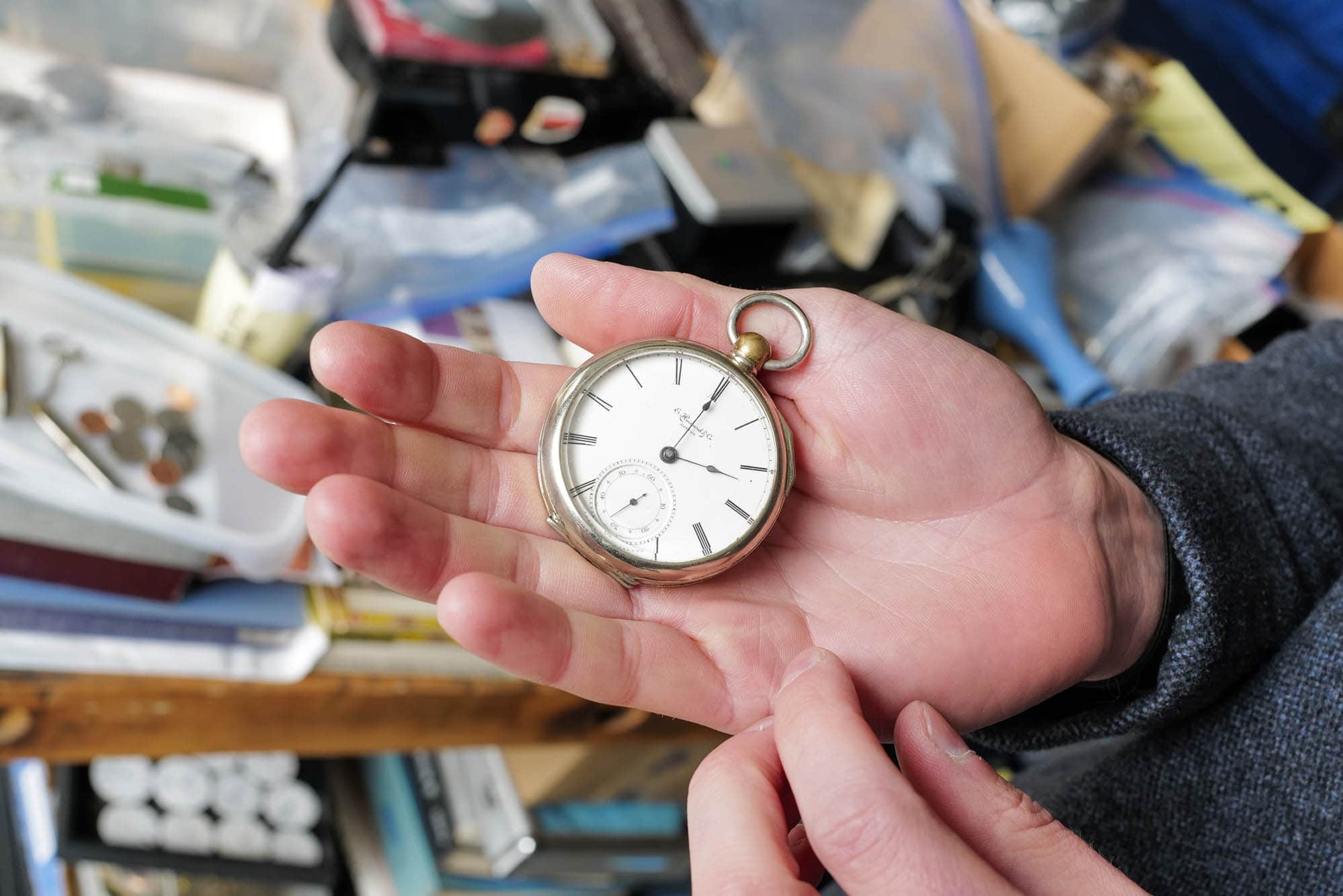
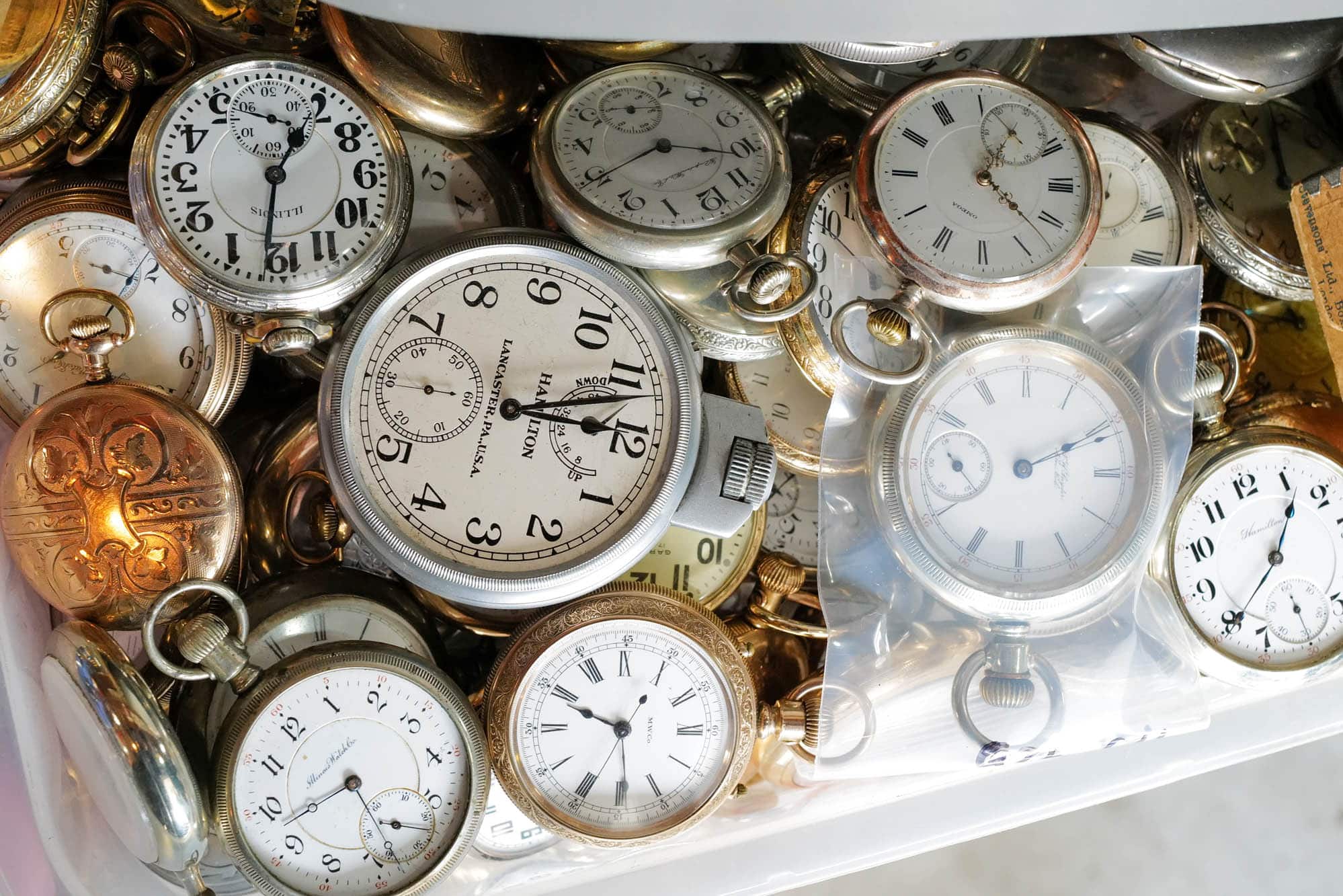
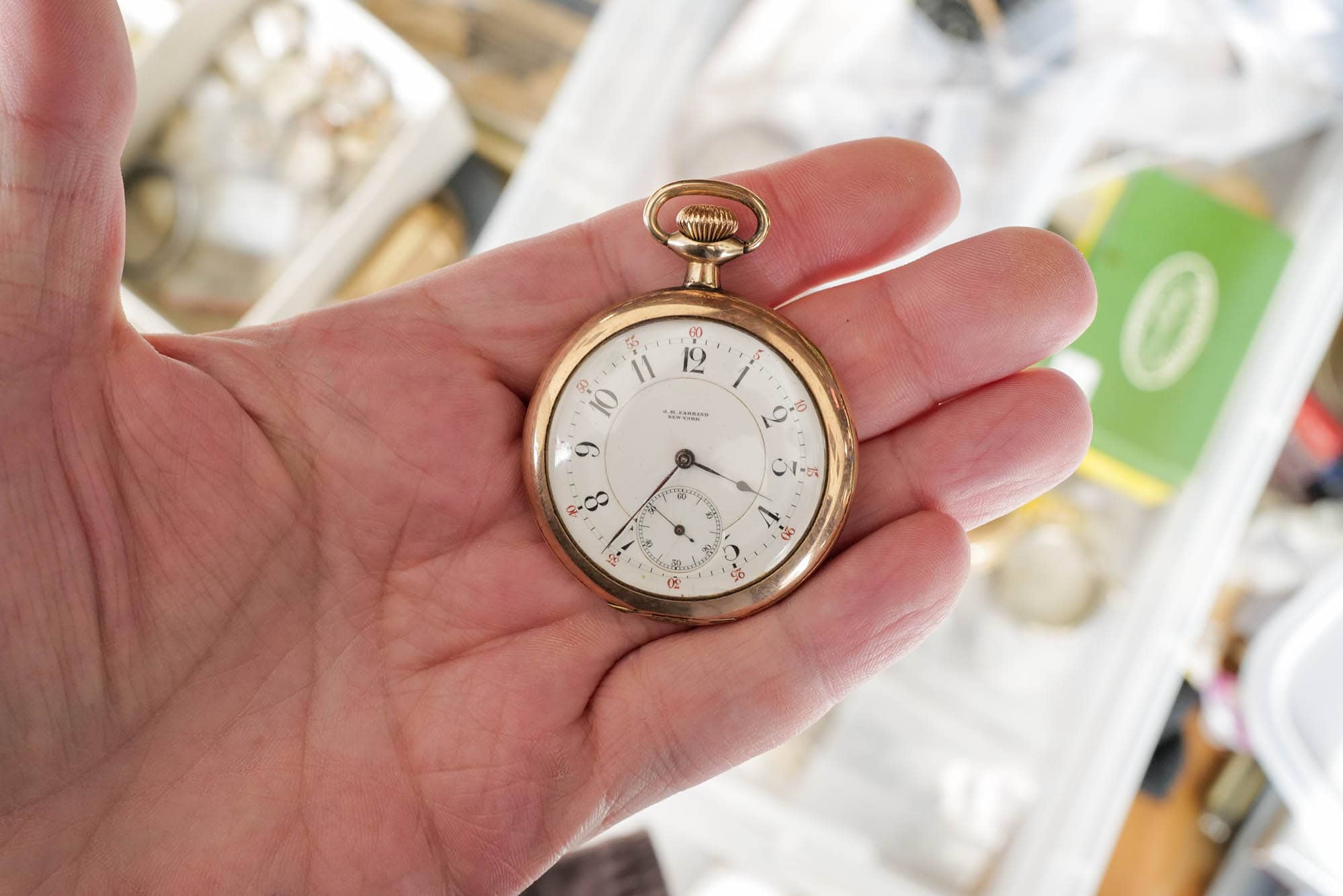
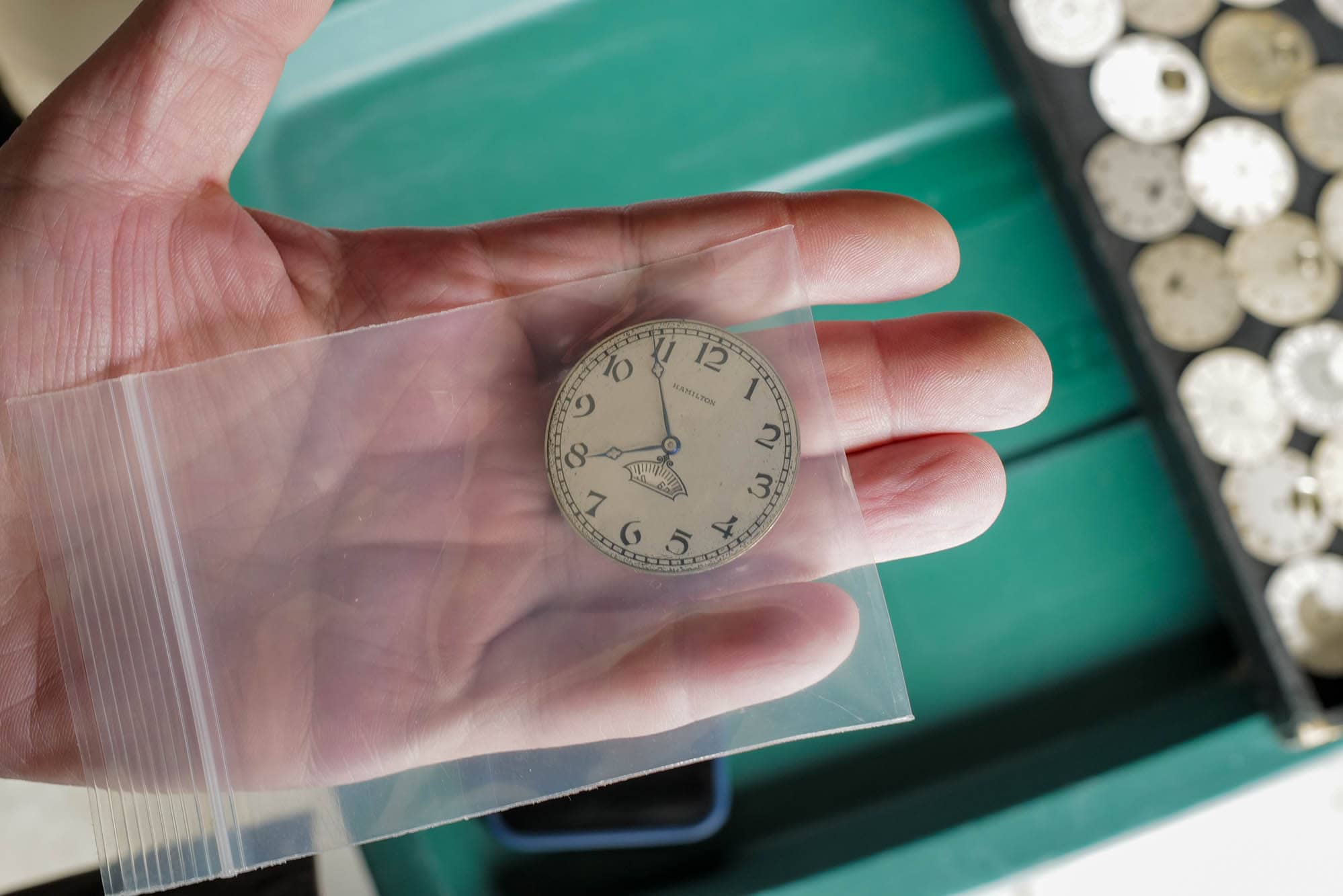
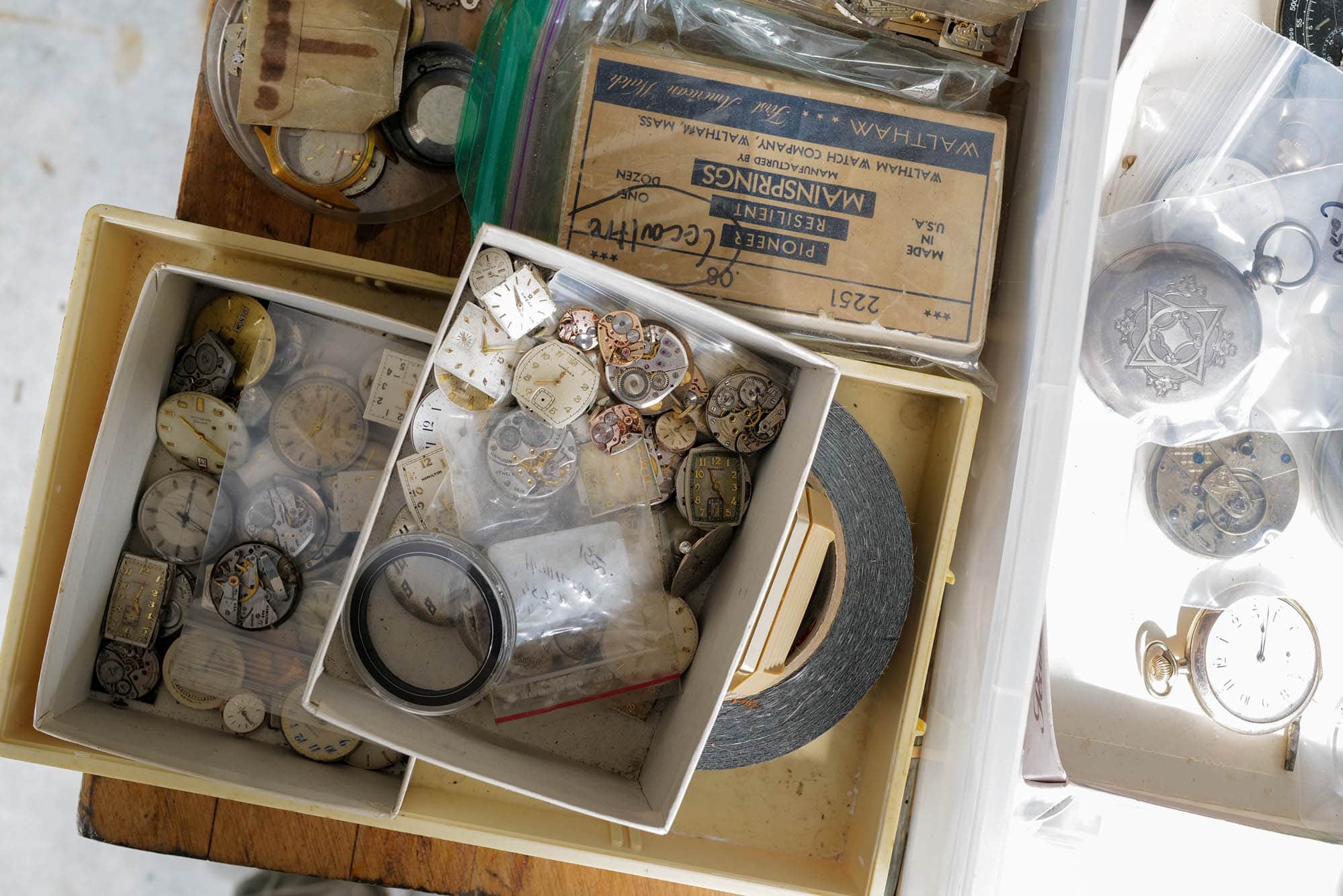
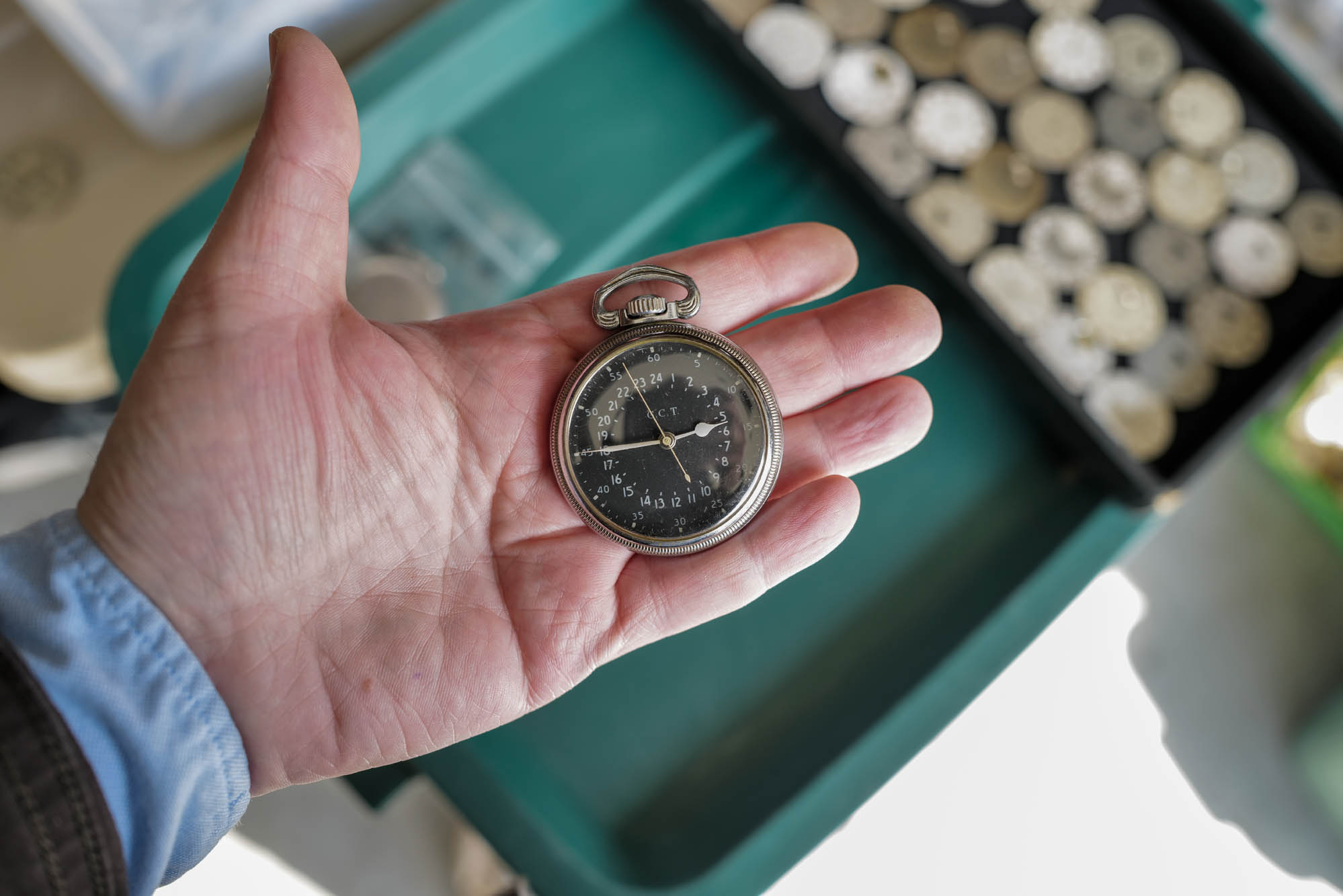
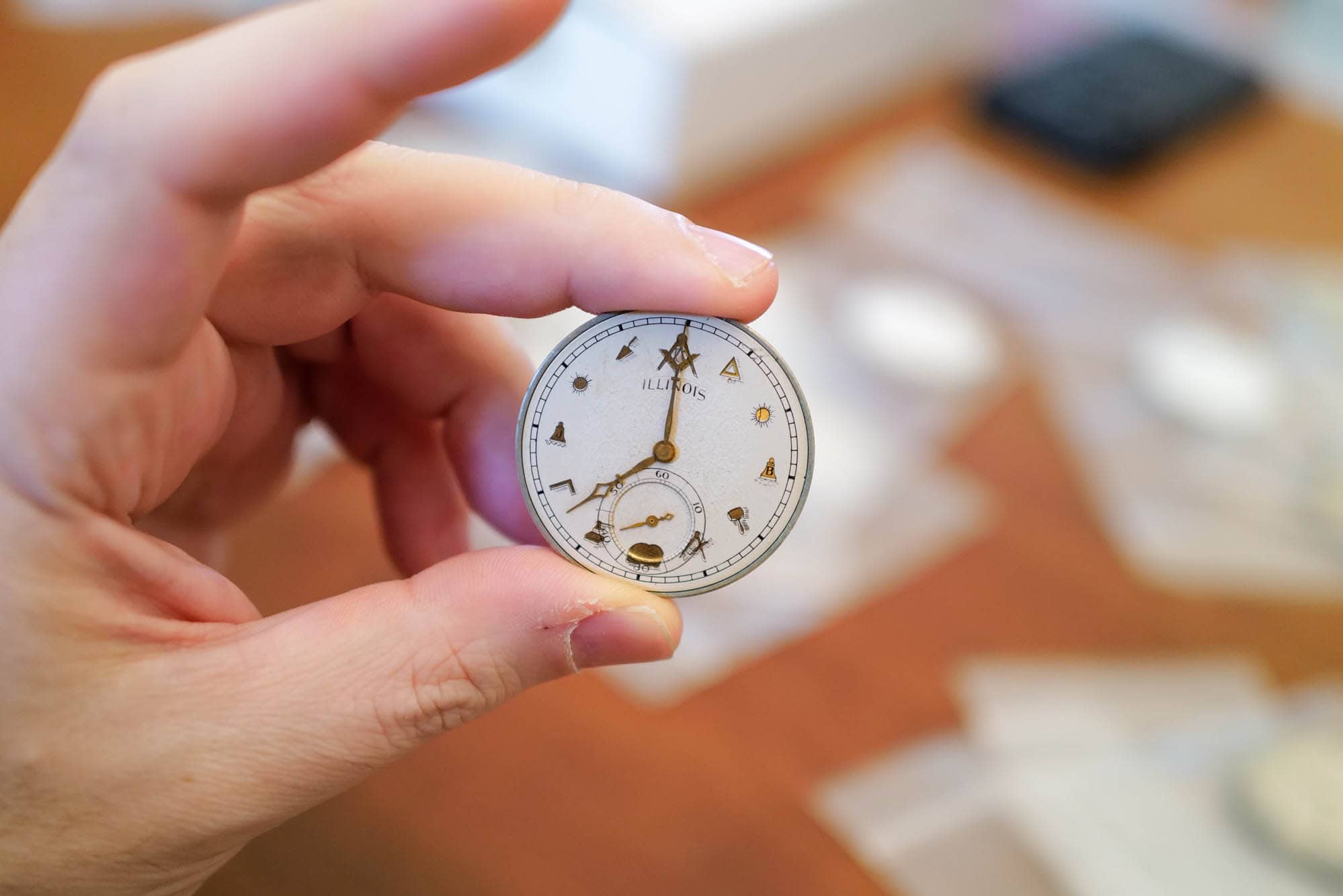
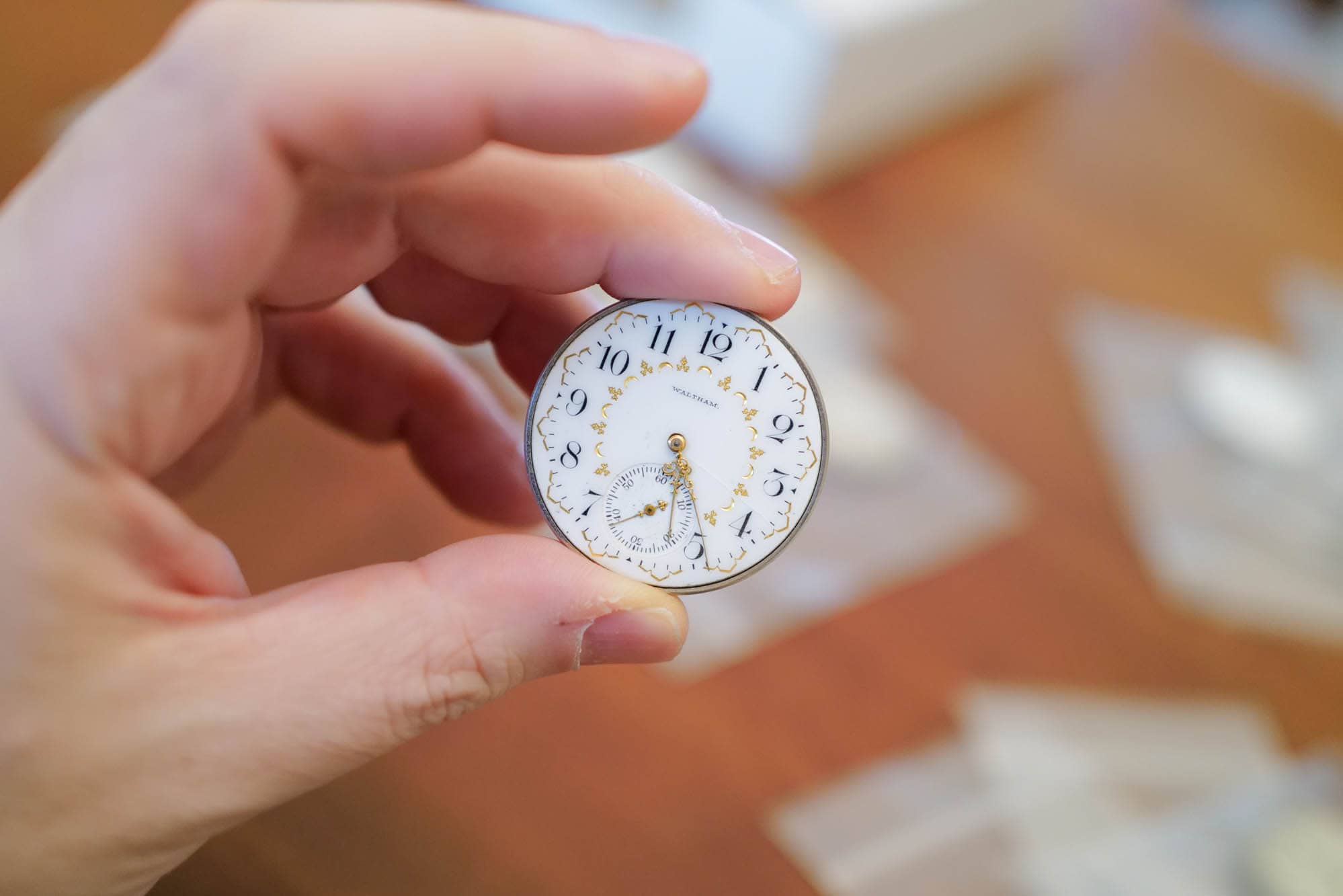
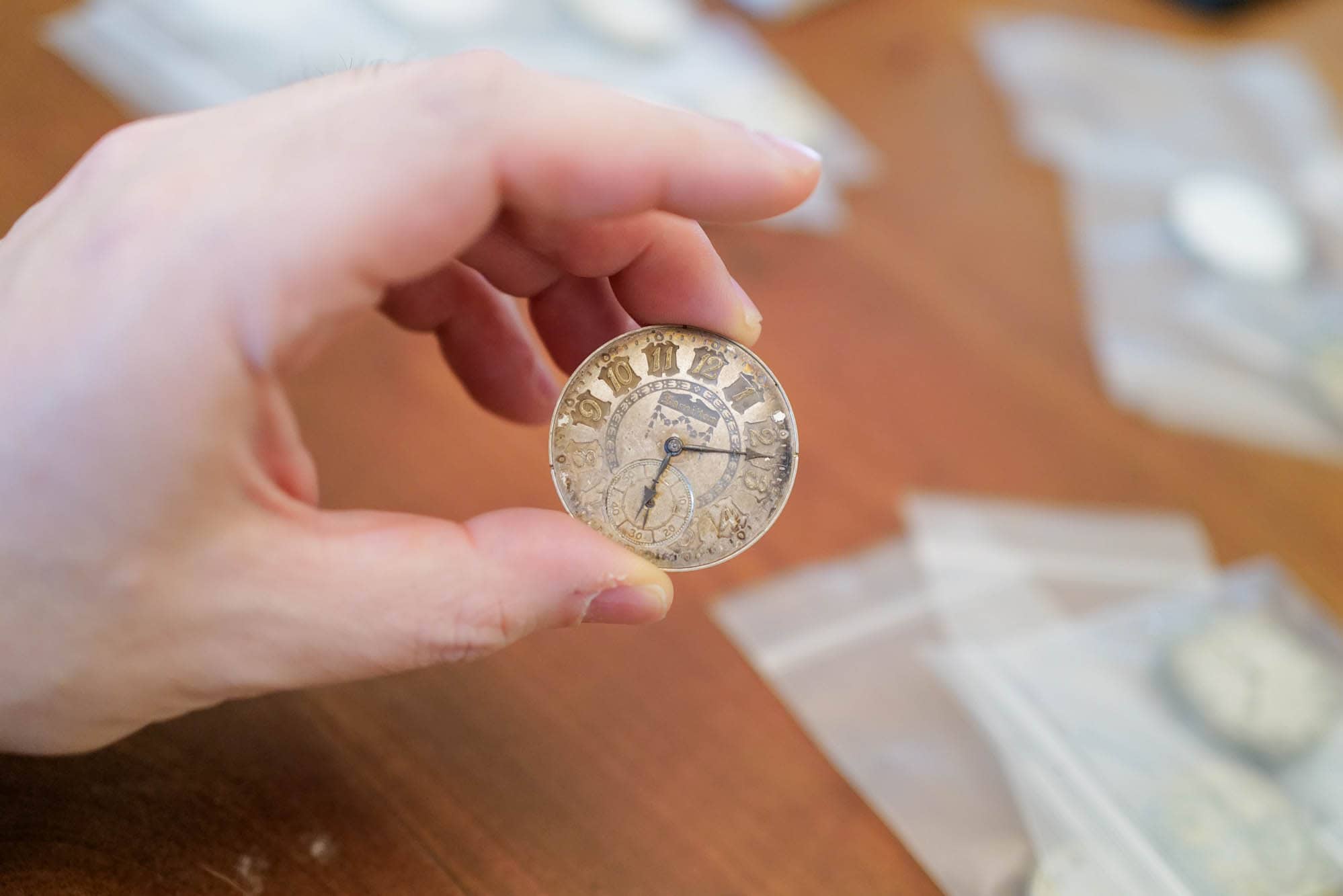
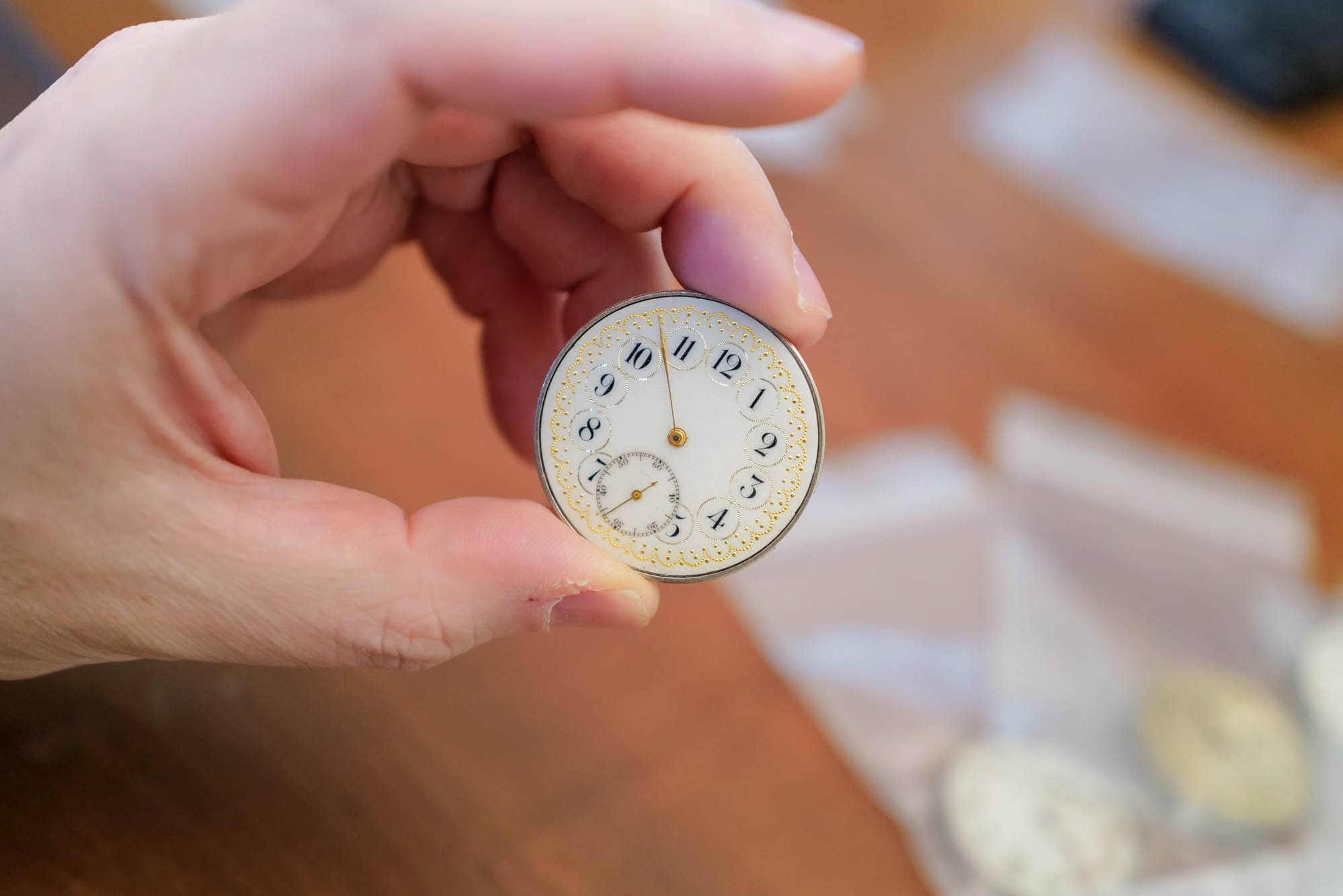
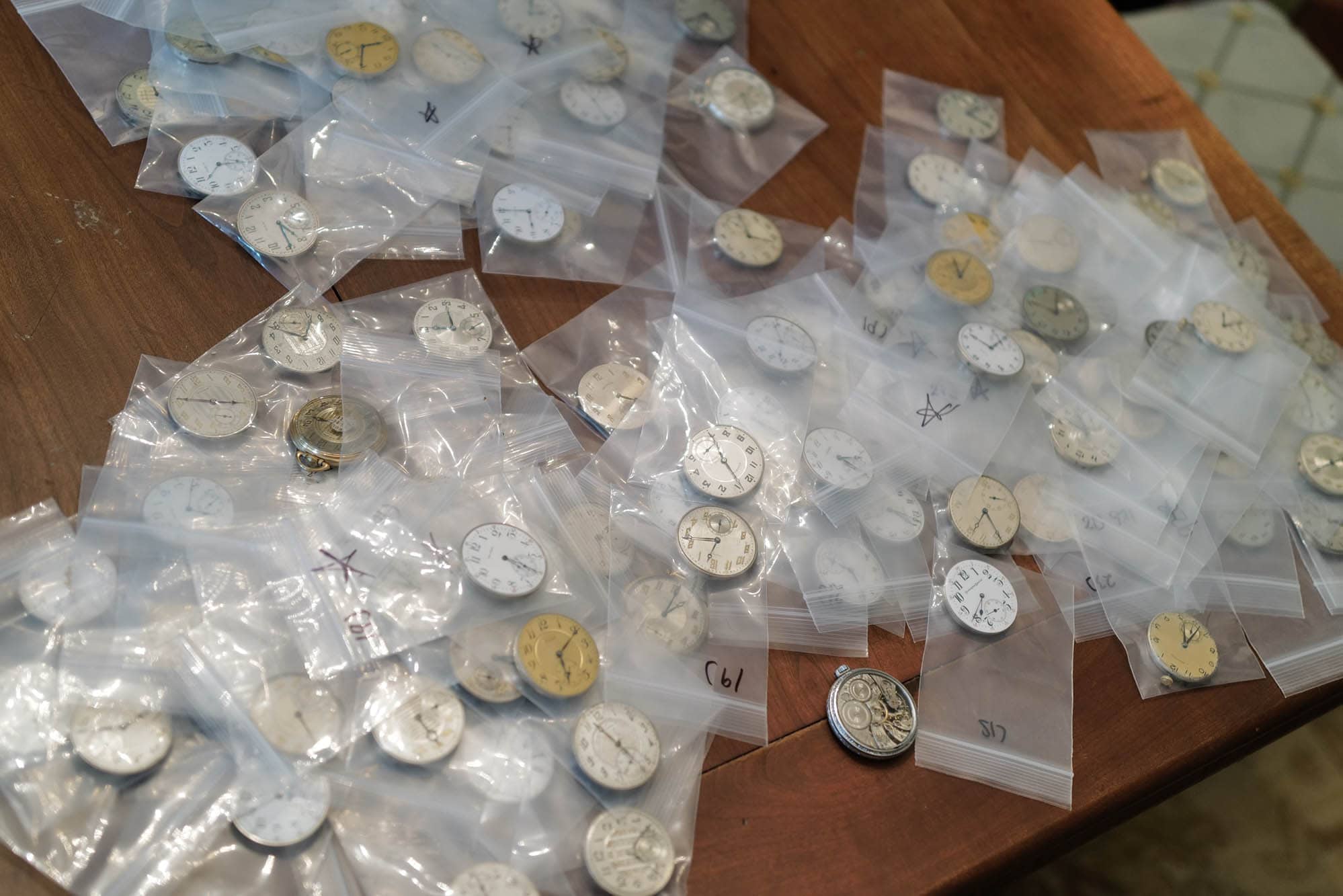
RT examines the pocket watch movements and dials that his dealer has set aside for him. There are hundreds, each in their own individual plastic bags, from mostly American brands like Waltham and Elgin. The dealer knows RT’s business having worked with him for years, and has set a number of special movements and dials aside for him to take note of that he knows will be of interest for their rarity.
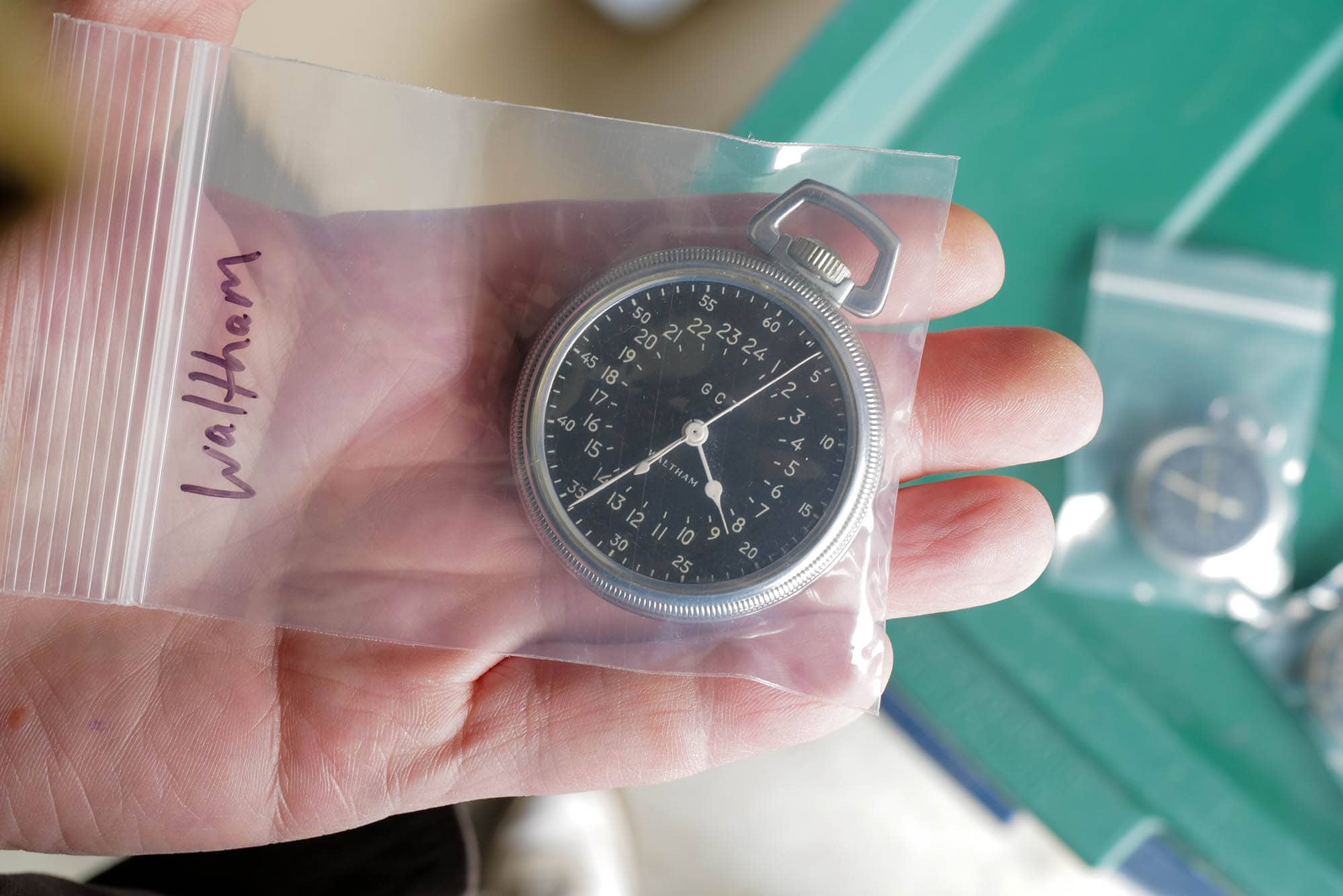
Almost the entire meeting is spent either catching up on life events or looking at watches. There is virtually no negotiation. Some, but not all, of the transaction logistics have been worked out ahead of time. When it comes time to formalize everything, it’s literally a handshake deal. RT has cash which serves as an initial payment, with more promised over the course of the year. There’s clearly a level of trust built up here from many years of exactly this type of deal taking place.
The smoothness of the transaction, and RT’s access to these watches in the first place, speaks to the importance of relationship building in the watch industry. Part of being successful is being the first person to get a call when a new trove of pocket watches is found in a hoarder house. And you don’t get that call if you’re not someone people want to do business with. Part of the success of Vortic revolves around it being a business people want to see succeed, and that’s a testament to RT and his team.

On the way back into Lancaster, RT told me about the challenging period following his stroke. Expenses at Vortic had to be cut dramatically, which meant layoffs were unavoidable. These are, understandably, incredibly difficult conversations. Can you imagine sitting across from an employee and explaining they’re out of a job because of your own impossible to anticipate medical emergency?
During one of these conversations, Raul, a Vortic engineer in the process of being fired, and seemingly having his life turned upside down, suddenly interrupted the meeting. RT explained that he was taken aback, and not sure exactly what to expect, already stressed about the prospect of letting a trusted member of his team go.
Raul, clearly taking cues from the company founder, had been bit by the entrepreneurship bug. He made an offer to buy one of RT’s lathes, a gesture that would allow Vortic’s cases to continue to be made in Fort Collins, supply a cash infusion to Vortic, and give Raul an opportunity to begin his own journey as a business owner. The symmetry of the end result here is hard to deny.
Vortic is a company defined by the power of a genuinely unique idea and a disciplined approach to building a brand in a certain way. But what became clear to me spending the day with RT in and around Lancaster is that none of that would really matter at all if he couldn’t convince others to buy into that idea as well. A business succeeds or fails because of the people in it and adjacent to it. Vortic