For Part Three, the story will focus on the culmination of Paul Atreides’ story, with his holy war now in motion and political tensions ever-present and ever-threatening (and, as a little treat, we also get to see that little freak Robert Pattinson with bleached hair and eyebrows). While this film marks the end to Villeneuve’s series, the franchise only focuses on the first two novels, leaving plenty of room for future filmmakers who are up for the challenge.
But I know that good things come to those who wait, so I’m hoping there’s a director out there just chomping at the bit to bring Leto II and his big, disgusting sandworm body to IMAX.
Meta Now Lets Anyone Use Your Instagram Photos in AI Images—Unless You Opt Out
I’m not sure if you remember, but about 10 years ago there was a period of time when Baby Boomers would post things on their Facebook and Instagram accounts with things like, “I HEREBY DECLARE I DO NOT GIVE FACEBOOK OR INSTAGRAM PERMISSION TO USE MY PHOTOS OR INFORMATION. SHARE THIS AND POST ON YOUR PAGE IF YOU AGREE AMEN”
At the time, I thought it was a bit silly, if harmless. But now? Well, maybe my aunt Peggy was onto something. I can only guess that years of putting SlimFast in her morning coffee has given her Paul Atreides-level prescience.
![]()
In any case, this week it was reported that Meta’s new Muse Image tool allows users to generate AI images using public Instagram accounts as source material unless those accounts opt out. As reported by WIRED, someone can tag a public profile in a prompt and use Meta AI to create an image using that person’s likeness, with public accounts opted in by default. It would be naive to think nothing could possibly go wrong here. Giving people a tool to use someone else’s likeness to fulfill their own fantasies carries obvious moral and legal risks, and adds another point to the “I think it’s time to delete all social media” column.
Fiat Topolino EV Brings Micromobility to America for Just $13,995
Reader, there has not been a single waking moment where I have not thought about the Fiat Topolino this week. The moment I wake up to the moment I close my eyes again, all I can think about is wearing a little scarf and a big gardening hat and driving one of these babies to an antique store and stopping for ice cream (I live in the South in this fantasy and I’m always eating ice cream and wearing little scarves). My God, doesn’t that sound nice?
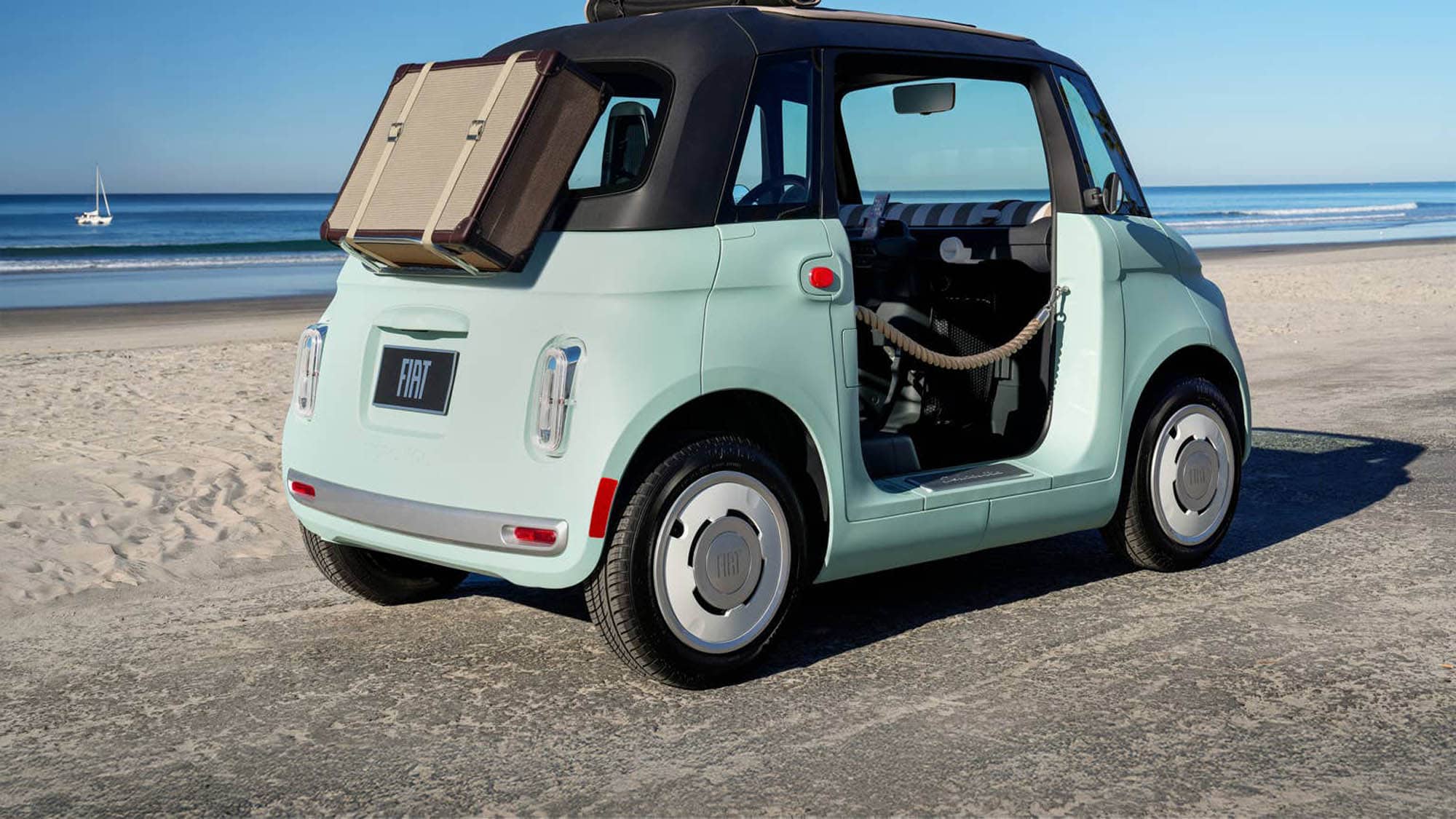
Well, now that Fiat has brought this li’l guy stateside, I’m one step closer to making this dream a reality. The new Topolino is now available in the U.S., with a price tag starting at just $13,995. The two-seat electric car comes in Verde Vita Mint and two model options. The standard Topolino offers asymmetrical doors and a glass roof, while the Topolino Dolce Vita adds rope doors and a roll-back soft top.
![]()
Both options have up to 46 miles of range, charge in about five hours, and tops out at 19 mph. And while it’s not fully street legal yet, Fiat says a Street Legal Conversion Kit is expected this Fall. That will bring the Topolino up to 25 mph and allow it to be driven on most roads posted at 35 mph or less. Imagine commuting in this thing to go to work. I’d never shut up about it.
Scientists Build Fully Synthetic Life Form That Can Eat and Reproduce
Perhaps one of the most exciting – and slightly terrifying – bits of news this week: scientists at the University of Minnesota have announced they have created cells from synthetic, non-living chemical components. Nicknamed SpudCell, the cell can grow, copy its genome, divide, and continue across multiple generations.
This, of course, brings up the slightly uneasy realization that biological life is, in itself, a sliding scale. Viruses, for instance, are not usually considered fully alive, but they can replicate inside host cells. SpudCell is in a similar gray area. It acts like a cell in several important ways, but it is not fully alive. For example, it still relies on outside intervention to survive, including ribosomes being “fed” to the cell, since it cannot produce this important building block to life on its own.
![]()
Even with this caveat, this finding could have major implications for synthetic biology and the bioeconomy, especially if these kinds of cells can eventually be used to make medicines, materials, or industrial chemicals. Until then, maybe the University of Minnesota can give these scientists a grant to hire a PR agency – I think SpudCell can use some work.
Haim Viajero SE
If you know me personally, you’ll know I never shut up about travel. Hell, I still talk about the time I studied abroad in college, and that was 16 years ago. Well, I must have a kindred spirit at Haim, because their latest collection seems to have been designed just for me.
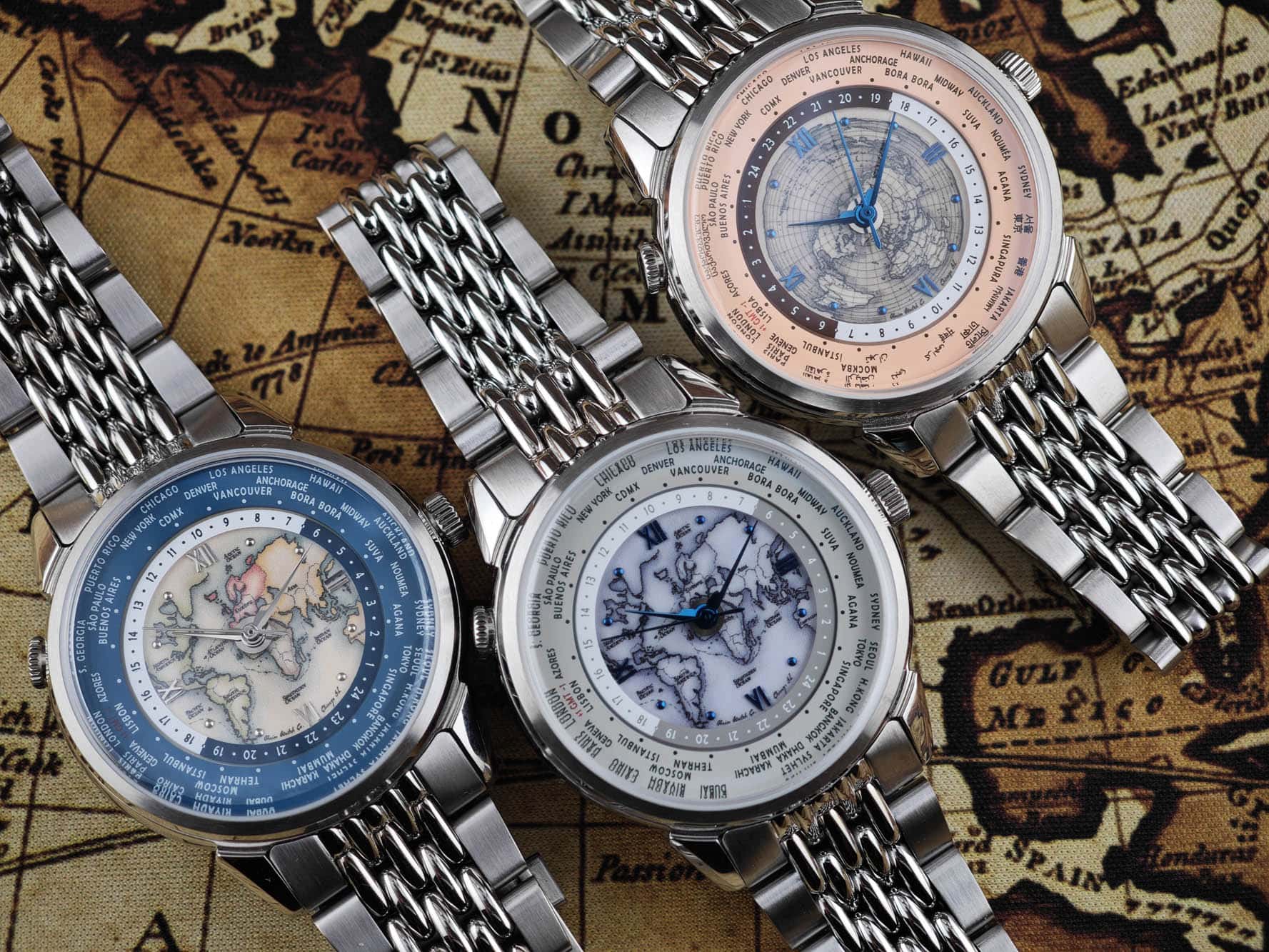
The new SE series hones in on the travel theme of the Viajero collection, each with an enamel dial featuring hand-drawn 17th-century maps and a bezel that includes three rows of cities and can account for half-hour time zones like Mumbai and Tehran. The custom Atlas-shaped rotor can also be seen through the exhibition caseback.
![]()
The Viajero SE collection comes in three styles. Antique Cobalt pairs Haim’s dark cobalt bezel with a full-color map and is an extension of the previous Viajero: Air model, while Grayscale keeps things monochromatic with the subtlest bit of contrast on the hands and markers in blue. Polyglot, my personal favorite, has a salmon-toned bezel and displays each city in its native script. Considering I have tried (and failed) to learn French, Spanish, Italian, German, Norwegian, Swedish, and Dutch, I might feel a bit like an imposter wearing this one, though.
Across the collection, each Viajero SE comes in a 39.5mm stainless steel case on Haim’s beads-of-rice bracelet and is powered by the Sellita SW330 automatic movement.
And if you’re in the Chicago area, be sure to stop by our Windup Watch Fair, going on now, and stop by Haim’s table to see this collection in-person this weekend.





 Latest Review