

 Latest Review






From the imposing astronomical clocks of Tudor England to the exquisite pendant watches of Victorian Britain, timekeeping has long been a symbol of power, prestige, and technological marvel within Europe’s royal courts. This new series explores the fascinating evolution of clocks and watches crafted specifically for royalty, tracing how these intricate masterpieces reflected the tastes, ambitions, and innovations of monarchs. Through the lens of craftsmanship, artistry, and historical significance, we reveal how these royal timepieces marked the passage of dynasties and empires.
King Philip II (1527–1598) inherited a globe-spanning empire from his father Charles V and, after 1580, also ruled Portugal. A devout champion of the Counter-Reformation, he centralised government, built the vast monastery-palace of San Lorenzo de El Escorial, and presided over Spain’s political zenith. His court prized scientific instruments and clocks as emblems of order and piety.
Philip was part of the great Habsburg dynasty and the son of the Holy Roman emperor Charles V. From time to time, the emperor wrote Philip secret letters, impressing on him the high duties to which God had called him and warning him against trusting any of his advisers too much. Philip, a very dutiful son, took this advice to heart.
During his reign the Spanish empire attained its greatest power, extent, and influence, though he failed to suppress the revolt of the Netherlands and lost the ‘Invincible Armada’ in the attempted invasion of England.
Philip inherited his father’s interest in timekeeping and amassed a notable collection of clocks and other scientific instruments. Perhaps, most significant among these were commissions from his Italian court mechanic, Juanelo Turriano, who also served his father.
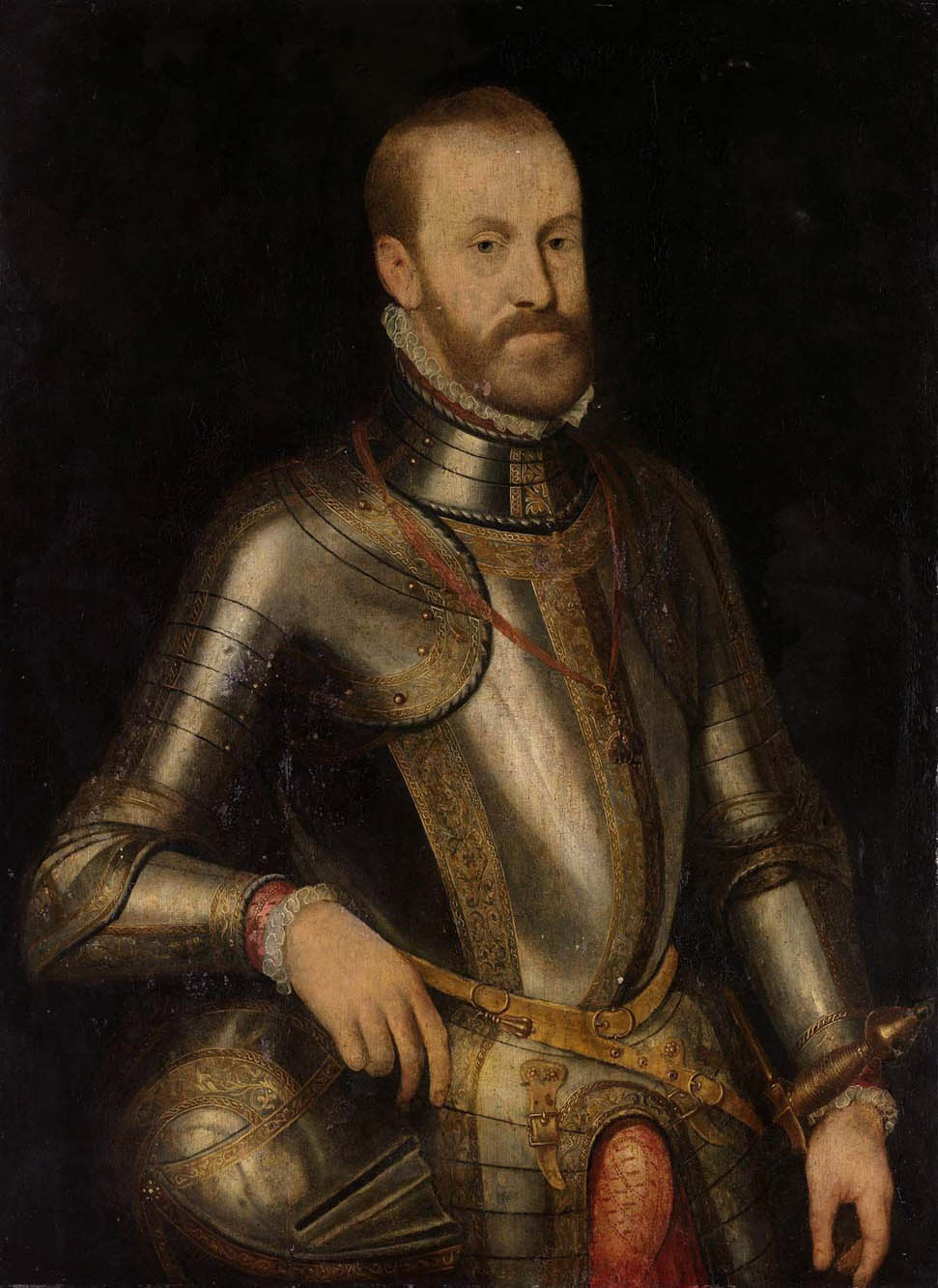
Philip was married four times. His first was to his cousin, Maria of Portugal, in 1543. She died in 1545 while giving birth to their son, Don Carlos, who lived an unhappy life. In 1554, he married Mary I of England and ruled with her as joint sovereign until her death in 1558, having no children.
His third marriage, in 1559, was to Elizabeth of Valois, daughter of France’s King Henry II. This union was part of the Peace of Cateau-Cambrésis, which ended the wars between Spain and France for a generation. Elizabeth gave him two daughters, Isabella Clara Eugenia and Catherine Micaela, before dying in 1568.
In 1570, he married Anna of Austria, daughter of his cousin Emperor Maximilian II. She died in 1580, but their son survived to become King Philip III.
A Court of the Arts and Mechanical Marvels
Philip was a collector of maps, globes, instruments, and books. His library at El Escorial became one of Europe’s most important centres of learning. Philip’s court prized intricate clocks, automata, and other mechanical devices imported from Central Europe and Italy. The court welcomed painters and craftsmen who introduced new methods in tapestry weaving, painting, and architectural decoration.
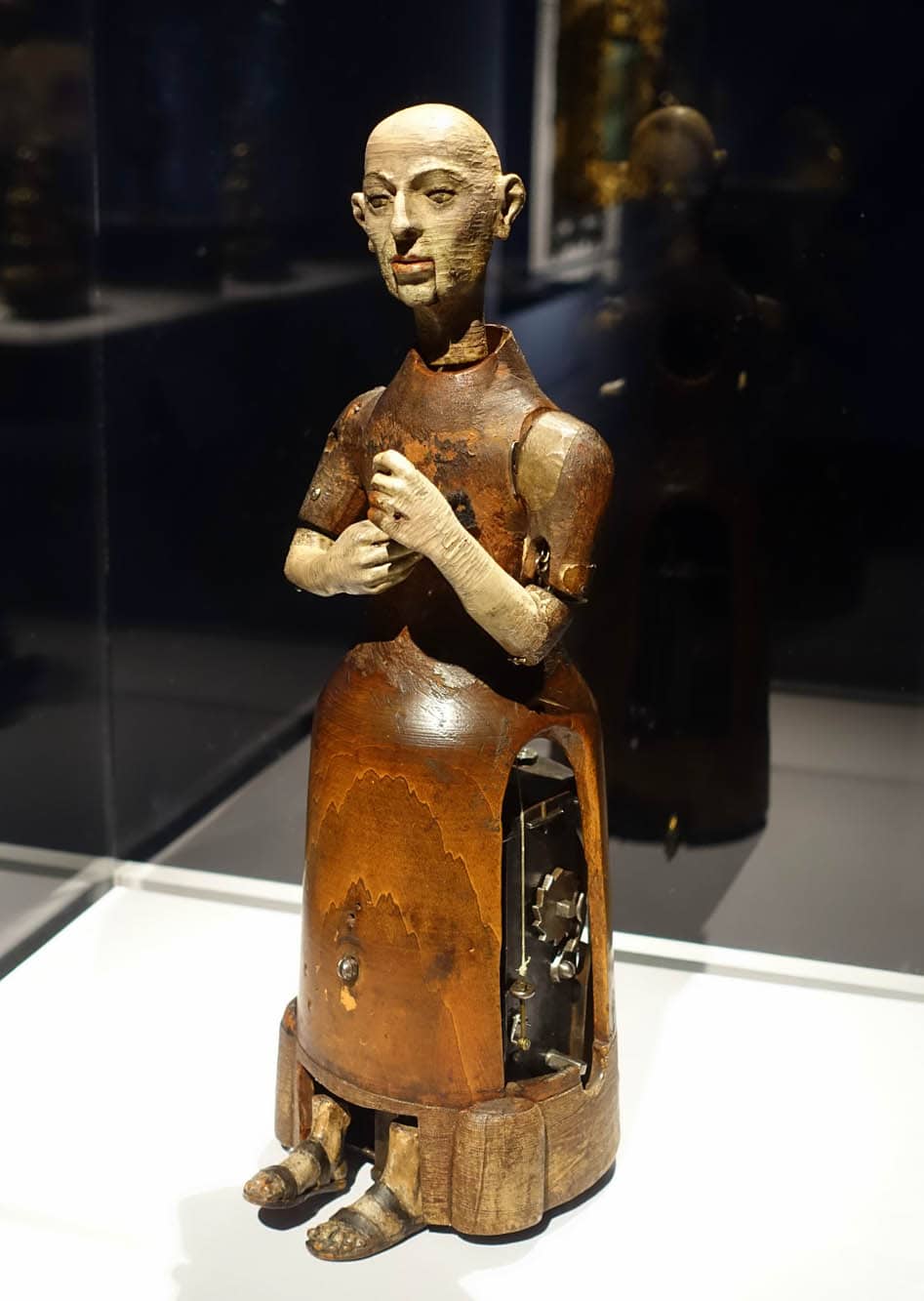
It is said that this remarkable automaton (above) was born from a royal vow. When a relic of the Franciscan friar Diego de Alcalá miraculously healed Philip’s son, Don Carlos, the king promised “a miracle for a miracle”. To fulfil it, he commissioned a clockwork figure of the monk, later canonised as San Diego (the same saint who gave his name to the city of San Diego in California). For Philip, likening clockwork to a miracle reflected a Renaissance fascination with the boundary between divine creation and human ingenuity.
Driven by an internal, hidden, key-wound spring mechanism, the clockwork was a marvel of its time. The figure itself is striking, carefully carved and painted to resemble a living man. It moves with a slow, deliberate gait, beating its chest in penitence and raising its hand toward its lips. Once dressed in Franciscan robes, it likely kissed a small cross on a rosary, an element now lost but evoked in its gestures.
It is one of the oldest and most complex known functional automatons, highlighting the advanced state of mechanical engineering in the 16th century.
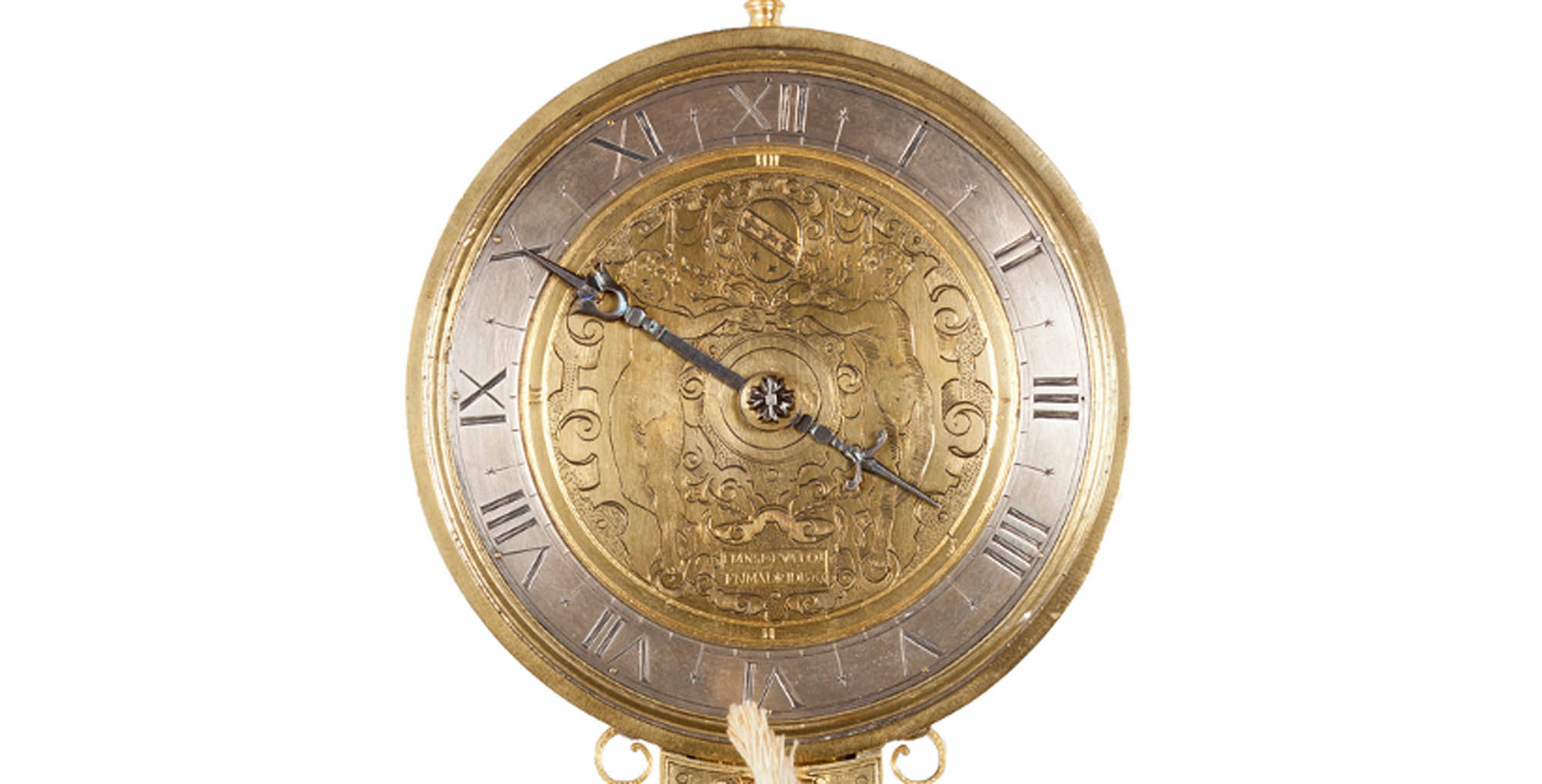
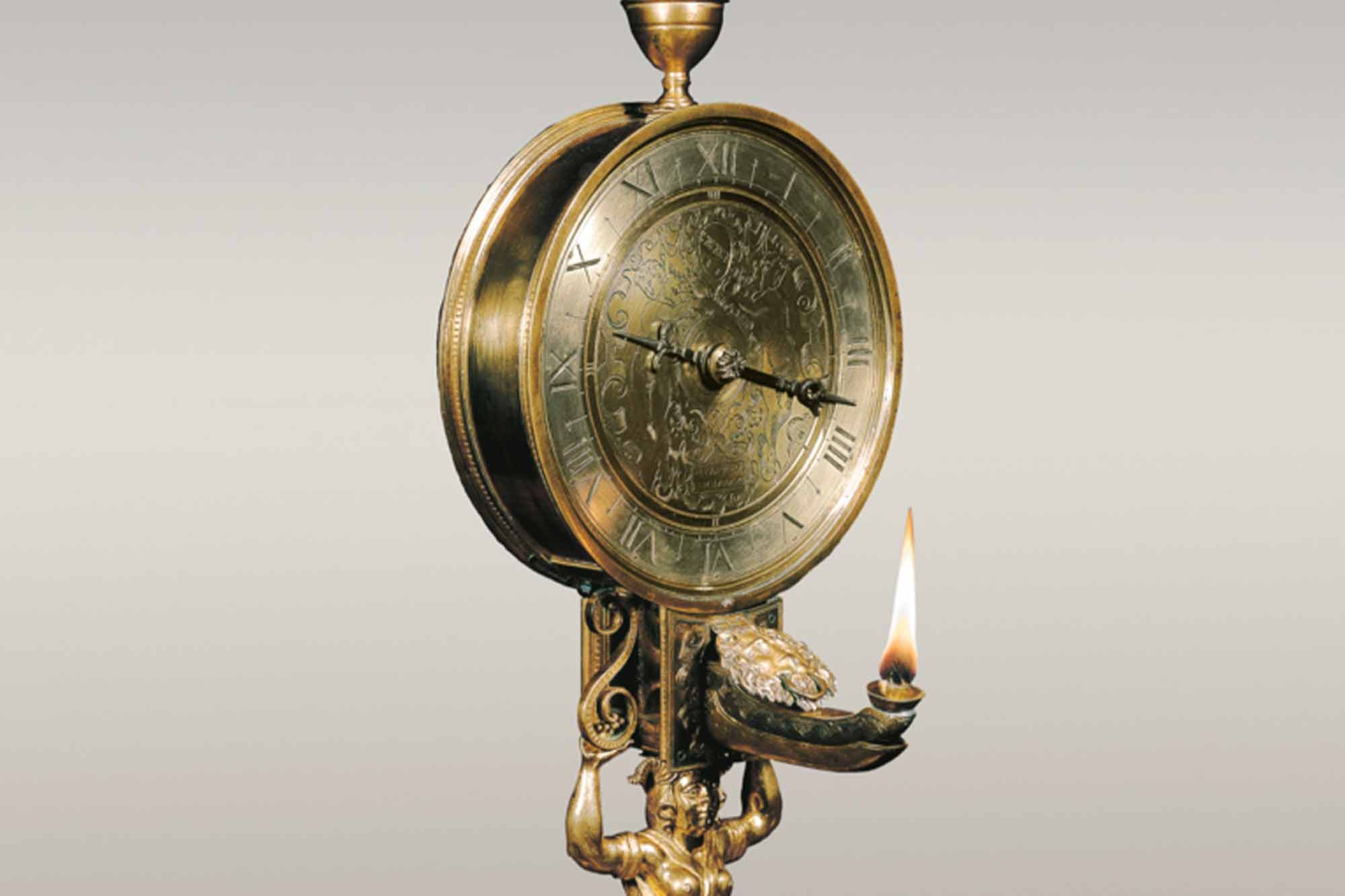
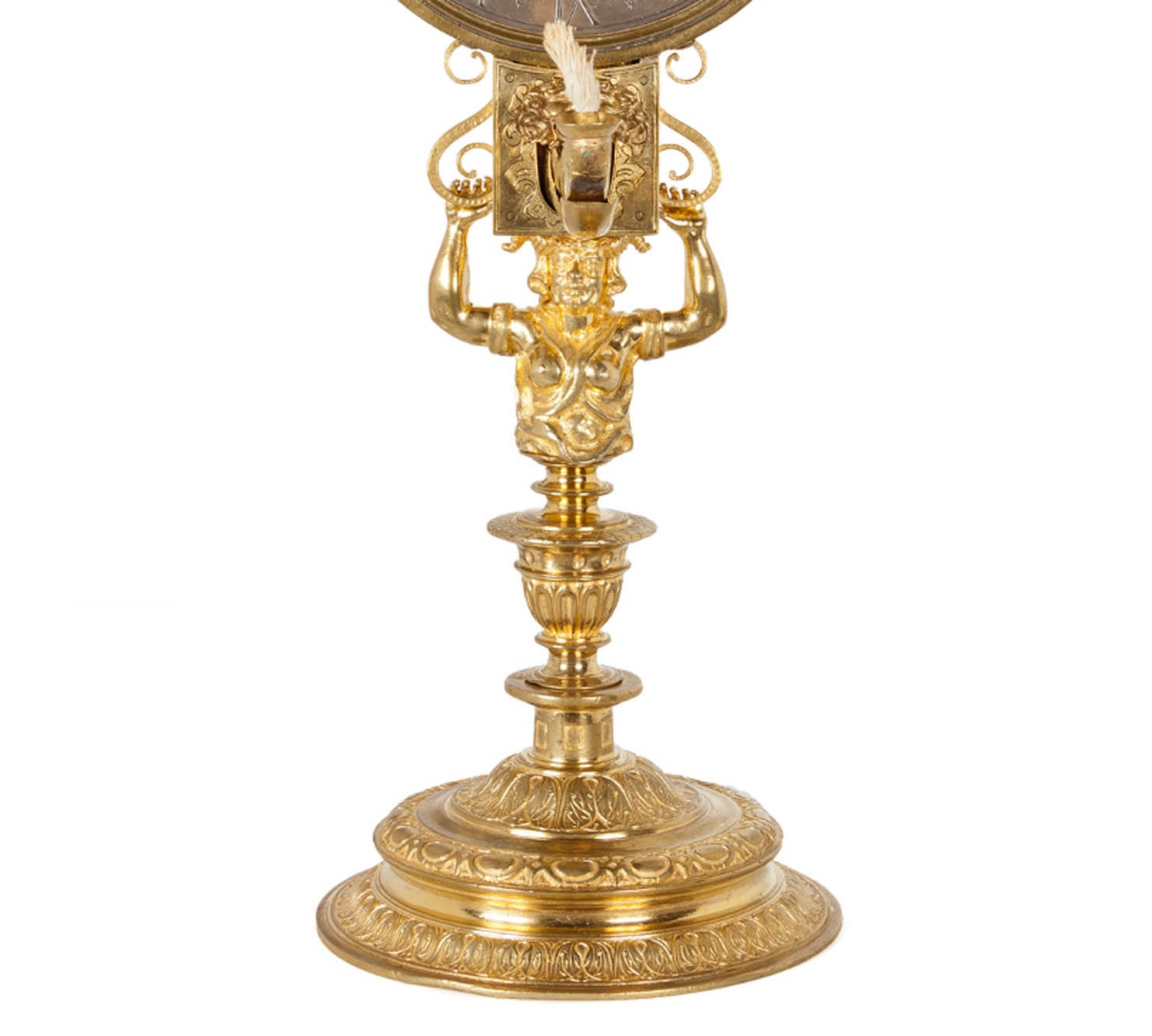
This is the dial detail of the so-called ‘candlestick clock’, made for Philip. It is made of gilded and engraved bronze and has a single hand. On a circular base stands a figure of a Fauness (below), holding a hinged piece with a lion’s head. When lifted, it reveals a small oil lamp. Above this sits a silver dial, a cartouche inscribed ‘Hans de Evalo, F. In Madrid 1583’, and a coat of arms featuring a red band with three fleurs-de-lis and two stars at the base. The hour hand is forged from steel. The movement is of German type, with round plates, spring-driven, running for one day, with a fusee and gut cord, and a foliot escapement with adjustable oscillation. Around it is the oil container for fuelling the lamp.
This clock was intended for night-time use, as the king was keen to keep track of time both day and night. For this reason, he placed it near his bed, allowing him to always know the hour, to work in his private chambers, and to attend prayers with the religious community of El Escorial.
Hans de Evalo was a Flemish clockmaker from Brussels, born c.1530, who entered the service of Philip II. Little is known about his activity before coming to Spain. Evalo was officially appointed clockmaker to the king in January 1580, as recorded in a certificate by Ramiro de Zavalza, secretary and clerk of Philip II, whose ledgers confirm that Evalo held the post until his death in 1598.
From 1574 onward, documents refer to him as the king’s clockmaker. In a report submitted in 1578, Evalo claimed to have made for the king: a lantern clock with a gilded case, striking quarters and hours; another lantern clock, elaborately chased, with figure, pedestal, and finial, containing two clocks, one striking both quarters and hours, the other only the hours, plus six sundials. He also repaired other royal clocks and made small parts and accessories.
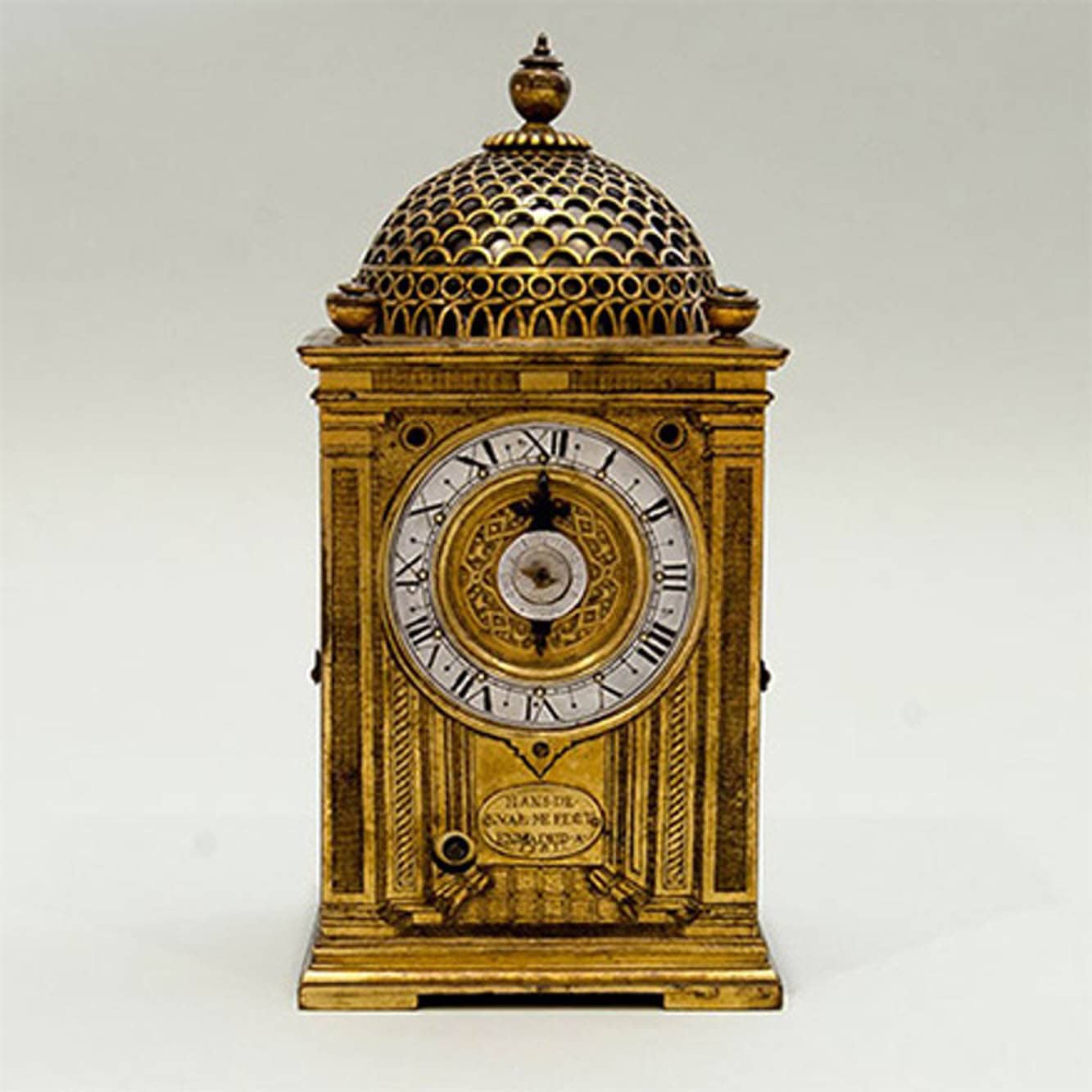
Evalo went on to serve Philip III and made the clock below for the Shogan Tokugawa Ieyasu which was delivered as a diplomatic gift by the King’s envoy, Sebastian Vizcaino in 1611.
Philip’s court also inherited some of the most celebrated astronomical clocks of the 16th century, though they are now sadly lost. Juanelo Turriano was famed for masterpieces like the Cristalino and Microcosmo, which displayed planetary motions in dazzling miniature.
The clock collection grew under the Habsburg dynasty, most of whose pieces came from Germany, but almost all of them were lost in the great fire of the Alcázar.
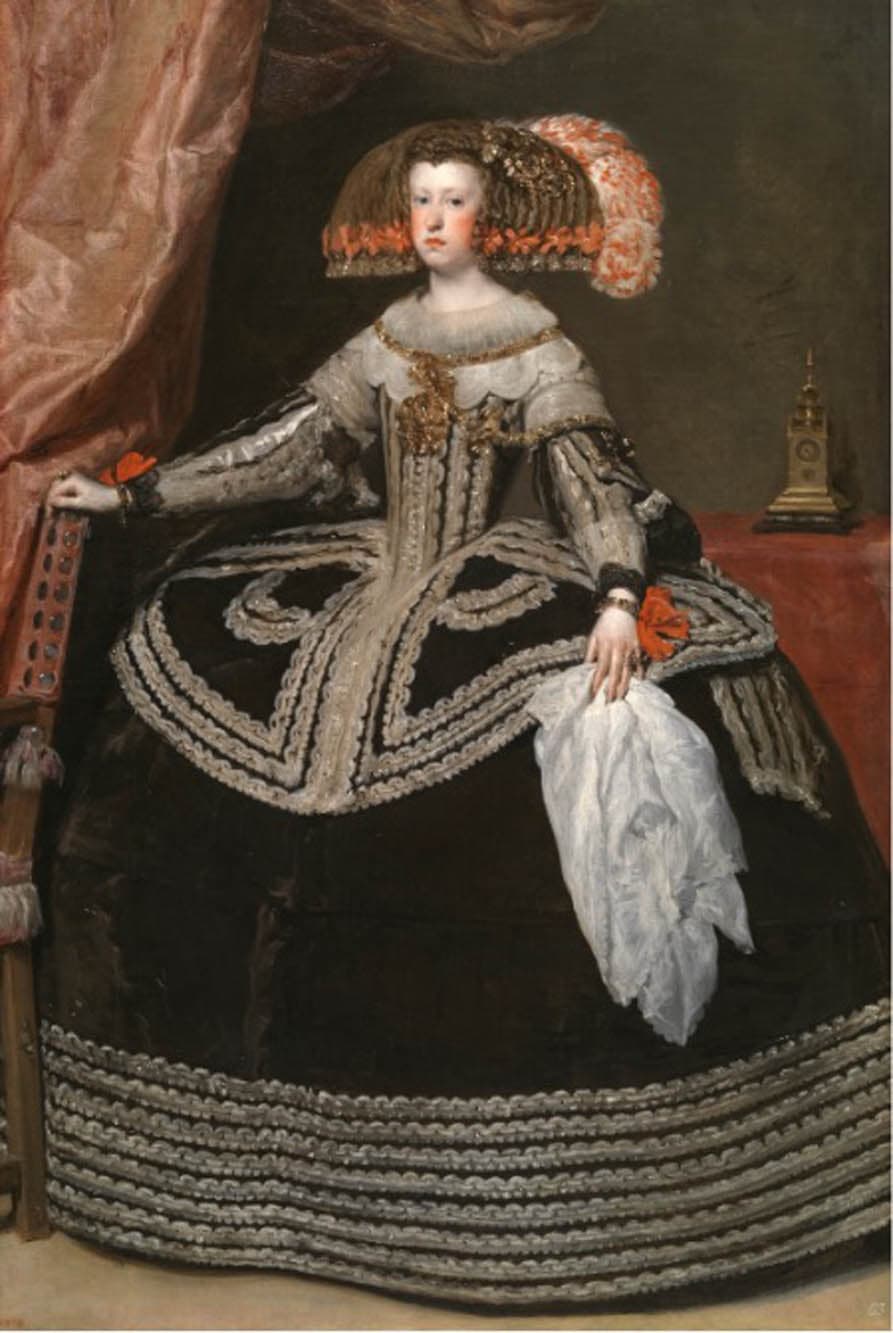
In the inventory of Charles II’s estate, the lantern clock in the above portrait was valued by the clockmaker José de Santiago at 550 reales (equivalent to about £10,000 today). It was included in several portraits of Queen Mariana of Austria, widow of Philip IV, giving it a double symbolic meaning.
At some point, the clock left the royal collection. It was acquired by a collector in Frankfurt, from whom it was soon purchased by Baron Stum, former German ambassador to Spain. Stum recognised the clock’s importance and generously presented it to King Alfonso XIII, who returned it to the Monastery of San Lorenzo de El Escorial.
An Extensive Royal Collection
There are currently 700+ horological items in the Patrimonio Nacional’s royal collection of clocks, dated between 1583 and the early years of the 20th century, which are distributed throughout the royal palaces and monasteries.
The Bourbon dynasty that succeeded them renewed this collecting spirit. Philip V, who was fascinated by precision and elegance, favoured clocks of English origin, then considered among the finest in Europe.
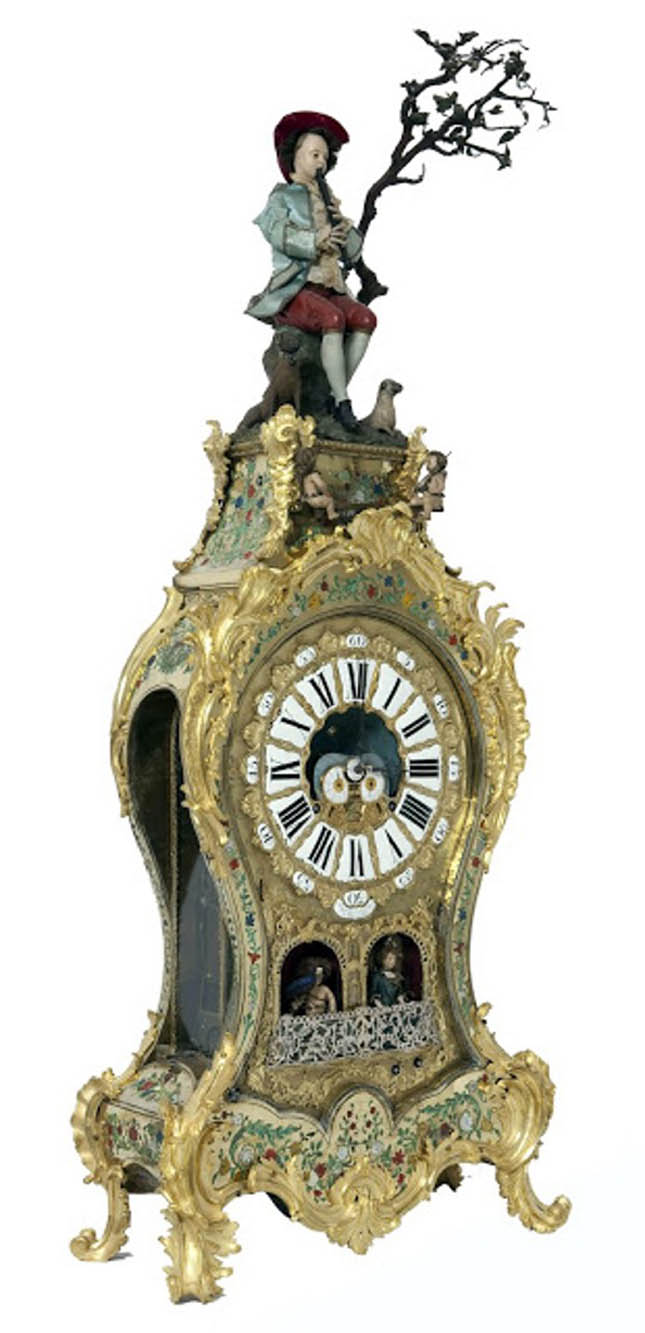
His son Ferdinand VI refined the collection further, preferring small-scale collector’s pieces. He surrounded himself with exquisite works by leading English makers such as John Ellicott and George Graham, while also fostering a culture of horological excellence at home by sending Spanish apprentices abroad. The reign also saw the arrival of early Swiss automata in Spain, with superb novelties like El Pastor (The Shepherd) by Pierre Jaquet-Droz (below), acquired in 1758, which exemplified the fusion of artistry and mechanical ingenuity so prized by collectors.
Charles III expanded this vision by attempting to establish a formal school of clockmaking at court. He sponsored the French Charost brothers in Madrid, where they trained local artisans with the aim of producing clocks that could rival French industry. His efforts reflect an early awareness of sustaining collecting culture through patronage and skill-building.
Charles IV, however, embodied the collector’s passion most intimately. Fascinated by mechanisms since youth, he even maintained a workshop within the palace, where he experimented with and repaired machines himself. Alongside Queen Maria Luisa of Parma, he invested heavily in building a collection that adorned the New Palace in Madrid and their leisure residence, the Royal House of El Labrador in Aranjuez. Their most celebrated acquisitions came through François-Louis Godon, a French merchant and trusted agent, who sourced masterpieces such as the monumental marble and bronze clocks now in Madrid’s Throne Room, and the celebrated Pendola del Tiempo in the Gasparini antechamber (below). This period also witnessed the flourishing of Spanish clockmaking itself, with masters like Manuel Gutiérrez, Manuel de Rivas, Antonio Molina, and Salvador López producing works of great quality.
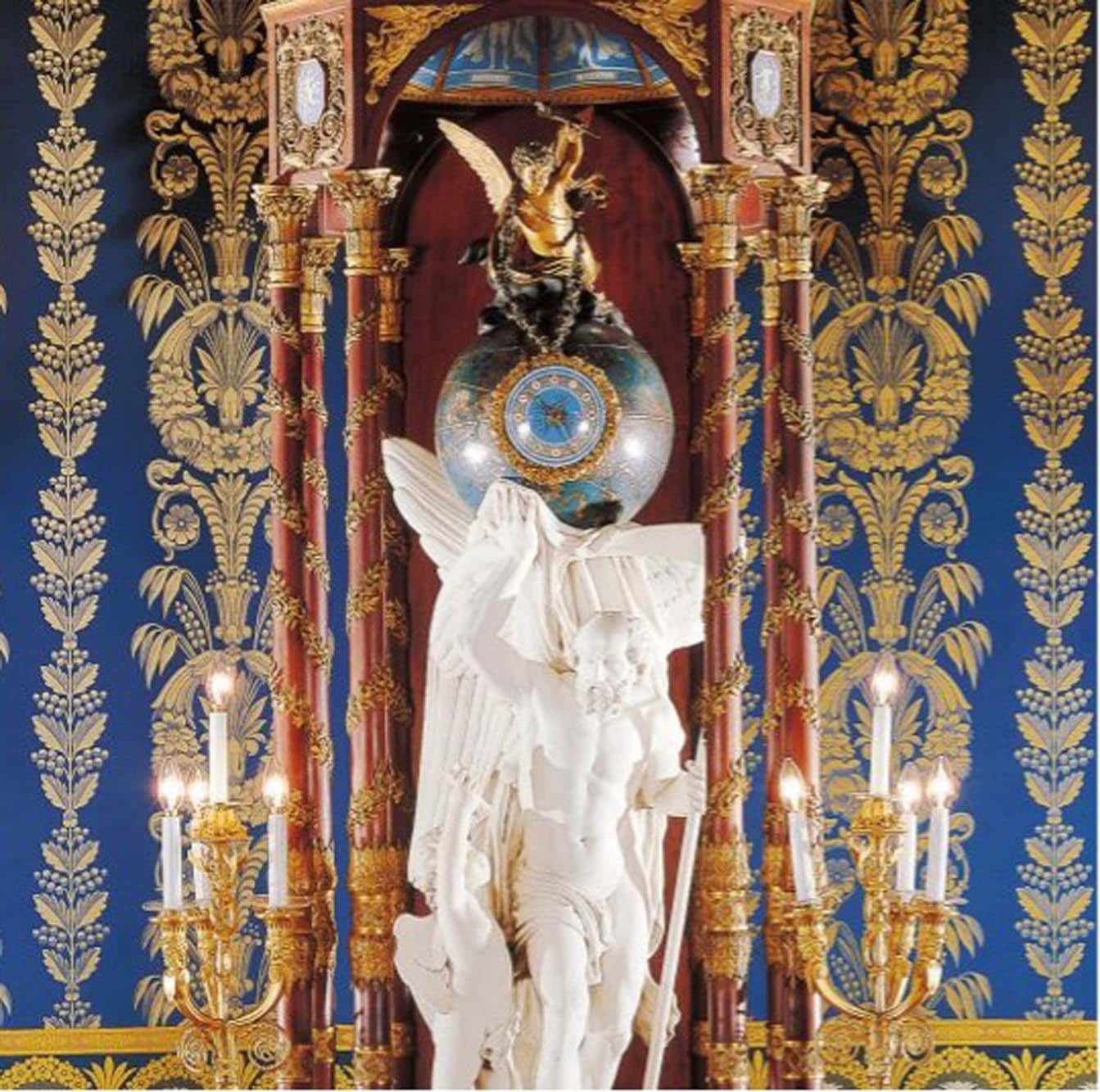
The clock, called El Tiempo (Time), is both a work of art and a tribute to the Spanish monarchy, decorated with royal symbols and allegories of Time. Created between 1798–1799 by French watchmaker-dealer François-Louis Godon, it features elaborate sculptural elements in marble, bronze, and porcelain, including allegorical figures of Old and New Time, zodiac motifs, and royal emblems. The clock contains a flute organ.
The Napoleonic invasion disrupted this tradition, when Ferdinand VII reclaimed his throne, he found the royal palaces looted. With the eye of a restorer-collector, he ordered careful inventories of what survived and began acquiring new pieces, particularly from the French school, then at its artistic peak. These clocks, with their cases inspired by classical antiquity and literature, not only embellished interiors but also reinforced the sovereign’s cultivated image.
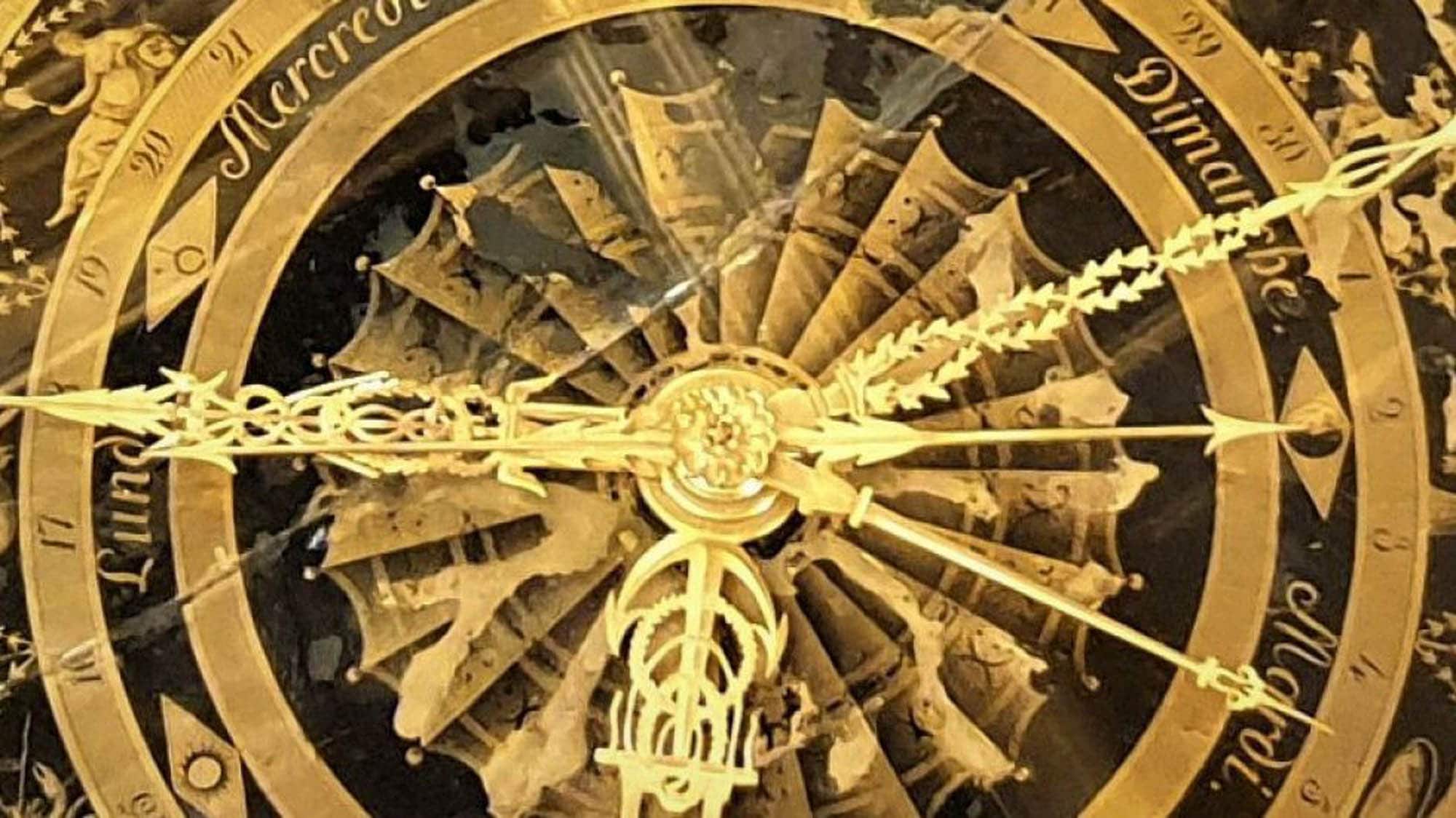
His successors, Isabella II, Alfonso XII, and Alfonso XIII, continued the practice, acquiring works in line with 19th-century and early 20th-century taste. Through their patronage, the royal collection grew into one of Europe’s richest ensembles, a treasure trove that reflects both the evolution of horology and the enduring passion of monarchs as collectors.
An Empire of Divine Timely Order
Philip II ruled an empire where ‘the sun never set’ and yet it is said that he spent his nights bent over documents, guided by the flickering light of a clock-lamp. His timepieces and those of his descendants, remind us that for Europe’s monarchs, clocks were never just tools. They were metaphors for divine order, machines of devotion, and instruments of statecraft. In Philip’s Spain, time itself became a royal privilege.