

 Latest Review




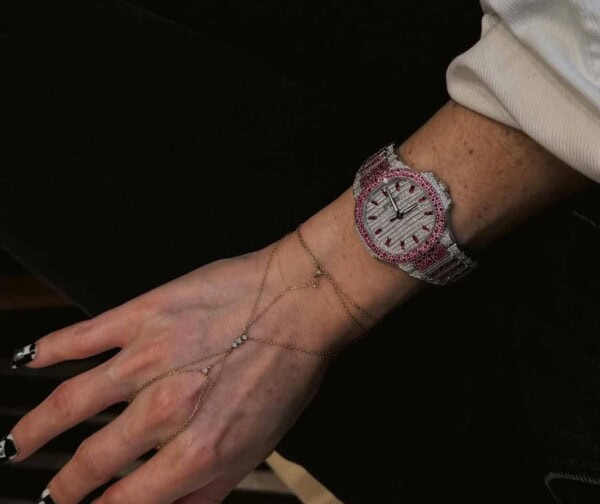

I can remember the exact moment I realized that Audemars Piguet was not the brand for me: I was listening to an episode of Hodinkee Radio in early 2019 featuring an interview with then current AP CEO François-Henry Bennahmias during which he boasted that he does not read books. For whatever skills Bennahmias has as an executive, and whatever objectively nice qualities come through in the watches made under his tenure with the brand, something about this statement immediately turned me off. In the parlance of 2025, you’d say it gave me “the ick.”
Over the last few years, I’ve thought about this moment a lot as integrated bracelet sports watch mania has waxed and waned, and my own taste has solidified somewhat. Back in 2019, my exposure to Royal Oaks was fairly limited. I basically knew what watch media and the burgeoning watch collector’s scene on Instagram told me. And the narrative, by and large, was that these were the crème de la crème of the high end, a watch that every collector should strive to own. In those days, it really was that simple: there were a handful of watches from big brands that seemed to be on everyone’s hit list at one time or another. The Submariner, the Speedmaster, the Royal Oak. It was drilled into my head, and all of our heads, that watches like this – the icons – were worthy of our universal devotion.

I eventually owned both a Speedmaster and a Submariner. Both of which, I’d eventually realize, were not for me for a variety of reasons. But I never felt, and still never feel, like the Royal Oak is something I need to check off my watch collecting bucket list, and it has to do with the culture around these watches. That’s a problem the Sub and the Speedy never really had, or at least not to the same degree as the Royal Oak. Sure, the Submariner has a deep Finance Bro association that most outside of that particular world probably roll their eyes at. And the Speedmaster collector community can sometimes seem closed off behind walls of knowledge of obscure Speedy arcana, reference numbers, and little details that most will never even consider. The Royal Oak, though, from the very beginning, was drenched in a type of elitism I always felt was off putting, and I’ve privately wondered over the years why this hasn’t been called out more frequently.
The very first Royal Oak advertisements, with tag lines like “the costliest stainless steel watch in the world,” connect a direct line between the watch’s origins and its place in watch culture today. While those same advertisements point to the admittedly impressive craftsmanship of the steel case and bracelet, they almost always lean on the expense of the watch itself as a selling point. This type of positioning within the luxury space is, of course, quite common today. There is no shortage of luxury brands selling watches priced many times over what the market will bear, and what makes sense for a particular watch, in the name of being able to place it alongside a would-be rival. The watch industry, at the highest end, is one of the few where paying a high price for something is a bit of a badge of honor.

So the Royal Oak, like a lot of watches, was always intended for a wealthy clientele. And there’s nothing inherently wrong with that, although making it explicit from the earliest days of the Royal Oak era strikes me as a bit crass. But I don’t feel the same way about, for example, the Patek Philippe Nautilus as the Royal Oak because of the unique position of the watch in our community. Far more than the Nautilus, the Royal Oak exists as a bauble, and a symbol. And it often appears to exist as a brand unto itself that can feel far afield from Audemars Piguet. While Patek has notably made (rather clumsy) efforts to diminish the importance of the Nautilus within its own catalog, AP has doubled down on the Royal Oak. Even as the Code 11.59 collection has grown and improved, the Royal Oak is still very much the symbol of the brand. That presence and ubiquity, then, drives the entire conversation, and because the watch itself exists to be a symbol of luxury and status, it all gets very tiresome. Posting a #NWA of a Royal Oak – just about any Royal Oak – is not a signifier of horological taste, even if the owner actually has great taste. It’s all about the acquisition. There’s no watch I can think of that’s more associated with a pure flex as the Royal Oak.

I’ll point out here that while I have no personal desire to own a Royal Oak, it would be silly and wrong to claim that the watch itself is not objectively good. Since hearing that podcast in 2019, I’ve been lucky to handle quite a few Royal Oaks of all types, be they vintage, or contemporary, Offshores, complicated models, and Royal Oaks in a variety of metals beyond the signature steel. They are incredibly well made objects, and while I don’t personally find them to be aesthetically pleasing, I can understand why an owner would like the look of the thing. And of course it goes without saying that there are many wonderful people who own Royal Oaks who do not participate in the flex culture that’s so associated with the watch. I think it’s fair to say that the cultural problem with the Royal Oak is one that exists outside the culture of the watch enthusiast community. The Royal Oak is so popular, though, that it tends to overshadow the enthusiast interest in the watch.
As I’ve gone deeper into the hobby, I’ve come to realize that there’s nothing I despise quite as much as the flex. If I see an Instagram photo of an arm draped with multiple Royal Oaks, or gold Daytonas, or Richard Milles, I quickly unfollow. I’ve learned that the things I value in watches are a reflection of my interests more broadly, namely a curiosity not just about watches, but of all the things that touch our hobby. History, design, mechanics, art – there are many disciplines through which you can enjoy watches and learn something about the world around you as well. It might even inspire you to pick up a book, unless you’re the former CEO of the Royal Oak Company.