I’ve been interested in Serica since the launch of the brand – it was always apparent that they were doing something unique in a market filled with increasingly dull vintage inspired tool watches. Little touches like unusual bracelets and dial configurations that were just a little (sometimes a lot) tweaked from what you might expect always made Serica feel fresh and interesting, and more like a creative and design oriented pursuit than a hardcore tool or sport watch brand. As someone who is admittedly more interested in the aesthetic side of watchmaking and not even remotely hardcore, this was refreshing when the brand launched and continues to be to this day.
I’ve also gotten to know Jerome and Gabriel a little bit over the years as they’ve attended Windup events, and as we’ve talked about a lot in these pages, the impact of making a personal connection with a brand owner can’t be understated in how we enjoy and appreciate their watches. And this doesn’t come from a privileged position of being on the inside of industry, or of Windup specifically. Jerome and Gabriel, as well as many other founders of brands that have cropped up in the last ten years, strive to make these connections with as many customers and enthusiasts as they can. We see it happen at every Windup – they’re forging these connections constantly, and it really informs the experience you have with the watch in an intangible way.
![]()
This is all to say, I’ve been looking for the right time and opportunity to actually own a Serica for a while. I made the move earlier this year at our Windup Watch Fair in Dallas. I wasn’t really planning to buy a watch that weekend, but I spent some time with the 5303 diver and something about that seafoam green bezel, and the way the watch wore on that bracelet spoke to me, and I found myself returning to Serica’s booth, trying on the watch, and repeating the cycle until eventually the credit card made an appearance, and that was that.
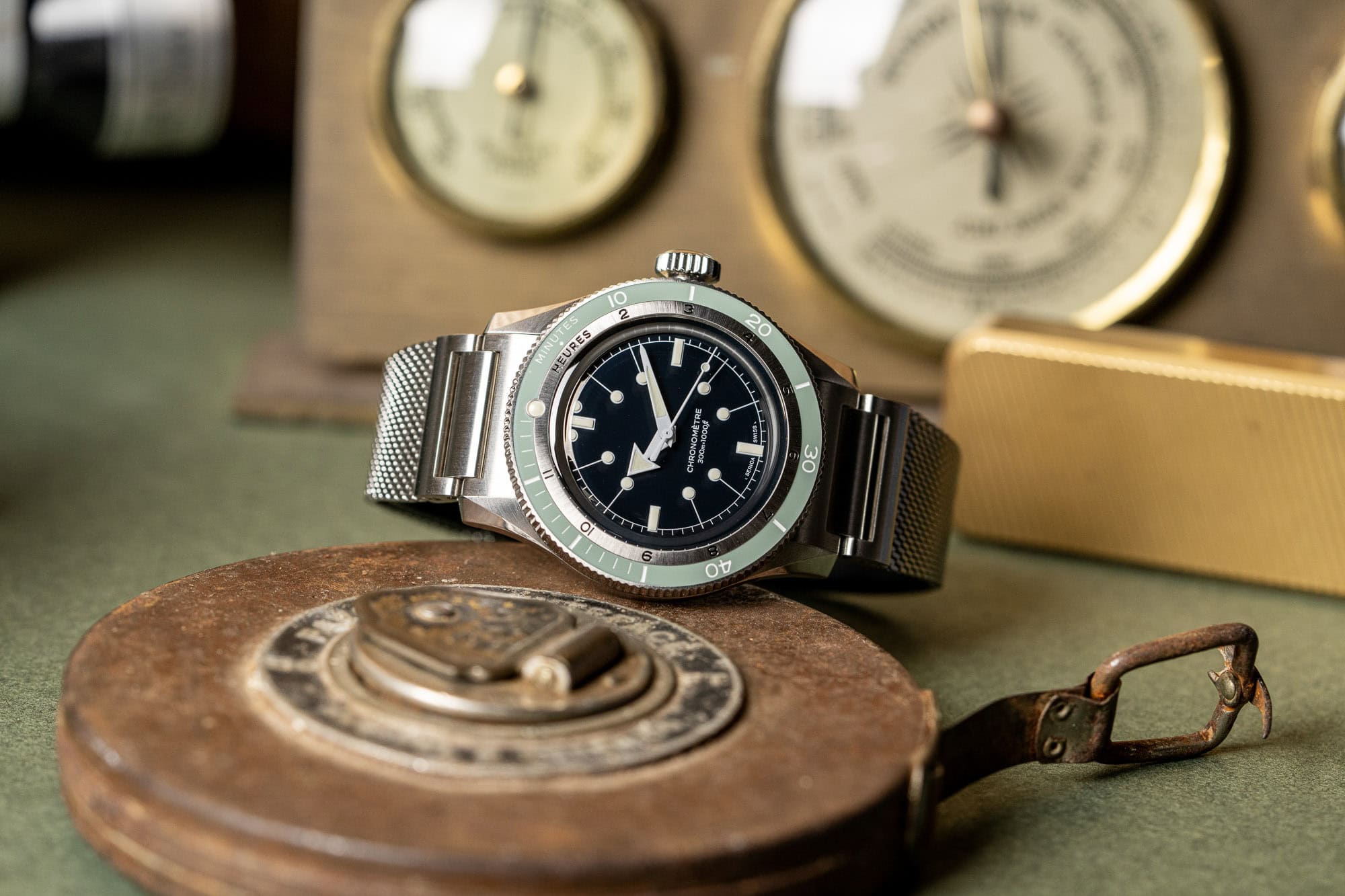
Let’s get the specs out of the way first. The 5303 measures 39mm in diameter and is 12.2mm tall. The lug to lug span is 46.5mm, and it’s water resistant to 300 meters. It runs on a Soprod movement, the M100, which is an automatic caliber with 42 hours of power reserve and is a COSC certified chronometer (all of Serica’s watches are COSC certified).
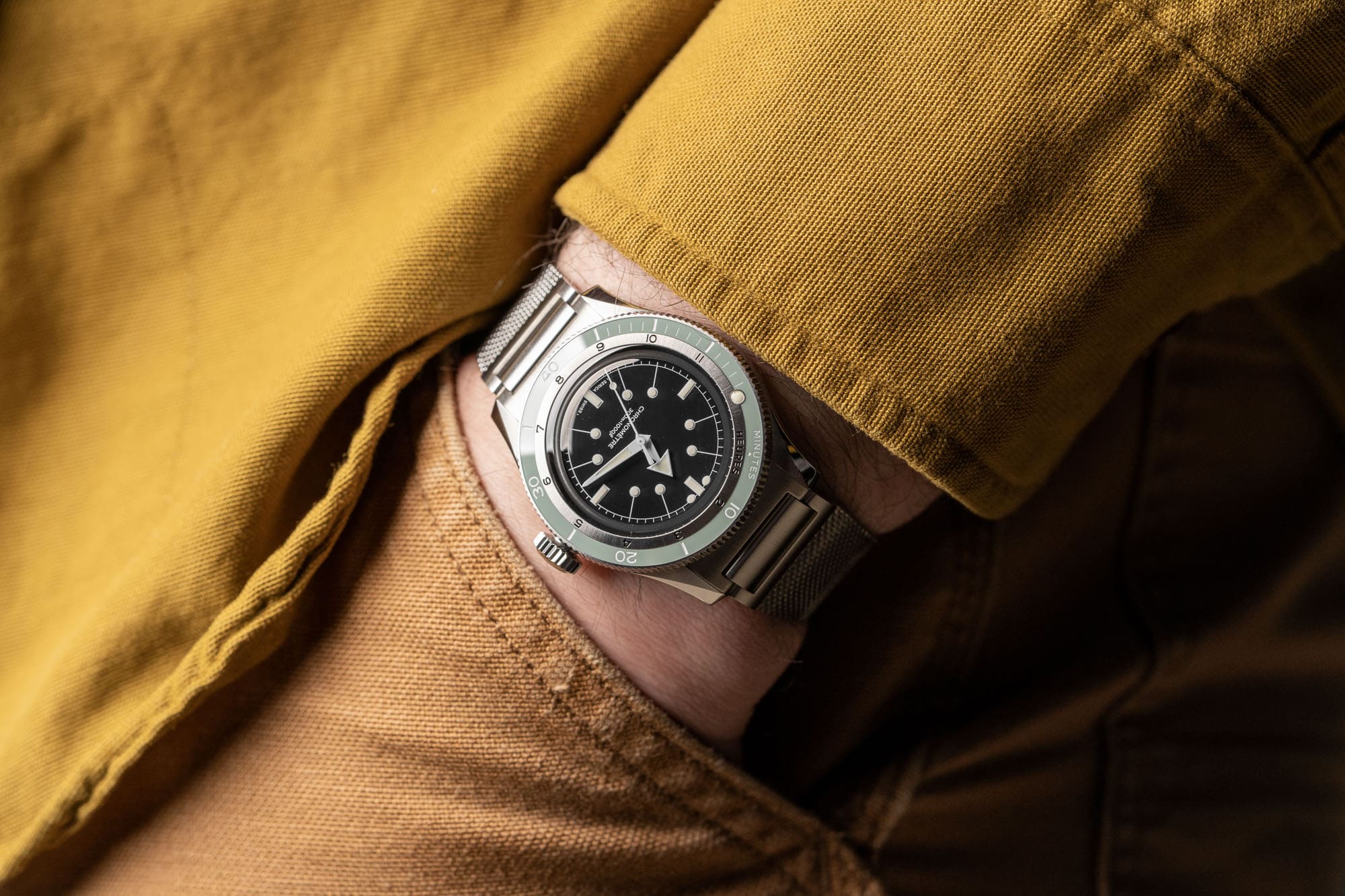
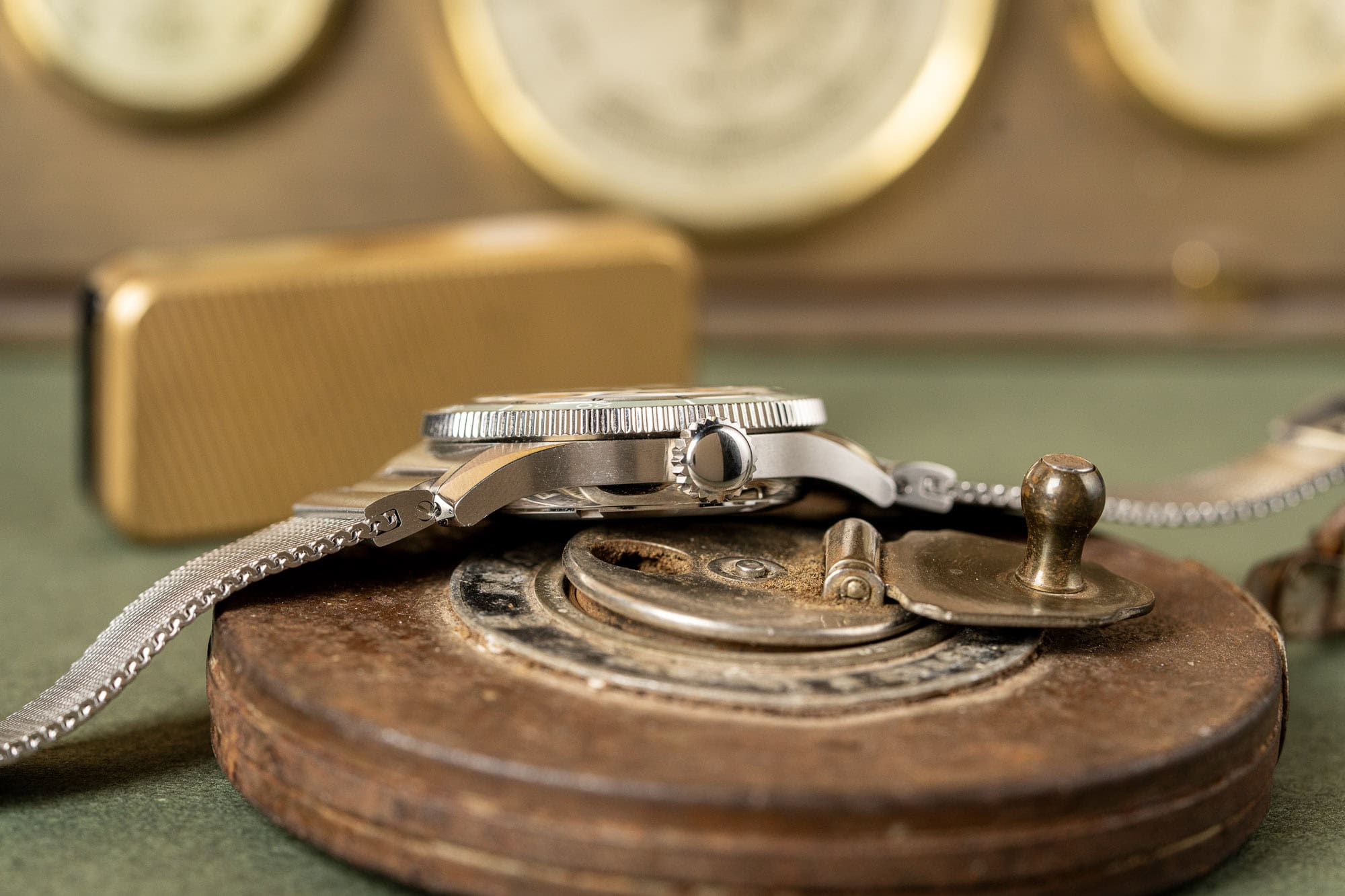
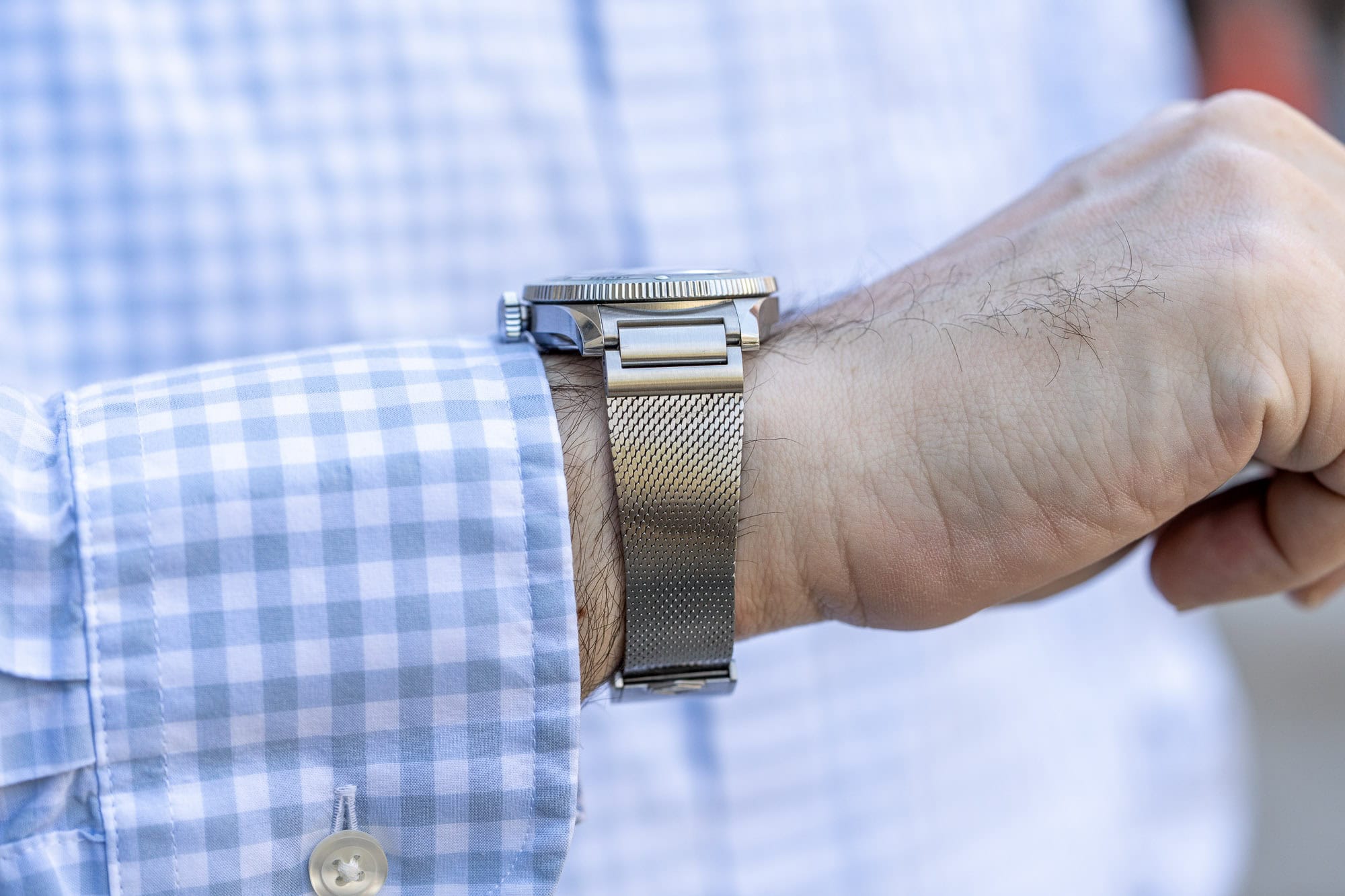
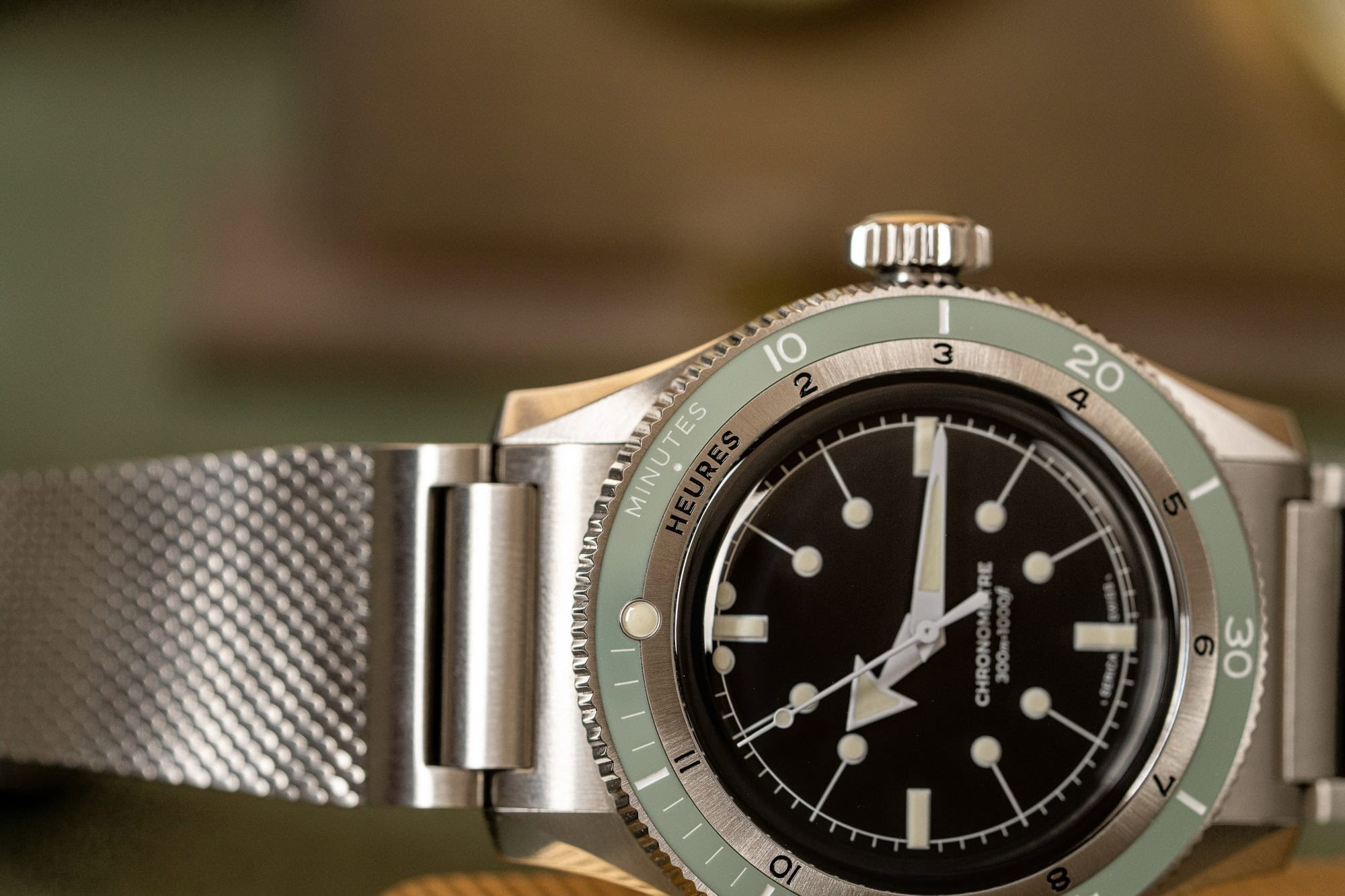
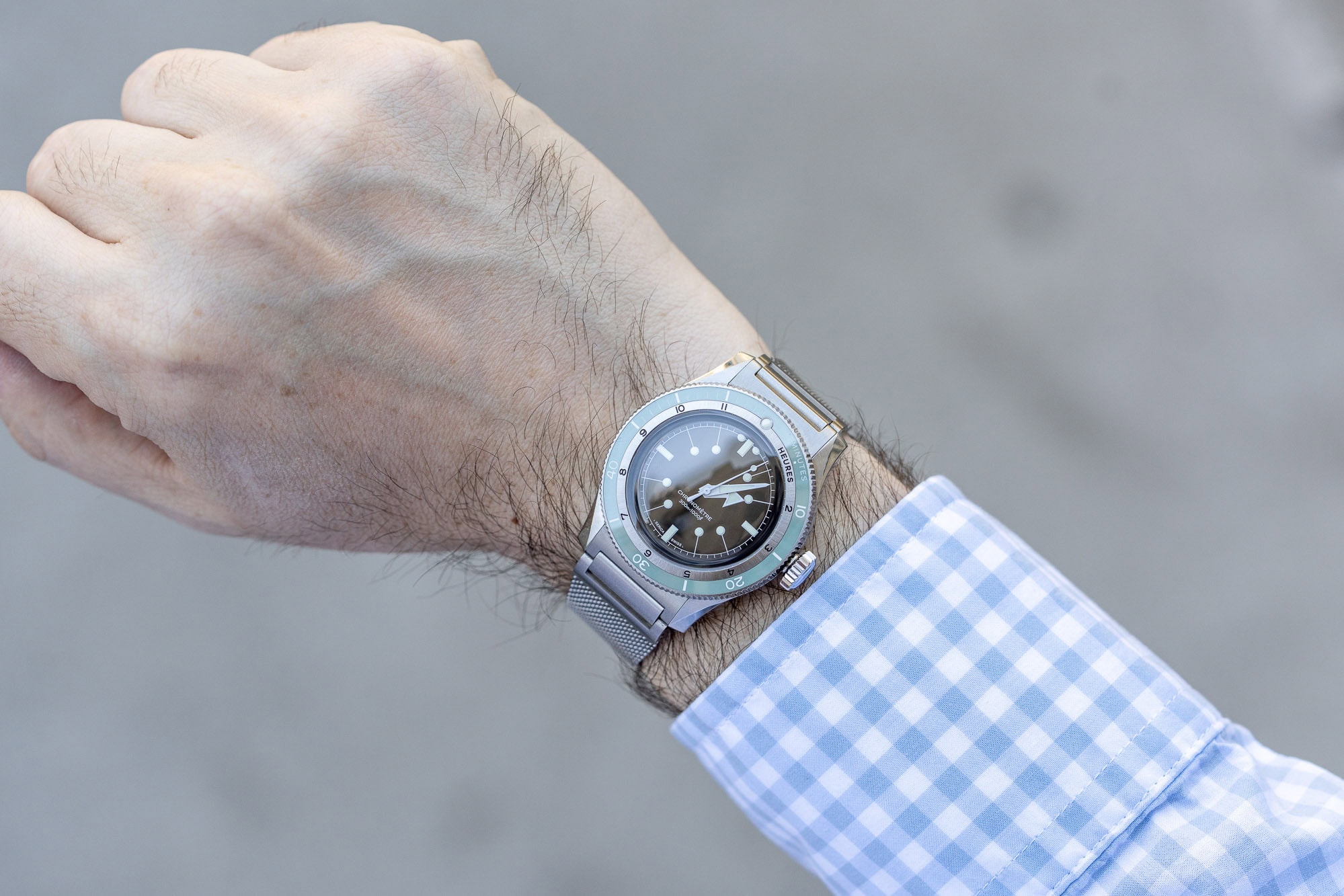
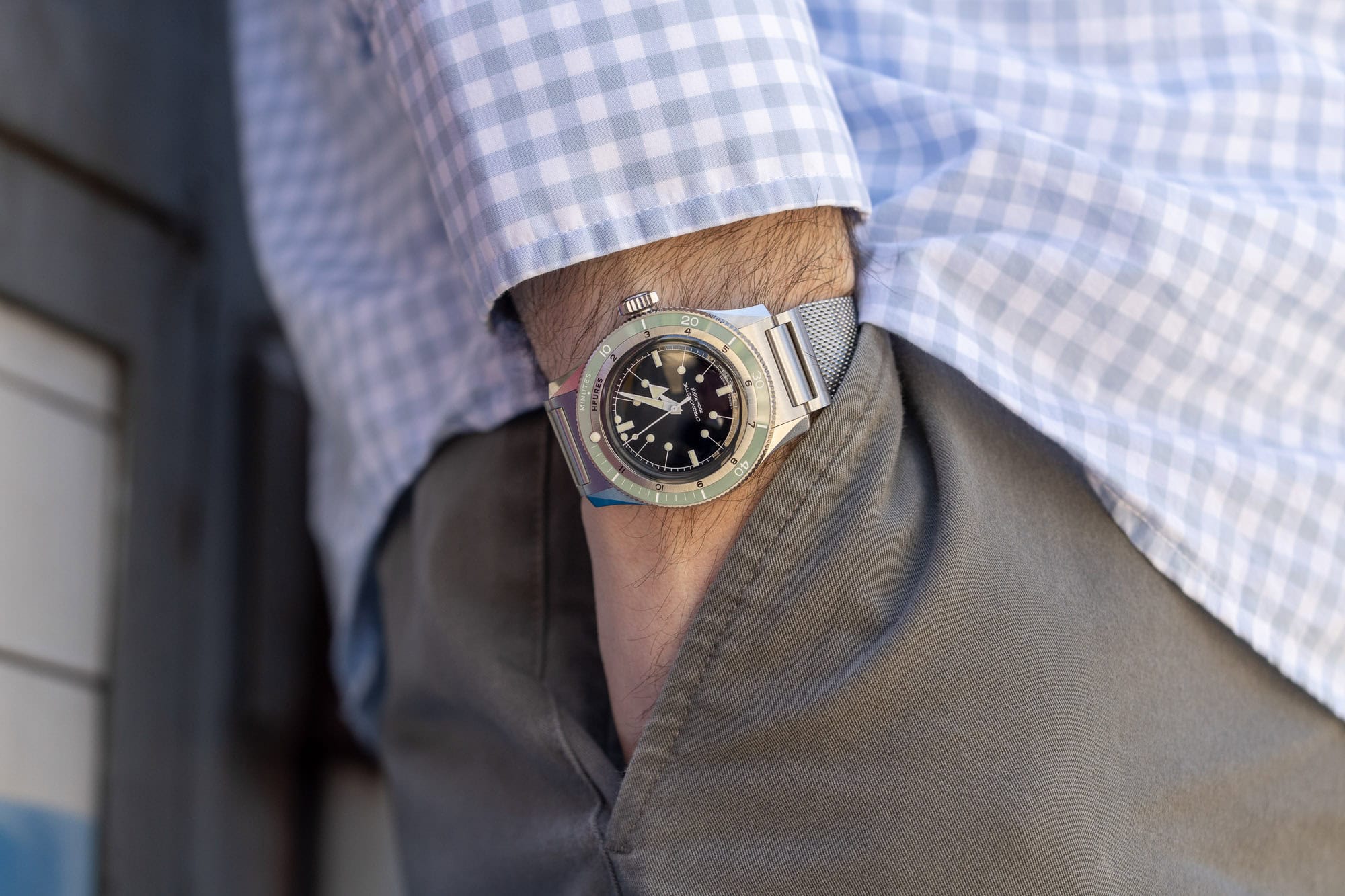
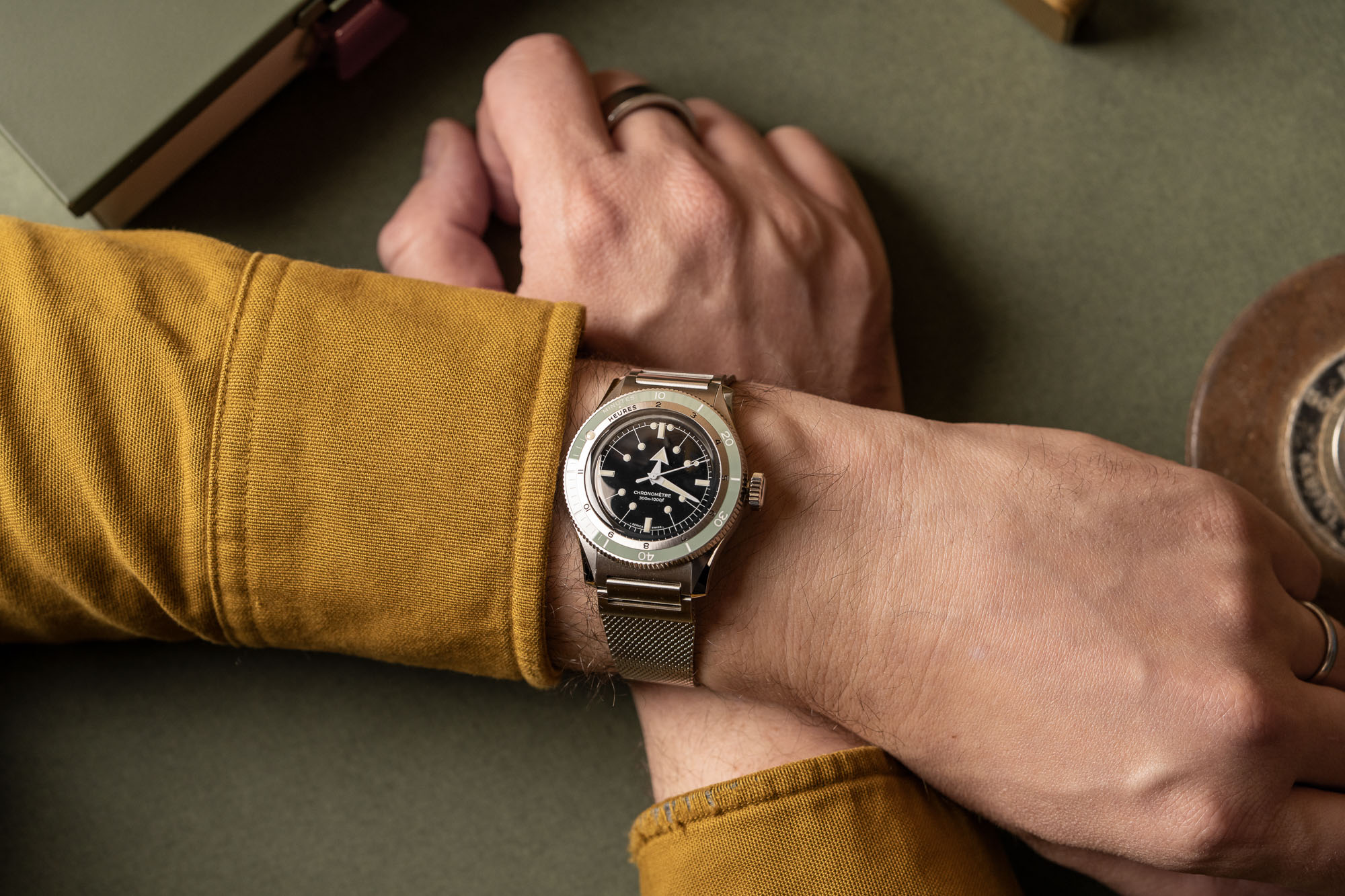
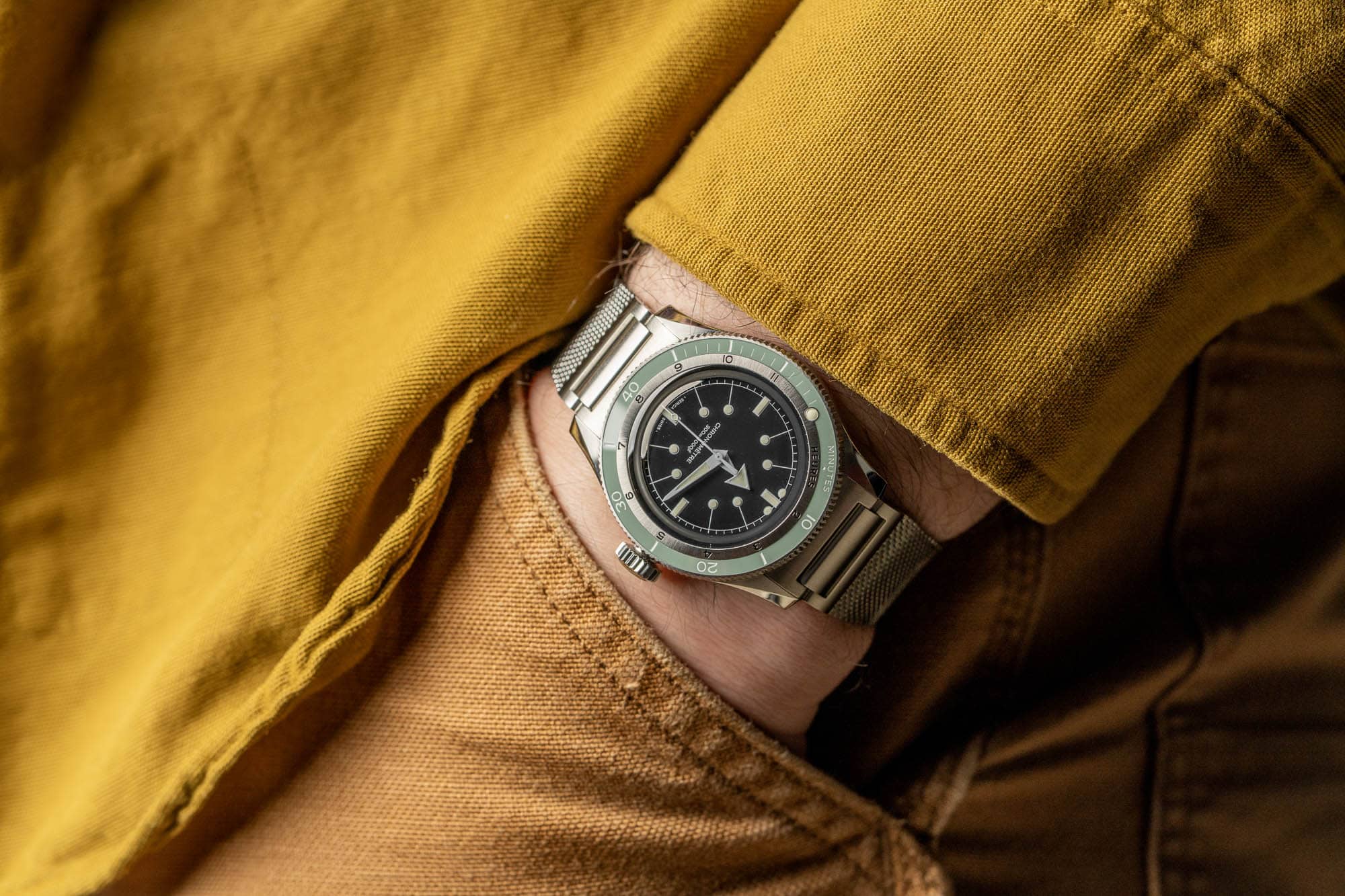
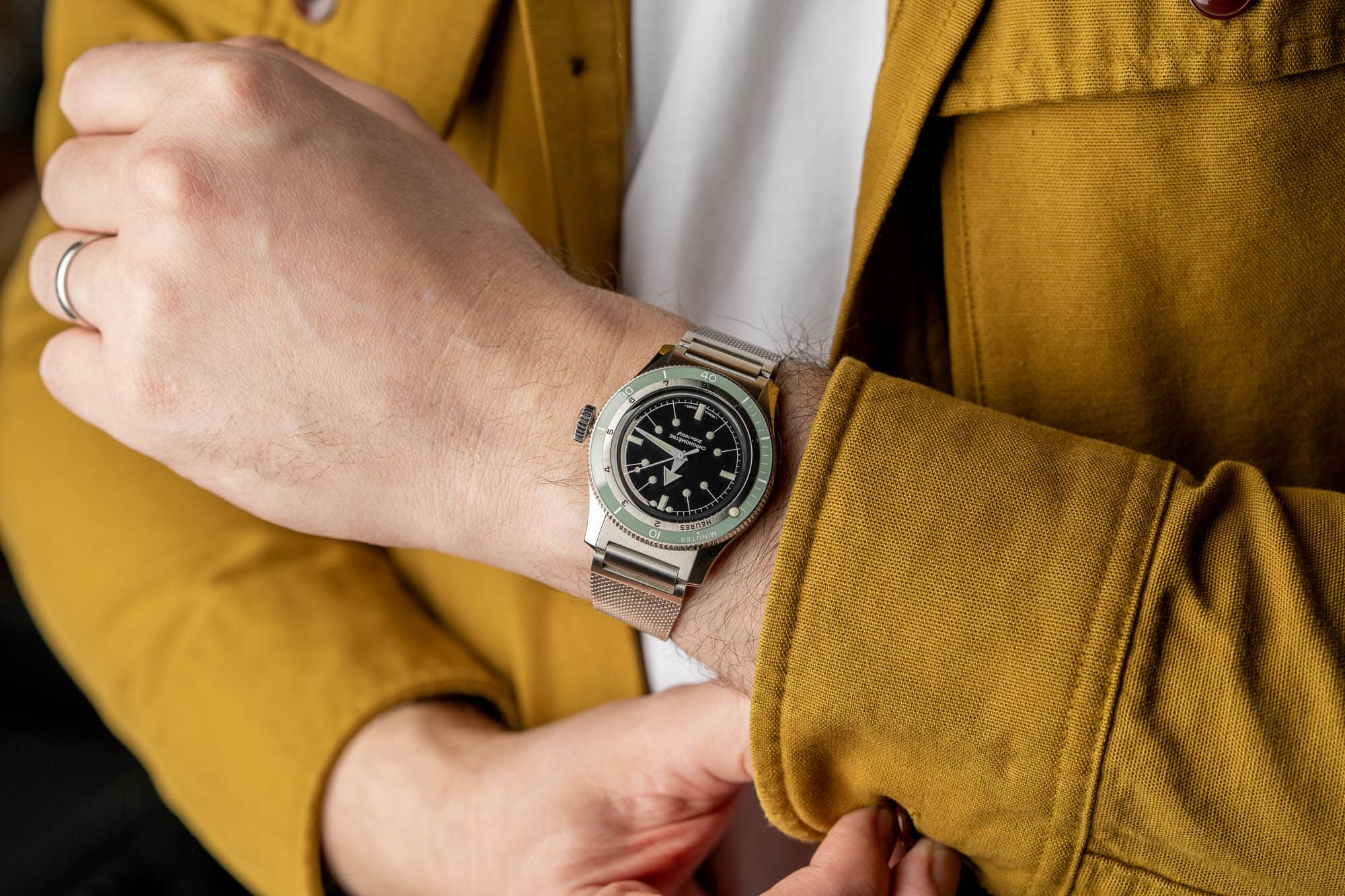
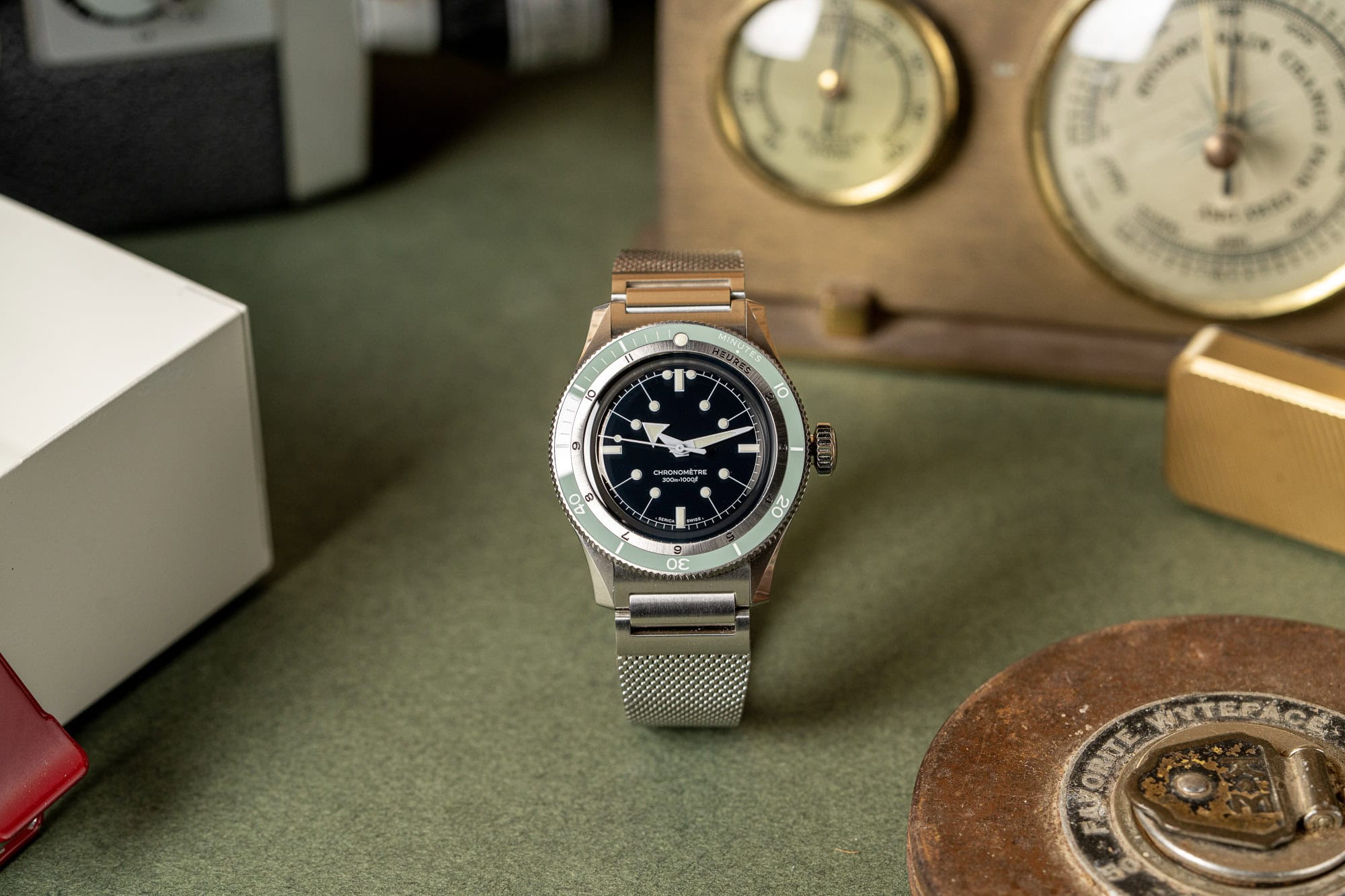
The thing that sold me on this watch, and continues to impress me several months into ownership, is the way it wear, and its stance on the wrist. A 39mm diameter for a dive watch is pretty much ideal, in my opinion. You can go bigger, for sure (and I have), but I think an under 40mm diameter allows a watch like this to wear multiple hats. Depending on the situation you’re in, your attire, or the season, it can feel dressed up or down, and wear virtually any hat you need it to. I’ll also say for a 300 meter dive watch, it wears remarkably thin, with a lot of the case height hidden visually by twisted lugs with wide, polished bevels that curve downward and accentuate the lines of the case.
![]()
![]()
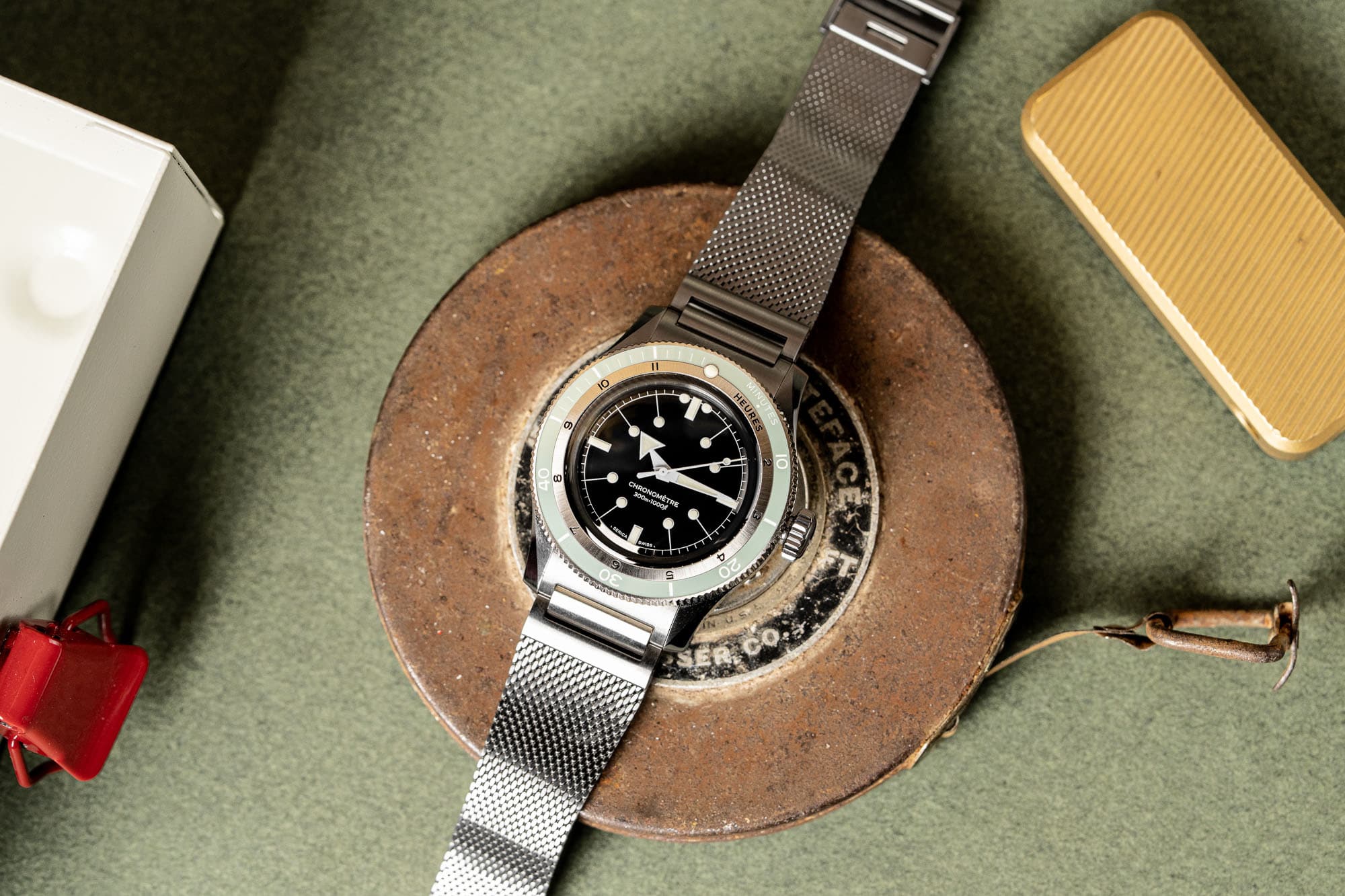
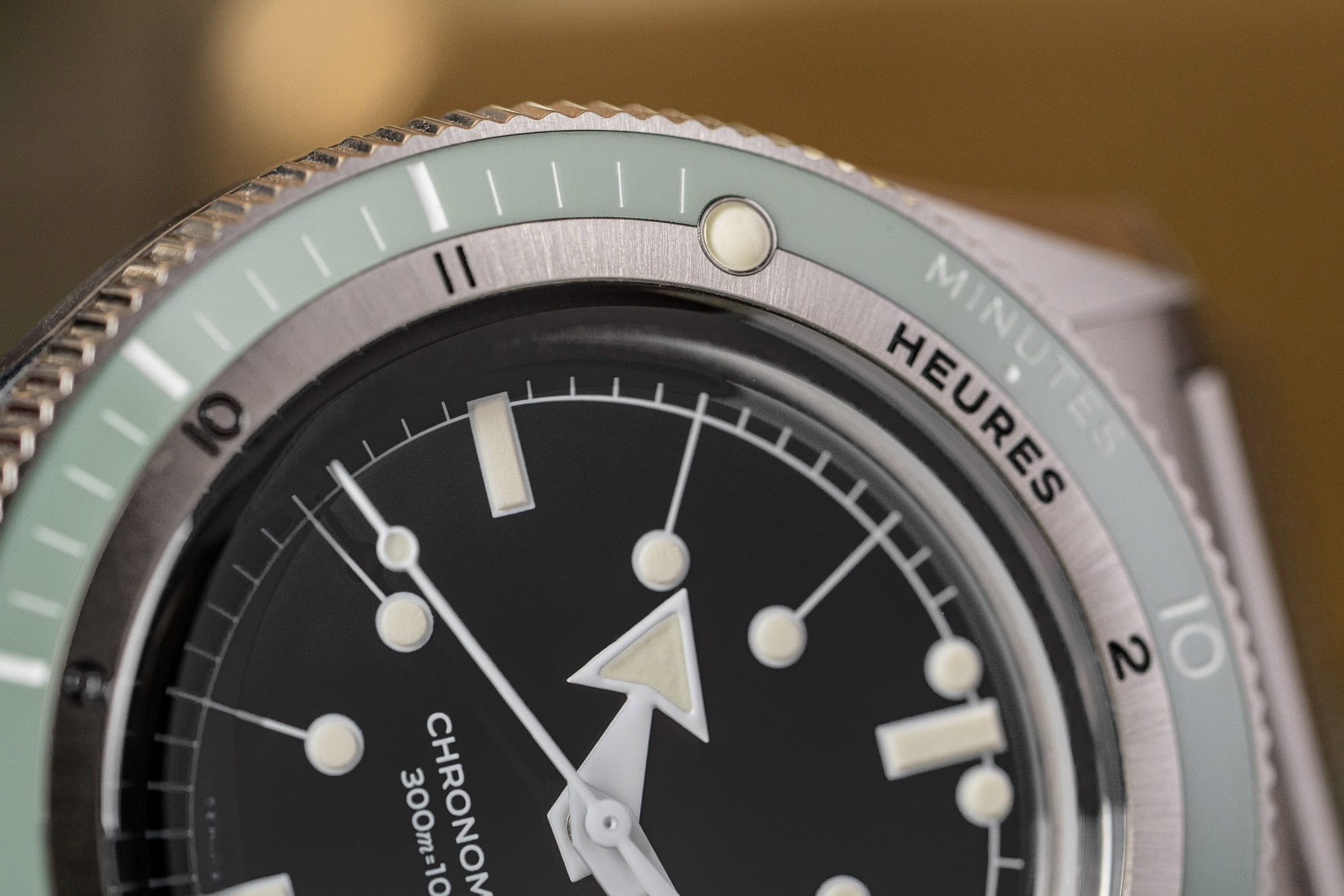
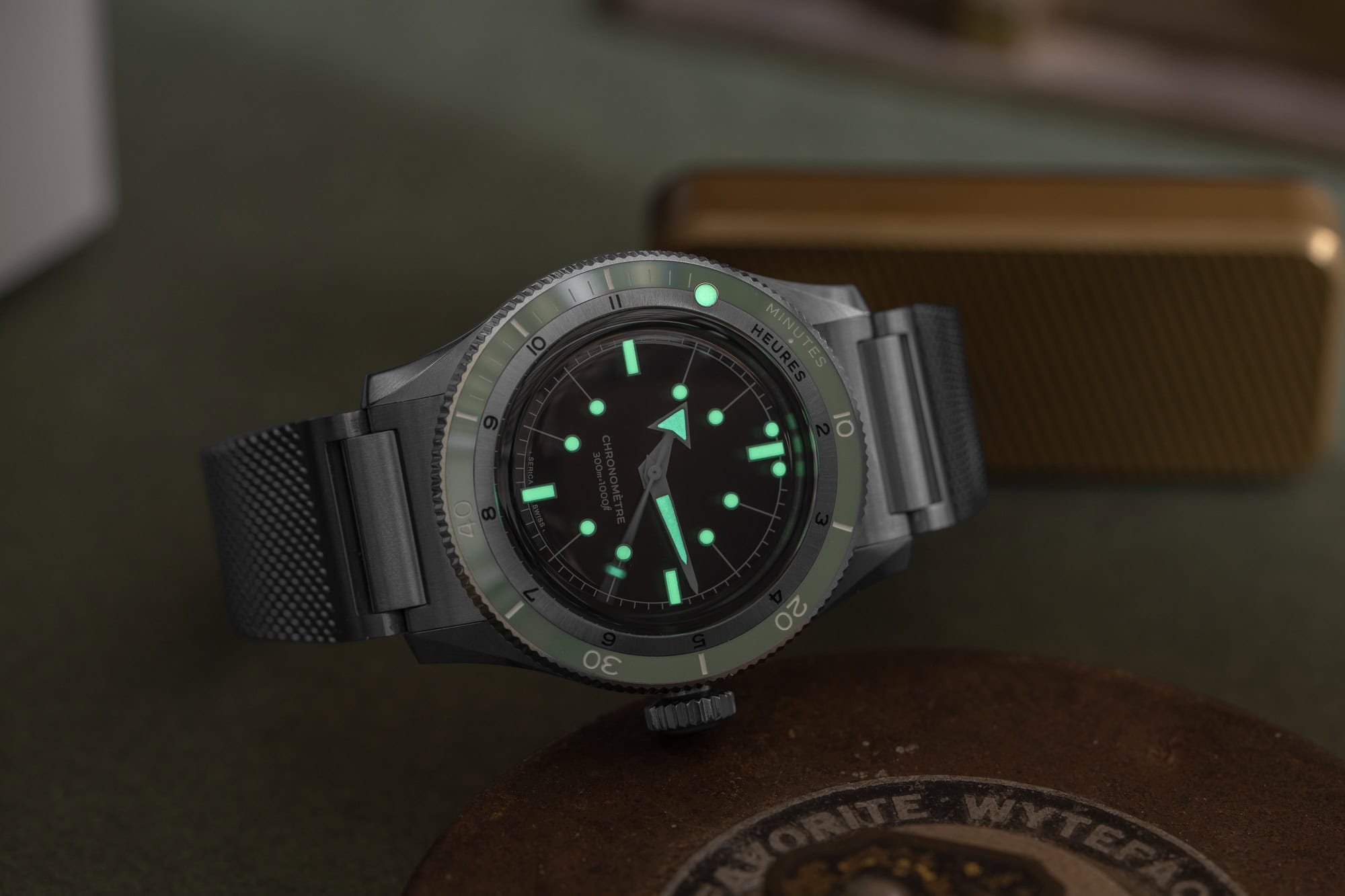
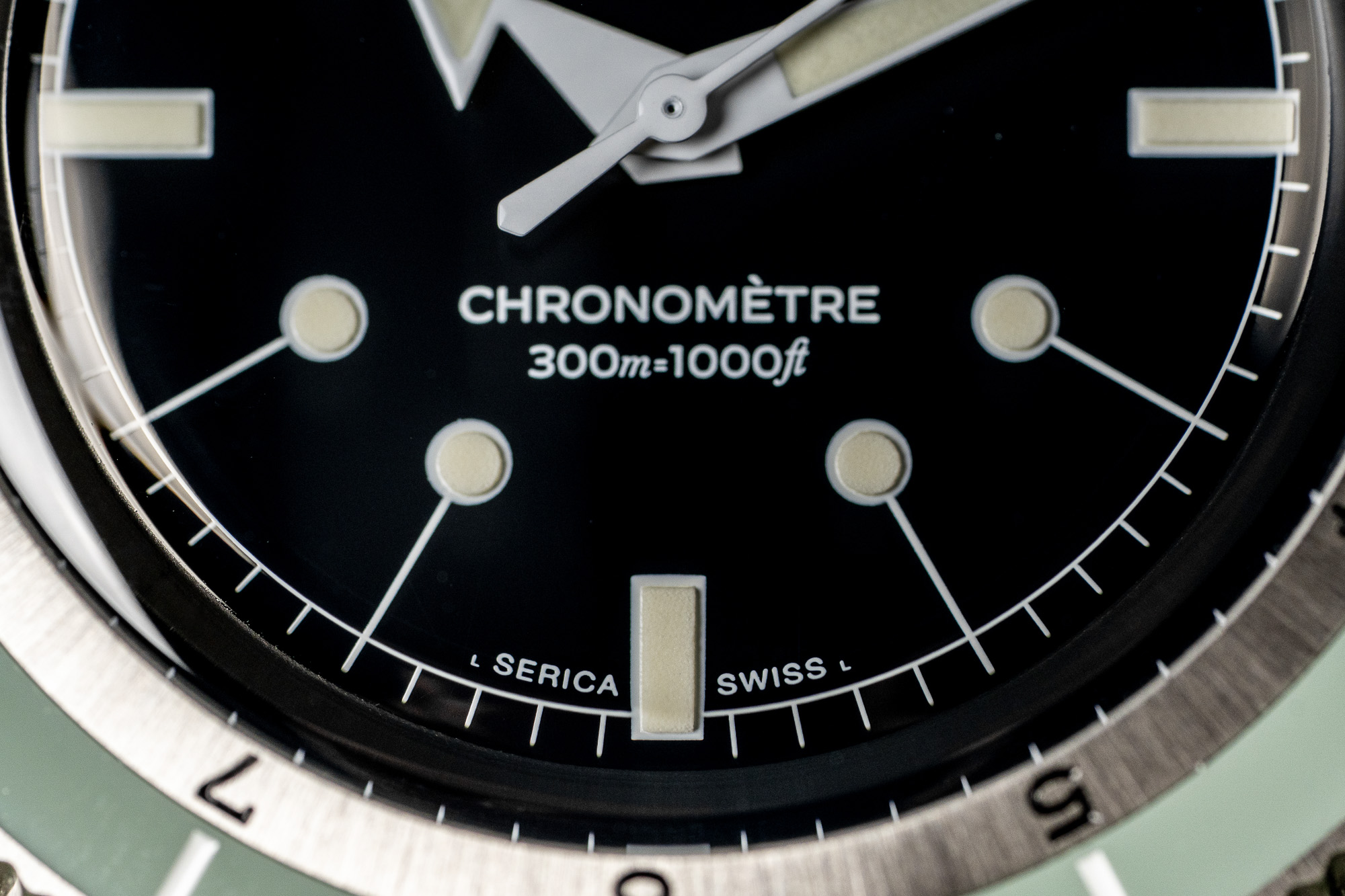
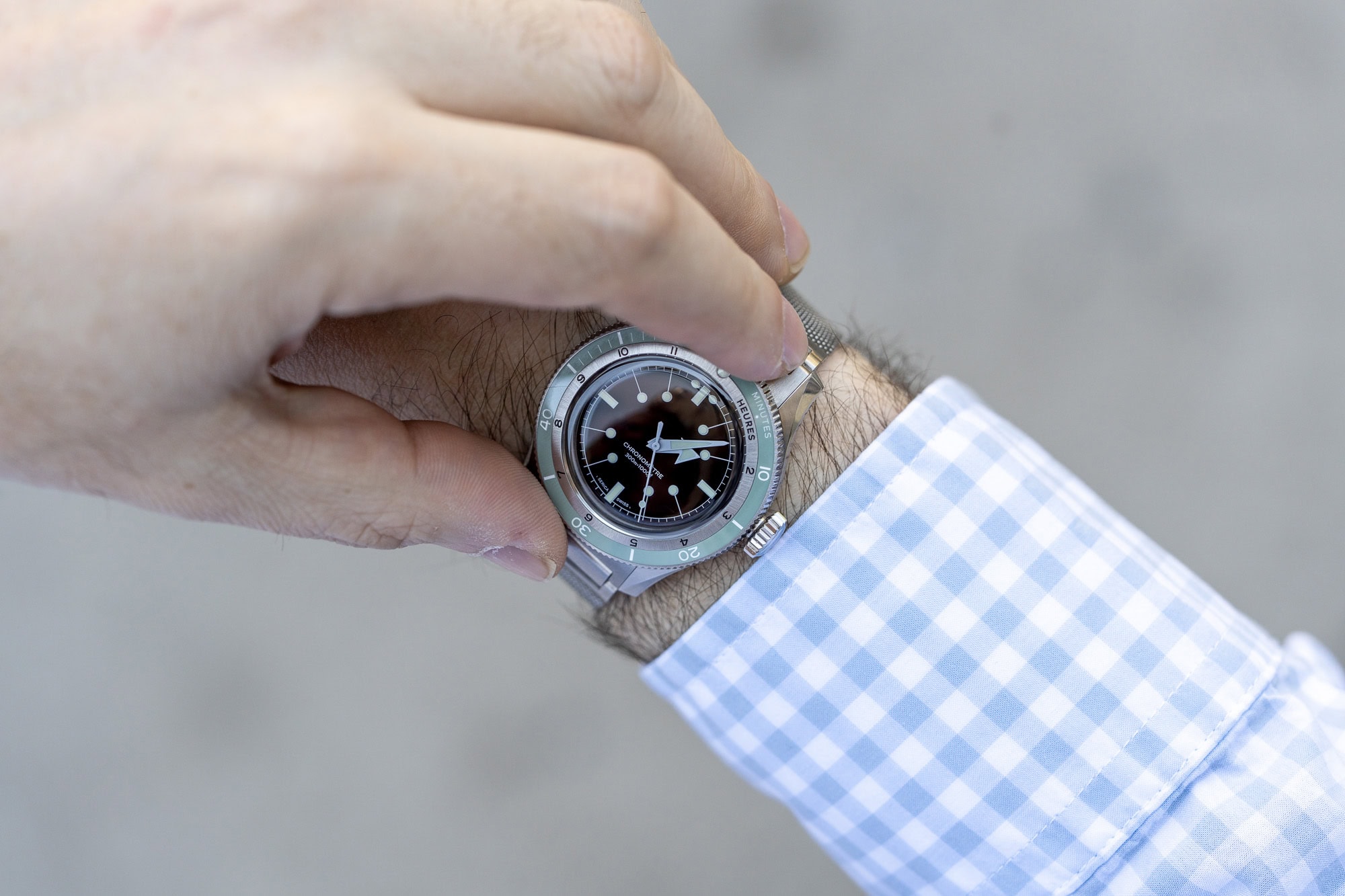
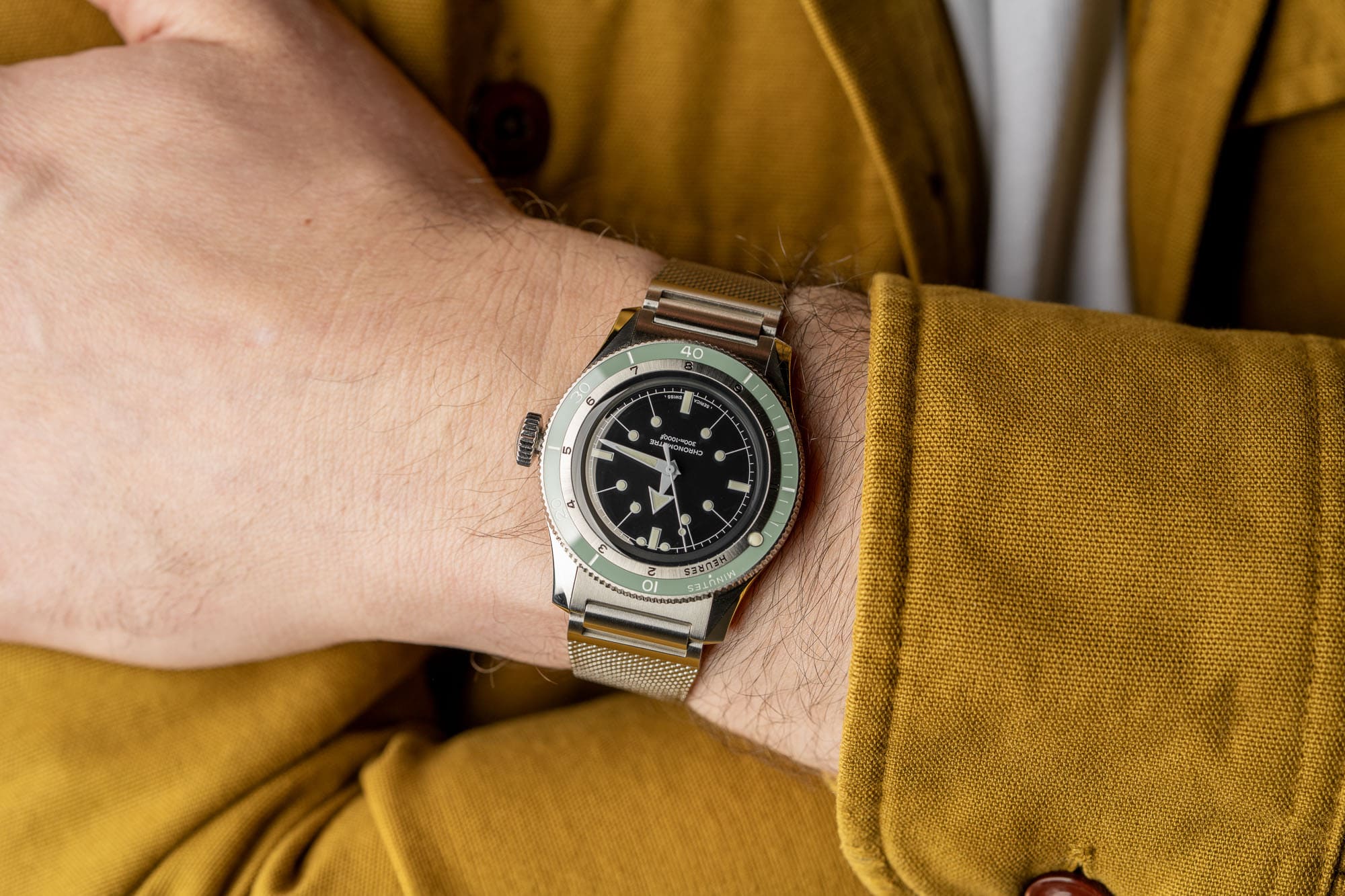
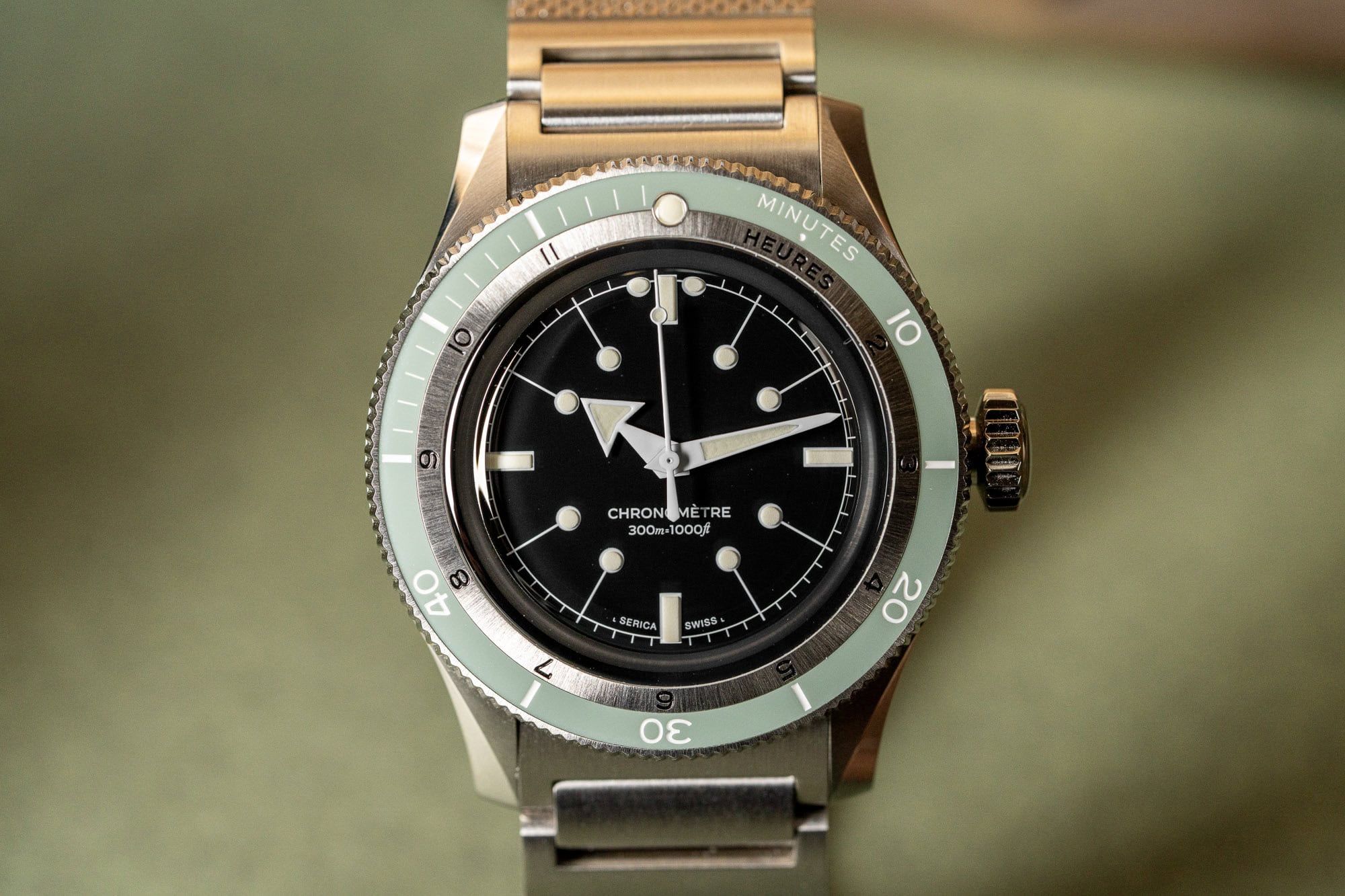
A big part of the 5303’s appeal is down to the time tested, vintage adjacent design codes. It presents, from a distance, as a classic, midcentury dive watch, but when you really start to look at the details you begin to realize it’s a wholly original creation, even as it’s made up of an amalgam of things most of us have seen before, including a broad arrow hour hand, a mix of circular and rectangular hour markers (with cream colored faux-patina lume), and minimal dial text that feels very tied to an earlier era of watchmaking.
Other details, though, feel like newer inventions. The thin straight lines connecting the non-cardinal hour markers to the minute track provide some additional visual interest to the dial and give it a vaguely spiderweb-like quality. I’m not sure that there’s a functional reason for it – I suppose it helps draw the eye when the minute hand passes by – to me it just looks cool, and that’s enough. And while the bezel that tracks both minutes and hours on separate scales is not a new invention, it’s a rare choice, and beautifully executed, particularly with respect to the pastel green color chosen for the outer minutes scale. It looks great, clearly evoking old Bakelite bezels used by Rolex and others.
![]()
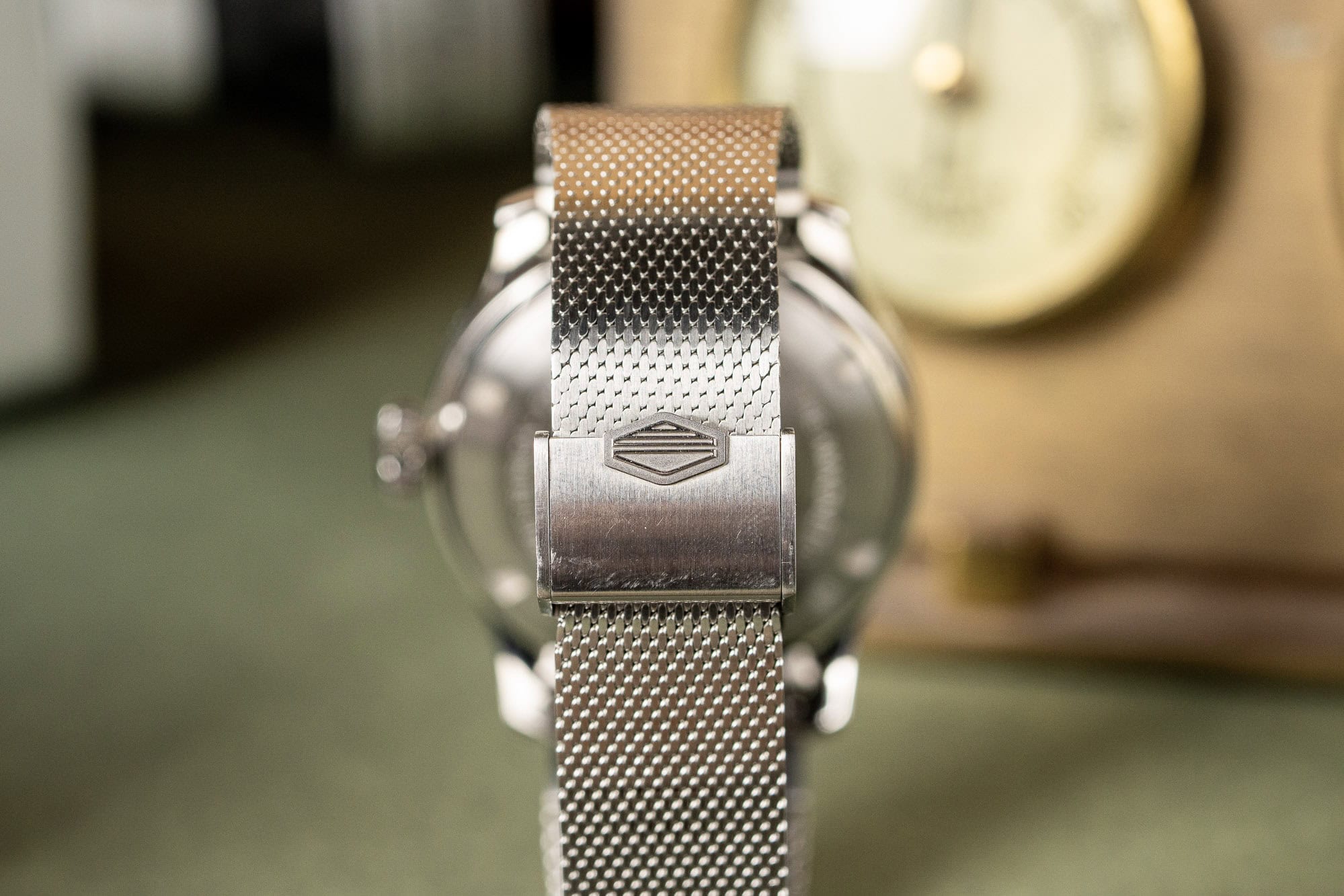
The other piece of the puzzle here, and the one that really made me want to write about this watch in the first place, is the bracelet. Reader, I have complicated feelings about this bracelet.
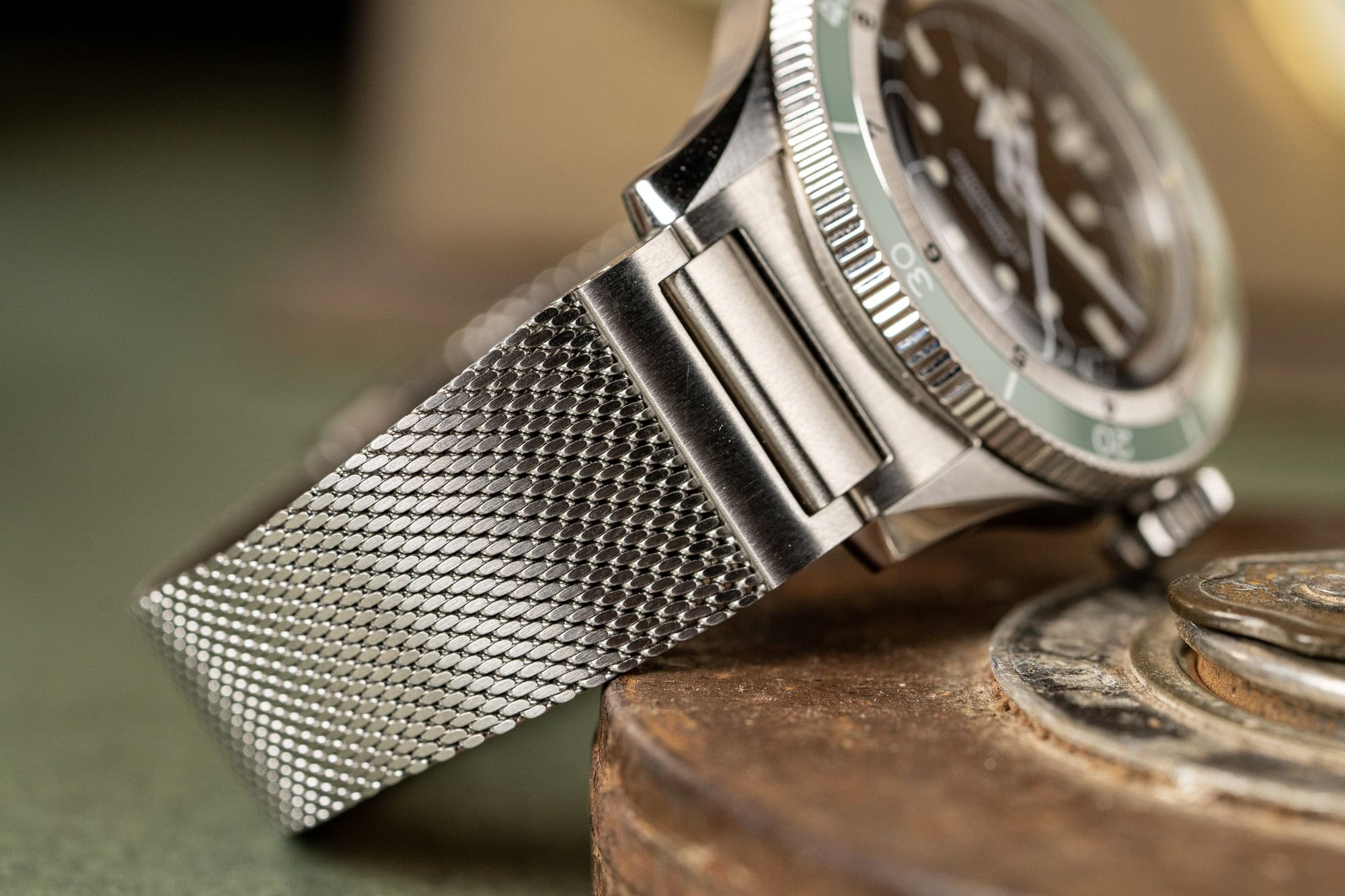
On the one hand, the bracelet suits this watch perfectly aesthetically. It presents as finely woven mesh, and is a beautiful object unto itself. Once you get the sizing dialed in, it’s incredibly comfortable. After wearing it for just a few days and snapping a few wrist shots and just generally admiring it, I said to myself and to colleagues and friends that it might be the most objectively attractive watch I own, in large part because of the bracelet and the way it is integrated to the case.
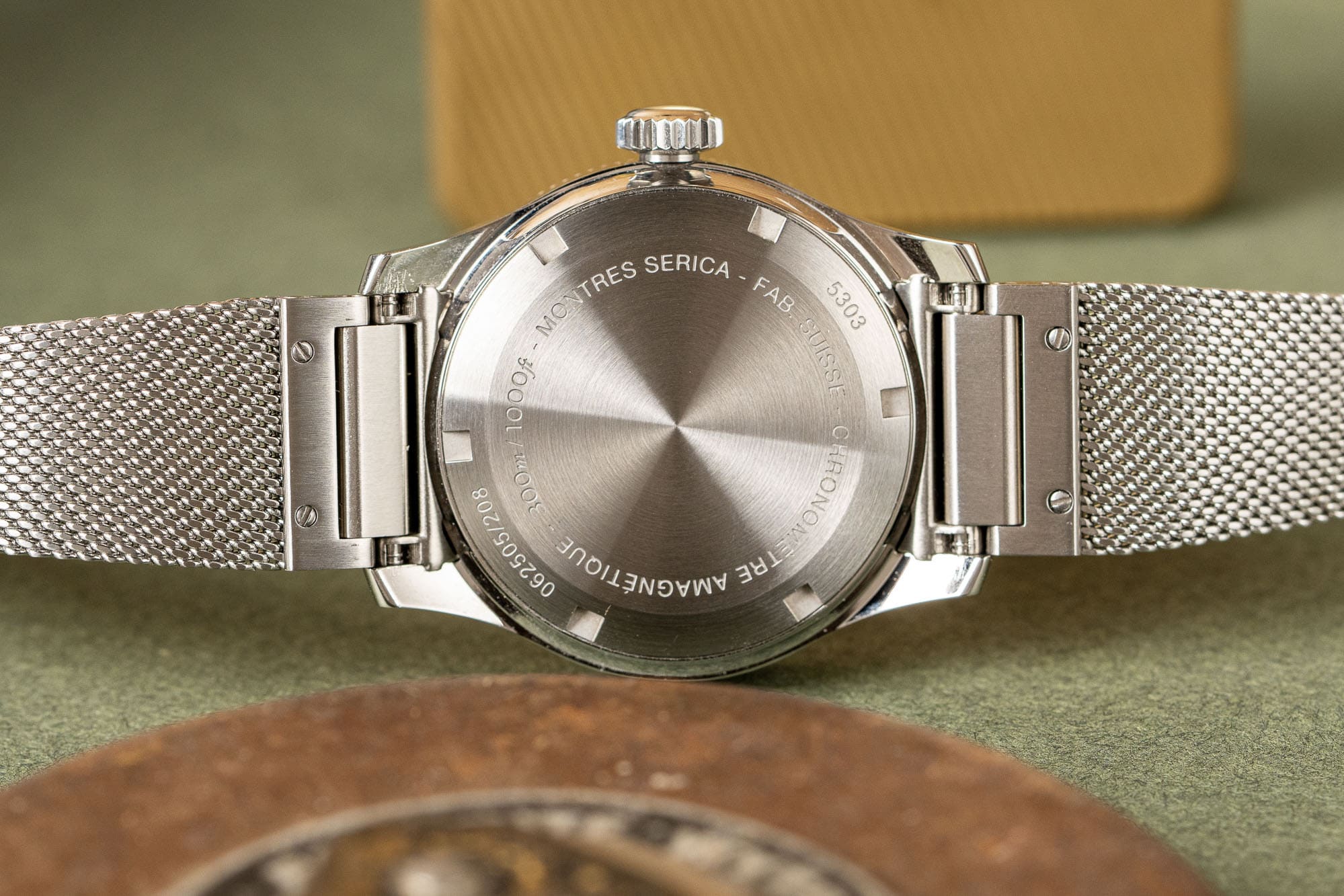
As much as I love the way it looks, though, I also find it fairly impractical. First and foremost, the clasp is tough to use, and even after several months, I haven’t quite mastered the technique required to gracefully close it when donning the watch. This is an old-style system where one end of the bracelet slides through the underside of the clasp, and a simple mechanism folds over and locks it in place. This, of course, was a fairly standard way to make a bracelet for decades that predates my existence on this planet, and like a horse and buggy it just feels similarly antiquated, begging the question of “why?” There’s just a lot of precision involved in sliding the bracelet end through the clasp, and finding the right fit. I’ve accepted that I simply might not have the fine motor skills to do this gracefully, which is disappointing because I know it’s possible from watching Jerome and Gabriel do it themselves at our events.
![]()
Another issue: the incredibly tight tolerances of the bracelet’s end links, which made for quite an experience after a brief period of testing the watch out on a leather strap. The end links, which have become a visual signature of sorts for Serica, articulate fully, and are essential to the wearing comfort of the bracelet as it helps the case lay very close the wrist and allows everything to mold to the shape of your wrist. That articulation though, along with a truly tight fit, make it incredibly hard to seat the endlinks properly between the lugs when putting it back on the watch, which you’ll definitely want to do because it’s clearly the most comfortable and visually arresting way to wear it. I fought with the case, the bracelet, and my springbar tool for much longer than I’d care to admit publicly before finally experiencing success.
This is ultimately a minor annoyance more than anything, and has the easiest solution imaginable, which is to treat the 5303 like an integrated bracelet sports watch and never remove the bracelet again. That being said, there is something vaguely anachronistic about the way this bracelet exists in Serica’s lineup.
![]()
This is a brand that sees itself as a maker of serious, but stylish, tools. As I mentioned above, all of their watches are now COSC certified, which is, honestly, unnecessary, but important to them, and that’s something I appreciate. Their dress watch, the Parade, has 100 meters of water resistance because situational wearability is a core value and starting point for a new design. Again, it’s not necessary for a watch like the Parade to be 100 meters water resistant, but I respect the choice they made to make the watch within those parameters, and it’s part of what makes the Parade special.
But the bracelet on the 5303 feels like a form over function choice, which is not something I’d have expected from Serica, who are always thinking about how their watches are actually used, and finding the balance between that an their own aesthetic principles. To be clear: I’m more than fine with any brand making a form over function decision. I think, in a lot of ways, the hobby has veered too sharply into satisfying a certain set of expected specs over creating things that are interesting and challenging. It feels like a lot of brands are fearful that they’ll be overwhelmed with Instagram comments asking why their watch has “only” 100 meters of water resistance, for example. Many of us, myself included, choose watches primarily because we think they look cool. When it comes to specs, we mainly just want them to work.
So the 5303 is an interesting thing to consider from that perspective, and I find myself asking if I’m willing to accept certain functional limitations for aesthetic gain. The answer, of course, is that in the case of this watch, I absolutely am.
![]()
![]()
My experience with the 5303 also raises some interesting questions about the intent of a watch, and whether it should matter if the owner experiences a watch in a way that is enjoyable, but perhaps at odds with how the designer or brand intended the watch to be used. I suspect that Jerome and Gabriel thought they were making the most streamlined, easy to use, and practical tool they could with the 5303 (or any of their watches). The fact is, I don’t really see this as a tool at all. It’s much more of a design object for me, and is very successful at that, even if it has some practical shortcomings.
This is a question that we often think about with respect to luxury sports watches. Any dive watch from Rolex is a good example here; they are made to exacting standards and are more than capable of being knocked around, submerged at depth, etc., but the vast majority of new Rolex owners in 2026 are wearing them as jewelry.
My personal opinion is that this is completely fine, and we should all be operating from the perspective that once a watch (or a movie, or a piece of music) is out in the world, the people who are using it and enjoying it begin to define what it actually is. Bruce Springsteen’s “Born in the USA” does not have particularly patriotic lyrics, but I heard it blasted from the yards of neighbors during recent 4th of July celebrations. Tommy Wiseau’s The Room is an old fashioned melodrama, but made so poorly it has only been viewed as a comedy for over twenty years.
![]()
The 5303 of course doesn’t represent nearly the miscalculation of The Room nor the large scale misunderstanding of “Born in the USA,” but it is an example, as all watches are, of something that has the ability to take on a life of its own once it’s adopted by an enthusiast community. Serica, as a brand only in its seventh year of existence, is itself still defining how they are understood by the community. I’m proud to be an owner, and excited to see how their story continues to develop. Serica


 Latest Review