
 Latest Review





Images from this post:
 May 30, 2025
 Out of Office: Pikes Peak – 14,000 Feet of Elevation with the Rover Trail Pack from Topo Designs
May 30, 2025
Words by Meg Tocci

Depending on who you ask, Colorado is home to either 53 or 58 “fourteeners.” This name is affectionately given to peaks rising to, or above, 14,000 feet in elevation. The debate over what qualifies as a fourteener is divisive amongst the mountaineering community, but there is something everyone can agree on: Pikes Peak is one of the most formidable summits on the list.
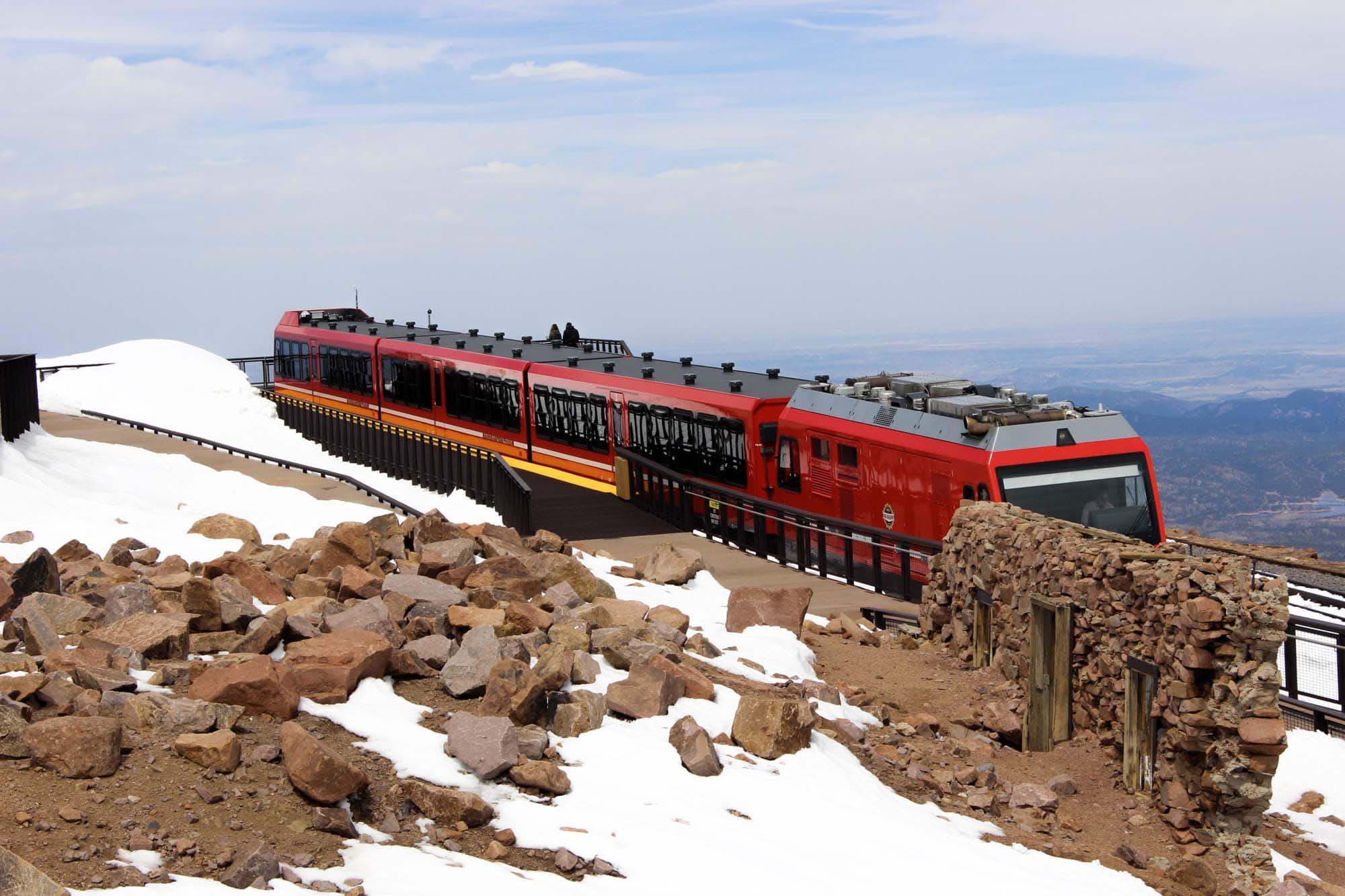
The Broadmoor Manitou and Pikes Peak Cog Railway has been climbing to the top of “America’s Mountain” since 1891 and played a large role in the history of the state. Even more impressive is the fact that it remains the highest rack railway in the world, and shuttles over 750,000 visitors to the peak each year. With views spanning hundreds of miles from the summit, it’s no surprise that Pikes Peak was the inspiration for “America the Beautiful,” when its author, Katharine Lee Bates, visited the mountain in 1893.
Last month, I was able to ride the cog railway all the way to the summit for the second time, nearly twenty years after my first experience.
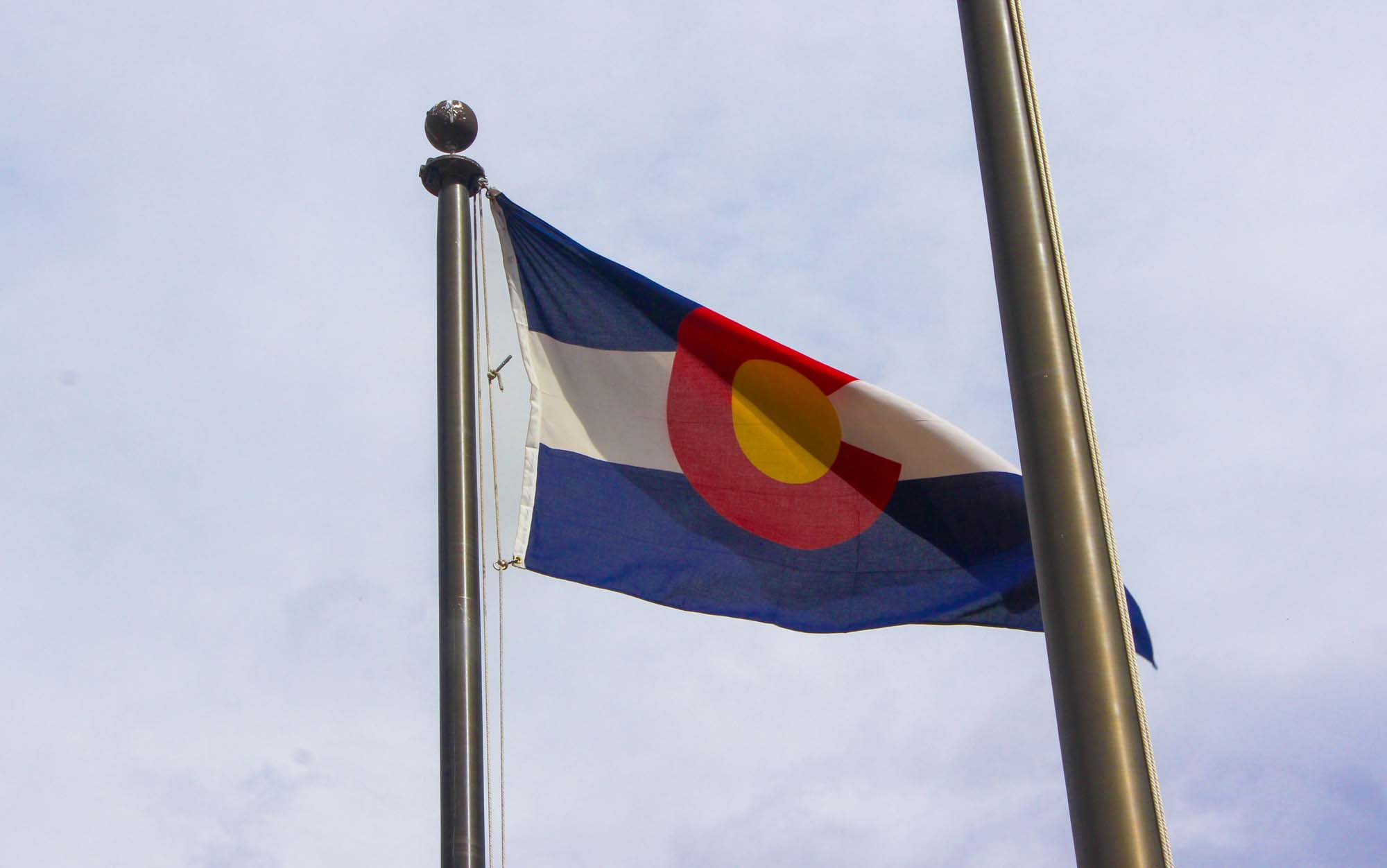
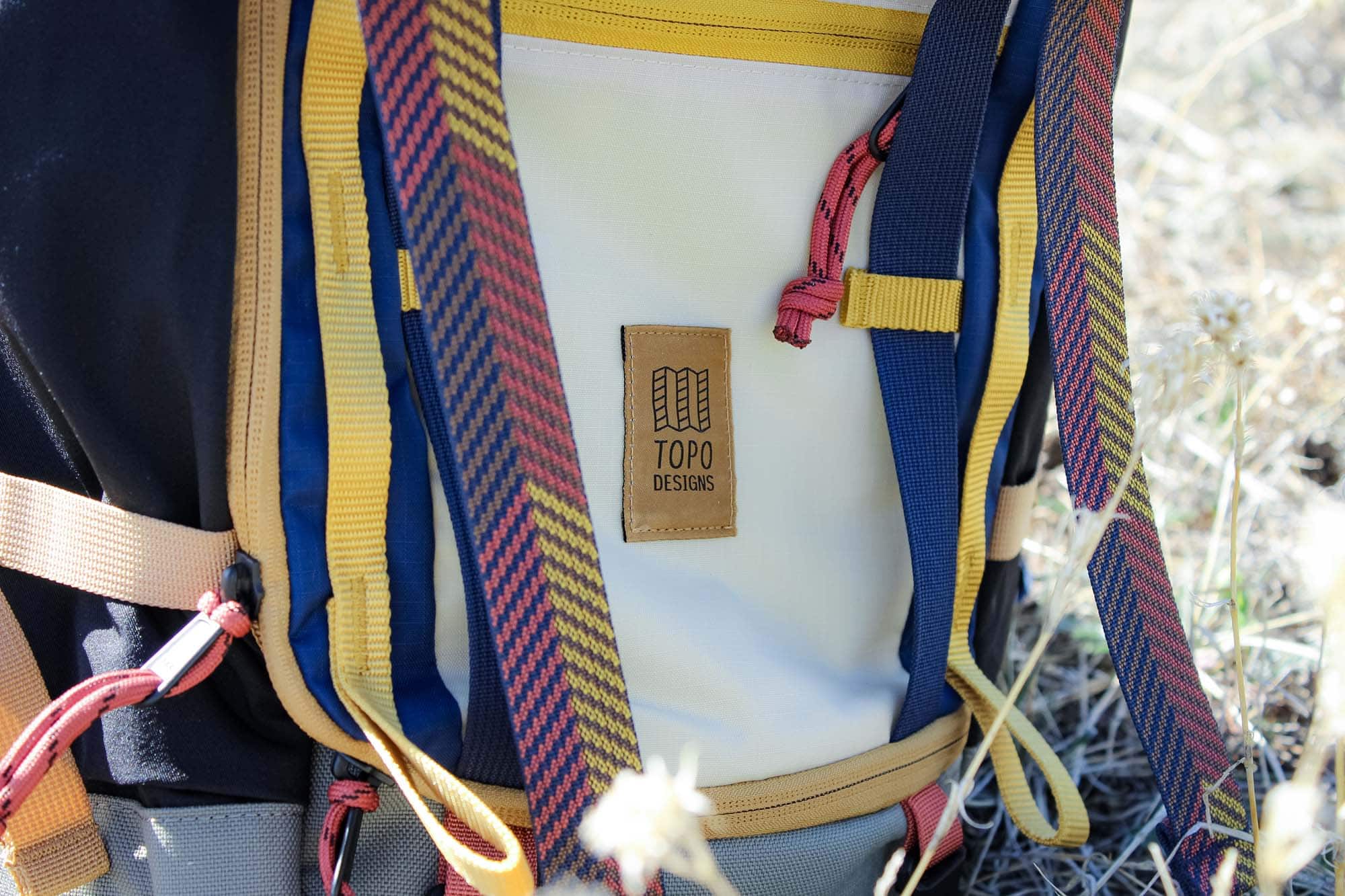
For this adventure, I brought along Topo Designs’ new daypack, the Rover Trail Pack 22L in the Bone White/Beetle colorway. I love backpacks in general, but had a particular interest in putting this one to the test in this location, specifically. Topo Designs started in Colorado back in 2008 and the brand’s dedication to sustainability and ethical practices align with many of the values that Colorado, especially its outdoor community, share. It felt fitting that I would be testing it out on Pikes Peak – perhaps the most distinctive landmark in the state.
Pikes Peak: Part I (2006)
Like I said above, this was my second visit to the summit of Pikes Peak. When I was ten years old, my family took the cog railway to the top of the mountain the summer after our move from California.
Though much of my work in the watch world reflects my love of Colorado, it might come as a surprise that my story didn’t actually start here. I was born and lived in San Diego, California until I was nine years old, when a job transfer brought my family to the Boulder Valley.
I have always had a profoundly deep sense of “place” and more of a connection to landscape than some. In California, I was a sun baby who loved the ocean, the palm trees, and the flowers that bloomed perpetually. The move to Colorado felt like trying to get my bearings on an alien planet. Greenery was sparse and the rapidly changing weather gave me whiplash. My first Halloween here brought snow and I thought I would die when I had to cover up my costume with a winter jacket.
The horizon in San Diego extended from the pier into eternity over the water. In Boulder, there was a wall of jagged mountains serving as the visual endpoint to my new world. They stood between me and my real home on the other side. Sometimes, it even felt like they were closing in.
I honestly don’t recall all that much from my first trip to the top of Pikes Peak that summer. The weather was nice that day, I remember that. It was sunny outside but freezing at the summit – one of those weird Colorado climate oxymorons I couldn’t wrap my head around then. I looked out from the viewfinders at the Summit House at the peak, and wasn’t sure what I should be trying to see. After watching the crowds, it became clear to me the vast open expanse below was the view and I thought it was a little strange to take a train all this way just stand there in the wind and the cold looking at nothing.
I remember the donuts at the shop inside the Summit House, and that this helped me understand why people made the trek. In my ten year old mind, one hour on a train up a mountain might have been a long time to look at nothing… but that felt like a reasonable amount of time and distance to travel for a donut.
I also remember the story our conductor told of a newlywed couple who vacationed in Colorado for their honeymoon in 1911. According to the Manitou Springs Heritage Center, Mr. and Mrs. Skinner embarked on the twelve mile hike in August of that year. A late summer storm was rolling in and the locals warned the hikers, originally from Texas, about the risks. The couple decided to proceed anyway. The last person to see them alive around 4:00 PM said the pair looked tired, but continued towards the summit. Their bodies were found by a train engineer around the 12,000ft mark the next day, buried under nearly two feet of fresh snow. Cause of death: exposure and exhaustion.
The creepiest part – and the one most contested by tourists and locals alike – was that Mrs. Skinner was supposedly said to have a postcard from a friend in her possession, reading: “Hope you’re having the time of your life in Colorado. Don’t freeze to death on Pikes Peak!”
Pikes Peak: Part II (2025)
The cog railway closed down in 2018 over concerns about the aging equipment. This problem was rectified to the tune of $100 million, and production began again three years later.
I surprised one of my best friends with the train tickets this past Christmas. He, being a native New Yorker drawn to Colorado by the allure of the west, has made an impressive dent in a Rocky Mountain bucket list. But I thought I’d help him check off one more staple. We (I) wanted to wait to cash in the tickets until the weather was a bit warmer in order to avoid recreating our last mountain adventure together last April. I, for one, have a strong desire to space out my near-death experiences as much as possible. Personal preference. A stretch of blue skies and mild temperatures in mid-April presented the perfect opportunity and we booked the tickets.
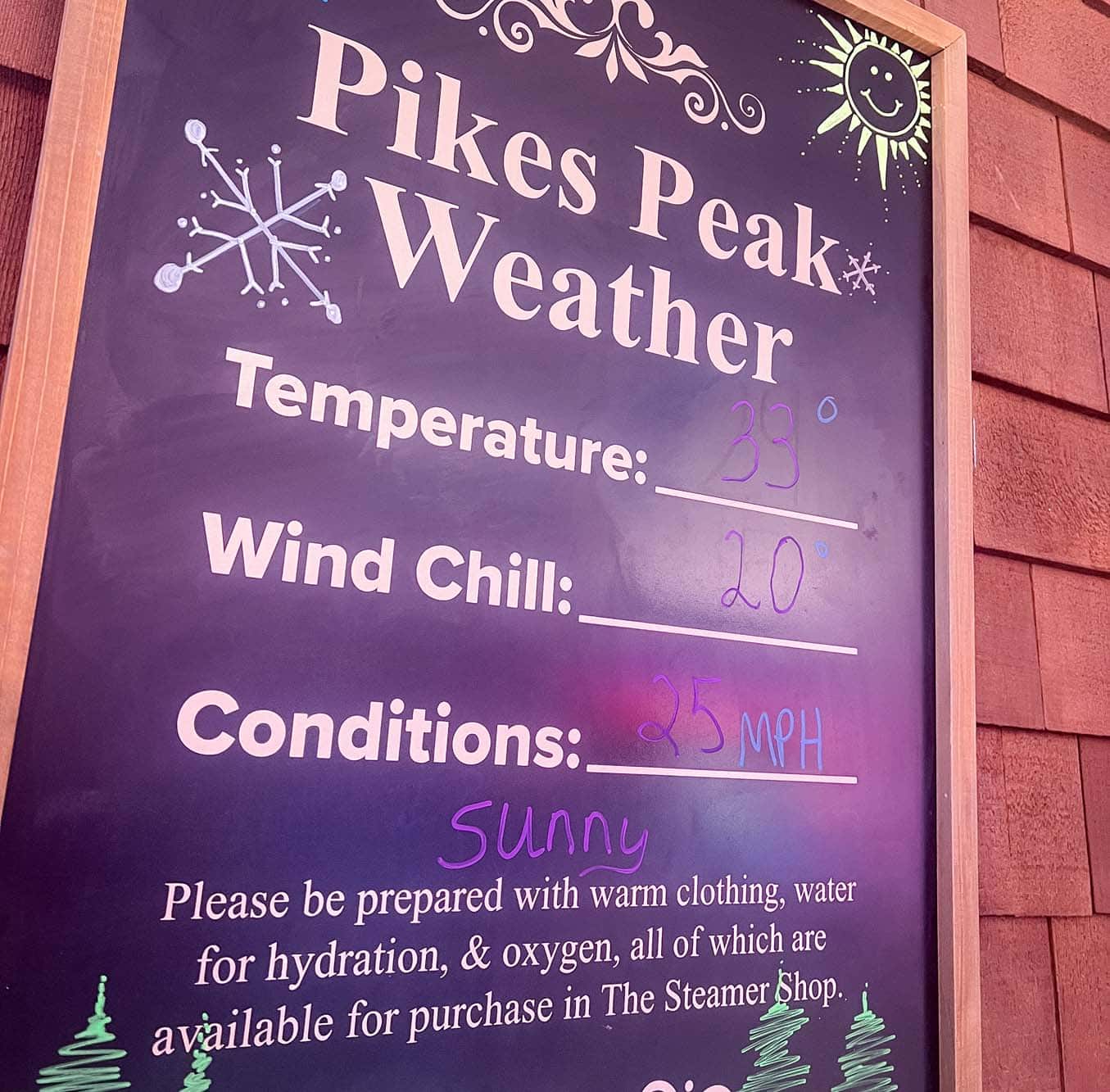
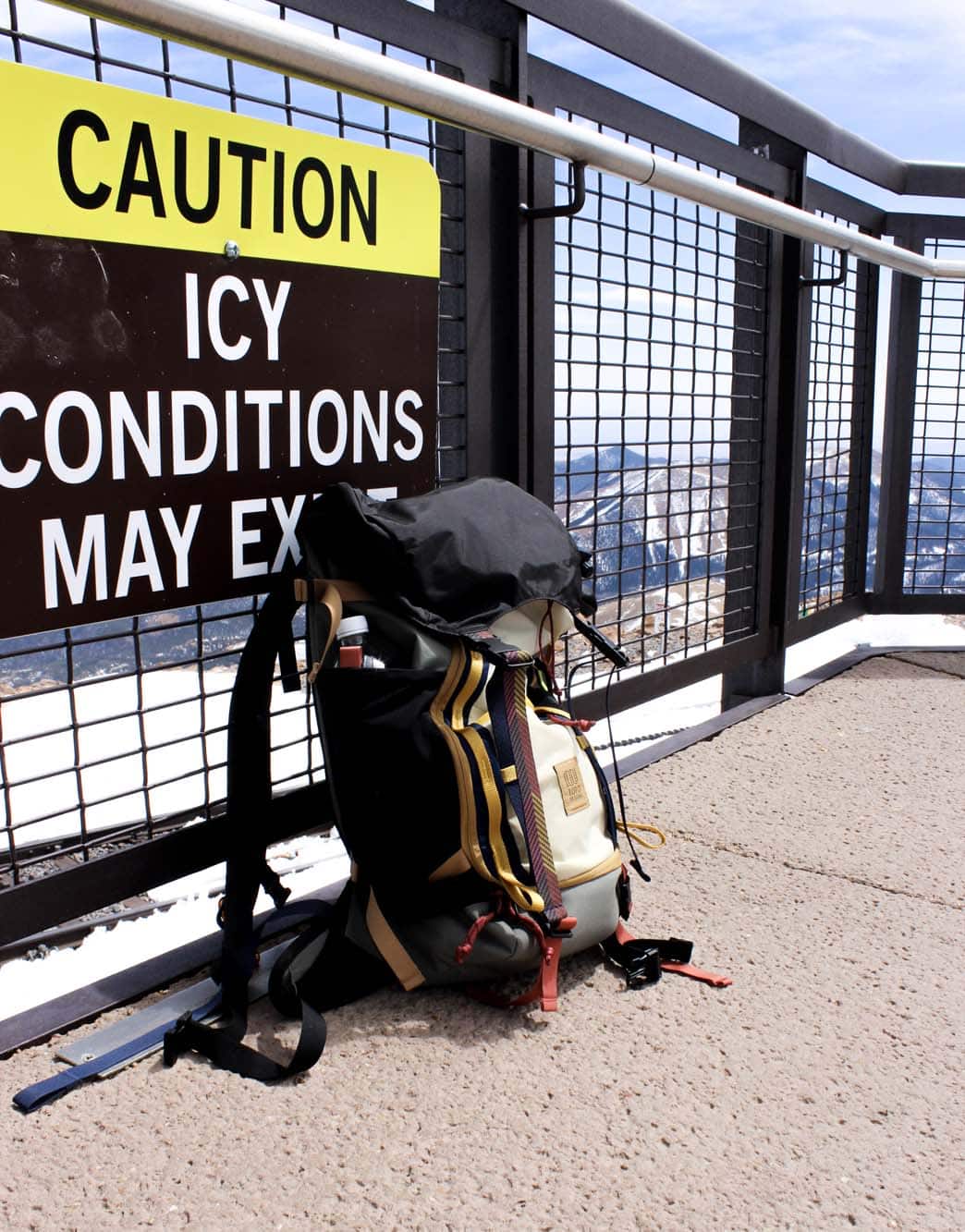
I had been itching to get some real time with the 22L Rover Trail Pack from Topo Designs, which is the second Topo backpack in my collection. Though I’d been on a few small hikes with it leading up to this trip, my kit looked totally different for each purpose. On my local day-hikes, the bag carried my water, a first-aid pack, and a handful of fruit snacks. Pikes Peak meant I would have to carry enough gear to be ready for not only the summit temperature (which consistently stayed well under freezing), but also the stark difference between that and the 70 degrees at the depot where we started.
Windbreakers were strongly advised since the peak is a good 3,000 feet past timberline. This means there are no trees standing in the way of the harsh winds sweeping over the mountain. Wind alone accounts for only a small fraction of the chill though: for every 1,000 feet climbed in elevation, the temperature drops about 3.5 degrees. When you’re scaling a mountain 14,115 feet high, those 3.5 degrees add up fast.
The Gear
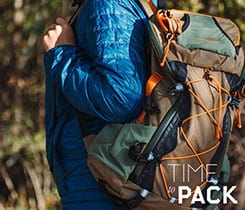
I needed a backpack that could accommodate as many warm layers as possible, along with my DSLR, which I planned to perch on top of my clothes. A feature I didn’t find myself needing on this particular outing (but one that’s come in handy on my hikes) is the J-panel front opening, which allows you to access your gear from the top, or simply unzip the front to access the bottom of the pack. This design is newer for Topo, and one that I think is a positive addition.
The top entry pocket held some essentials like my keys and sunglasses, and then items that are fairly non-negotiable at an elevation of 14,000 feet, like chapstick and tissues. My only qualm with the top pocket set up, is that anything stored in the pocket without being zipped into the mesh panel inside, is at high risk of tumbling out due to gravity when the bag is full. This happened to me once on a hiking trail, so I’m speaking from experience. However, much of that is user error. If someone were to only use the mesh insert (likely how Topo Designs intended), I don’t see this being a universal issue.
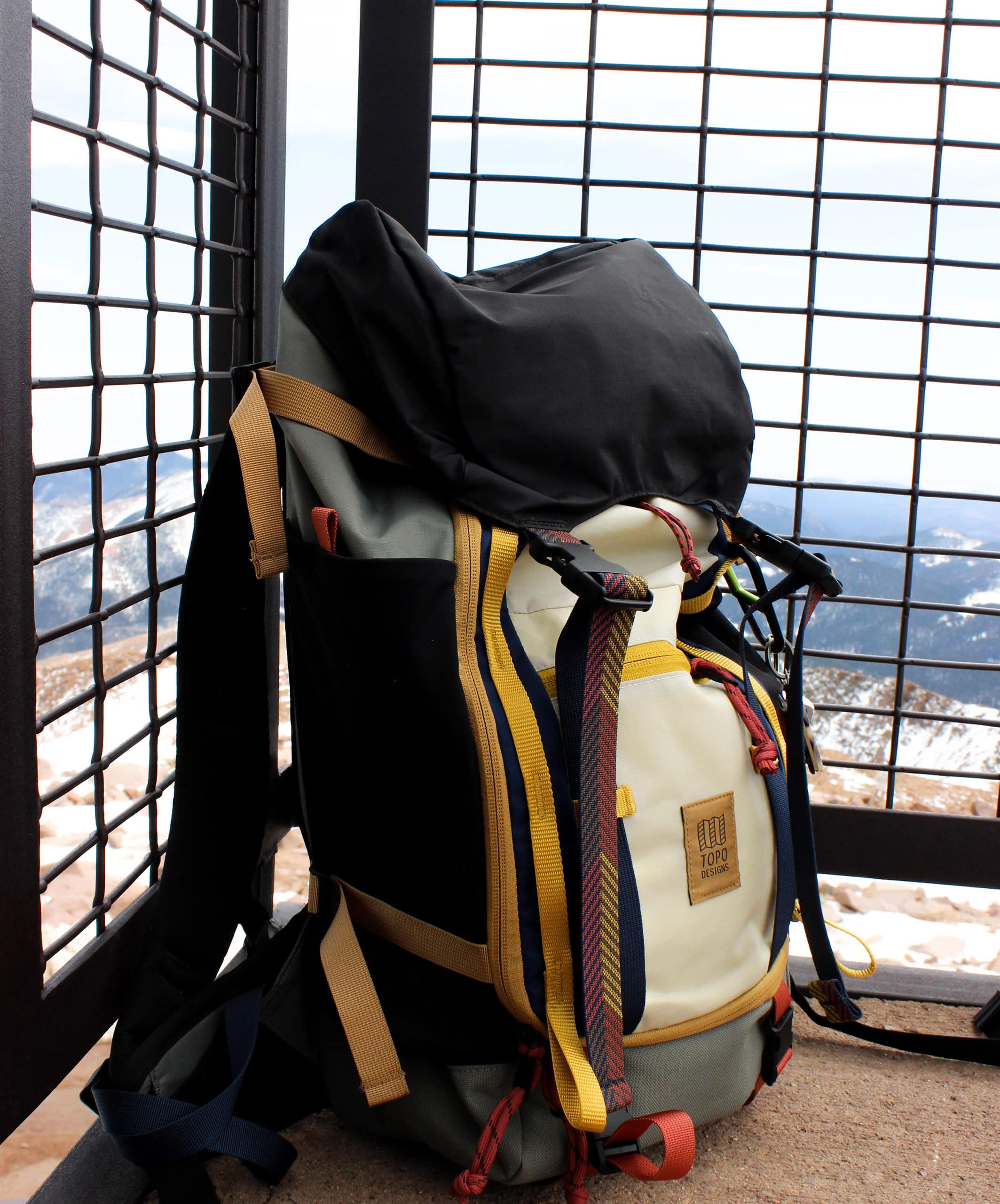
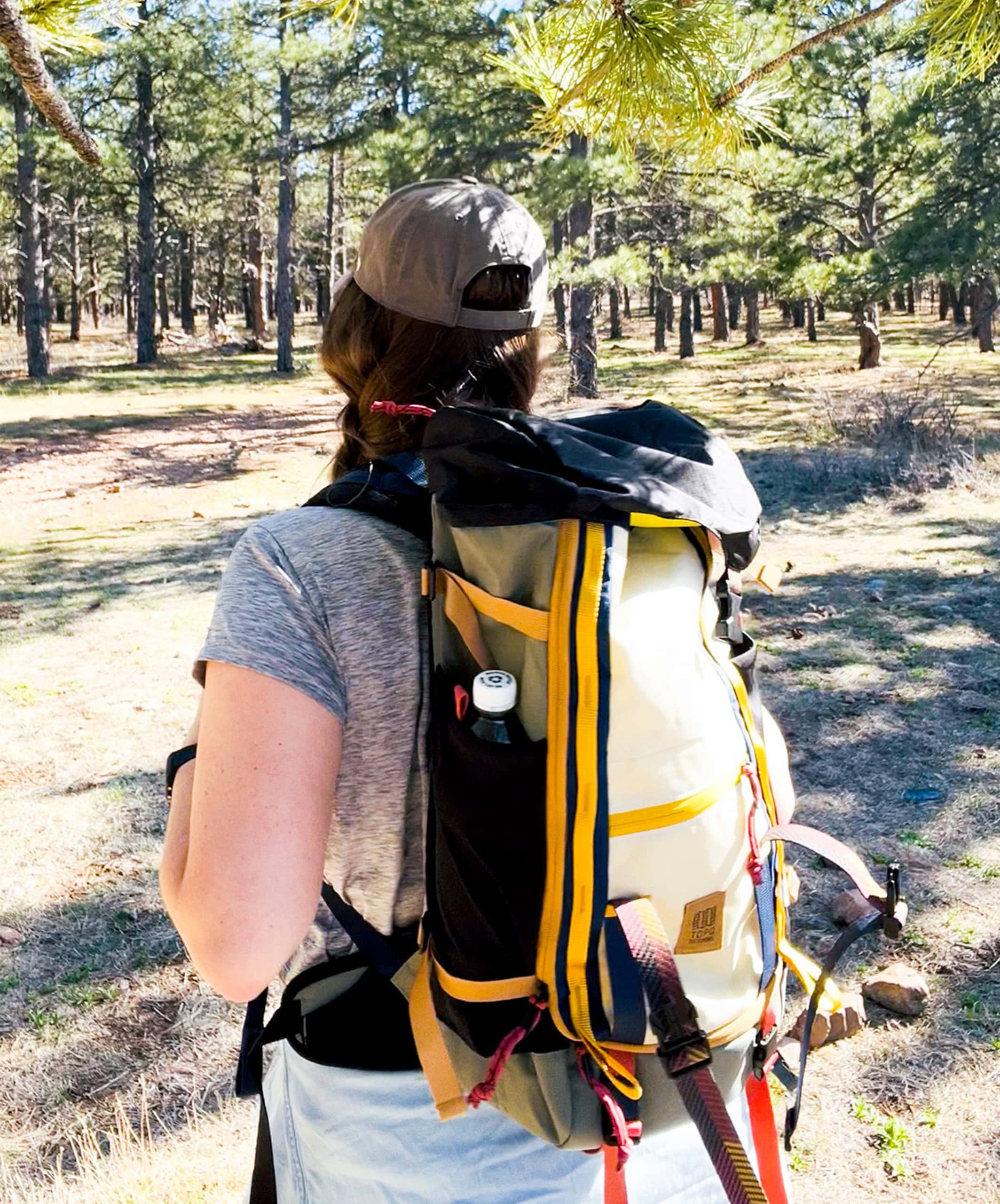
I was skeptical about the chest and waist straps, but did find the former to actually make a difference in how the load was carried on my back. The waist strap might be helpful if the bag is packed really heavily, but I didn’t need it for this trip. The 22L sizing is perfect for this backpack. It sits flush against my back and the chest clip keeps it from slipping out of place.
The backpack has two oversized water bottle holders and I used one of them for that purpose. The other held six liters of oxygen, compressed in two small canisters. Even though I live at high altitude and was therefore less at risk of altitude sickness than other visitors to the peak, I wanted to be prepared in the event of any side effects, and be ready to share if others needed assistance. Fortunately, I brought the two cans back unopened.
Summit
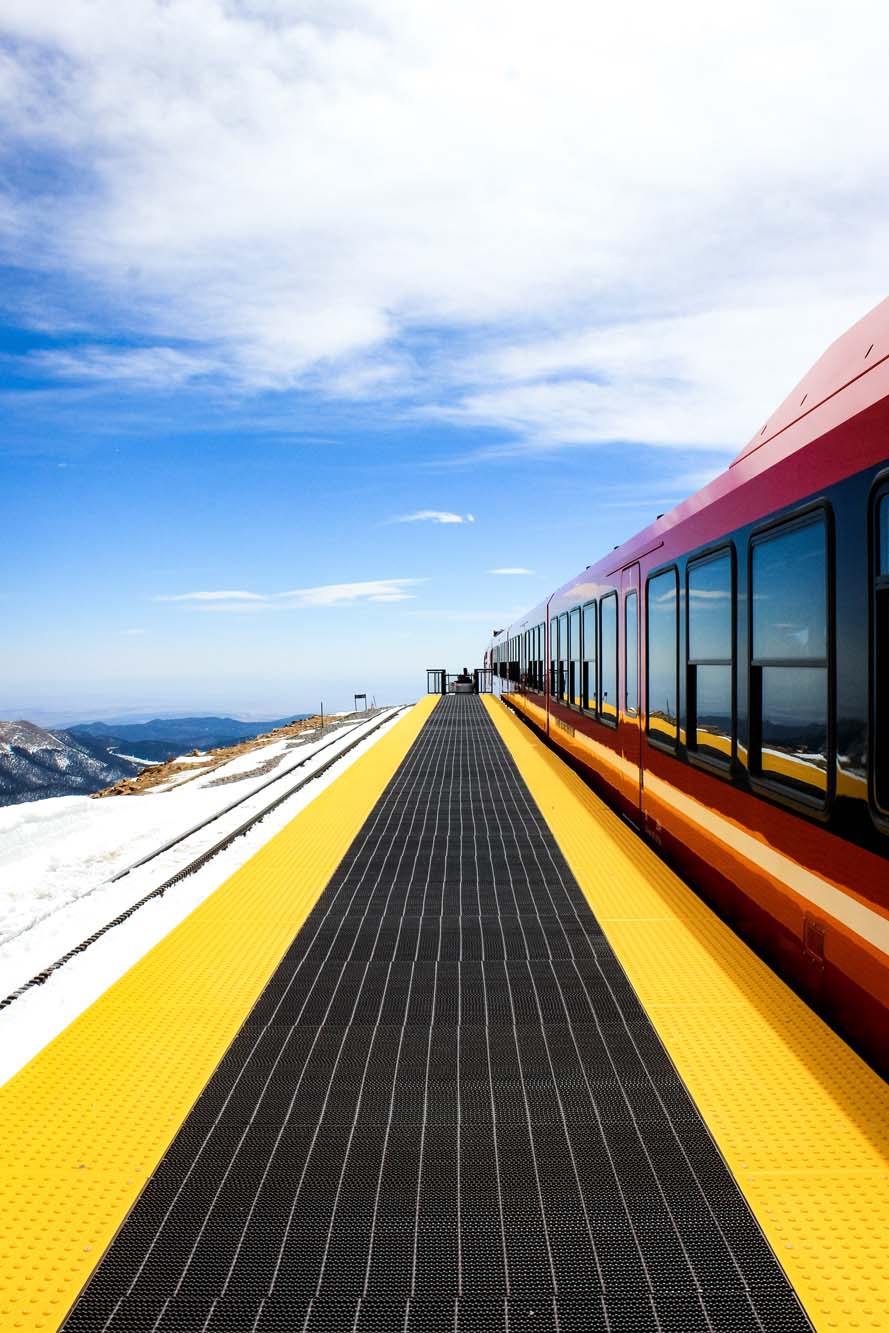
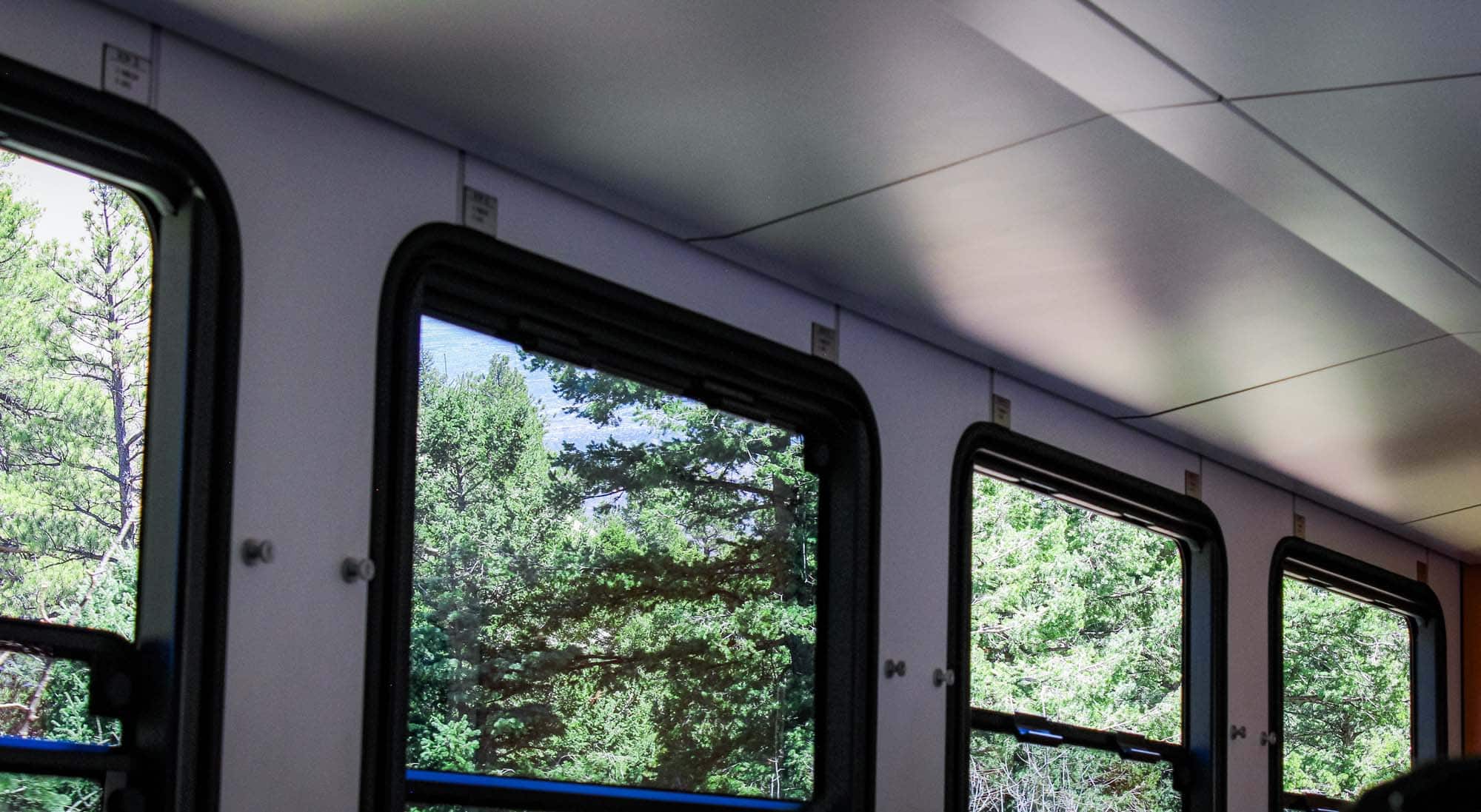
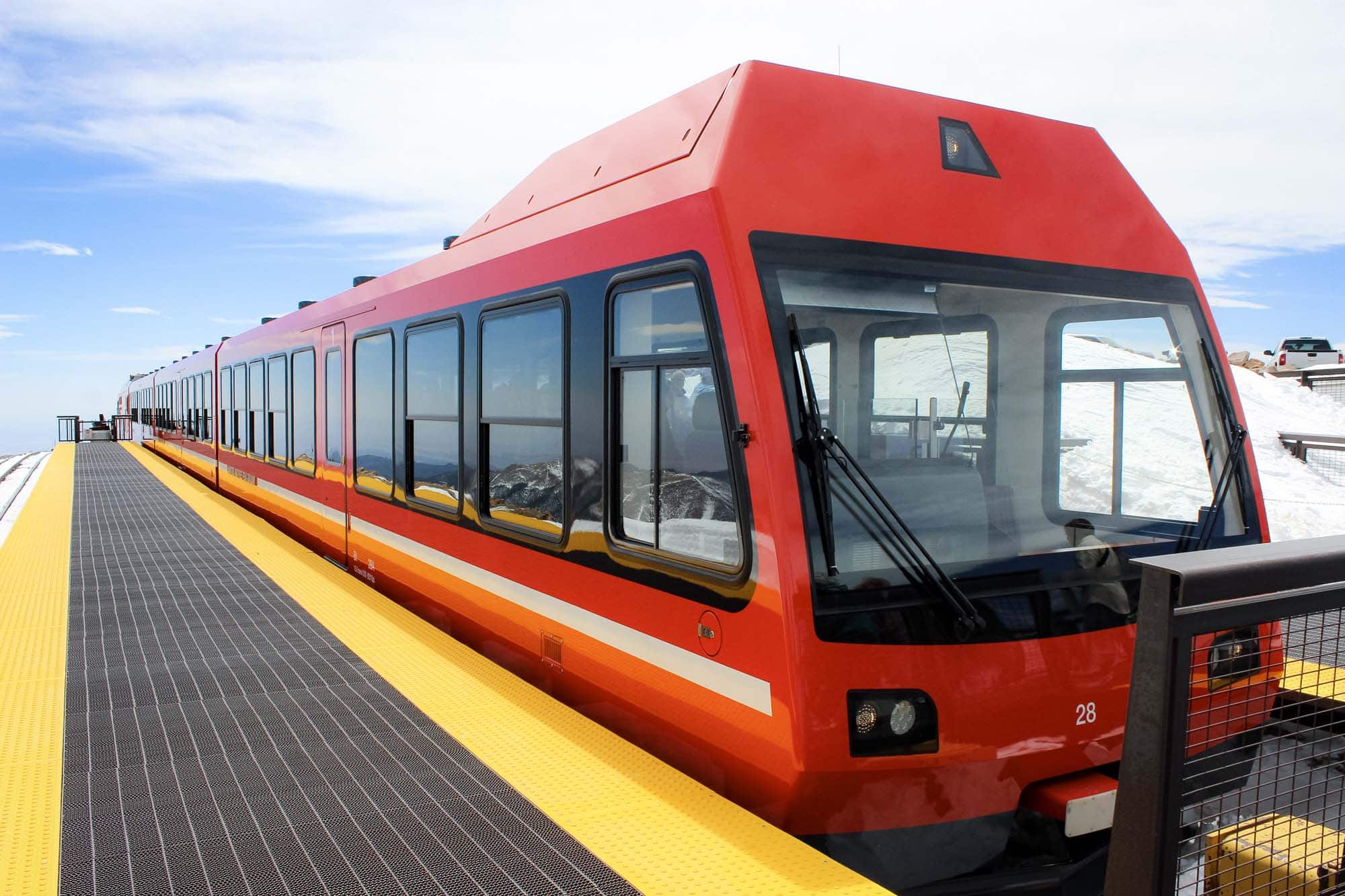
The seats were configured in pods of six, with three seats facing the front, and three facing the back, on both sides of the train. My back was to the summit as we ascended, and the lack of room under my feet meant the bag sat on my lap on the way up and back.
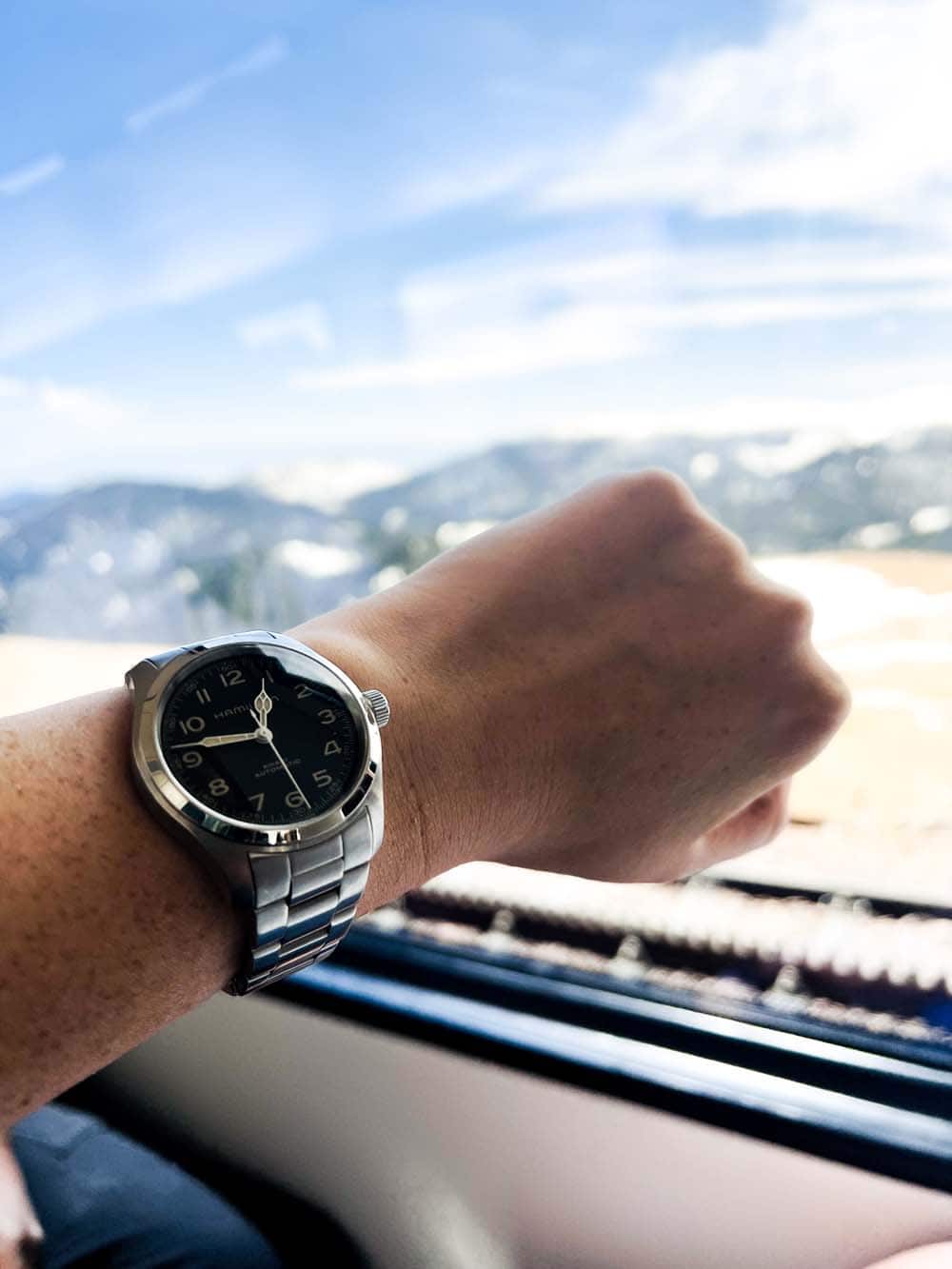
The full ascent took about an hour and was mostly uneventful. However, it was strange to feel the temperature drop as we climbed. It wasn’t dramatic, and the close proximity of the guests in the train cars kept things feeling comfortable, but I was happy that I took my puffer jacket out of the Trail Pack before we left the station, just in case.
I’ve been on a handful of adventures that take me above timberline (also known as the alpine tree line or forest line), which is a cool phenomenon that occurs in mountainous regions where trees stop growing at a certain altitude due to a mix of environmental elements related to oxygen, wind, and sunlight. However, it’s rare to be in a situation where you reach timberline so quickly and have such a clear sense of the distinction between montane and alpine zones. The depot in Manitou Springs sits at an elevation of just over 6,500ft, which means the train climbs nearly 8,000 feet straight up the side of the mountain.
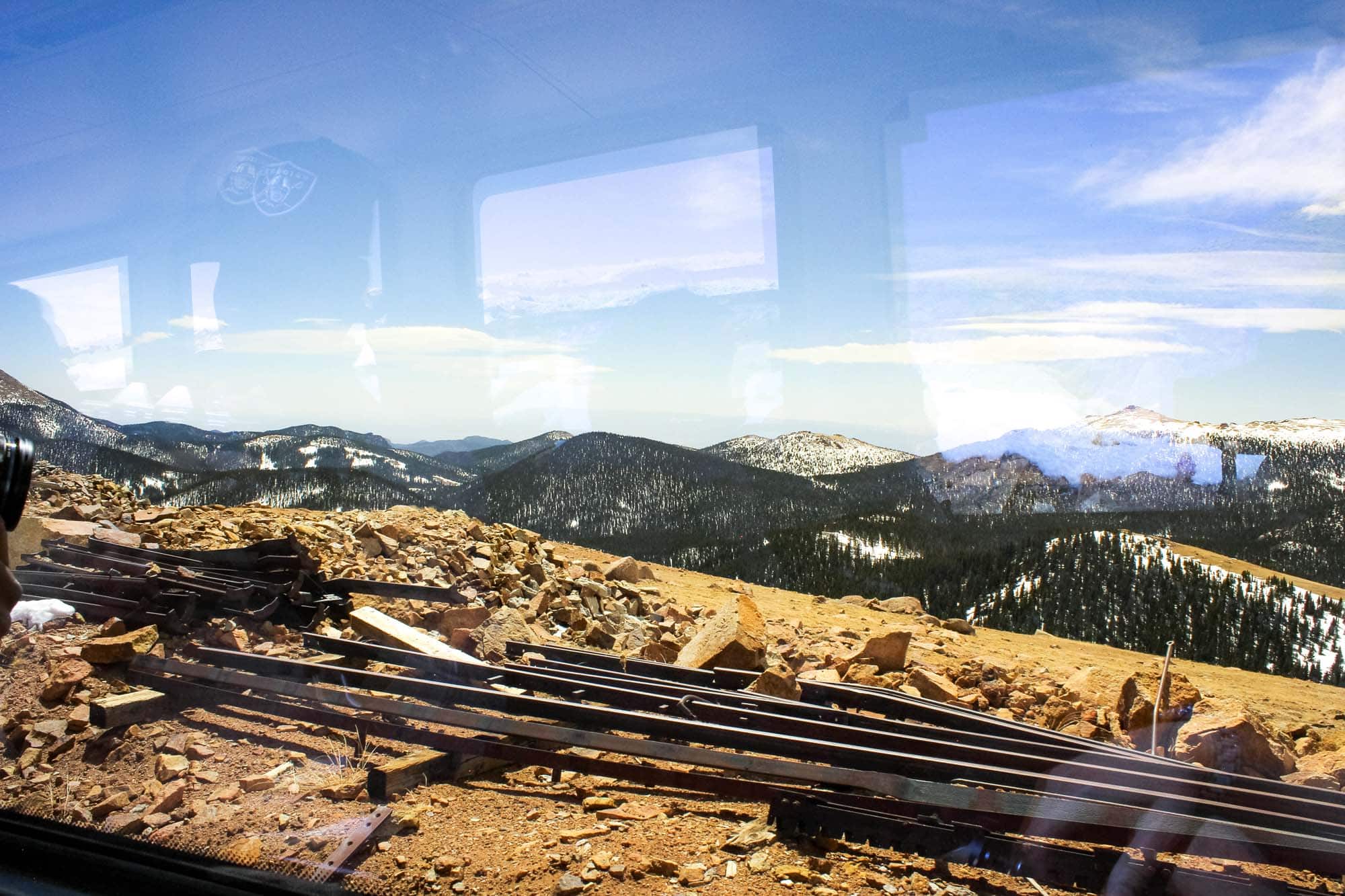
I arrived at the Summit House to find it had changed significantly in the nineteen years since my last visit. Throngs of crowds from the train and those who made the drive up the mountain on their own intermingled on the walkways and in the building. A small delay on the ascent meant our train would be leaving the summit less than an hour after we arrived. We’d have to do everything we’d planned much faster than previously expected.
A combination of the crowds, the two-story layout of the Summit House, and the lack of my phone carrier’s prioritization of service atop a 14,000ft peak, meant my friend and I spent the majority of our time separated and trying to find our way back to each other. We’d eventually reunite right before we needed to board the train back down. Him, with the famous Summit House donuts for the two of us, and me, with a handful of photos of the views I didn’t understand or appreciate as a child.
I hadn’t gotten the time to sit in silence and contemplate big thoughts, as is often my wont in nature. For sitting only 3,000 feet lower than Everest’s base-camp, I was surprised to find that visitors of all types were risking the altitude sickness for a taste of America’s Mountain.
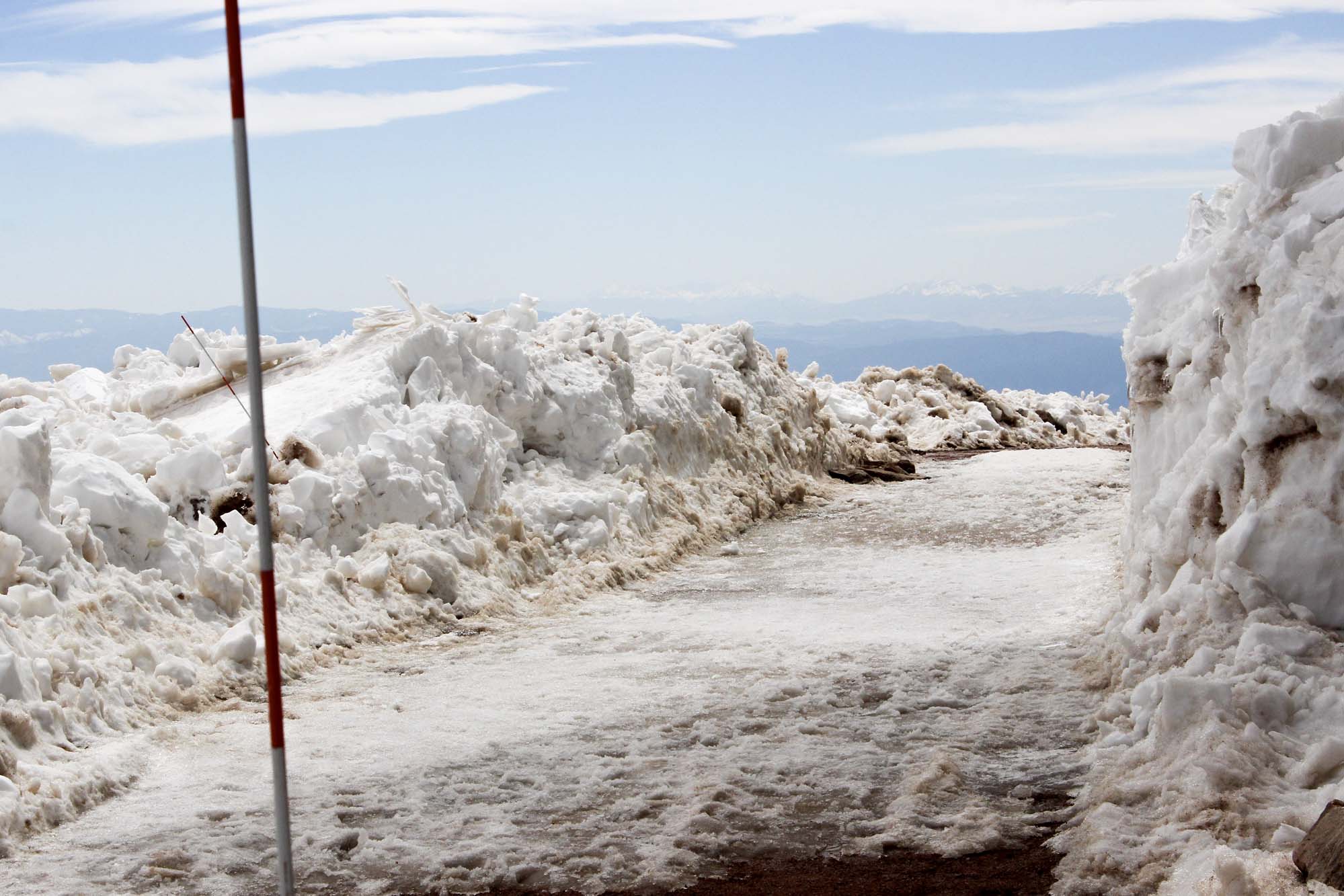
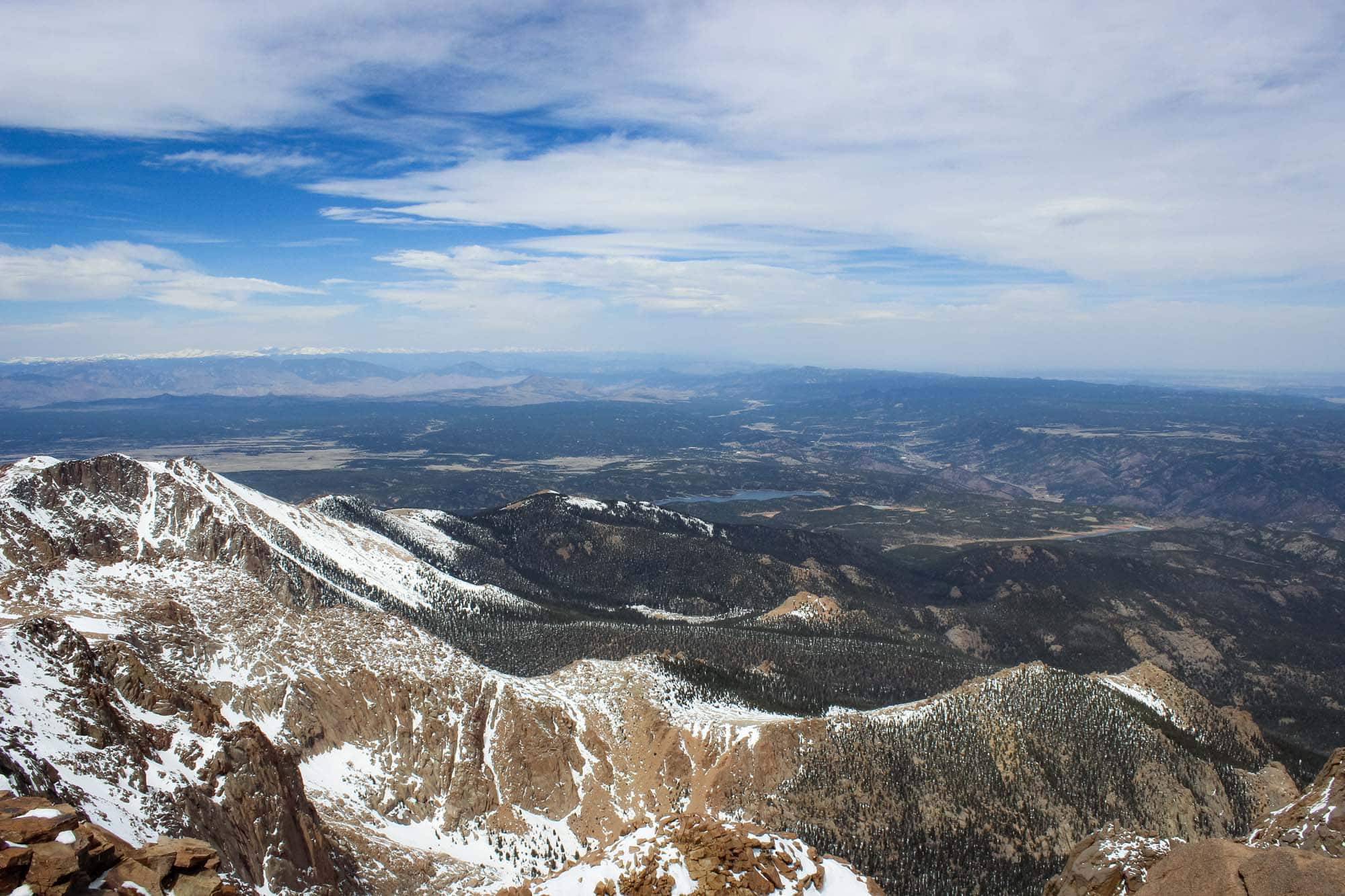
I did find one moment of quiet after climbing a staircase to the second story. Any exertion that high up feels like a chore and gets the heart thumping, but it was worth it when I got to stand at the edge of the guardrail and look out at the vast expanse that lay before me on all sides. I thought about my explorations the past handful of years in Colorado and wondered if some of my favorite towns were sitting below, so far down I couldn’t see them.
I thought about how I still loved the ocean and missed it, but how the mountains I see every day on the horizon have become a thing of beauty and comfort to me over twenty years. How I can so easily orient myself – even from an airplane – as long as I can find the two familiar peaks that frame the road I take home.
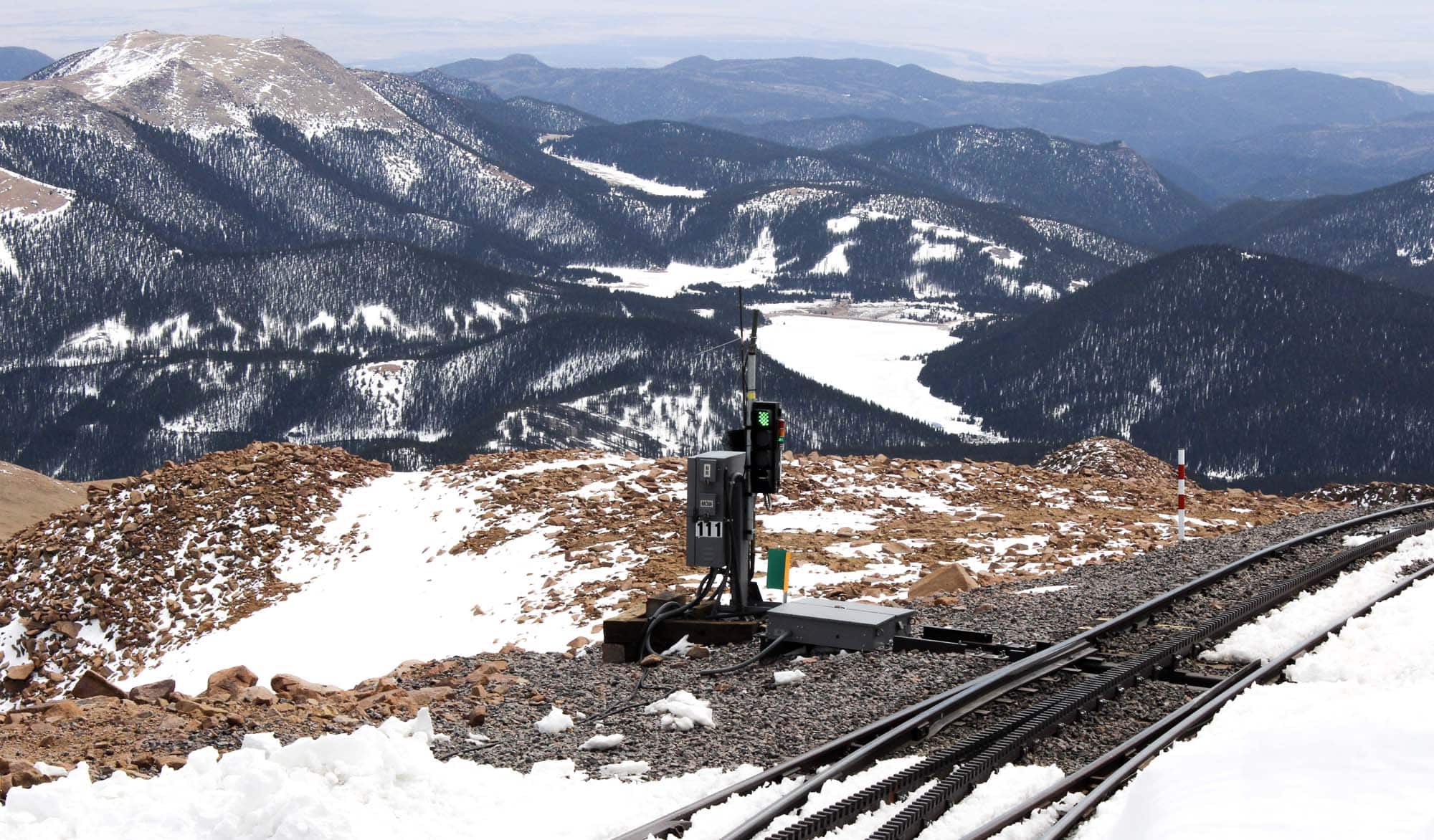
Descent
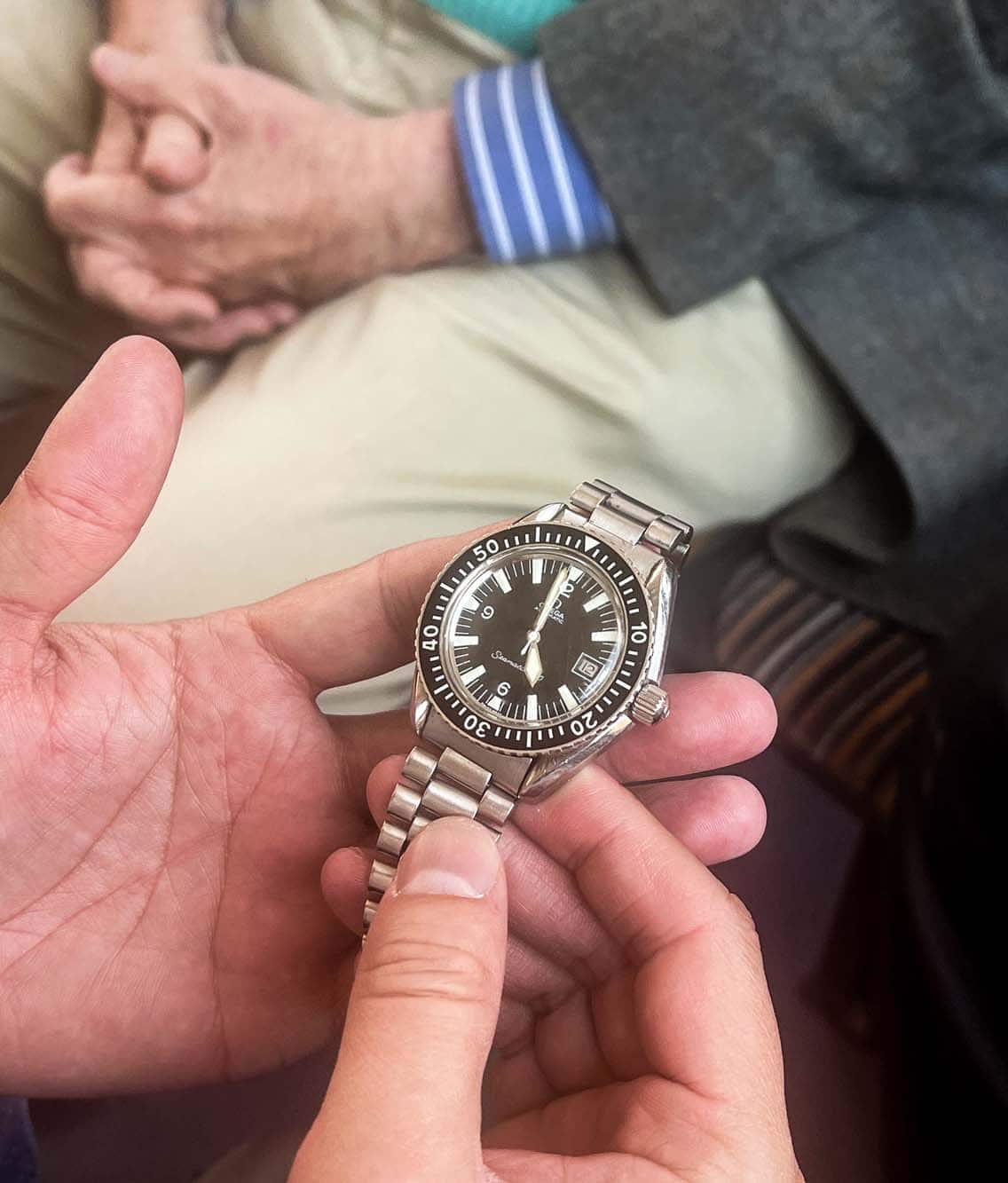
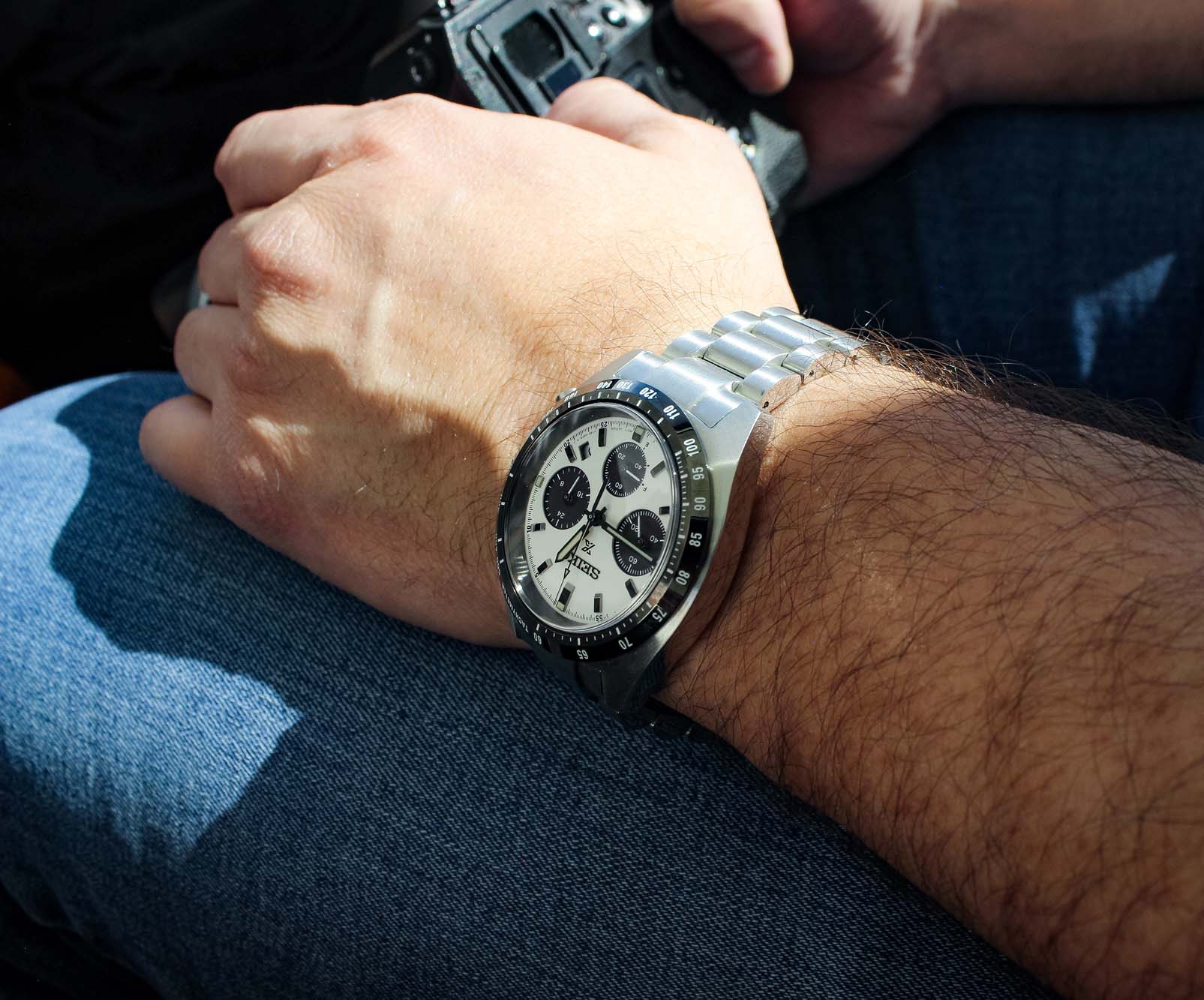
On the way down, as I attempted to eat a contraband donut without catching the attention of the train guides, my friend noticed one of our seat companions was sporting a vintage Seamaster diver on the inside of his wrist. The conversation moved into watches, and then beyond – we discovered Richard was a veteran of the Vietnam War. He and my friend served in the same branch (U.S. Army) and they swapped some stories of their time in the service.
I sat there half-listening, half-watching the landscape, and taking in a moment of welcomed rest after our whirlwind of a morning.
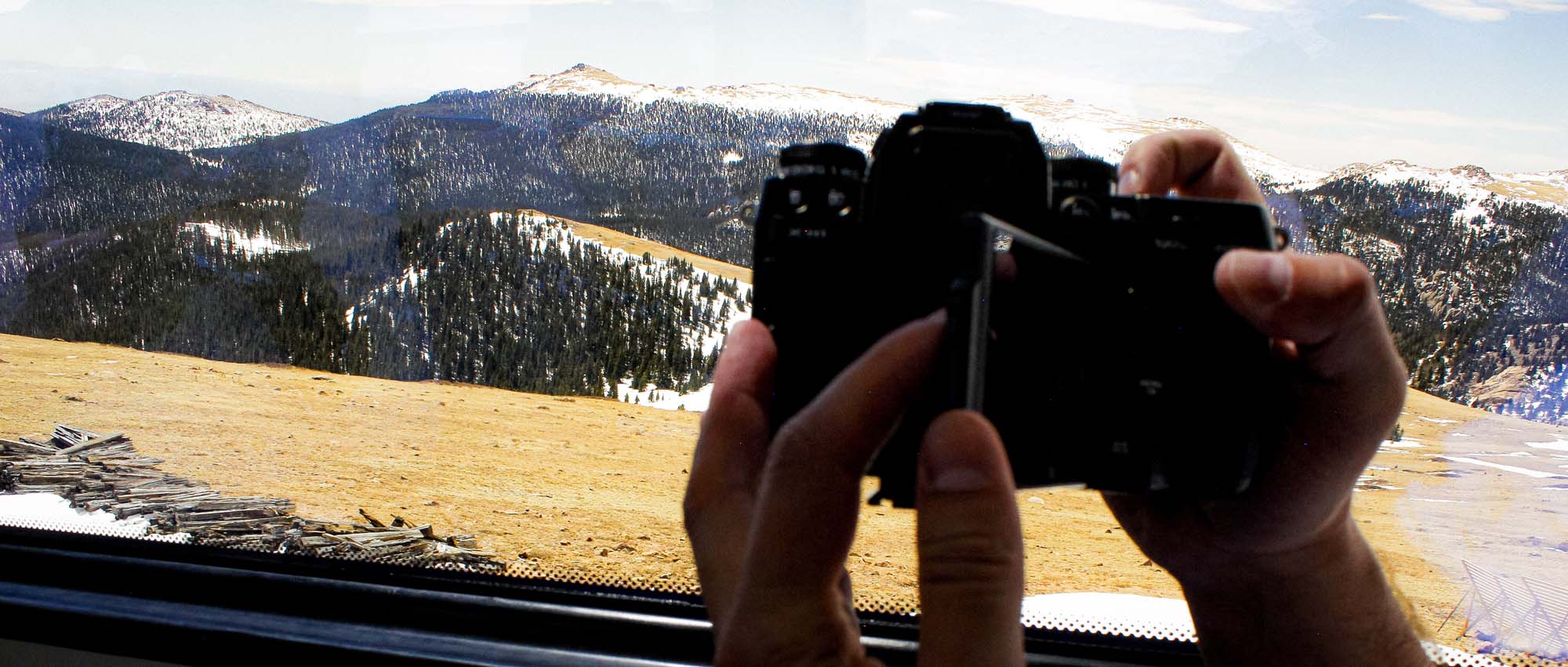
A guide recalled the same tale about the ill-fated honeymooners and I thought back to how much it spooked me when I was ten years old. The fact I remembered it two decades later I think means it had its intended haunting effect all those years ago. But this time, it felt more like a ghost story someone tells around the campfire – a yarn that somehow isn’t fully fact or fiction. It left me with an inflated sense of respect for the Rockies. I thought about how not all have heard the term “wilderness” and paused to understand what it actually means.
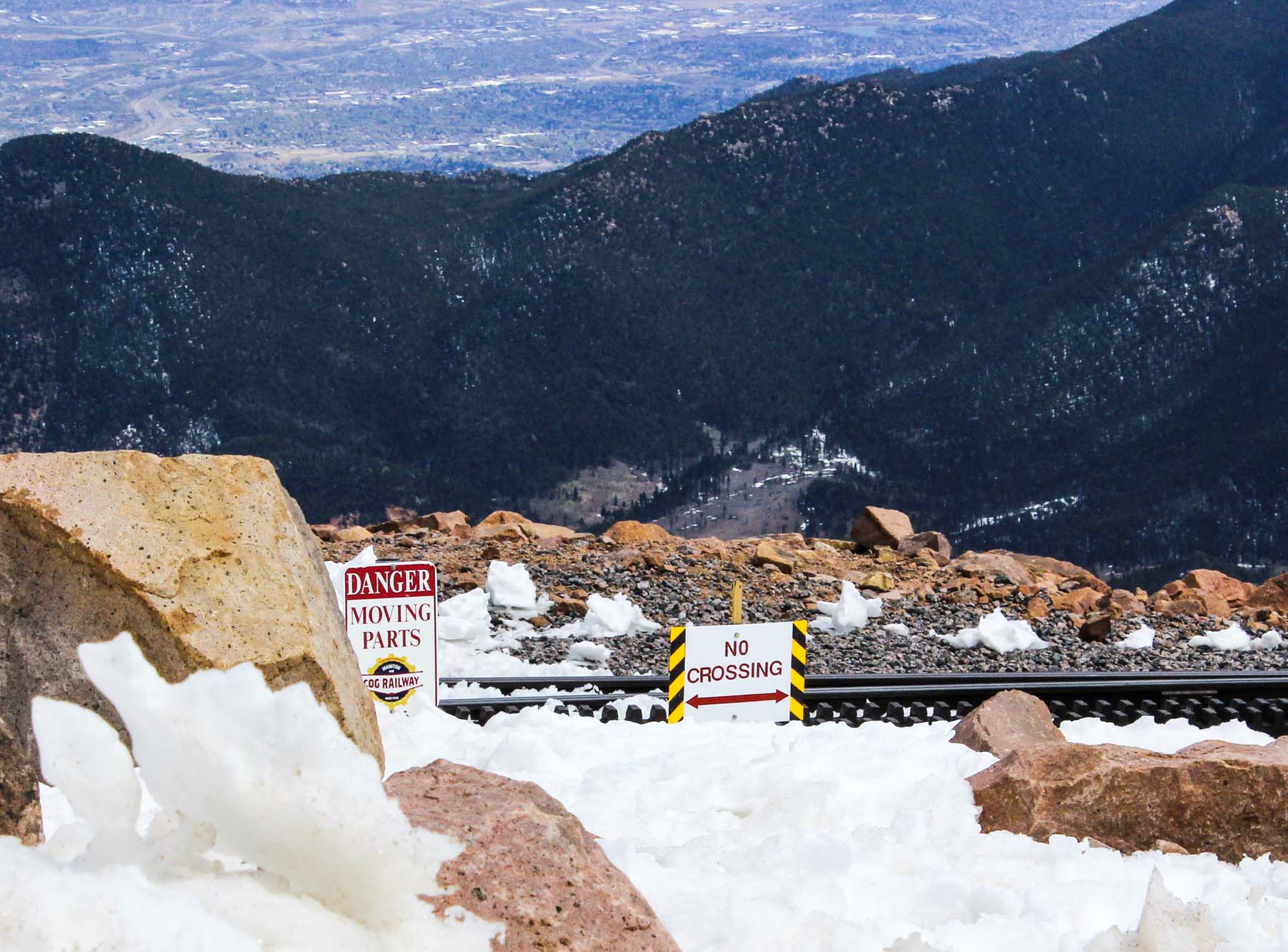
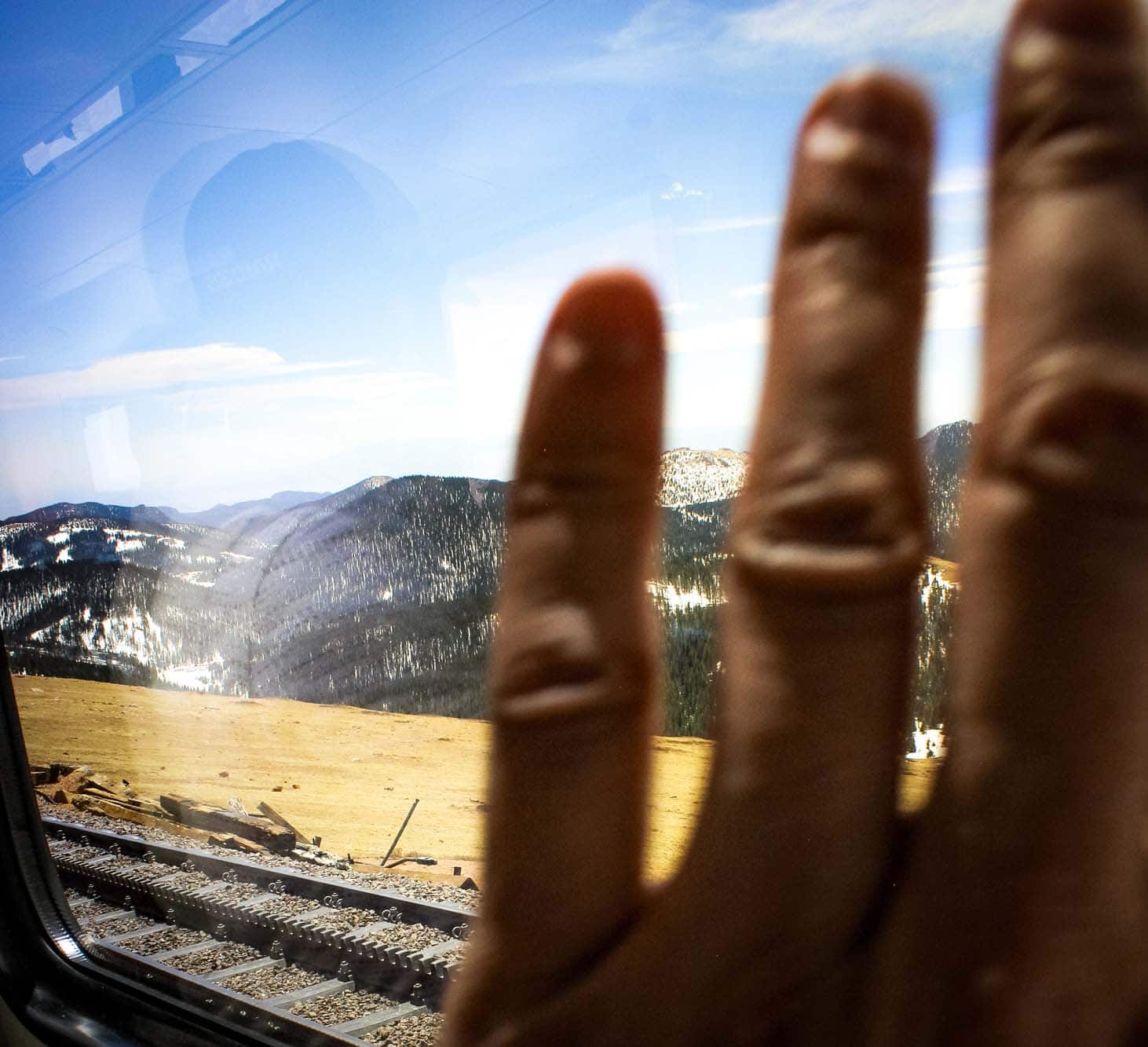
As we approached timberline once again, two pairs of lines set side-by-side were visible on one of the hills in the distance. A staff member told us they were indents in the earth from wagon wheels dating back to before the turn of the century. At an altitude of around 11,000 or 12,000 feet, it takes about 100 years for the ground to change a single inch. Almost like dinosaur tracks, I thought, these wooden wagon wheel markings are Colorado history in one of its purest forms. History imprinted on the land itself.
We took the shuttle back into town and walked off the last of our altitude jitters. At a restaurant in Manitou Springs, we laughed at the hecticness of the Summit House, and how cool it was to have met Richard with his classic Seamaster – once again recognizing how watches have the ability to unite strangers and facilitate conversations in ways impossible to find with nearly anything else.
We kept the theme of the day almost unbearably Coloradan by splitting bison and elk burgers, while discussing our plans to possibly drive up to the summit again this summer. Maximizing time for the informational exhibits, but most importantly those Summit House donuts, this time.
The cog railway will likely remain an activity I suggest to tourists who want a quick way to see the state and get a sense of what drew pioneers and prospectors here all those years ago. But my story with it feels complete. In some sense, I wish I was able to chat with my ten year old self to let her know this place will feel familiar one day. But in another sense, part of the love I have for the state feels purer because that love had to be worked for and earned.
Pikes Peak can remain America’s Mountain, with all the weighty and glorious aspirations that come with an epithet like that. For me – just one Colorado girl – it’s simply a 14,000 foot reminder that here, now, is home.
in partnership with
/
May 30, 2025


Meg is a Colorado-based collector navigating the watch world as a Zillennial twentysomething. Though she appreciates anything quirky or practical, she has a particular love of field watches and chronographs.
When she’s not posting #wristchecks you can find her reading about military history, training as a competitive Irish dancer, and exploring the remarkable state she calls home.
minutemeg
Categories:
Featured