 Latest Review





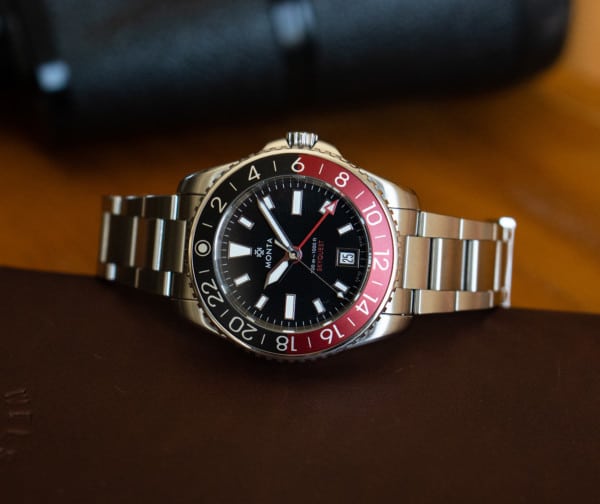
It has been a while since I last had a Monta watch on my wrist, so it was nice to approach this one with a fresh set of eyes. As one of the longer-standing smaller brands, Monta seems to be a bit of a known quantity at this point. They have very specific targets in both what they offer and their demographic, and seem to nail it almost every time in a very calculated way. Looking for an Omega Aqua Terra alternative for a fraction of the price? Check out the Monta Noble. You have a Rolex GMT Master II on your wishlist but can’t reasonably afford it, and need an alternative option? Well, there’s the Monta Skyquest for you. Thirsty for a Rolex Submariner but only looking to spend about one-third the retail price? Then, chances are good that you have already looked at previous iterations of the Monta Oceanking.

I was in that camp almost a decade ago. Staring at older versions of the Aqua Terra online while signing up to be notified of the next restock of Monta Triumph models. No, I wouldn’t consider them one-to-one comparisons, as Monta does inject a bit of their own design language into each piece. However, while so many brands introduce new models year after year, chasing trends and sales, Monta instead takes the approach of refinement. Rather than pumping them out, they take in community feedback, look at their manufacturing capabilities and target price point, and make subtle but meaningful tweaks. That is how we’ve wound up with the Monta Oceanking in its third version, which now has a blue dial and matching aluminum bezel insert.
Originally released back in 2016, the Oceanking has remained a staple collection in the Monta lineup, receiving three major updated versions along the way. The original target seemed clear: introduce an affordable alternative to the Rolex Submariner without compromising heavily on quality or specifications. While not a new idea in the industry, Monta could do it better than most, relying on Swiss manufacturing and a higher level of quality control than many others. Fast forward to today, and that same ethos remains in play with some design adjustments to keep it in line with modern demands. For the newest version, we have a more traditional bezel insert, a refined case shape, and a much-needed bracelet enhancement through a redesigned clasp. But is it enough to still stand out in a crowded market where many brands have been able to enhance their quality as industry manufacturing capabilities have advanced?

Perhaps the biggest area of refinement over the years are the changes made to the case. Beginning in life as what can only be described as a bit generic, the original Oceanking case saw a dramatic change from generation one to two, introducing refined lines, crown guards, and more sought-after dimensions. While not as significant of a change, Monta has made a series of efforts to further refine the case again, moving into generation three. Hitting a sweet spot of dive watch dimensions, the case measures in with a diameter of 40.5mm paired with a thickness of 12mm and a lug-to-lug of 48mm. That marks a slight decrease in case diameter and a full millimeter drop in lug-to-lug. In theory, this should make the case more wearable for those with smaller wrists, despite not being a significant change. Visually, though, the lug dimensions do seem to have a more dramatic effect.

Breaking up the vertical brushing decorating the case’s top is a polished facet that has grown with each iteration. Now, that widening sweep transitioning to the polished case sides is larger than ever, elevating the case finishing while diminishing its visual presence. While it does help the transition, the visual effect is similar to an older Rolex case that has undergone some polishing, removing some material and rounding its edges. Despite the shortened length, the female endlinks do still terminate short of the lug tips as well, which helps with articulation but leaves the sharp point exposed for potential damage. It is strange to me that Monta has done away with the internal lug facet from the previous version in favor of a better endlink fit, only to have left the extra room. The same can be said for the side to side too, as you can see a sliver of space between the link and lug when holding the watch up. No, this doesn’t lead to any sort of jangle or noticeable slide along the spring bar, but is unfortunately more noticeable due to the design updates.

Other touchpoints of the case have been updated in meaningful ways that enhance the overall visual design. Introduced in the previous generation, the crown guards have been slimmed down to a more aggressive slope. The initial version always had a bit of a blob-like appearance as the rounded polished guards sat protecting half of the crown. Now, though, the rounded, polished surfaces on either side are cut off by a convex chamfer meeting the lines of the bezel. Without the previous version in hand, I can’t say for certain, but the crown seems to have been refined slightly as well, better protected by the guards without sacrificing any of its tactile functionality.
Touted as fully redesigned, the new Oceanking bezel sports a new typeface, layout, and click mechanism. The new bezel now offers 120 clicks instead of the previous 60 clicks for more accurate countdown timing while keeping the previously squared-off knurling for grip. It has a very precise feel when moving forwards, offering a good tactile response, a nice audible click, though it does have a bit of backplay once in its new position. A more traditional typeface has been opted for again, aiding with legibility and accuracy, along with a lume pip at 12 for nighttime reference. On this model, Monta has opted for a matte blue aluminum insert rather than the ceramic of its siblings. This is certainly a personal preference, as some see ceramic as an upgrade, but I am thrilled at the use of aluminum. It means that the bezel will age and wear with you, showing true character with time. A slight faceted step up just inside leads your eye into the flat sapphire crystal protecting the blue dial.

Further refinements can be found all across the dial as the layout and applied details have all been tweaked in one way or another. At the perimeter, the white printed minute track remains, though now runs uninterrupted as the hour indices have been moved one step further in. The new applied polished indices now act as full frames, each holding its own generous portion of lume. At 6, a framed faceted date window remains, though now the framing has been slimmed down, transitioning into a color matched facet before meeting the white date wheel. This again lends more legibility to the design and seems to do well to not cast any shadows obscuring the number beneath. While the printed logo and brand name at six remain the same, the model name and depth rating beneath have been swapped. Here you will see that Monta has finally relented in terms of depth rating and marked this Oceanking as 300 meters water resistant rather than the 304 meters, which might be more accurate, though it did tend to throw people off. The hands remain the same, which is a good thing, offering excellent legibility and contrast, reaching out to their intended details. Overall, the dial overhaul is the most significant upgrade. You might not notice all of the changes at first, but each one comes together to make a more symmetrical and harmonious design than ever before.