


 Latest Review





I’ve never bought a watch because it was worn by a celebrity. I generally don’t think that’s a wise reason to own a watch, and kind of goes against my general philosophy of collecting as an act of individual expression. Still, there are some watches where the association with a particular person either looms so incredibly large it’s impossible to ignore (the Paul Newman Daytona, I think, falls into this category), and others where the association may not be at the level of a household name, but is nonetheless fascinating and interesting. Duke Ellington and his preference for the Cartier Tank à Guichets falls into this category for me.
This is probably not the appropriate forum for an extended discourse on the importance of Duke Ellington to American music and culture, so we’ll do a short version. Ellington is universally regarded as one of the great American artists – he’s responsible for over 1,000 jazz compositions and was active over a 60 year period. Critics and experts in jazz and American music often mention him in the same breath as people like Mozart, which seems like a good place to be.

So, he’s one of the singular genius artists of his or any era. And, I dunno, it kinda seems like wearing the same watch as that guy would be pretty cool. From the time I started noticing watches on the wrists of notable people, the idea that the Tank à Guichets was Ellington’s choice has been a point of fascination. The cool, industrial look of Cartier’s jump hour equipped Tank makes a certain amount of sense for a musician and bandleader. The importance of precision seems rather self evident, and the impossible to miss legibility of the Tank à Guichets makes sense for anyone that might need to check the time at a glance and know they’re going to be bang on to the minute. More than that, though, is the idea that this particular Tank would have been the one that the most on-trend, stylish people would have chosen in the late 1920s. It was Cartier’s most direct Art Deco statement, and picking this watch could have only been an extremely deliberate choice.
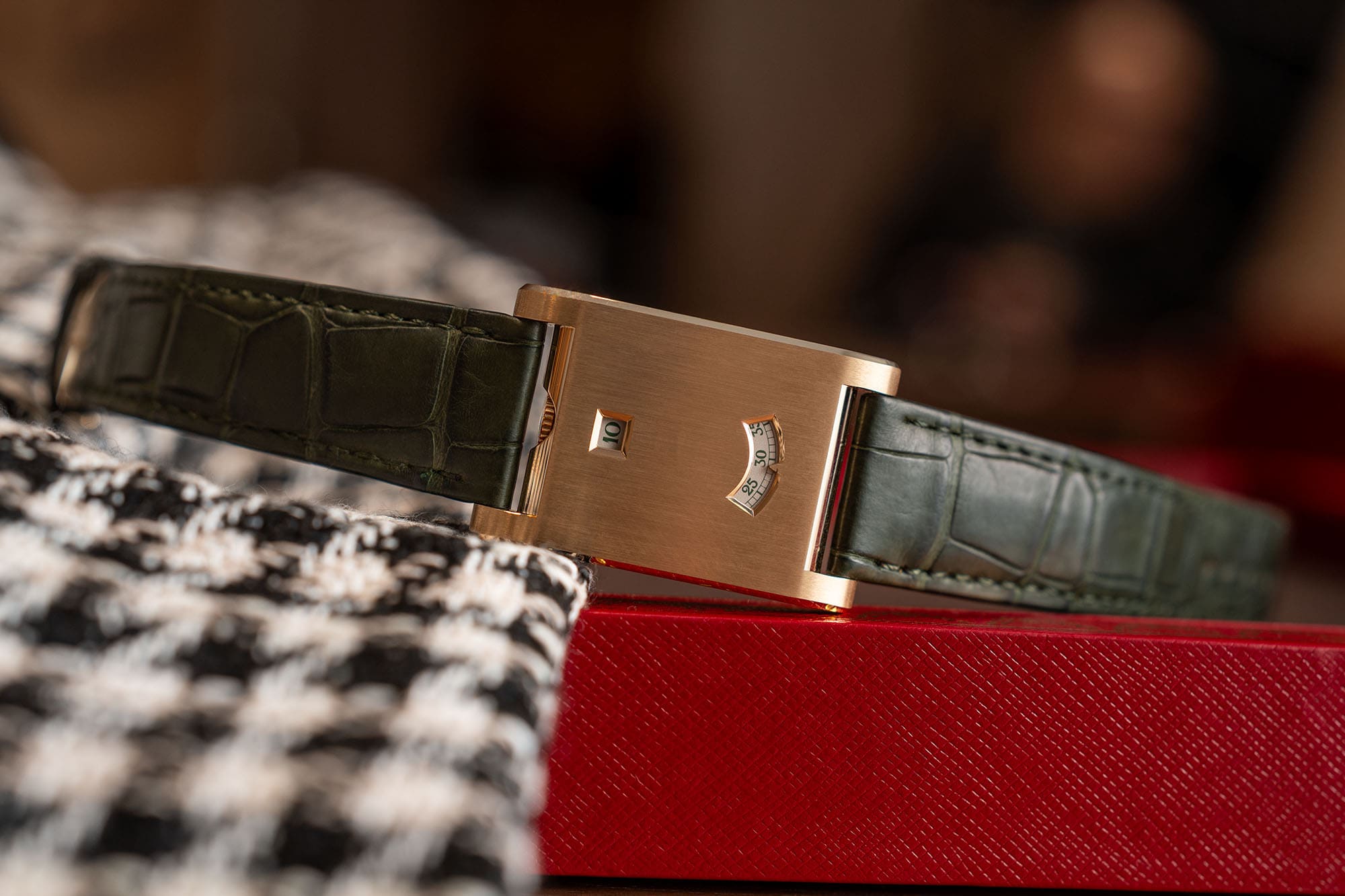
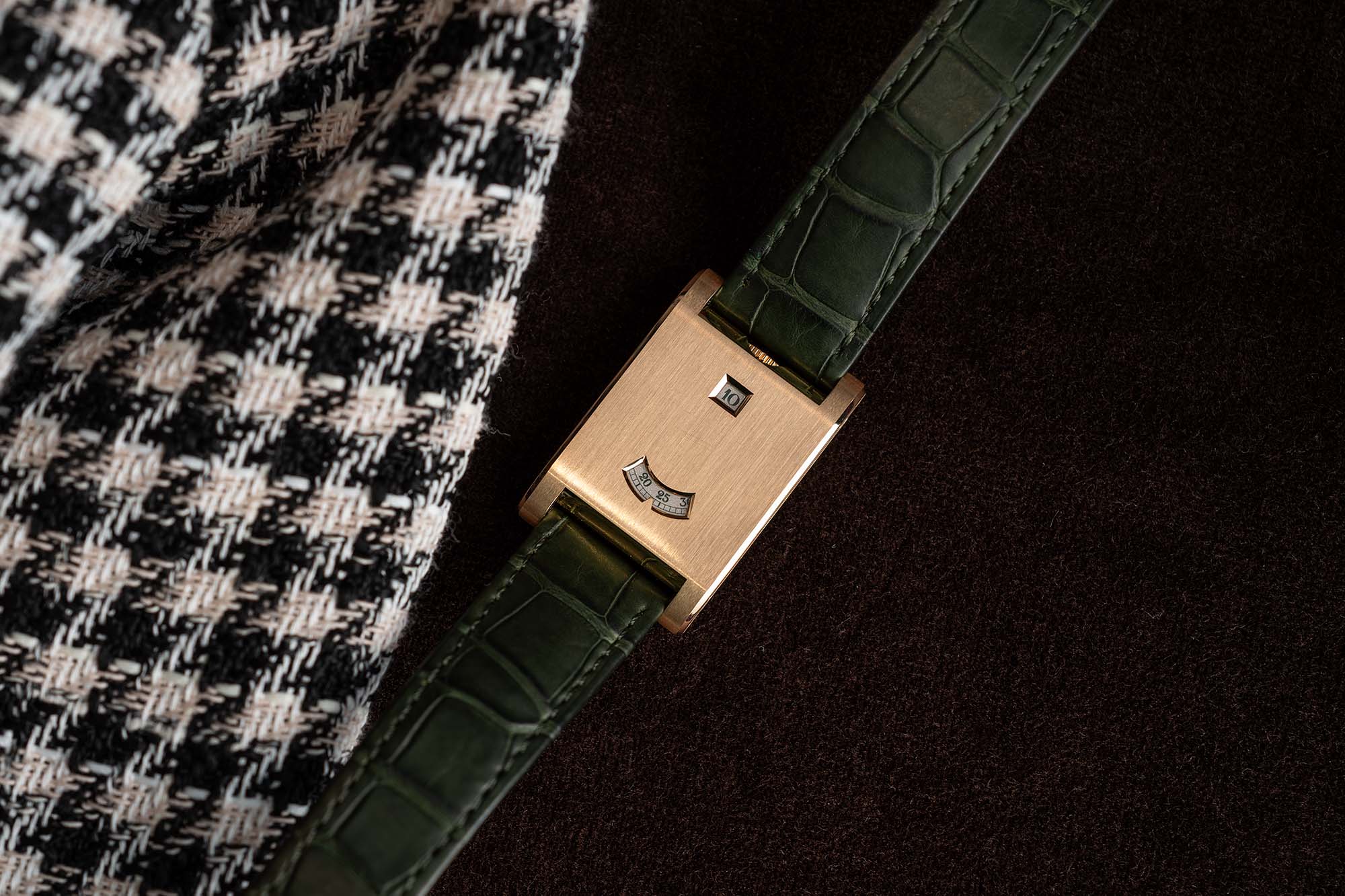
The Tank à Guichets is one of the rarest of all Tanks, so its revival as this year’s entry in the ongoing Cartier Privé series is notable, if not entirely unexpected. It was only a matter of time, really, until Cartier got around to the Tank à Guichets. This year, it’s been released in a total of four references in three metals: yellow and rose gold, as well as platinum. Each of the three metals gets what you might call a traditional Guichet treatment, with an aperture at what we’d normally identify as the 12:00 position to view the hours, and a crescent shaped window below it where you’ll find the minutes. The platinum version has red text for the time indications, something Cartier is known for with their platinum releases. All of this year’s Tank à Guichets releases feature cases with prominent vertical brushing, and a 12:00 crown.

All of the new Guichets are impressive in person, but I was particularly drawn to the limited edition reference in platinum that was quickly nicknamed the “Oblique.” Here, the hour aperture has been shifted to the upper left corner of the case and flipped on its side. The minutes aperture has been similarly shifted a quarter turn, and now sits in the lower right corner. While some of the conversation around Palexpo and on social media was that this was some kind of “driver’s” version of the Guichet or perhaps intended to be worn on the right wrist, I think it’s just a natural extension of Cartier’s willingness to play with convention in how we view time. The Oblique, to me, immediately brought to mind the Cloche de Cartier, which has 12:00 oriented where we’d normally see 3:00. The Tank Asymetrique is whimsical in a similar way. And of course there’s last year’s Santos-Dumont Rewind, which at a quick glance appears “normal” but runs in reverse, with its Roman numerals counting down from 12, clockwise around the dial.

These somewhat offbeat Cartier references are all in conversation with one another, but it’s the Tank à Guichets that really gets me excited. The stripped down, engineered quality of the case is incredibly satisfying. It really focuses the eye on the shape of the Tank case, which I think is something that we might take a bit for granted when it’s accompanied by either a traditional dial or one that’s a bit more artisanal. The story of the Tank’s inspiration, that being the Renault FT-17 tank used in World War I, makes a lot more sense when you just have that rectangular shape staring back at you. And then add Duke Ellington into the mix, whose artistic prime was arguably the years between World Wars, and there’s something almost poetic about the modern presentation of the Tank à Guichets, something that can rarely be said about your typical vintage reissue.
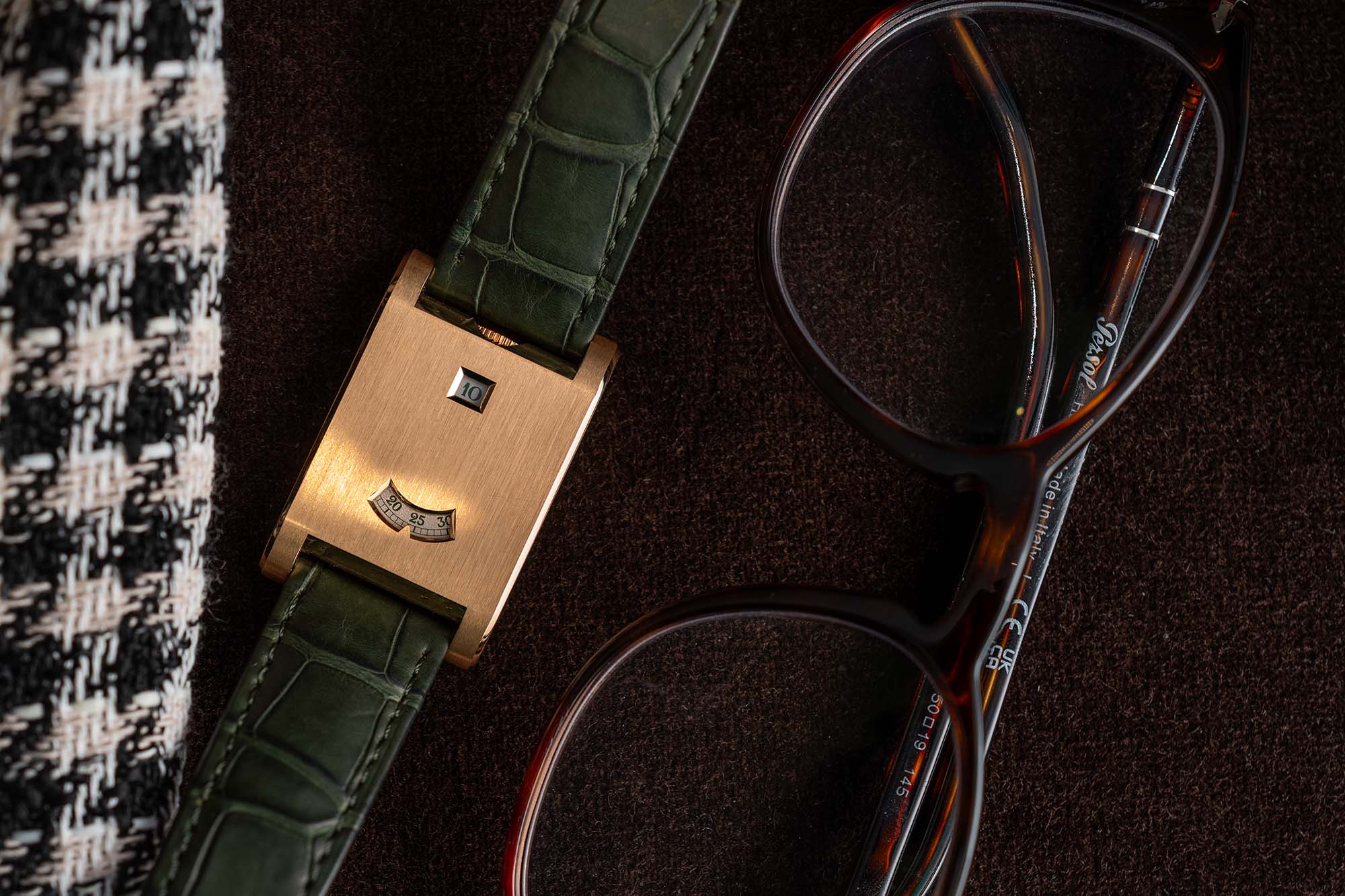
The Tank à Guichets’ party trick, the jumping hours complication, is having a moment that extends well beyond the plush confines of Cartier’s Watches & Wonders booth, with a variety of examples premiering at or around this year’s big event. This has been a trend, honestly, that’s been bubbling under the surface for some time, and it feels like it’s finally gone mainstream, in a manner of speaking, with both lavish and more accessible versions of the complication seemingly around every corner in Geneva.
Among the higher profile jump hours seen in Geneva earlier this month was one in a very different expression than the Cartier, the M.A.D. Editions M.A.D.2. This is a far more under the radar jump hour simply because the hour display shows you every hour at a glance, but it does “jump” with a solid click every 60 minutes. This is a very specific complication and not to be confused with the wandering or “dragging” hours complication that can easily be mistaken for one that truly jumps.

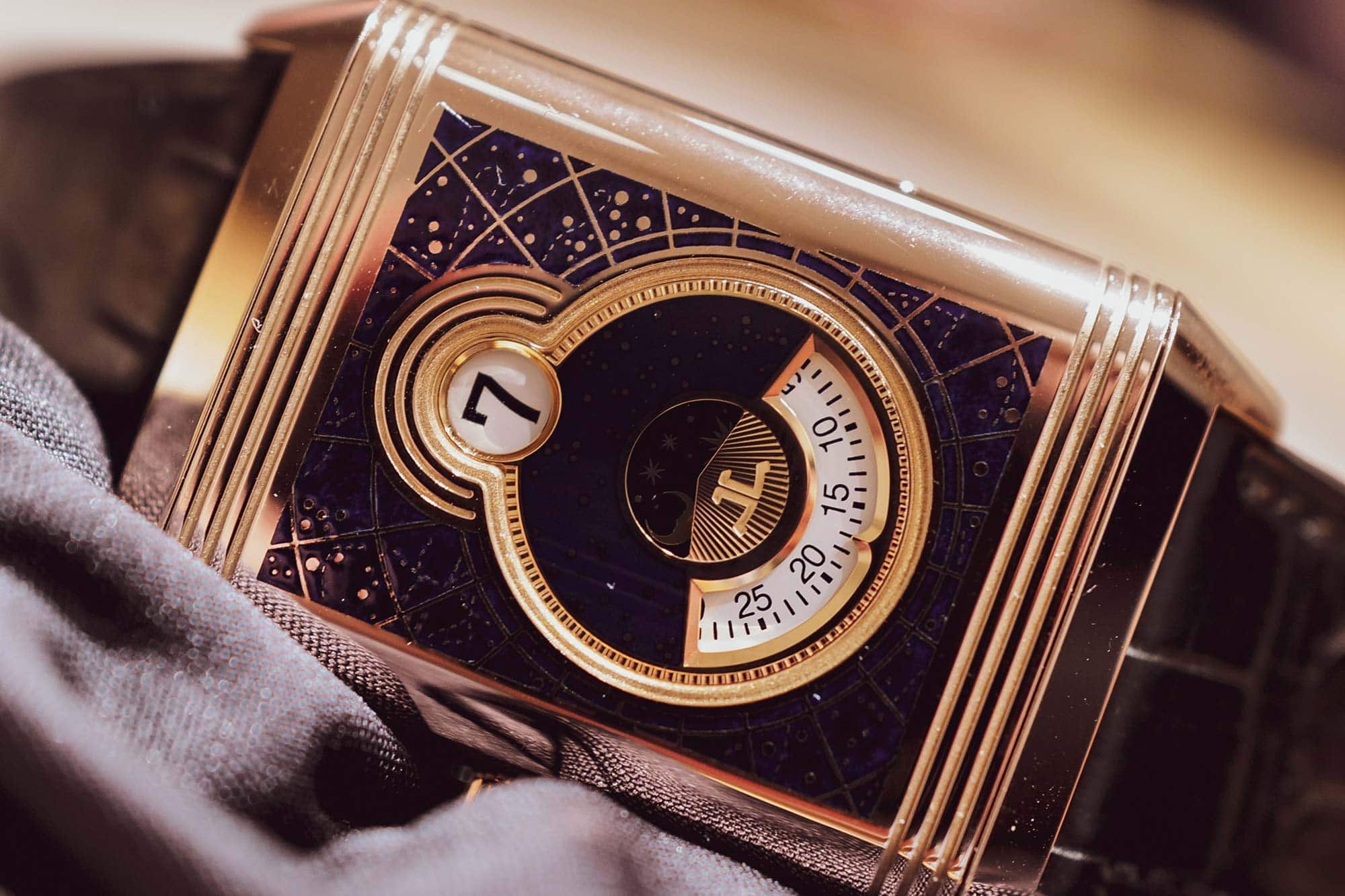
Just because an hour doesn’t jump, however, doesn’t mean the watchmaker is taking a shortcut. Jaeger-LeCoultre reminded us of this with a new version of the Reverso Tribute Nonantieme “Enamel,” a watch that was originally part of the brand’s celebration of the Reverso’s 90th anniversary in 2021. This year, it got a new grey dial execution and enamelling in a pink gold case. The Nonatieme is among the most complicated of Reversos, with a big date and moonphase on one side, and what JLC refers to as “semi-jumping” hours and minutes on the reverse. All told, Calibre 826 has a total of 243 components and runs for 42 hours when fully wound, which is quite an achievement given the energy required to actuate the big date (along with everything else). According to JLC, their rationale for the semi-jumping hour complication is to further safeguard that power reserve, and to allow for a more “gradual and elegant” transition from hour to hour. The watch is spectacular in person, and I’m happy to give them the benefit of the doubt here. There’s nothing wrong with opting for elegance in a Reverso.
If there was one jumping hour, though, that I saw in Geneva that I’d personally consider adding to my own collection (assuming the hyper limited Oblique Tank à Guichets is out of reach both financially and in literally every other way) it’s the new Beda’a Eclipse II, which will be released later this year. Beda’a exhibited at the Beau Rivage this year, in a giant suite on the top floor of the hotel with a spectacular view of the lake. Less foot traffic up there, for sure, but incredible natural light and a view that was hard to beat. In some ways, the Eclipse II is the inverse of the Tank à Guichets. The crown, for one, is at 6:00 as opposed to 12:00. And the dial here is far more complex, with an aventurine main dial and a deeply textured area of negative space outside it, meant to evoke sand dunes. The interplay of textures here works incredibly well, and the case is exotic without being ungainly on the wrist. The dramatic, oversized lugs are deeply curved, and it wore well on my 7.5 inch wrist.
The jump hour mechanism here feels more playful – it snaps into place at the top of every hour and kind of wobbles a bit as the new digit comes into focus. I really enjoyed the sense of motion, and extending that “jump” just a little as the disc finds its place gives the watch a strange organic quality that’s exacerbated by the case’s curves. I’ve been a fan of Beda’a since discovering the brand a few years ago, and this might be the one that finds its way to my own collection eventually. The retail price, after currency conversion, is around $4,500. Pardon the watch writing cliche, but between the original design and the complication, that’s a lot of watch for the money.

Our impromptu 2025 jump hour tour ends where it began, back at the Palexpo, with Bremont. We’ve already covered Bremont’s new novelties, but it’s worth returning to their new jump hours again to place them in the proper context, and to further emphasize how pervasive the complication has been this year. The bronze jump hour (the more traditional of the two Bremont released) is the less interesting of the two in my opinion. To my eye, it’s a brawnier version of the Tank à Guichets in format, which itself is a brawnier version of the classic Tank. We can only take the theme so far, though. I stand by my appreciation of the black dial execution, however, which is sleek and visually interesting.
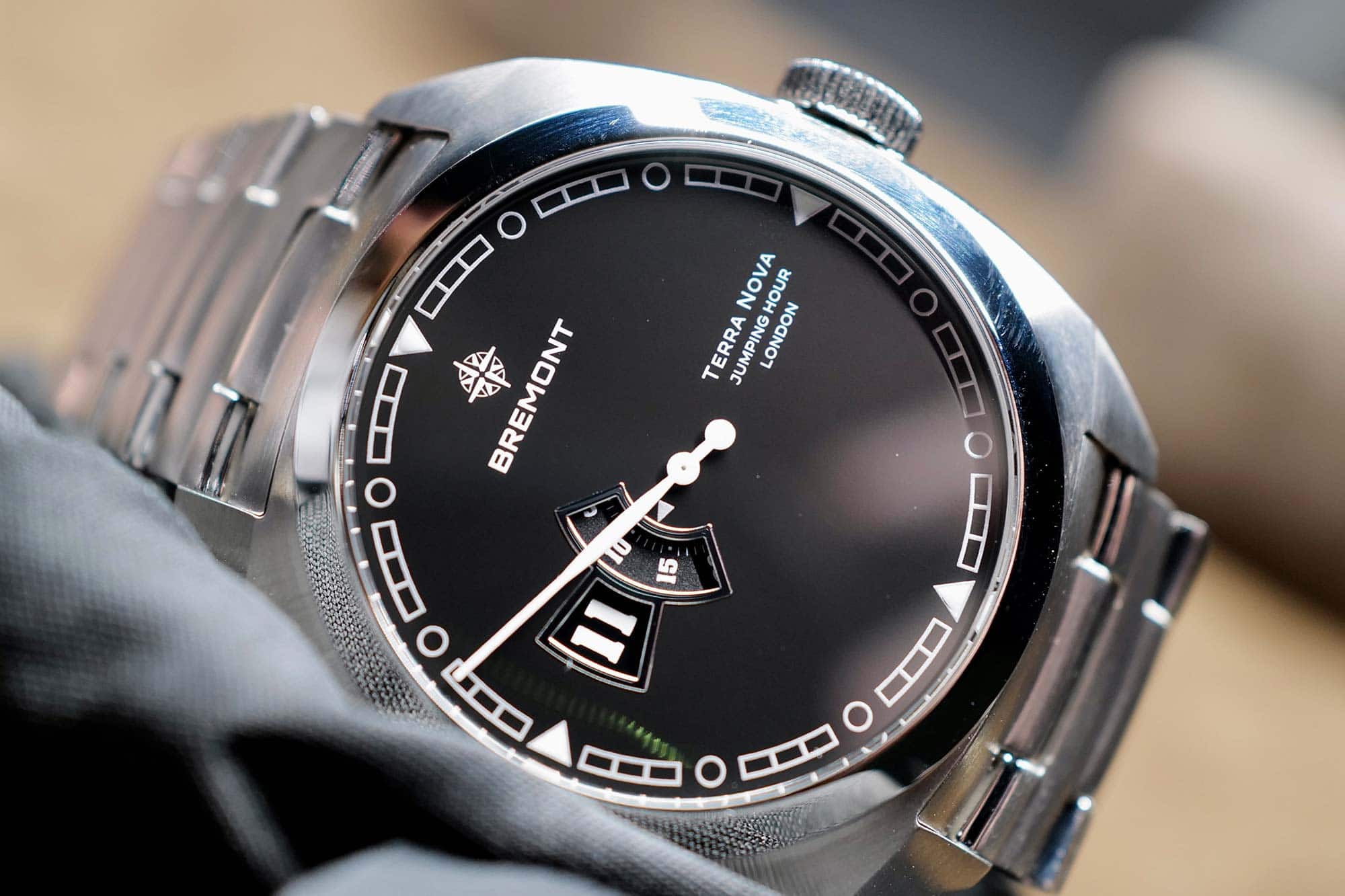
Those Bremont jump hour watches use a Sellita movement that they have exclusive rights to for a period of two years. I imagine we’ll see additional twists on the jump hour from Bremont in the interim. Following that, could the jump hour floodgates open even further? It’s a possibility, especially if interest in the watches mentioned here is strong (and this article only scratches the surface). For a complication that was once quite rare, it’s exciting to suddenly have a variety of choices across all price points.

