
 Latest Review





It’s not an exaggeration to say that my meeting with Bremont at this year’s Watches & Wonders was among my most anticipated. For better or worse (probably worse, if you survey watch industry vets, media types, and longtime enthusiasts) Bremont’s output dominated much of the conversation during and after last year’s event. It was the brand’s first Watches & Wonders, and the public unveiling of an entirely new look for the brand. As I’m sure many readers will remember, it did not go over particularly well.
But 2025 is a new year, and a new opportunity for Bremont to crystallize in the mind of observers what this new era will be about. Because, to be sure, it will not be like “old” Bremont. That ship has sailed, and while some of the watches introduced this year are in direct conversation with Bremont classics, they are still distinctly their own thing. That’s not a judgement, but it’s the reason why some Bremont loyalists will continue to dismiss the new novelties, even if from a bird’s eye view they appear that they might be a return to form. By the same token, someone like me, who was never really a hardcore Bremont enthusiast to begin with, might see silver linings and positive steps forward for the brand.
This is perhaps a longwinded way of saying that Bremont’s output at Watches & Wonders this year was a mixed bag, but a big improvement over last year. More importantly, regardless of whether you like the watches they debuted at the show, the vision of the brand under Davide Cerrato has become quite a bit clearer. There should be fewer questions marks after this year’s show, and less confusion and all out mania about the state of the brand. They have a plan – whether you agree with the direction they’re heading is a personal matter, of course, but there’s no mistaking what they’re up to.
Last year, the introduction of the Terra Nova collection caused many an eye to roll in the Palexpo. For those who felt Bremont had fallen off course, the Terra Nova was Exhibit A. A cushion cased field watch with an aesthetic derived from military pocket watches, the collection ranged from a tidy and nice looking 38mm two-hander to a 42mm chronograph that felt a bit bloated on my 7.5 inch wrist. In hindsight, it was a risky move for a brand so associated with aviation to lead with a “land” based watch. It really threw people for a loop.
I actually thought the Terra Nova pieces were the strongest I saw from Bremont last year, particularly the smaller 38mm and 40mm watches. This year, they’ve expanded the Terra Nova in a way that I found surprising, but in line with one of the year’s emerging trends: a jump hour. More precisely, two jump hours.
This was not even close to what I was expecting and I said as much when I was given a preview of the new watches (remotely, over a Zoom call) ahead of the show. I’m told that the jump hour is a favorite complication of Davide Cerrato, and while I don’t know if the reasoning and logic for including this complication in the Terra Nova makes a ton of sense, I think the watches are fun and creative, and bring Bremont into genuinely new territory. Again, it’s likely, perhaps, to irk some who have been committed to the brand for a long time. But for someone like me, with very little if any skin in the game (I’ve never owned a Bremont and am not tied up in the brand’s heritage or image in any way) it reinforces the notion that this is a new Bremont, with new ideas.

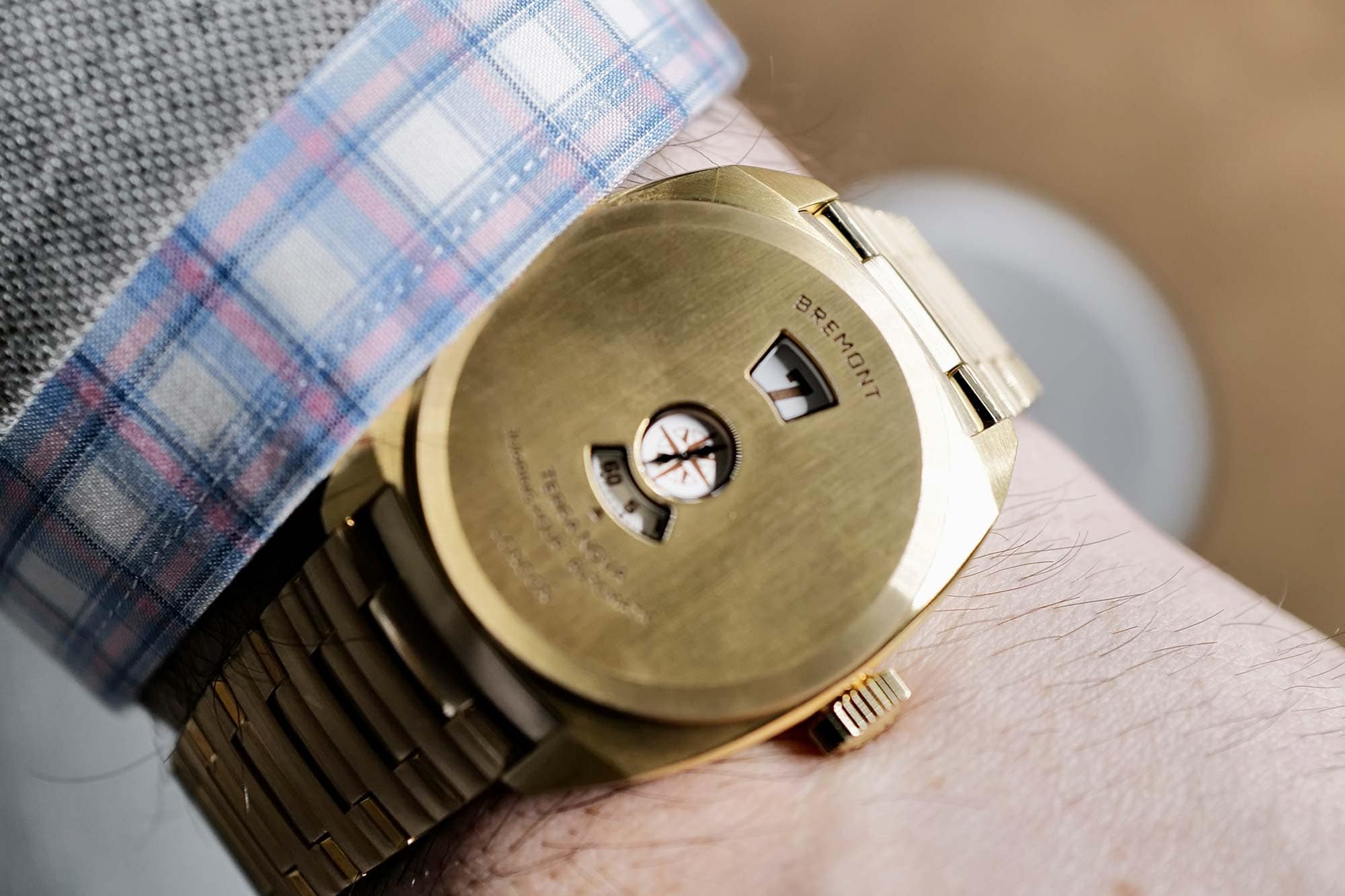
The first of the jump hour models is the Jumping Hour Bronze, available on both a strap and a full bronze bracelet. This reference has an aperture where you’d normally find 12:00 for the hours, a circular center aperture with the brand’s new Wayfinder logo under it along with a running seconds indicator, and a crescent shaped aperture for the minutes just below that. Said to be inspired by 20th century trench watches, there’s a Lawrence of Arabia, desert explorer vibe to this watch that feels a little smashed together, but is not altogether unappealing. The Cupro-Aluminum bronze alloy is said to patina more slowly than a typical bronze, which I think is a good thing – the hue of the case is quite nice and I don’t think I’d want to spoil it, but this is certainly a personal preference. The case is 38mm, which is the right choice. The abundance of metal where you expect to see the dial makes this watch feel larger, slabbier, than it otherwise would. Ultimately I think there’s just too much metal, but I appreciate that Bremont is trying something a little outside the box here.
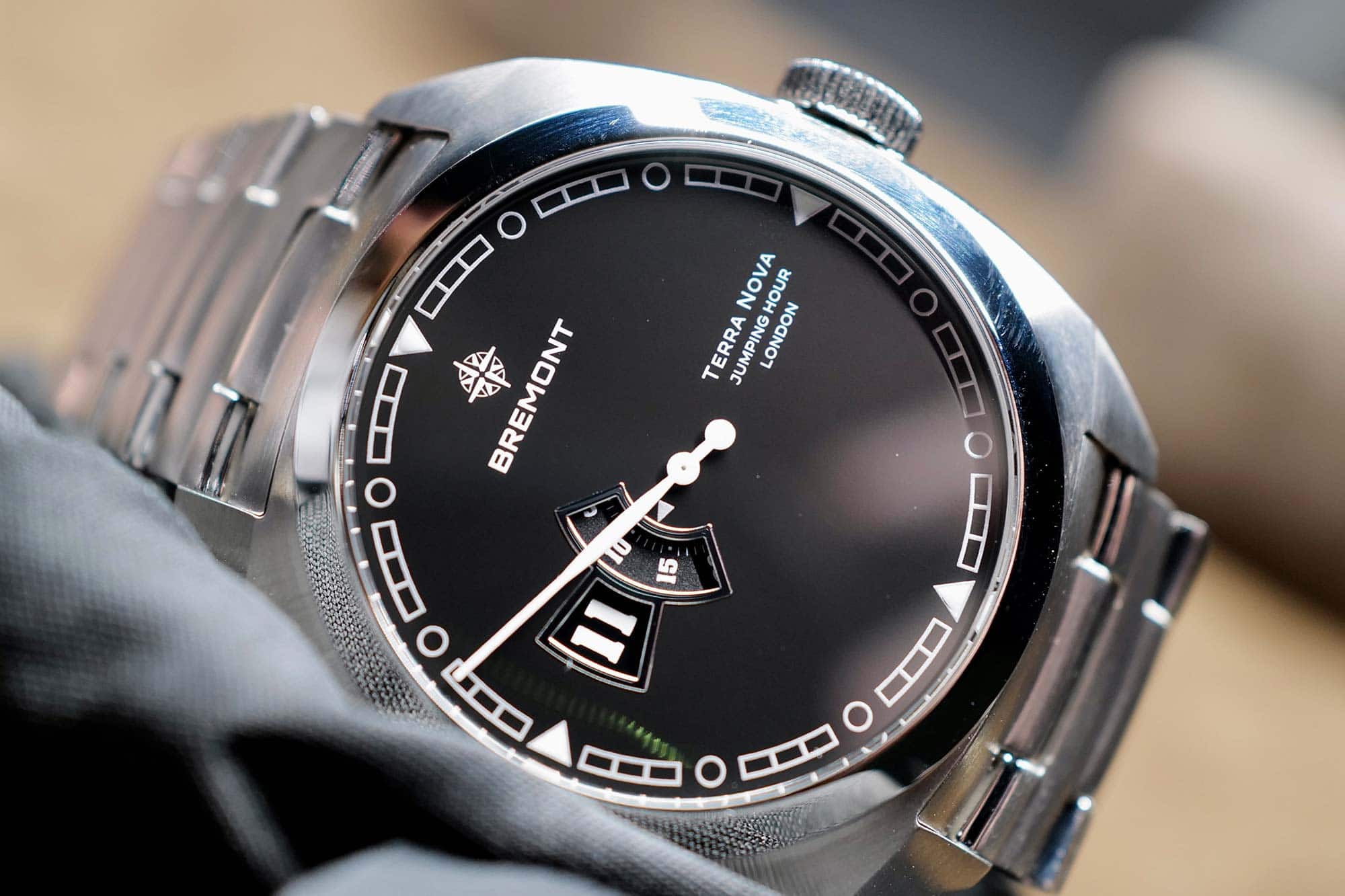
Much more successful, in my opinion, is the Terra Nova 40.5 Jumping Hour. This one’s in steel (904L steel to be precise) and moves the jumping hour aperture to the 9:00 position, with minutes to the right, and a centrally mounted seconds hand. The dial is a glossy black, with what reads to me like an Art Deco inspired chapter ring around the dial’s perimeter. Again, a real mishmash of influences are imbued into this one, but it steers the Terra Nova into a more elegant space. This is almost a dress watch (despite the size) and maybe it’s the England of it all, but it feels like the type of watch Bremont would love to see the next James Bond wear with a tux.
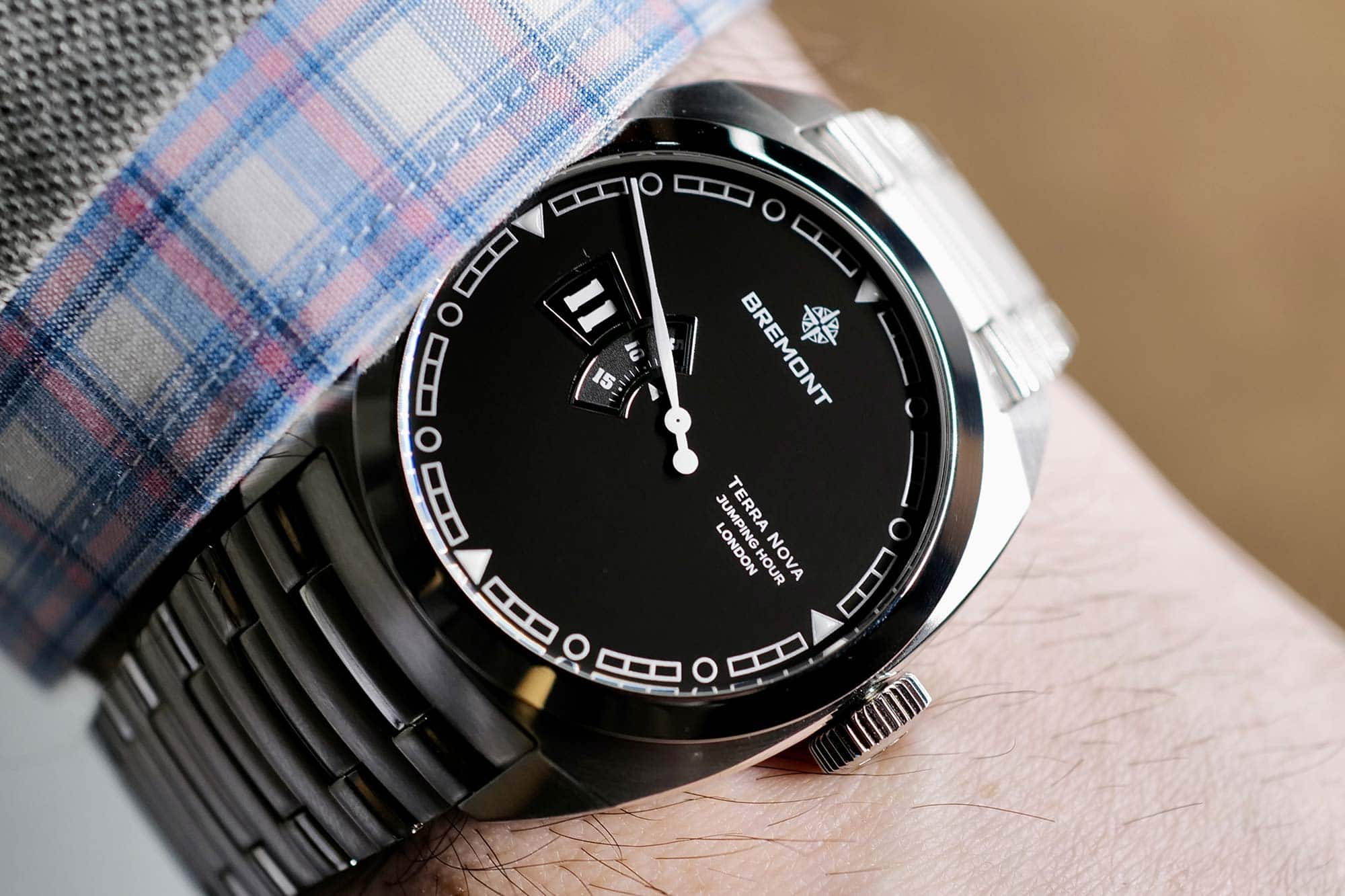
Both of the jump hour references run on a movement designated BC634AH, which is a Sellita caliber that Bremont has an exclusive on for a period of time before it becomes available to other brands. The jumping mechanism has a crisp and satisfying action. The steel reference retails for $4,300 while the bronze sells for $5,650 and is a limited edition of 100 pieces. These are quirky and interesting watches, and see Bremont being playful in a way that you’d have to spend quite a bit more to get a taste of prior to their rebrand, and you’d wind up with a watch with a piece of a plane built into the movement, or something similar.
Speaking of planes (I’ve been planning this segue for days, folks), Bremont this year has also debuted the new Altitude collection, which gives us our first look at the watches most collectors have been most curious about since last year’s big relaunch. Bremont’s identity is tied tightly to aviation – it’s part of the DNA of the brand, and no leadership change is likely to change the general public’s association of Bremont with flight. Their headquarters, after all, is called The Wing. So the unveiling of their new aviation inspired watches is an event with larger stakes than anything having to do with the Terra Nova, or even the Supermarine.
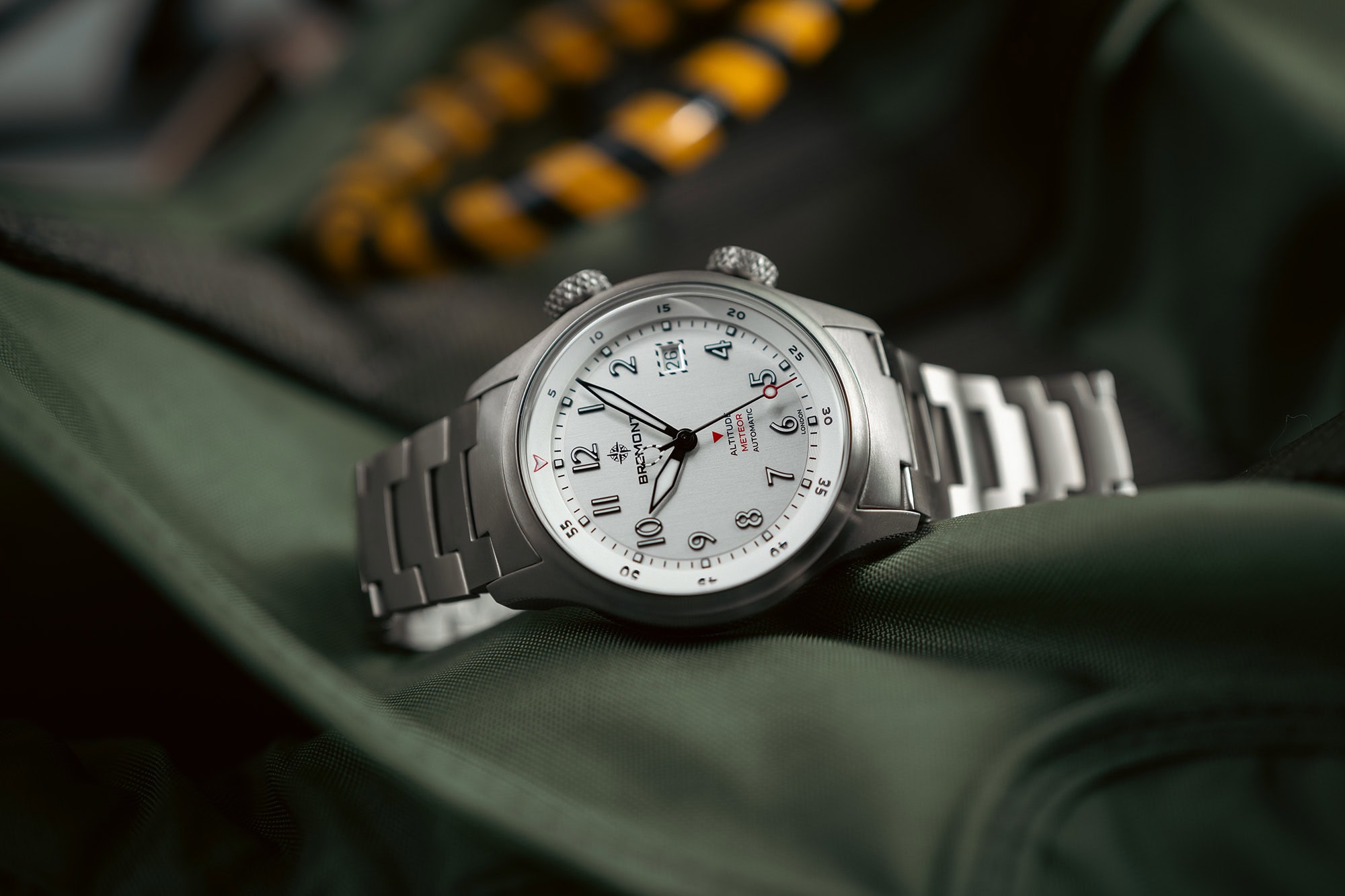
The flagship release, and the one most likely, I think, to be the subject of some controversy, is the MB Meteor, the latest in the line of tough, tool oriented aviation watches named for the Martin-Baker ejector seat. When these watches were introduced by the brand years ago, Bremont offered special versions of the timepieces to pilots who survived an ejection, tying the unique serial number of the Martin-Baker seat to the watch. It’s a special project imbued with real aviation history, and previous versions of the Martin-Baker watches were built with anti-shock properties (reworked movement bridges and iron inner-cases) that Bremont always claimed could survive a real ejection, and probably much more. The new MB Meteor does not have the “anti-shock” branding on the dial, but according to Bremont it does have an anti-shock movement mount as well as an anti-magnetic movement protection ring.
As a watch, I like the MB Meteor quite a bit, particularly the silver dial variant, which has a pronounced brushed texture that looks great. The watches in the Altitude collection see the return of the Trip-Tick case, now in a slimmer form factor with redesigned lugs. This was something many Bremont fans were in a state of panic about a year ago, thinking they had lost this case forever. I’m happy to say that it’s back, and I like this new thinner incarnation, even if some robustness is sacrificed. I’m not planning on ejecting myself from a plane anytime soon, after all, and I hope you’re not either.
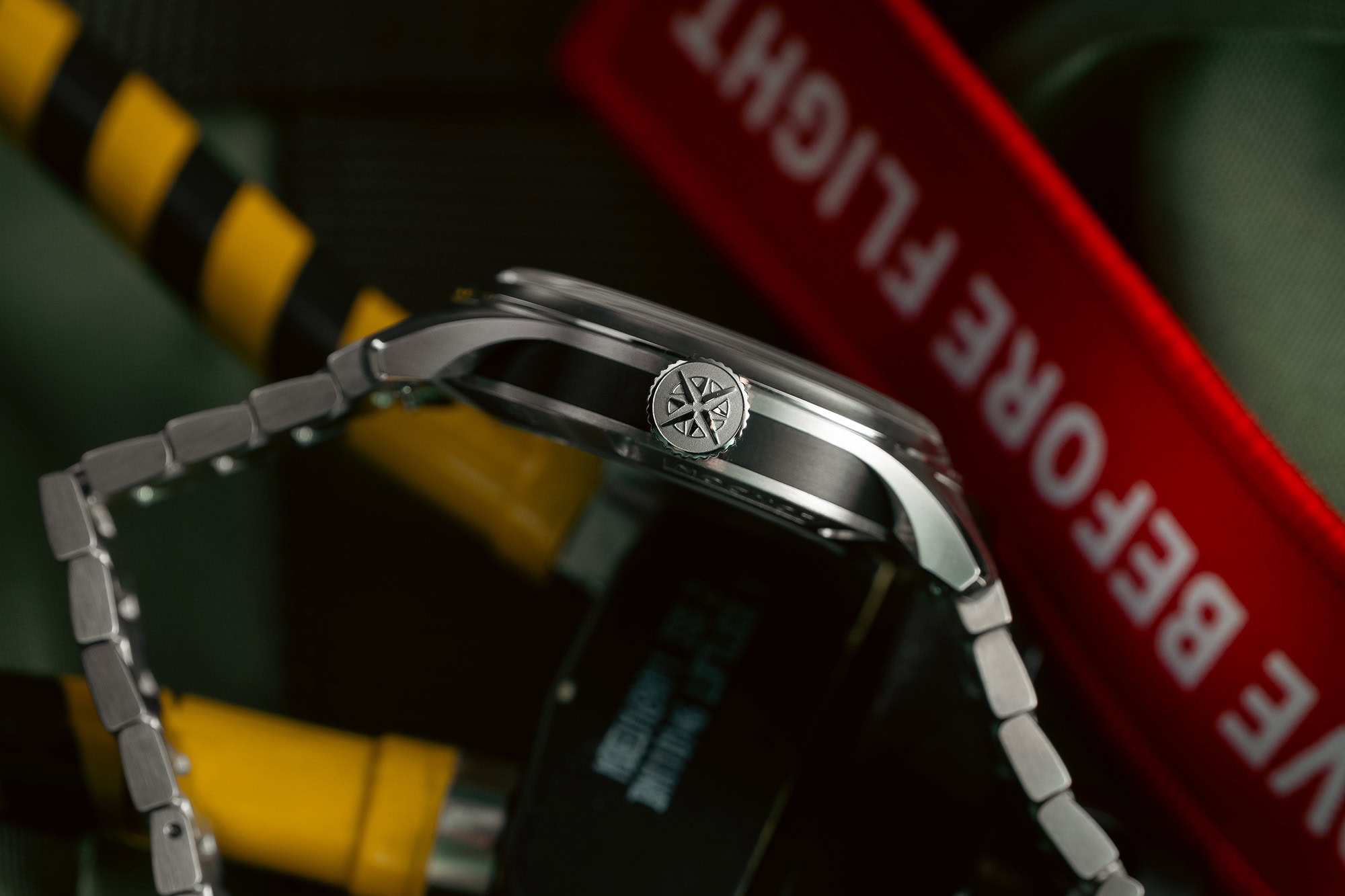
The MB Meteor, I think, illustrates where Bremont is as a brand, and where they are heading. They are making watches that are in the spirit of the old Bremont, but, perhaps, with certain shortcuts taken that make them a little less specialized. They no longer lead with the anti-shock design, but rather the wearability of the case. And the word “chronometer,” once a standard fixture on Bremont watches (indeed, the brand referred to their watches as chronometers) is MIA.
What we said last year, about the brand effectively abandoning their enthusiast market, still feels true. While some might see that as sad or a disappointment, I’ve come to think that it makes a certain amount of sense. The old strategy was not working, so the brand has had to pivot, cut costs, and look for additional ways to increase profit. That’s reflected in the volume of pilot’s watches they released this year. In addition to the MB Meteor, we also have a Chronograph GMT and the 39 Date, each in silver and black dial options, and on a bracelet or a strap. Plus there’s a new perpetual calendar, which has not yet been formally introduced but isn’t an embargoed release. These watches are also priced ambitiously: the MB Meteor retails for $5,700 on a bracelet, the 39 Date for $4,550, and the Chronograph GMT for $6,600.
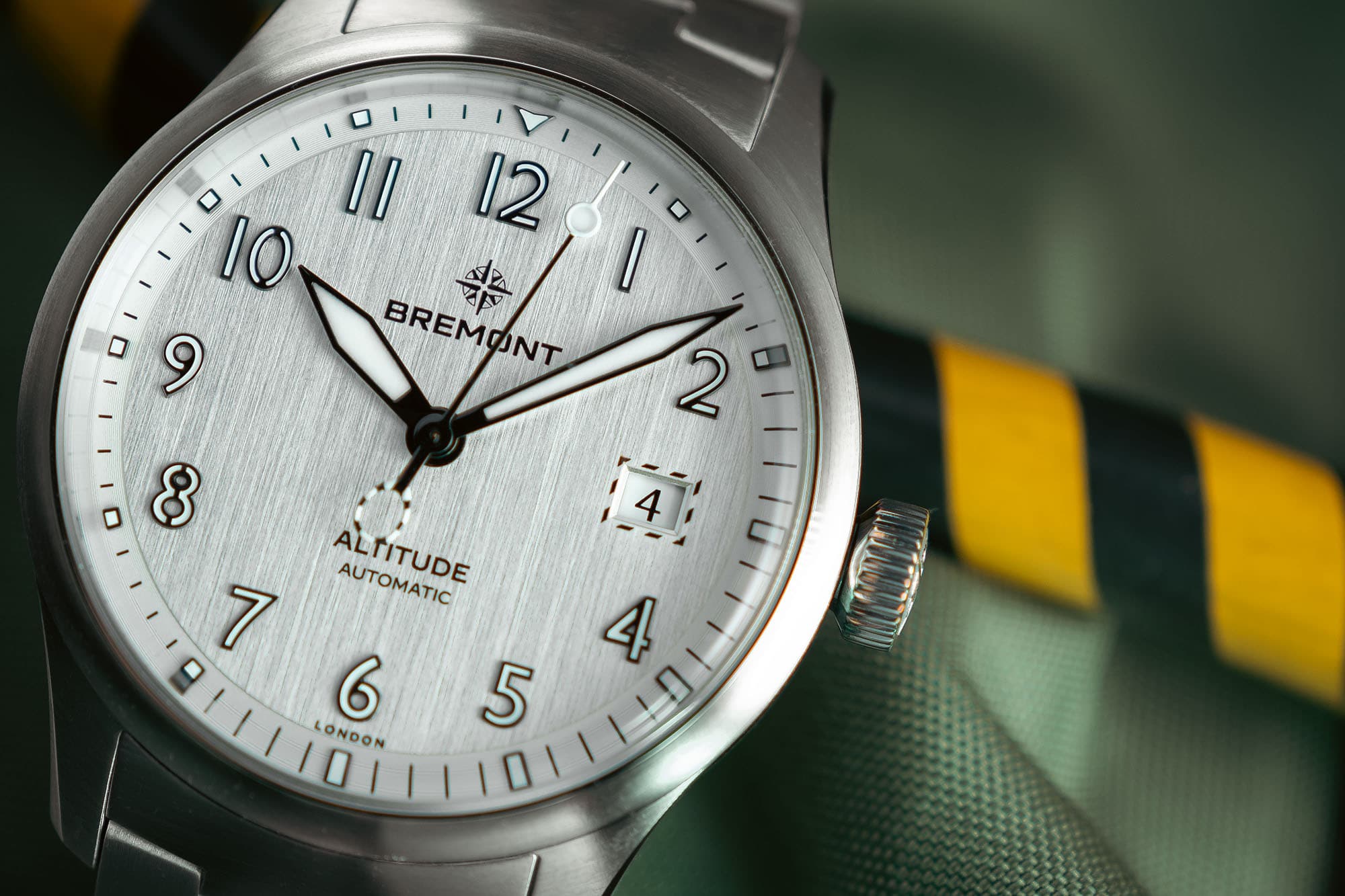
All of these watches are nice in the hand and, to my eye, are quite attractive. In fact, scrolling through the watches in the aviation section on the Bremont website, it’s hard to differentiate between the new and old Bremont if you don’t know exactly what you’re looking for. So while I get that purists and the brand’s biggest fans are likely not going to be thrilled with these watches (a note to purists and the brand’s biggest fans: please get in touch with me if I’m wrong, I’d love to hear your thoughts), I think it’s important to understand the possibility that these watches have not been built for them, but to attract a new audience that wants something different.
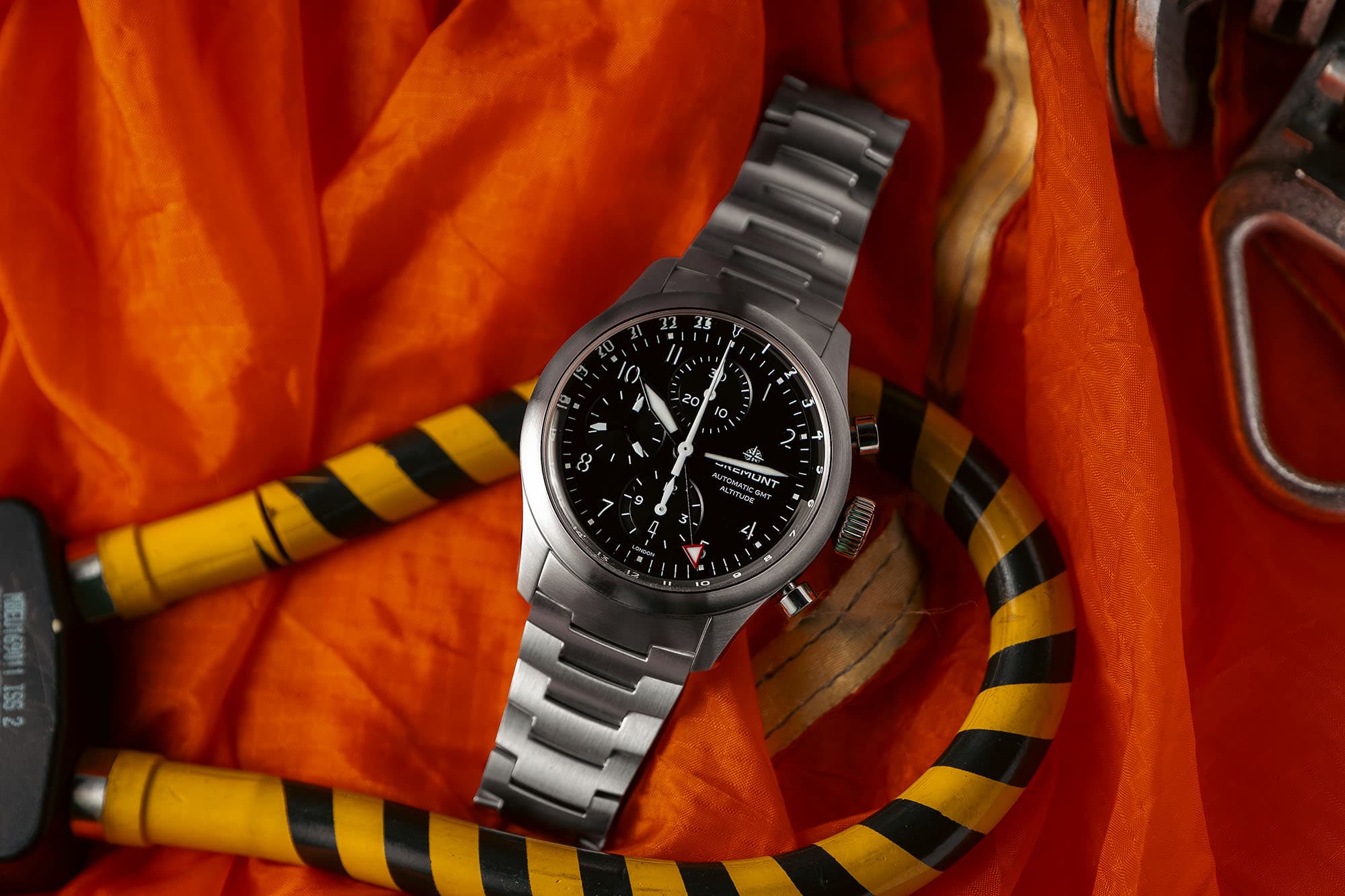
Like last year, this year is hit and miss for Bremont. Unlike last year, there is more hit than miss, however. This is an improvement, even if the watches are not perfect, and the brand is still finding its footing under new leadership. If the rebrand ultimately works, it will take years, and I think those of us following Bremont’s progress should become comfortable with the idea that there will be fits and starts along the way. This year was a big step, and while some of the pricing might be hard to justify (a fact that is true for many, many luxury watches), these releases indicate to me that Bremont is at least still capable of making solid watches, even if they are less geared toward their enthusiast base. Bremont




