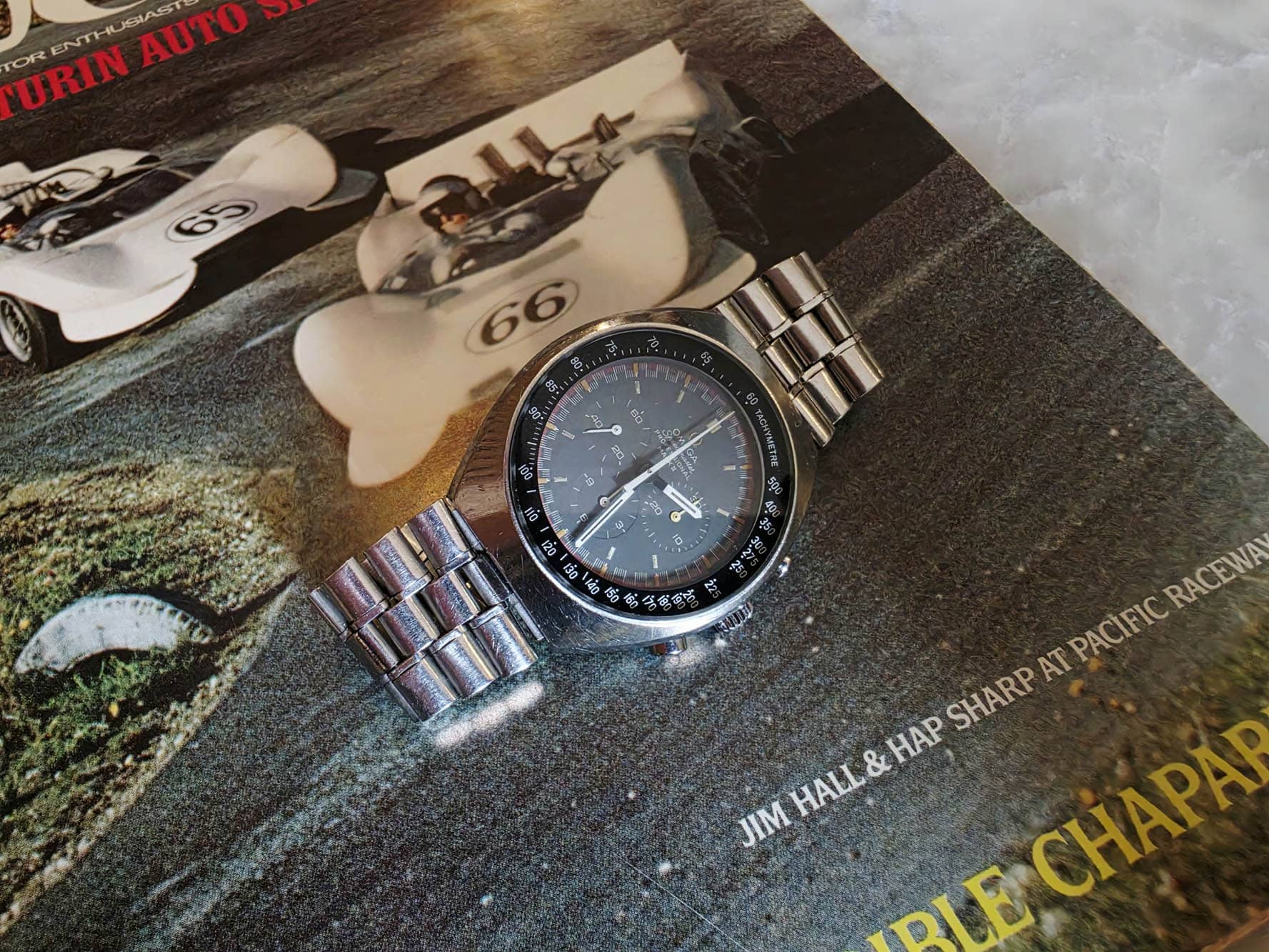
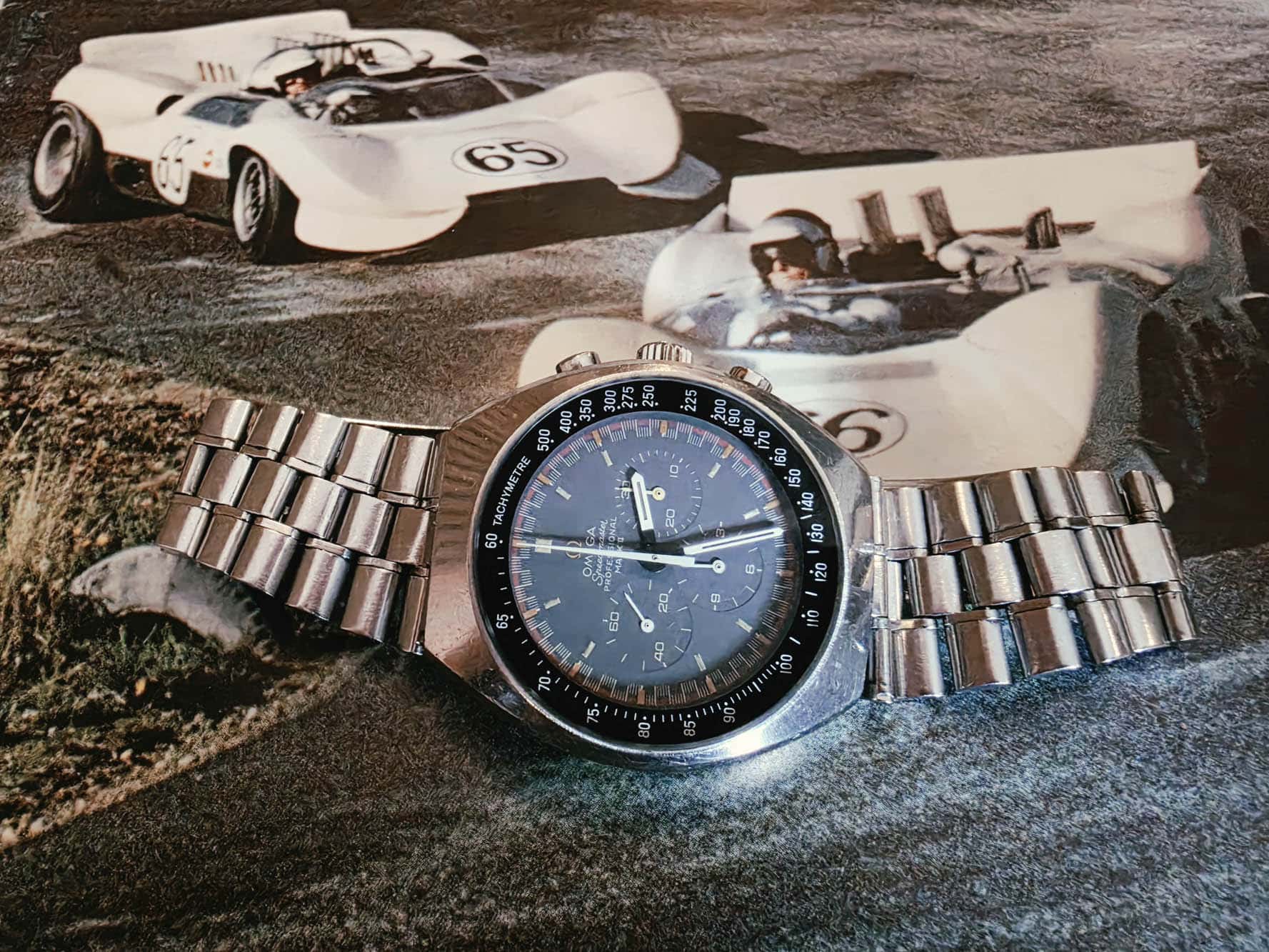
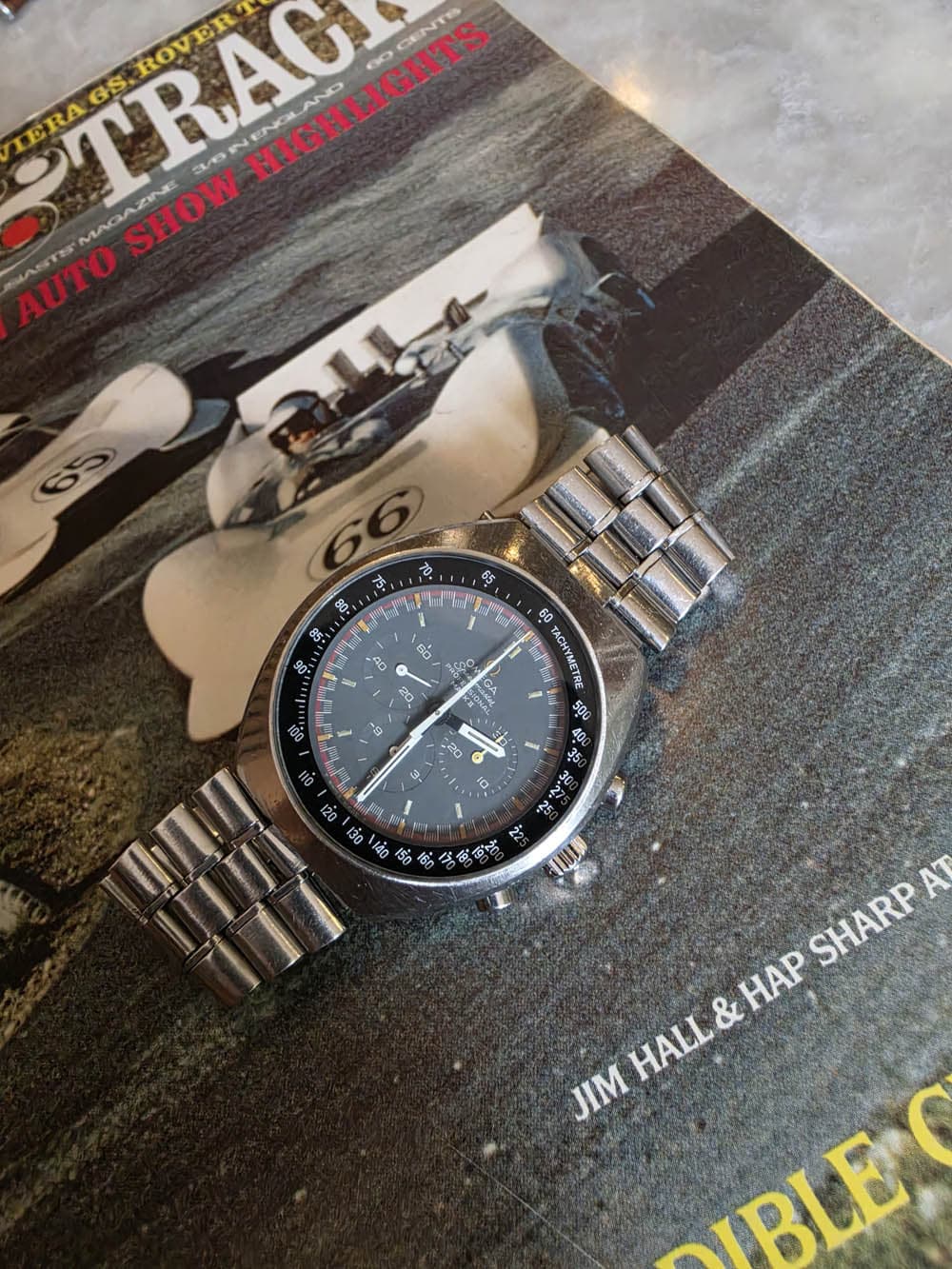
But it’s the Speedmaster’s sequel that commands my attention: once envisioned as a permanent successor to the Moonwatch, the Mark II Speedmaster is as bold as any seventies chronograph, worthy of the original’s lofty aspirations.
I came across this watch at Theo’s Haberdashery, a recently-opened vintage shop that highlights vintage Americana. Think woolen pennants for the Brooklyn Dodgers, Playboy matchbook covers, turquoise jewelry and custom-rolled cigars, complete with a 1950s Dodge flatbed truck parked in front. This brand of old-world nostalgia, located next to the oldest saloon in the city and adjacent to the nexus of counterculture that is St. Mark’s Place, is not always an easy proposition in New York City. The block itself is not always hospitable to its own history, what with the ghost of Gem Spa on one end of the street, and an often-mocked Sephora on the other end.
![]()
But progress marches on, even for a midcentury design as iconic as the Speedmaster. The Mark II represents a vision of the future that is now half a century old. When Omega began working on a successor to the Speedmaster Professional, not only was Apollo 11 the signifier that America had won the Space Race, but there were moon missions to be planned every year, well into the next decade or two; it seemed like moon bases and orbiting space stations were just around the corner.
Omega developed this second generation under the guise of the Lunar Surface Chronograph, a timepiece that could withstand the extreme temperatures of the moon—where, without an atmosphere, the lunar climate can swing from 250°F (121°C) facing the Sun to -208°F (-133°C) at night. The Alaska Project was a proof-of-concept developed in 1969, whose original prototype was encased in an oversized titanium case with a red anodized thermal shield, but a later variant used the same Mark II case, and sent to NASA for testing practically unsolicited. You guys did so well picking our original Speedmaster out of a lineup of other chronographs, so went the line of thinking, so why not take a look at this?
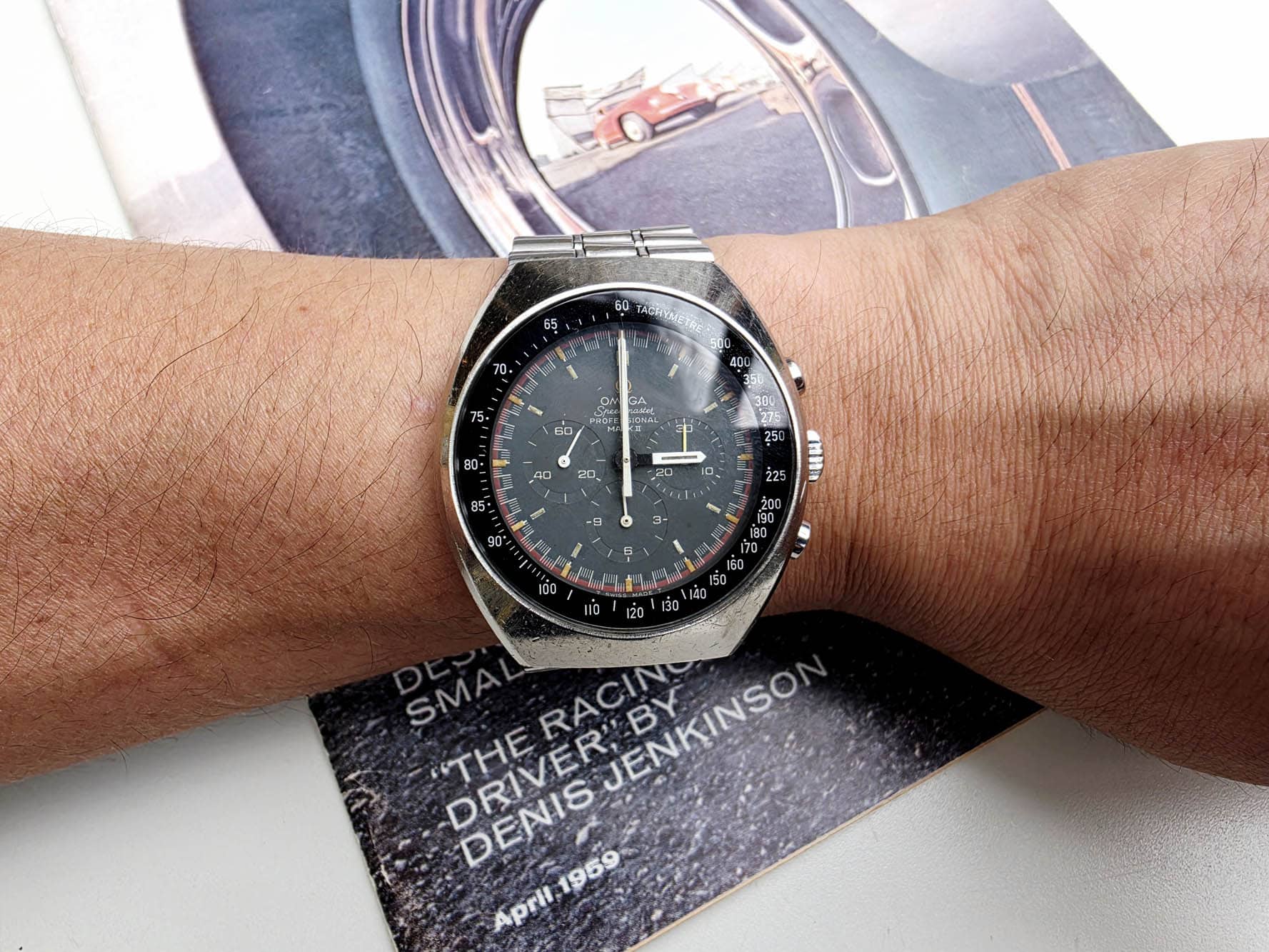
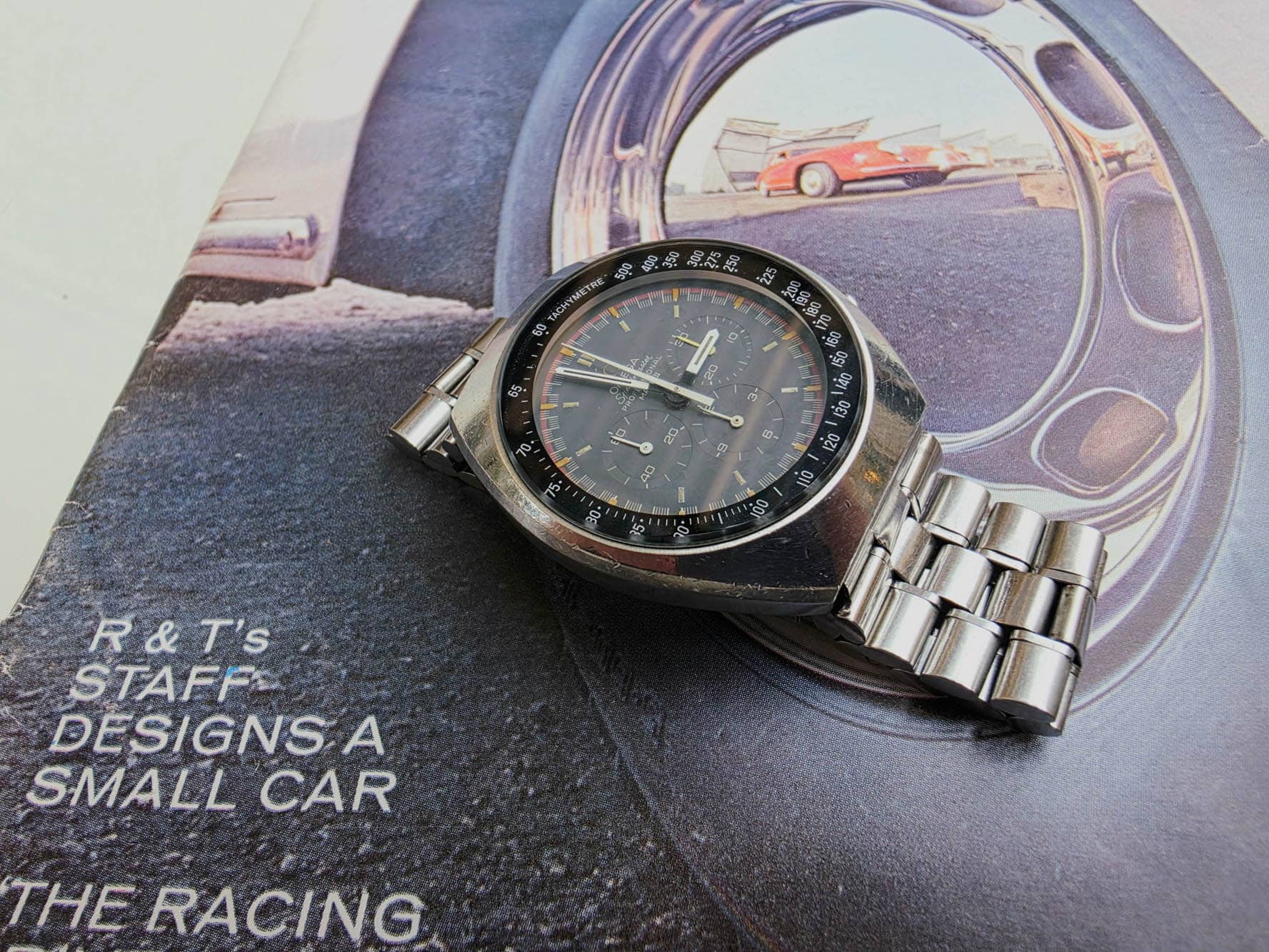
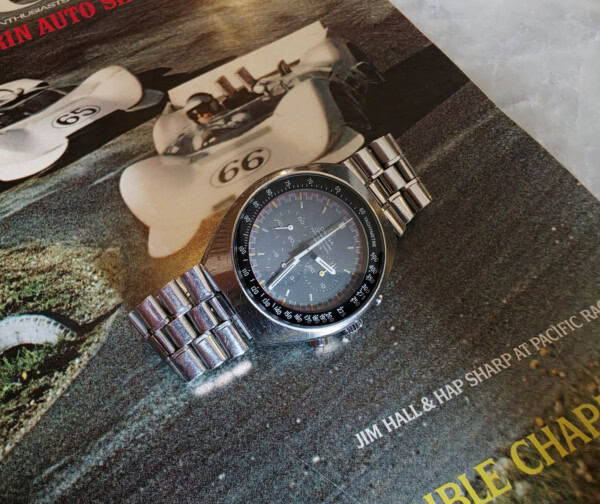
Watch design had to reflect the future. The Space Age was marked by a sleek, smoothed-down tonneau-shaped case, doing away with the classically-styled lyre lugs of the Speedmaster Professional. Instead of a separate and raised steel bezel, the tachymeter scale is embedded into the underside of the crystal. When viewed from the side, the Mark II features a concave, brushed-aluminum gap between the crystal and above the dial.
![]()
The Mark II Speedmaster that I found at Theo’s doesn’t have the default, black-and-white, highly legible markings that defined the Speedmaster, but instead a pale grey Racing dial. Omega has replicated variants on the Racing dial multiple times in the recent past. Reference 3570.40 was introduced exclusively for the Japanese market in 2004, and about ten years later in 2013, a red-and-white checkerboard “Tintin” variant honored the comic book character’s trip to the moon in 1950, nearly two decades before the real thing. The automatic Speedmaster Reduced Michael Schumacher Edition debuted in 1996 at the height of the Formula One legend’s abilities, while in 2012, the Speedmaster Racing debuted with exaggerated sub-dials above a Co-Axial movement, subsequently evolved into a two-register version that stays within the family.
But few things can beat the original. What I enjoy about this watch is how it wears so snugly, its lack of lugs adhering graciously to the curvature of my wrist. This one wears the sun-worn patina of an unknown history, its faded outer markings in red and faint, originally yellow subdial hands giving little clues as to its history. Sure, the case’s original radial brushing could have been sharper—perhaps it was overpolished at some time in its history—but its dents speak to honesty, daily wear, and the occasional bout of carelessness. (Who among us, after all?)
![]()
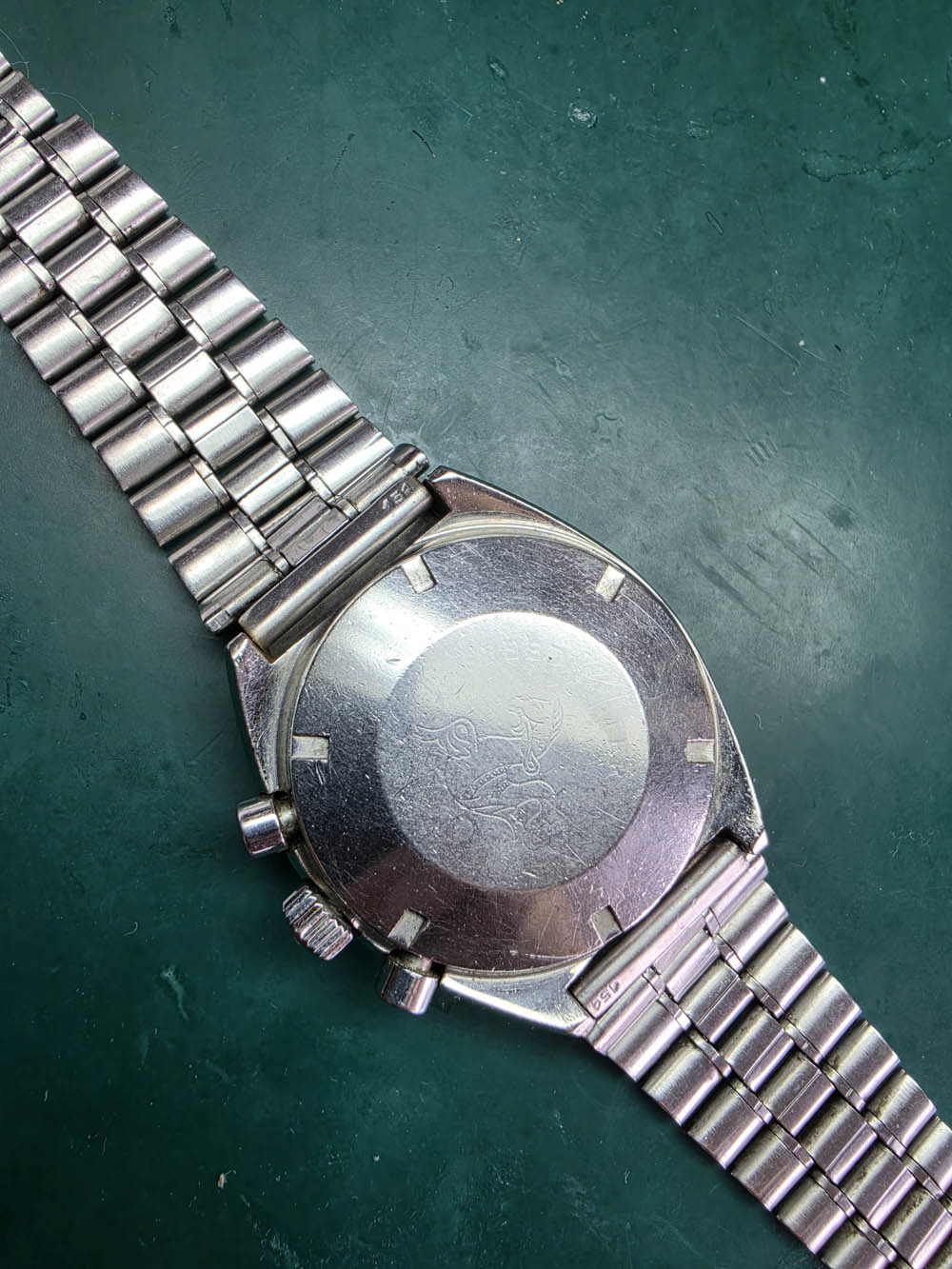
The Caliber 861 manually wound, three-register movement is running sharply and resetting to zero, and keeping time consistently. The jangly old-school bracelet feels like slipping on a familiar pair of shoes, a natural affectation that also happens to be adjustable with its Omega-signed clasp. Plus, the Mark II features the hippocampus on the reverse side, a symbol originally of water resistance, but with deeper connections to astrology. This value will always be part of its appeal, but thankfully not its only definition: if you wanted that beautiful, simple etched design on the back of your Speedmaster, you’d have to look to an era before Apollo 11. Like vintage Porsches, or iPod Nanos, or tickets to Warped Tour.
![]()
Ultimately, it is a practical piece of wear that embraces the oversized vibes of a seventies tool watch, but just under the radar to feel like a hidden secret. There is nothing that I have against the Speedmaster Professional, and its combination of function, significance, and quintessential design: it does feel like something hewn from the fundamental laws of nature, with nothing more to be added nor taken away. Yet, when it comes to deep-diving into watch history, isn’t it more fun to broaden our minds?


 Latest Review